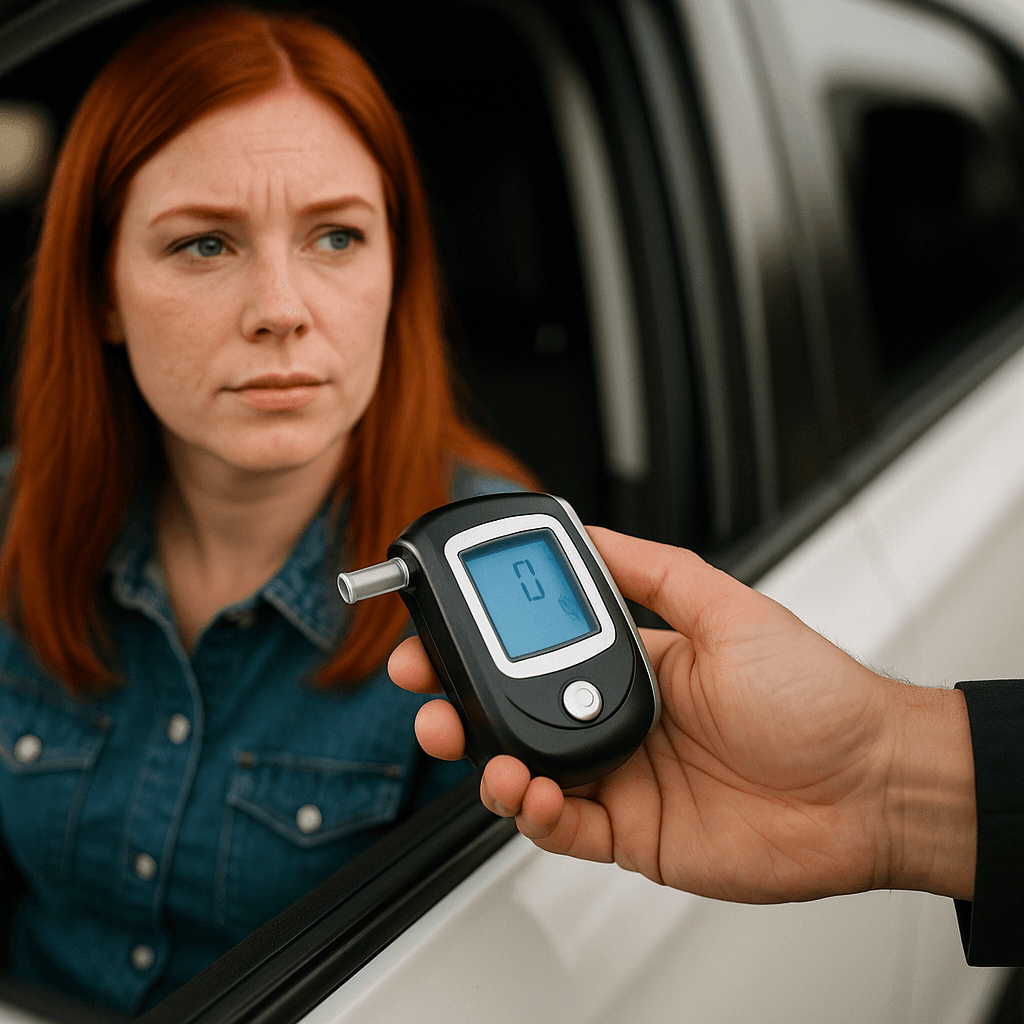
Kentucky hardship licenses allow work commutes only during court-approved hours. Weekend driving, errands, and route deviations all violate your restricted privilege and trigger automatic revocation.
What Hours Does a Kentucky Hardship License Actually Cover?
Kentucky hardship licenses approve driving to and from work only during the specific hours listed in your court order. If your employer letter states you work Monday through Friday, 7:00 AM to 4:00 PM, your hardship license allows travel during those exact windows plus reasonable commute time. A Saturday shift added after approval is not covered. A Tuesday evening company meeting outside your stated hours is not covered. Weekend errands, medical appointments not pre-approved, and childcare stops are all violations.
The Division of Driver Licensing does not issue flexible hardship licenses. Your court order specifies approved purposes, approved hours, and approved routes. Law enforcement verifies all three during any traffic stop. If you are driving at 10:00 PM and your approved work hours end at 5:00 PM, you are operating outside your restricted privilege regardless of whether you were actually coming from work late.
Most Kentucky hardship licenses run 180 days and require SR-22 filing for the full suspension period, typically 6 to 12 months for DUI or 45 days minimum for insurance lapse. Violating your approved hours forfeits the hardship license immediately and often adds 90 days to your underlying suspension.
Can You Drive on Weekends Under a Kentucky Hardship License?
You can drive on weekends only if your employer documentation submitted to the court explicitly lists weekend work hours. A Monday-Friday work schedule does not grant Saturday or Sunday driving privileges, even for the same job. If you are hired for weekend shifts after your hardship hearing, you must file a motion to amend your restricted driving order before driving those shifts.
Kentucky courts treat weekend driving outside approved hours as knowing violation of a court order, not an administrative infraction. Penalties include immediate hardship license revocation, contempt proceedings in some counties, and extension of your full suspension period. The underlying SR-22 filing requirement continues through the extended suspension, meaning both your insurance cost and your timeline to full reinstatement increase.
Drivers who need weekend medical appointments or childcare transport must request those purposes at the hardship hearing and provide supporting documentation. Kentucky does not allow post-approval amendments for non-work purposes in most judicial districts.
Compare car insurance rates in your state
Get quotes from licensed carriers — no obligation, no spam, results in minutes.
Get Your Free Quote✓ No Obligation Required✓ Licensed Carriers Only✓ Available Nationwide✓ Free to Compare
What Happens If You Drive Outside Your Approved Hours?
Law enforcement in Kentucky checks hardship license compliance at every traffic stop. Officers verify your current location, direction of travel, time of day, and stated destination against the approved hours and routes listed in your court order. Any discrepancy results in a citation for operating on a suspended license under KRS 186.620, which carries a mandatory 90-day license suspension and $500 to $1,000 fine.
The hardship license itself is revoked immediately upon violation. You do not receive a warning or grace period. The underlying suspension clock does not pause during revocation, meaning you lose months of restricted driving privilege and still must serve the original suspension period from the date it was imposed. Most drivers who lose a hardship license to an hours violation wait 12 to 18 months before regaining full driving privileges.
Your SR-22 filing requirement continues through the extended suspension. Carriers do not reduce premiums during periods when you cannot legally drive. Expect to pay $80 to $150 per month for SR-22 liability coverage even while your hardship license is revoked.
How to Add Hours or Change Your Approved Work Schedule
Kentucky requires a formal motion to amend your restricted driving order. You must file the motion in the same court that granted your original hardship license, provide updated employer documentation showing the new schedule, and appear at a hearing. Most judicial districts schedule amendment hearings 30 to 45 days out, meaning your new work hours are not legally drivable until the amended order is signed.
Some employers do not wait 45 days for a court hearing. Drivers who lose jobs due to inability to work amended schedules often lose their hardship license eligibility entirely, as Kentucky requires proof of current employment to maintain restricted driving privileges. If you are terminated or resign before your amendment hearing, the court typically denies the motion and may revoke your existing hardship license.
Attorney fees for amendment motions run $300 to $800 depending on county. Filing fees add $50 to $150. Budget for these costs before accepting schedule changes from your employer.
Do Commute Windows Include Stops for Gas, Food, or Childcare?
Kentucky hardship licenses allow direct travel between home and work only. Stops for gas, food, or childcare are violations unless the court order explicitly approves them. Some counties allow a single pre-approved childcare stop if documented at the hardship hearing. Most do not permit grocery stops, pharmacy visits, or fuel stops unless they fall on the direct route and occur during approved commute windows.
Law enforcement treats any deviation from the direct route as operating outside your restricted privilege. A detour to drop off a family member, a stop at a gas station two miles off your route, or a drive-through meal pickup all constitute violations. The legal standard is not reasonableness — it is strict compliance with the court order.
If you need to add a childcare stop, medical appointment, or other non-work purpose, you must request it at your initial hardship hearing or file a motion to amend. Courts require documentation for every requested stop: daycare enrollment paperwork, medical appointment letters, or proof of ongoing treatment. Verbal requests at traffic stops do not create exceptions.
Which Carriers Write SR-22 for Kentucky Hardship License Holders?
Kentucky hardship licenses require SR-22 filing, which limits you to non-standard carriers. Most standard carriers (State Farm, Allstate, Nationwide) either decline hardship license applicants outright or non-renew at the first policy term. Non-standard carriers that write Kentucky SR-22 for suspended drivers include The General, Direct Auto, Acceptance Insurance, Safe Auto, and regional providers like Permanent General and CURE.
Monthly premiums for minimum liability coverage with SR-22 filing typically run $110 to $180 for hardship license holders in Kentucky. Rates vary by county, age, violation type, and whether an ignition interlock device is required. DUI-related hardship licenses often trigger IID requirements, which add $70 to $100 per month in device fees on top of insurance premiums.
Carriers verify hardship license status before binding coverage. If your hardship license is revoked for an hours violation, your SR-22 policy typically cancels within 10 days unless you provide proof of reinstatement. The SR-22 lapse triggers a filing gap notice to the Division of Driver Licensing, which extends your suspension and restarts the SR-22 filing clock.