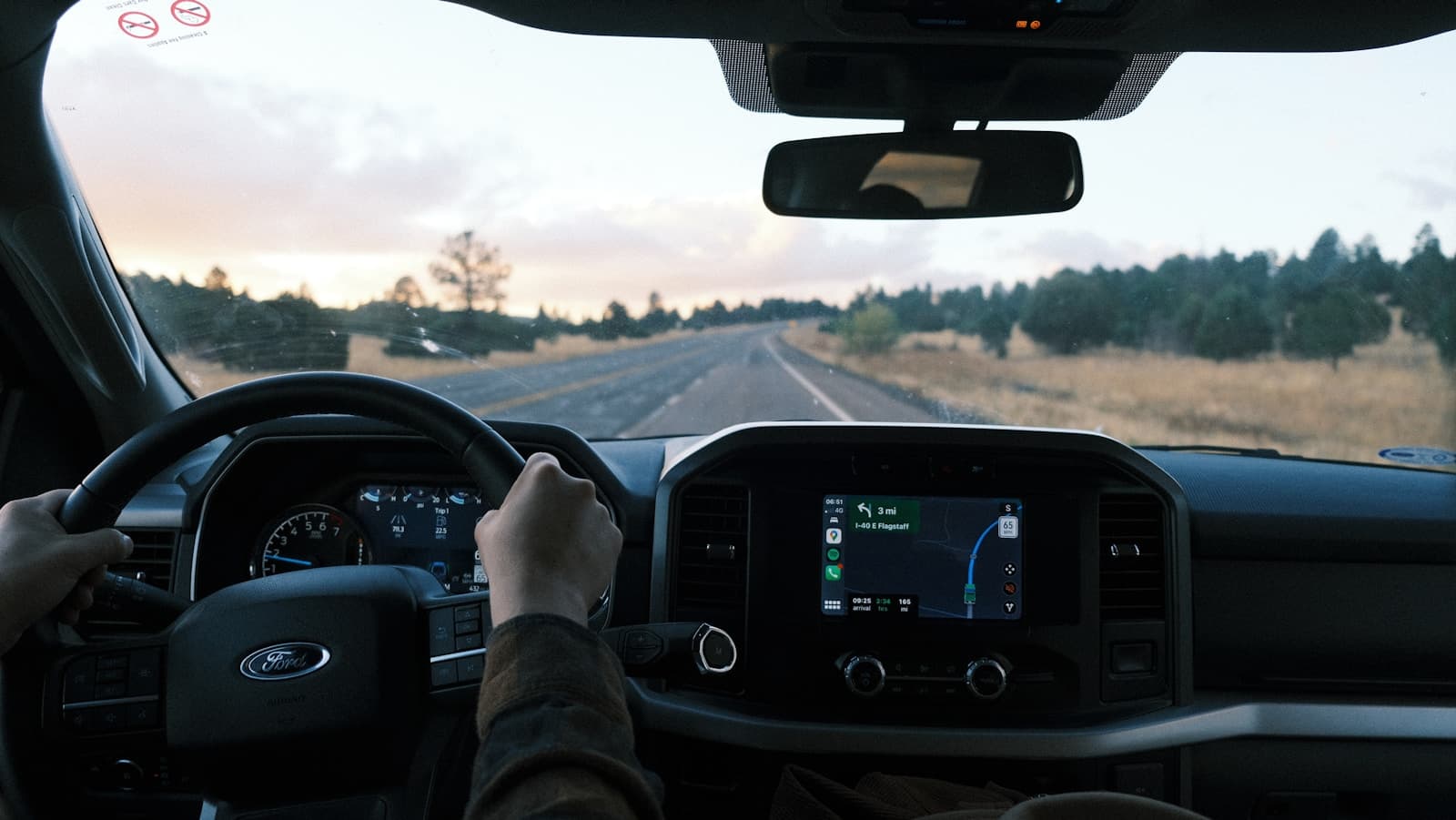
You just got your Oklahoma hardship license approved. The court set your hours and routes, SR-22 is filed, and you're back behind the wheel. One violation—even driving 10 minutes past your approved window—revokes the license and extends your suspension.
Your Approved Hours Are Court Orders, Not Suggestions—Violation Revokes the License Immediately
Oklahoma hardship licenses grant driving privileges during specific hours set by the court order that approved your license. These hours are not DMV guidelines or employer recommendations—they are enforceable court orders. If you're approved to drive Monday through Friday from 6:00 AM to 6:30 PM for work purposes, driving at 6:45 PM or on Saturday morning violates your hardship license terms. Law enforcement can verify your approved hours through the court order number on your license during any traffic stop.
Violating your approved hours triggers automatic license revocation. Oklahoma courts treat hardship license violations as contempt of the original court order. Your hardship privilege is revoked immediately, and the underlying suspension period is often extended by 6 to 12 months. There is no warning system, no grace period for first-time violations, and no administrative appeal that reinstates your privilege without a new hardship hearing. Most drivers lose their hardship license within the first 90 days—not from DUI arrests or new violations, but from driving outside approved hours they thought had flexibility.
Your SR-22 filing remains active during revocation, but you cannot legally drive. You continue paying the SR-22 premium (typically $200–$400 annually in Oklahoma) and your underlying policy premium, but the hardship privilege is gone. Reapplying requires filing a new hardship petition, paying a new $150–$250 court filing fee, waiting 30 to 60 days for a hearing date, and proving the violation was not willful. Approval rates for second hardship petitions are under 40% in most Oklahoma district courts.
Route Restrictions Mean Specific Streets—Not General Areas or Employer Neighborhoods
Oklahoma hardship licenses approved for work purposes restrict you to the direct route between your home address and your employer's address as listed in your hardship petition. This is not a general radius or neighborhood boundary. If your approved route is I-35 North to Exit 137, then East on Memorial Road to your employer at 1250 N. Broadway, you cannot take the Pennsylvania Avenue alternate route even if traffic is stalled. Route deviations—even for construction detours or accident avoidance—are treated as hardship violations unless you document the deviation with a police report or highway closure notice filed with the court within 48 hours.
Approved stops are limited to what the court order explicitly lists. Most Oklahoma hardship orders approve only two locations: home and work. If you need to stop for daycare drop-off, medical appointments, or DUI program attendance, those addresses must be listed in your original hardship petition or added through a formal petition amendment. Adding a stop after approval requires filing a motion to modify the hardship order, a $75–$150 filing fee, and court approval—which takes 2 to 4 weeks. Stopping at unapproved locations, even for 5 minutes, is a violation.
GPS monitoring is not standard in Oklahoma hardship cases, but some district courts require it for second-offense DUI or multiple-violation suspensions. If your hardship order includes GPS monitoring, your approved routes and hours are tracked continuously. The monitoring company reports violations to the court within 24 hours. Monthly GPS monitoring costs run $80 to $150, paid by you, in addition to SR-22 and ignition interlock costs.
Compare car insurance rates in your state
Get quotes from licensed carriers — no obligation, no spam, results in minutes.
Get Your Free Quote✓ No Obligation Required✓ Licensed Carriers Only✓ Available Nationwide✓ Free to Compare
Ignition Interlock Is Required for DUI Hardship Licenses—Failed Tests Count as Violations
Oklahoma requires ignition interlock device (IID) installation for all hardship licenses granted after DUI suspension. The IID is installed before your hardship hearing and must remain installed for the duration of your hardship period plus the remaining underlying suspension. Installation costs $100 to $150, and monthly monitoring runs $70 to $100. Your hardship petition is denied if the IID is not installed and certified at the time of your hearing.
Failed breath tests—registering 0.02 BAC or higher—are reported to the court and the Oklahoma Department of Public Safety within 48 hours. A single failed test is treated as a hardship violation and typically results in immediate revocation. Rolling retests are required every 5 to 15 minutes during approved driving hours. Missing a rolling retest or failing to provide a breath sample when prompted triggers a lockout event, which is also reported as a violation. The IID does not distinguish between alcohol consumption and mouthwash, cold medicine, or fermented food—any detectable alcohol reading is a failure.
IID service appointments must occur during your approved hours, or you need court approval to add the service provider's address and appointment window to your hardship order. Most drivers schedule IID service during lunch breaks or immediately after work within their approved window. Missing a required monthly service appointment disables the device, which prevents you from starting your vehicle and is reported to the court as a compliance failure.
What Happens If You're Pulled Over—Even for a Minor Traffic Violation
Law enforcement verifies hardship license status during every traffic stop. Oklahoma officers check your license against the court order database, which shows your approved hours, routes, and restrictions. If you're stopped outside your approved hours or off your approved route, the officer can issue a citation for driving under suspension even if the original traffic stop was for a minor violation like a broken taillight. Driving under suspension while on a hardship license is a misdemeanor carrying up to 6 months in jail and a mandatory 6-month license suspension extension.
You must carry your hardship court order and SR-22 proof of insurance at all times. Oklahoma hardship licenses are marked with a restriction code, but the physical license does not list your approved hours or routes. Officers request your court order paperwork to verify compliance. If you cannot produce the court order during the stop, you may be cited for failure to provide proof of privilege, which is treated similarly to driving without a license. Most Oklahoma drivers keep a certified copy of their hardship order in the glove box and a second copy photographed on their phone.
SR-22 lapses during your hardship period trigger automatic hardship revocation in addition to the standard license suspension. If your carrier cancels your policy or you miss a premium payment, the SR-22 filing is withdrawn and the Oklahoma DPS is notified within 24 hours. Your hardship privilege is revoked immediately, and you face a new 3-year SR-22 filing requirement starting from the date you refile. There is no grace period for SR-22 lapses under hardship licenses.
How to Avoid Violations in the First 90 Days—the Highest-Risk Window
Set phone alarms for 15 minutes before your approved end time each day. Most hardship violations occur during the evening commute when drivers stop for gas, pick up dinner, or run a quick errand after work. If your approved hours end at 6:30 PM, you need to be parked at your home address by 6:30 PM—not leaving your employer's parking lot at 6:25 PM. Build a 20 to 30-minute buffer into your departure time to account for traffic, weather, and unexpected delays.
Map your exact approved route and eliminate all alternative routes from your GPS. Use the same route every day, even if traffic apps suggest faster alternatives. If road construction or an accident forces a detour, document it immediately: photograph the closure signs, note the time and location, and file a notice with the court clerk within 48 hours. Some district courts accept emailed documentation; others require in-person filing. Confirm your court's process during your hardship hearing.
Schedule all non-work activities outside your driving hours or petition to add them before you need them. If you have a medical appointment, DUI program session, or custody exchange scheduled, file a motion to modify your hardship order at least 3 weeks in advance. Do not assume the court will approve retroactive route additions after a violation is reported. Oklahoma courts treat unapproved stops as knowing violations, even if the stop was for a legitimate emergency like a child's school pickup.
When You Can Apply to Modify Your Hardship Order—and What It Costs
Oklahoma allows hardship order modifications after 60 days of violation-free compliance. You file a motion to modify with the same district court that granted your original hardship petition. The motion must state the specific change requested: expanded hours, additional approved stops, or route modifications. Filing fees range from $75 to $150 depending on the district. The court schedules a hearing 2 to 4 weeks after filing, and you must appear in person with documentation supporting the requested change—such as a new employer address, updated work schedule, or medical appointment letters.
Approval is not automatic. The court evaluates your compliance record, the reason for the modification, and whether the change increases risk. Requests to add medical or childcare stops are approved at higher rates than requests to expand general driving hours. Requests filed after a violation—even if the violation was dismissed—are denied in most cases. If your modification is approved, the updated court order is effective immediately, but you are responsible for notifying your SR-22 carrier of any address or vehicle changes.
Employer changes require a new hardship petition in most Oklahoma counties. If you lose your job or change employers, your original hardship order lists the wrong work address, which means every trip to your new job is a route violation. Some district courts allow expedited employer-change motions with 1-week hearing schedules, but you cannot legally drive to the new employer until the modified order is signed. Most drivers negotiate delayed start dates with new employers to allow time for court approval.
SR-22 and Hardship License Interaction—Two Separate Compliance Tracks
Your SR-22 filing and your hardship license are separate legal requirements that run on independent timelines. Oklahoma requires 3 years of continuous SR-22 filing after most DUI and serious violation suspensions. Your hardship license is typically granted for 6 to 12 months during the underlying suspension period. The SR-22 requirement continues after your hardship period ends and your full license is reinstated. Letting either one lapse triggers new consequences—SR-22 lapse extends the filing clock to zero and suspends your license; hardship violation revokes your restricted privilege and extends the suspension.
You must maintain continuous coverage on the vehicle listed in your hardship petition. Switching vehicles requires filing an SR-22 amendment with your carrier and notifying the court if the new vehicle is not listed in your original hardship order. Most Oklahoma carriers charge $25 to $50 for mid-term vehicle changes. If you sell your vehicle and do not replace it, your SR-22 must convert to a non-owner SR-22 policy, but your hardship license is revoked because you no longer have access to an approved vehicle. Reapplying requires proving you have acquired a new vehicle and refiling the hardship petition.
SR-22 premiums for hardship license holders run higher than standard SR-22 policies. Oklahoma drivers with DUI plus hardship restrictions see average monthly premiums of $180 to $320 for minimum liability coverage. Carriers view hardship licenses as higher risk than standard SR-22 because the hardship indicates recent suspension and court oversight. The same non-standard carriers that write post-DUI SR-22 policies handle hardship cases: The General, Acceptance, Direct Auto, Safe Auto, and Bristol West maintain active Oklahoma filings for restricted-license drivers.