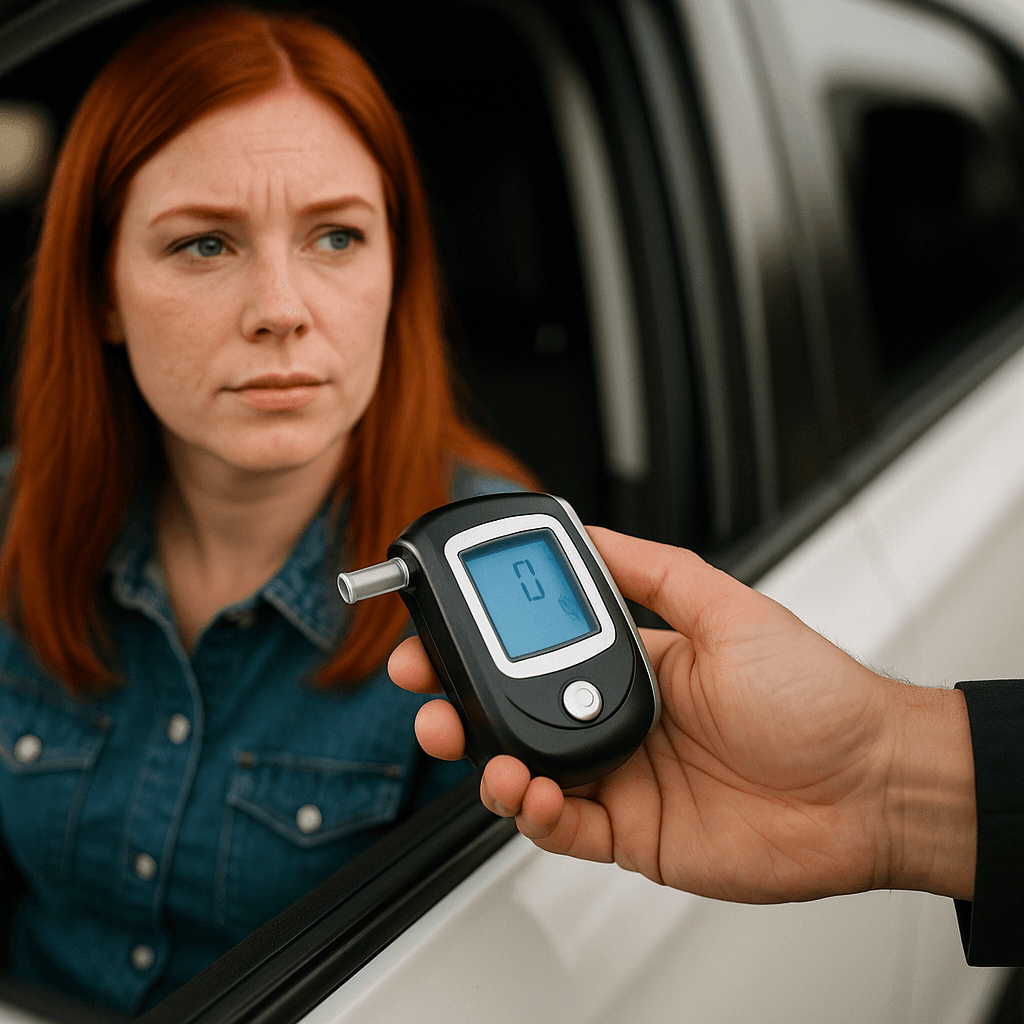
You need to drive to work after a Kentucky license suspension. Louisville drivers face a DMV administrative process with specific waiting periods, approved-use limits, and mandatory SR-22 filing before regaining restricted driving privileges.
Does Kentucky Require a Court Hearing or DMV Application for Hardship Licenses?
Kentucky grants hardship licenses through DMV administrative review only. You submit Form TC 41-001 (Application for Hardship License) to the Kentucky Transportation Cabinet, Division of Driver Licensing, along with proof of suspension eligibility and SR-22 filing. No court appearance is required unless your suspension stems from a DUI conviction with contested facts.
The Louisville DMV office at 9850 Von Allmen Court processes most Jefferson County hardship applications. Processing time runs 10–15 business days after your waiting period ends and all documents are submitted. Walk-in application submission is permitted, but mail processing adds 7–10 days to the timeline.
Most Louisville applicants qualify under work-related hardship, which requires employer documentation on company letterhead stating your job title, work address, shift hours, and confirmation that alternate transportation is unavailable. Kentucky does not accept verbal employer confirmation or generic letters.
How Long After Suspension Can You Apply for a Hardship License in Louisville?
Kentucky mandates a 30-day minimum waiting period for hardship license eligibility after most suspensions, measured from the date your physical license is surrendered to DMV or law enforcement. If you continue driving on a suspended license or delay surrender, the 30-day clock does not start. Louisville drivers who mail their license to Frankfort instead of surrendering in person often add 10–14 days to their waiting period due to processing lag.
DUI suspensions carry longer waiting periods: 45 days minimum for first-offense DUI, 120 days for second-offense, 365 days for third-offense. Hardship eligibility begins only after completing court-mandated DUI education or treatment programs, which typically run 10–20 weeks in Jefferson County. The waiting period and program completion do not overlap.
Insurance-lapse suspensions require immediate SR-22 filing before the waiting period begins. Kentucky DMV will not process your hardship application until SR-22 continuous coverage appears in their system, which takes 3–5 business days after your carrier files electronically.
Compare car insurance rates in your state
Get quotes from licensed carriers — no obligation, no spam, results in minutes.
Get Your Free Quote✓ No Obligation Required✓ Licensed Carriers Only✓ Available Nationwide✓ Free to Compare
What Purposes and Hours Does a Kentucky Hardship License Cover?
Kentucky hardship licenses restrict driving to employment, medical appointments, court-ordered obligations, and DUI program attendance. The license specifies approved addresses and approved travel hours printed directly on the restricted license card. Louisville applicants must submit exact work addresses, shift schedules, and route documentation—DMV does not issue open-ended work authorization.
Approved hours typically match your work shift plus 30 minutes travel time each direction. A second job requires separate documentation and route approval, which extends processing time by 5–7 days. Kentucky does not permit grocery shopping, childcare pickup, or errands under hardship license authority unless medically necessary and documented by a physician.
Violation of approved hours or routes triggers immediate hardship license revocation and extends your underlying suspension by 90–180 days. Louisville Metro Police and Jefferson County Sheriff run frequent compliance checks near approved work addresses during non-approved hours. A single stop outside your authorized window ends your restricted privilege.
What Are the Fees and SR-22 Requirements for a Louisville Hardship License?
Kentucky charges $40 for hardship license application processing, $20 for restricted license issuance if approved, and a separate reinstatement fee that varies by suspension type: $440 for DUI-related suspensions, $100 for most other suspensions. Total DMV costs run $500–$660 before SR-22 insurance premiums.
SR-22 filing is mandatory for all Kentucky hardship licenses. Your carrier must file SR-22 with Kentucky DMV before your hardship application is reviewed. SR-22 premiums in Louisville run $110–$240 per month for drivers with DUI or multiple violations, compared to $55–$85 per month for clean-record drivers. Filing duration is 3 years for DUI suspensions, 2 years for most other violations, measured from the date of reinstatement to full license status, not from hardship license issuance.
Most Louisville hardship applicants secure SR-22 coverage through non-standard carriers: Direct Auto, Dairyland, GAINSCO, The General, Safe Auto, or Acceptance. Standard carriers (State Farm, Allstate, Progressive) typically decline hardship license applicants or cancel existing policies after suspension notification. Non-owner SR-22 policies cost $35–$75 per month if you do not own a vehicle but need hardship driving privileges.
How Long Does a Hardship License Last and What Happens After?
Kentucky hardship licenses remain valid for the duration of your underlying suspension, up to a maximum of 5 years. Most Louisville work-related hardship licenses run 6–18 months. The license does not automatically convert to full driving privileges—you must apply for reinstatement, pay all outstanding reinstatement fees, and maintain continuous SR-22 coverage through the end of your filing period.
Hardship license holders must renew SR-22 filing every 6 months and notify DMV of any address, employment, or insurance changes within 10 days. Failure to update triggers automatic hardship license suspension. A single day of SR-22 lapse resets your filing requirement to day zero in Kentucky, which extends your restricted period by months or years.
Once your suspension period ends, you pay the final reinstatement fee, pass a written knowledge test if your suspension exceeded 12 months, and receive full driving privileges. Your SR-22 filing obligation continues for the full duration originally assigned, regardless of reinstatement timing. Louisville drivers typically spend $1,800–$3,500 total between fees, SR-22 premiums, and DUI program costs during the hardship license period.
What Disqualifies You from a Hardship License in Kentucky?
Kentucky denies hardship licenses for refusal of chemical testing (implied consent violations), vehicular homicide, third-offense DUI within 10 years, habitual offender status (3+ major violations in 24 months), or suspensions under 30 days in length. Louisville applicants with pending criminal charges related to their suspension must resolve those charges before DMV will process hardship applications.
Incomplete employer documentation is the most common denial reason for Jefferson County applicants. Kentucky requires original signatures on company letterhead, direct supervisor contact information, and confirmation that no alternate transportation exists. Generic HR letters or unsigned forms result in automatic rejection with no refund of the $40 processing fee.
Out-of-state suspensions or holds from other states block Kentucky hardship license approval until those holds are cleared through the Problem Driver Pointer System (PDPS). A $50 suspended license in Ohio or Indiana will prevent your Louisville hardship application from proceeding regardless of Kentucky eligibility.