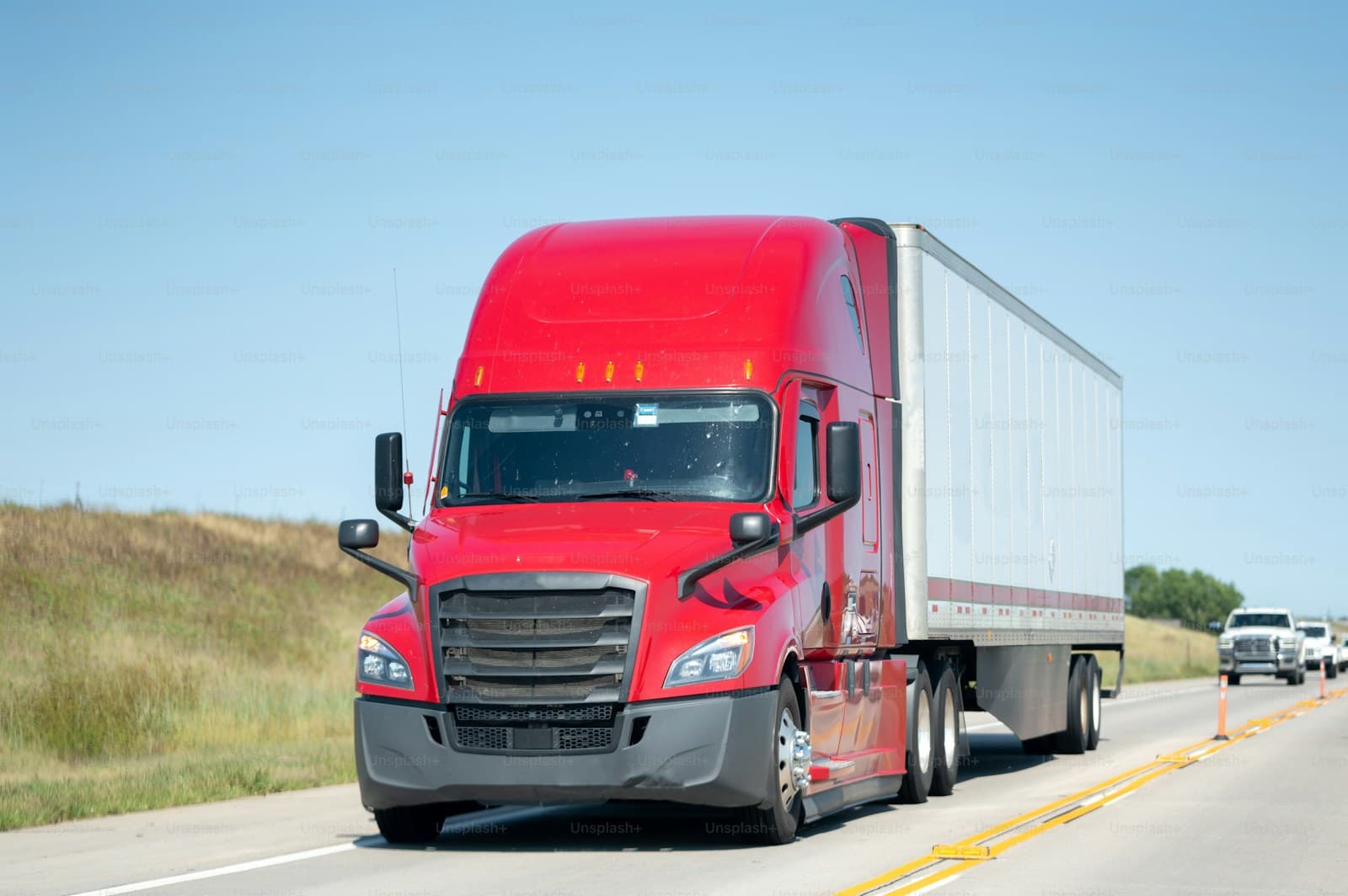
Missouri law blocks commercial drivers from receiving restricted driving privileges after DUI or major violations. You lose your CDL and your livelihood simultaneously, with no work-permit option to bridge the gap.
Missouri Law Bars Restricted Commercial Driving Privileges
Missouri Revised Statute 302.309 permits hardship licenses for certain suspended drivers, but Section 302.309.3(3) contains a commercial vehicle exclusion: no restricted driving privilege authorizes operation of a commercial motor vehicle. If you hold a CDL and drive professionally, a hardship license grants you permission to drive a personal vehicle only. Your employer cannot legally assign you commercial routes, and you cannot operate trucks, buses, or any vehicle requiring a CDL.
The practical effect is immediate unemployment for professional drivers. A DUI, refusal to submit to chemical testing, or excessive points triggers both your Class E (personal) and Class A/B/C (commercial) suspensions simultaneously. Missouri DMV pulls both licenses. A hardship hearing may restore limited personal driving privileges, but your CDL remains suspended for the full statutory period. Most trucking companies terminate drivers who cannot legally operate commercial vehicles within 30 days of suspension.
This is not an oversight. Missouri statute treats commercial driving as a privilege requiring higher standards. Federal Motor Carrier Safety Administration regulations (49 CFR Part 383) impose additional CDL disqualification periods for DUI, refusal, and major violations. Missouri hardship law defers to federal CDL standards, which do not recognize restricted commercial privileges.
What Triggers CDL Suspension and How Long It Lasts
A first DUI in a commercial vehicle triggers a one-year CDL disqualification under federal law, even if your personal Class E license receives a shorter suspension. A DUI in your personal vehicle while holding a CDL triggers a one-year disqualification as well. Missouri applies the longer of state suspension periods or federal disqualification periods, whichever extends further.
Refusal to submit to breath, blood, or urine testing results in a one-year CDL disqualification for a first offense, two years if the refusal occurred while transporting hazardous materials. A second lifetime DUI or refusal in any vehicle permanently disqualifies your CDL. There is no hardship reinstatement process for permanent CDL disqualification.
Excessive points, leaving the scene of an accident, reckless driving, and driving on a suspended license all qualify as major violations under 49 CFR 383.51. Two major violations within three years trigger a 60-day CDL disqualification. Three major violations within three years trigger a 120-day disqualification. Missouri DMV administers these federally mandated disqualification periods. A hardship license does not reduce them.
Compare car insurance rates in your state
Get quotes from licensed carriers — no obligation, no spam, results in minutes.
Get Your Free Quote✓ No Obligation Required✓ Licensed Carriers Only✓ Available Nationwide✓ Free to Compare
The Personal Vehicle Hardship License Path
Missouri hardship licenses (officially called Limited Driving Privileges) allow suspended drivers to operate personal vehicles for approved purposes: work, school, medical appointments, court-ordered programs, and childcare. You apply through a circuit court hardship hearing, not through Missouri DMV. The hearing costs $50–$100 in filing fees, and most applicants hire attorneys because denial is common without proper documentation.
Eligibility requires 30 days of continuous suspension for alcohol-related offenses or 15 days for non-alcohol suspensions. You must present employer verification, proof of SR-22 insurance, proof of IID installation if required, and a detailed driving schedule. The judge has full discretion to grant, deny, or modify your request. Approval rates vary by county. Rural counties grant hardship licenses more readily than St. Louis and Kansas City metro jurisdictions.
The hardship license restricts you to specific routes, specific hours, and specific purposes. Deviation from court-approved parameters constitutes driving on a suspended license, a Class D felony if committed during an alcohol-related suspension. The hardship license does not restore your CDL. It does not authorize commercial vehicle operation. It does not allow you to accept employment requiring a valid CDL.
How This Affects CDL Holders Who Drive Personally and Commercially
Most professional drivers operate personal vehicles for daily errands and family transportation. A hardship license restores that limited personal mobility, but employment remains the core problem. If your CDL suspension stems from a personal-vehicle DUI, you can drive your spouse's car to the grocery store under hardship terms. You cannot drive the company semi to the distribution center.
Some drivers attempt to transition into non-CDL roles during the suspension period. Delivery van jobs, warehouse work with forklift certification, and dispatching roles offer paths to remain employed within the transportation industry. These roles typically pay 40–60% less than commercial driving. Most require proof of valid personal driving privileges, which a hardship license satisfies.
Drivers transporting hazardous materials face longer disqualifications and stricter reinstatement requirements. A first DUI while carrying HAZMAT triggers a three-year CDL disqualification. Federal law prohibits hardship privileges for HAZMAT endorsements under any circumstances. Reinstatement requires retesting for both the CDL and the HAZMAT endorsement, plus a new TSA background check costing $86.50.
SR-22 Filing and Insurance Costs During CDL Suspension
Missouri requires SR-22 filing for two years following DUI reinstatement, three years for multiple alcohol violations, and five years for refusing chemical testing. The SR-22 filing itself costs $15–$50, but the underlying high-risk insurance policy drives total cost. Drivers with a CDL suspension and SR-22 requirement typically pay $150–$280 per month for personal auto liability coverage, compared to $65–$95 per month for clean-record drivers.
Non-standard carriers write most SR-22 policies for suspended CDL holders. Direct Auto, Dairyland, The General, Bristol West, and GAINSCO accept drivers with recent DUI convictions and active suspensions. These carriers require proof of hardship license approval before binding coverage. Standard carriers (State Farm, GEICO, Progressive) typically decline or non-renew CDL holders with alcohol violations.
Commercial auto insurance for owner-operators becomes unavailable during CDL suspension. If you own your truck and lease to a carrier, your commercial policy cancels immediately upon suspension. Reinstatement requires proof of valid CDL, proof of personal SR-22 compliance, and commercial SR-22 filing in most cases. Commercial SR-22 premiums for reinstated CDL holders with DUI history run $8,000–$15,000 annually for liability-only coverage.
What Happens at CDL Reinstatement
Missouri CDL reinstatement after suspension requires satisfaction of all disqualification periods, payment of a $45 reinstatement fee, proof of SR-22 insurance, and retesting. You must pass the written CDL general knowledge exam, the written endorsement exams for your classification (air brakes, combination vehicles, tanker, etc.), and the skills test in the vehicle class you intend to operate. There is no exemption for previously licensed drivers.
The skills test costs $50 and requires access to a commercial vehicle matching your desired classification. Most drivers rent trucks from CDL training schools at $200–$400 per test day. First-attempt pass rates for reinstating drivers average 60–70% according to Missouri State Highway Patrol data. Drivers who have not operated commercial vehicles for 6–12 months during suspension typically require refresher training before attempting the skills test.
Employers run Motor Vehicle Records and FMCSA Pre-Employment Screening Program reports on all CDL applicants. A DUI disqualification appears permanently on your FMCSA record. Most major carriers maintain policies excluding drivers with alcohol violations within the past 3–7 years. Small carriers, regional operations, and owner-operator opportunities remain available, typically at reduced pay rates. Expect $0.10–$0.18 per mile less than your pre-suspension rate for the first 2–3 years post-reinstatement.
The Financial Reality of CDL Suspension Without Hardship Options
A one-year CDL disqualification without commercial hardship privileges costs professional drivers $40,000–$75,000 in lost wages. The median CDL driver in Missouri earns $52,000 annually according to Bureau of Labor Statistics data. Unemployment benefits do not cover job loss caused by license suspension. Drivers ineligible for non-CDL work within their companies face total income loss until reinstatement.
The hardship license application costs $300–$800 when accounting for court fees, attorney fees, and IID installation. SR-22 insurance adds $1,800–$3,400 to annual costs. CDL reinstatement requires $500–$1,200 in testing, training, and administrative fees. Total financial impact for a first-offense DUI with one-year CDL suspension typically exceeds $50,000 when combining lost wages, legal costs, and insurance increases.
Drivers supporting families on single incomes face immediate financial crisis. The 30-day waiting period before hardship eligibility eliminates one month of potential personal-vehicle employment. Most professional drivers cannot absorb a $50,000 income disruption without defaulting on vehicle loans, losing housing, or filing bankruptcy. Missouri offers no state-funded retraining programs for suspended CDL holders, and federal workforce development grants exclude drivers with alcohol-related suspensions from eligibility.