Tulsa County hardship hearings are heard by district court judges who require employer proof, SR-22 filing, and completion of DUI program coursework before granting occupational driving privileges. Know what documents you need and what the judge expects before you walk in.
Tulsa County Hardship Hearings Are District Court Proceedings, Not DMV Administrative Reviews
Oklahoma assigns hardship license petitions to district court judges, not to Department of Public Safety administrative hearings. This means your Tulsa County hardship hearing takes place in a courtroom at 500 S Denver Ave, follows formal evidentiary procedure, and requires legal documentation that satisfies judicial standards — not just DMV form completion. The judge has discretion to grant, deny, or impose conditions beyond state minimums.
You file your petition with the Tulsa County District Court Clerk, pay the $185 filing fee, and wait 2-4 weeks for a hearing date. The DPS has already suspended your license; the court decides whether to grant restricted driving during that suspension period. Most Tulsa County judges require proof of SR-22 filing, ignition interlock device installation, DUI Victim Impact Panel completion, and employer verification before granting the petition.
This court-based system differs from administrative DMV review states where hardship approval is formulaic. In Tulsa County, the judge evaluates your employment need, your compliance with DUI program requirements, and your documented reliability. A generic employer letter is insufficient. The judge expects job offer on company letterhead, work schedule with hours and address, supervisor contact information, and verification that your job cannot be performed remotely or via rideshare.
What Documents the Tulsa County Judge Requires at Your Hardship Hearing
Tulsa County district court judges issue hardship licenses under 47 O.S. § 6-205.1, which grants discretion to impose conditions beyond statutory minimums. Every judge follows the statute, but documentation expectations vary by judge assignment. Standard required documents: certified DPS driving record abstract, SR-22 certificate of filing from your insurer, proof of ignition interlock device installation with serial number and installer affidavit, DUI Victim Impact Panel certificate of completion, employer verification letter on company letterhead with supervisor signature and contact phone number, and proposed driving route map with work address and residence address marked.
The employer letter must state your job title, work hours, work address, whether remote work or rideshare is feasible (and why not), and confirmation that loss of driving privilege results in job loss. A letter stating "John needs to drive for work" gets rejected. The judge expects specificity: "John works 6am-2pm Monday-Friday at 4158 S Yale Ave as a delivery driver; the role requires driving a company vehicle to 15-20 job sites daily within Tulsa metro; no public transit serves our facility; rideshare cost would exceed $400/week."
If your suspension stems from DUI, Tulsa County judges require proof of ADSAC assessment completion and enrollment in Level I or Level II DUI program before granting the hardship petition. You do not need to complete the full program, but you must prove active enrollment with documentation from the program provider. Judges deny petitions from drivers who appear at the hearing without enrollment proof.
Compare car insurance rates in your state
Get quotes from licensed carriers — no obligation, no spam, results in minutes.
Get Your Free Quote✓ No Obligation Required✓ Licensed Carriers Only✓ Available Nationwide✓ Free to Compare
SR-22 Filing and Ignition Interlock Device Requirements in Tulsa County Hardship Cases
Oklahoma requires SR-22 filing for all drivers granted hardship licenses, regardless of suspension cause. Your insurer files form SR-22 with the Oklahoma DPS; you receive a stamped certificate copy within 3-5 business days. Bring the certificate to your Tulsa County hardship hearing. The judge will not grant your petition without proof of active SR-22 filing on the hearing date.
SR-22 filing for hardship license holders in Oklahoma lasts the full suspension period plus any extension imposed by the court. Most DUI-based hardship cases carry 3-year SR-22 requirements; the clock starts on your conviction date, not your hardship grant date. Your SR-22 premium runs $900-$1,600/year depending on violation type and carrier; expect Bristol West, Direct Auto, Dairyland, GAINSCO, or The General as your primary carrier options. Standard carriers decline hardship license applicants.
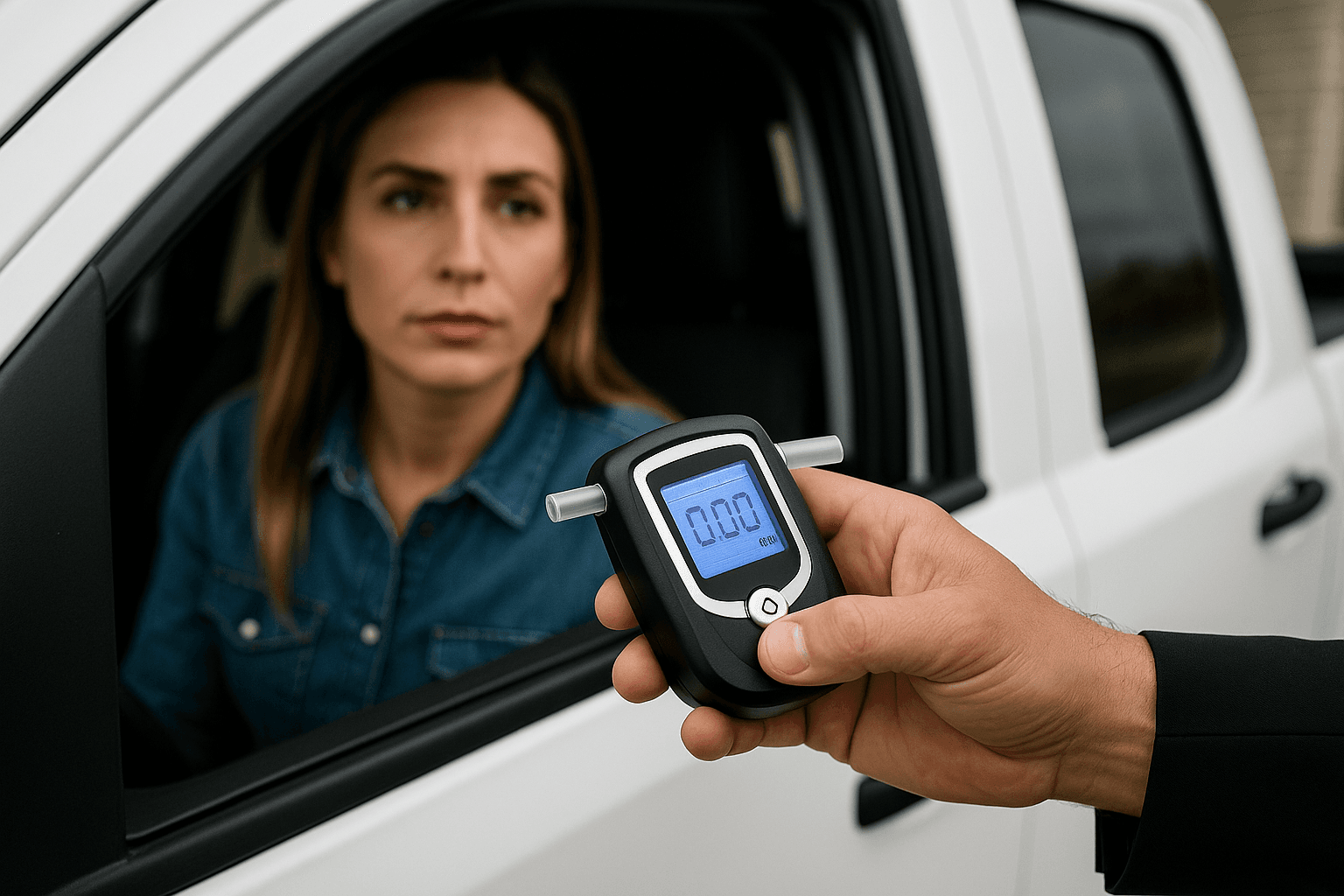
Ignition interlock device installation is mandatory for all DUI-based hardship licenses in Oklahoma under 47 O.S. § 6-205.2. You install the IID before your hearing, obtain the installer's affidavit with device serial number, and provide that affidavit to the judge. Tulsa County-approved IID installers include Smart Start, Intoxalock, and LifeSafer; installation costs $75-$150 and monthly monitoring runs $70-$100. The IID requirement lasts the full hardship period — typically 6-12 months depending on suspension length.
Approved Driving Purposes and Route Restrictions Tulsa County Judges Impose
Oklahoma statute permits hardship licenses for employment, medical treatment, DUI program attendance, and court-ordered obligations. Tulsa County judges routinely approve work-only petitions but require medical necessity documentation for non-work purposes. Grocery shopping, school drop-off, and personal errands do not qualify unless tied to a documented medical condition or court order.
Your hardship order specifies approved hours and approved routes. Most Tulsa County judges grant driving privileges limited to direct routes between residence and workplace during scheduled work hours, plus one hour before and after shift for commute variability. If you work 8am-5pm, your approved hours run 7am-6pm. Driving outside approved hours — even on an approved route — violates the hardship order and triggers immediate revocation.
Judges issue route restrictions based on your submitted route map. The order lists specific street names and intersections; deviation from the approved route risks revocation if stopped by law enforcement. Tulsa Police and Tulsa County Sheriff deputies verify hardship compliance during traffic stops by comparing your location and time to your court order. One deviation does not guarantee revocation, but two violations within 90 days typically result in petition to revoke filed by the district attorney.
Hardship Hearing Procedure and What Happens If the Judge Denies Your Petition
Your Tulsa County hardship hearing lasts 10-20 minutes. You appear before the assigned district court judge, present your documents, and answer questions about your employment, your suspension cause, and your compliance with DUI program requirements. The judge reviews your driving record abstract, your SR-22 certificate, your IID affidavit, and your employer letter. Most judges ask why you cannot use rideshare or public transit; your answer must be specific and cost-anchored.
If the judge grants your petition, you receive a signed hardship order listing approved purposes, approved hours, and approved routes. You take that order to any Oklahoma Service Oklahoma location, pay the $50 restricted license fee, and receive your occupational license on the same day. The license is valid for the period stated in the court order — typically 6-12 months or until your full suspension ends, whichever comes first.
If the judge denies your petition, you receive a written denial order stating the deficiency. Common denial reasons: insufficient employer verification, missing SR-22 proof, failure to complete DUI Victim Impact Panel, no IID installation proof, or lack of demonstrated employment necessity. You can refile after correcting the deficiency; there is no statutory waiting period between petitions, but most Tulsa County judges require 30-60 days between filings to demonstrate program compliance progress.
Cost Breakdown for Tulsa County Hardship License Process
Tulsa County hardship license total cost runs $2,100-$3,800 depending on violation type and representation. Filing fee for the hardship petition: $185 paid to Tulsa County District Court Clerk. SR-22 insurance premium increase: $900-$1,600/year for first year, declining 15-25% annually if no new violations occur. Ignition interlock device installation: $75-$150 upfront, $70-$100/month monitoring. DUI Victim Impact Panel: $75-$100 for state-approved program. ADSAC assessment: $150-$250. Restricted license issuance fee: $50 paid to Service Oklahoma.
Attorney fees for hardship petition representation in Tulsa County run $800-$1,500 depending on case complexity. Most attorneys include petition drafting, document gathering, and court appearance in flat-fee arrangements. Representing yourself is permitted but not recommended if your suspension involves DUI with injury, multiple prior DUI convictions, or refusal charges — judges scrutinize those cases more heavily.
Budget for 4-6 weeks from suspension notice to hardship license issuance. Filing and hearing scheduling takes 2-3 weeks; SR-22 and IID installation take 1 week; DUI program enrollment and Victim Impact Panel completion take 1-2 weeks. Employers rarely hold positions open beyond 30 days, so timeline urgency is real.
What Happens If You Violate Your Tulsa County Hardship License Restrictions
Driving outside approved hours, outside approved routes, or without your IID functioning triggers hardship license revocation. Tulsa County district attorneys file petitions to revoke upon receiving law enforcement violation reports. The court schedules a revocation hearing within 10-15 days; you receive notice by mail to your address of record.
At the revocation hearing, the district attorney presents evidence of the violation — typically officer affidavit, traffic stop report, and IID monitoring data. You may present defense evidence, but strict liability applies: if you were driving outside restrictions, the judge revokes the hardship license regardless of reason. "I had to pick up my child from daycare" is not a valid defense unless daycare pickup was included in your original approved purposes.
Revocation restores your full suspension with no hardship privileges. You cannot refile for a new hardship petition for 6 months after revocation in most Tulsa County cases. Your SR-22 requirement continues regardless of revocation; letting SR-22 lapse resets your filing clock to zero and adds 30-90 days to your suspension. Violation during hardship also increases your SR-22 premium 20-40% at renewal.