Indiana's specialized driving privilege requires court pre-approval of exact campus-to-work routes and class schedules — combining academic and employment destinations on one petition requires different documentation than standalone work permits, and most college students don't realize deviation between approved buildings revokes the license.
How Indiana's Specialized Driving Privilege Works for College Students with Jobs
Indiana issues specialized driving privileges (not occupational licenses) after DUI suspensions, allowing driving for employment, education, medical care, and court-ordered treatment. Students attending college while working face a unique documentation requirement: you must list every campus building where classes meet as a separate approved destination, not the university address as a single location.
Most students assume listing their college name covers all campus movement. Indiana courts require building names, specific classroom locations when classes rotate across multiple facilities, and separate route approvals between campus and workplace. Your petition must demonstrate you cannot reasonably combine trips — attending class then driving to work requires proof both destinations fall within the same approved time window and that public transit cannot serve the route.
The application goes through Marion County Circuit Court or your county of residence if outside Marion County. Processing averages 14-21 days from petition filing to court hearing. The $200 filing fee is separate from the $250 BMV reinstatement fee you'll pay after license approval.
Why Campus Routes Fail Approval More Often Than Work-Only Petitions
Indiana judges approve work-only specialized driving privilege petitions at roughly 85% in first hearings. Adding educational destinations drops approval to approximately 60% for first-time petitioners. The difference comes from route complexity and time-window overlap.
Judges deny petitions when approved hours would allow discretionary driving between destinations. If your last class ends at 3:00 PM and your work shift starts at 6:00 PM, the court reads that three-hour gap as opportunity for non-approved travel. You must prove the gap is necessary travel time or that you have no transportation alternative for the interval. Providing an employer letter stating you cannot adjust your shift start time strengthens the petition, as does documentation that campus parking-to-workplace commute genuinely requires the full window.
Students attending multiple campuses face higher denial rates. Purdue Fort Wayne students taking classes at both the main campus and downtown locations must list both as separate destinations with separate route justifications. Indiana courts will not approve blanket metro-area educational driving.
Compare car insurance rates in your state
Get quotes from licensed carriers — no obligation, no spam, results in minutes.
Get Your Free Quote✓ No Obligation Required✓ Licensed Carriers Only✓ Available Nationwide✓ Free to Compare
What Documentation the Court Requires for Student Work Permits
Your petition package must include: (1) employer verification letter on company letterhead stating your job title, work address, exact shift hours including days of week, and supervisor contact information; (2) current class schedule printed from your university portal showing course names, meeting times, building names, and days of week; (3) campus map with highlighted route between parking area and classroom buildings; (4) written statement explaining why you cannot use campus shuttles, public transit, rideshare, or carpooling for either destination.
The employer letter cannot come from a family member unless the business is an established LLC or corporation with third-party employees. Indiana courts reject letters from parent-owned sole proprietorships as insufficiently verifiable employment. Your class schedule must be official — a screenshot of your personal calendar will not satisfy the court.
If your DUI occurred on campus or involved university police, include a letter from the university confirming your enrollment status remains active and you are not prohibited from campus access. Some judges require this automatically for student petitioners; others request it only when the violation file references the university.
How Approved Route Restrictions Work During the Semester
Your court order specifies approved hours and approved destinations. Both must align for legal driving — traveling to an approved destination outside approved hours violates the order, as does traveling to any address not listed during approved hours. Most student petitioners receive Monday-Friday approval windows matching their class and work schedules, with weekends excluded unless weekend shifts are documented.
If you drop a class mid-semester, the building where that class met is no longer an educationally necessary destination, but it remains on your approved list until you petition for modification. Driving to that building after dropping the course is legal under the order but creates risk if stopped — the officer may verify your current schedule and discover the discrepancy. If you add a class in a new building, you cannot legally drive there until you file a petition to modify and the court approves the addition.
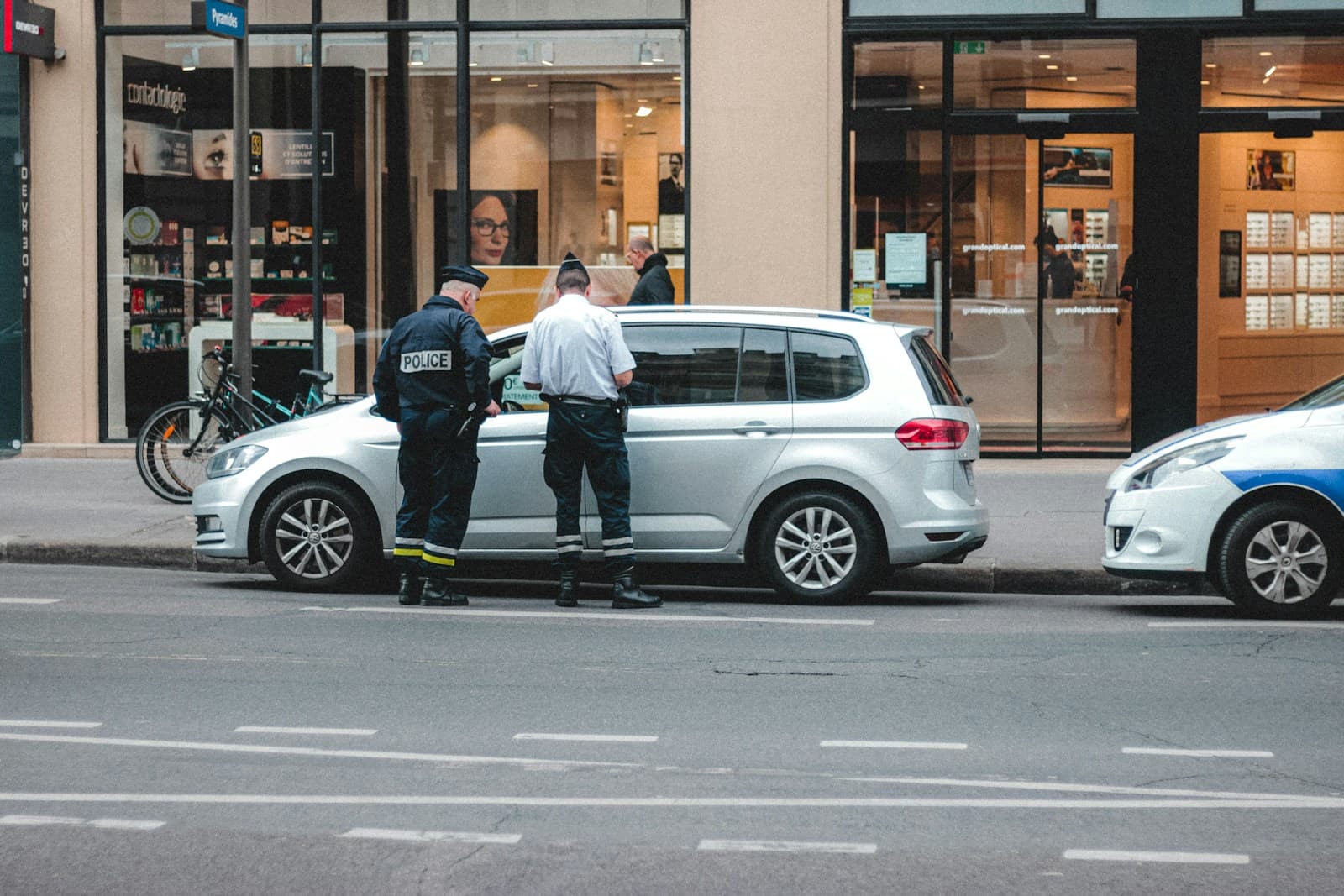
Route deviation between approved destinations during approved hours is the most common violation. Stopping for gas, food, or errands between campus and work is not permitted unless those stops are petitioned as separate approved destinations. Indiana state police and campus police both enforce specialized driving privileges and cross-reference your physical location against the court order during traffic stops.
What Happens If Your Employer or Class Schedule Changes
Schedule changes require a petition to modify filed with the court that issued your original order. Processing typically takes 7-14 days for modifications, faster than initial petitions because the court already has your case file. The modification filing fee is $50 in most Indiana counties, though some circuits charge the full $200 for any petition type.
If your employer changes your shift hours, you cannot legally drive the new schedule until modification approval. Notify your probation officer immediately if one is assigned to your case — some DUI sentences include probation terms that require pre-approval of any specialized driving privilege modifications. Driving outside your approved hours, even to an approved destination, triggers a Class A misdemeanor charge for violating a court order.
Students graduating or leaving school mid-restriction period should file to remove educational destinations and convert to work-only approval. This simplifies your order and reduces violation risk. If you lose your job, Indiana law requires you to notify the court within 10 days — failure to report employment termination can result in privilege revocation even if you secure new employment before the court discovers the change.
SR-22 Insurance Requirements and What Student Drivers Pay
Indiana requires SR-22 filing for all DUI-related specialized driving privileges. The SR-22 is not a separate insurance policy — it is a proof-of-insurance certificate your carrier files electronically with the Indiana BMV certifying you carry at least the state minimum liability coverage: $25,000 per person, $50,000 per accident for bodily injury, and $25,000 for property damage.
Most standard carriers (State Farm, Allstate, Nationwide) will not renew policies after DUI convictions or will not file SR-22 for drivers under 25. Student drivers typically move to non-standard carriers specializing in high-risk coverage: Bristol West, The General, Direct Auto, and Acceptance write the majority of Indiana student SR-22 policies. Monthly premiums for college-age drivers with DUI convictions typically range $180-$280/month, significantly higher than standard-market rates.
The SR-22 filing itself costs $15-$50 depending on carrier, paid at policy inception. Indiana requires continuous SR-22 filing for three years from your conviction date. If your policy lapses or cancels for non-payment, your carrier notifies the BMV within 10 days and your specialized driving privilege suspends automatically. Reinstatement after SR-22 lapse requires paying a new $250 reinstatement fee and refiling proof of insurance.
How to Budget the Full Cost of Maintaining a Student Work Permit
First-year costs for an Indiana specialized driving privilege after DUI conviction break down as follows: $200 court petition filing fee, $250 BMV reinstatement fee, $15-$50 SR-22 filing fee, $2,160-$3,360 in annual insurance premiums (at $180-$280/month), and $200-$500 in attorney fees if you hire representation for the court hearing. Total first-year cost typically runs $2,825 to $4,360.
If your DUI sentence includes ignition interlock device (IID) requirements — mandatory for BAC over 0.15 or second offenses — add $100-$150 installation, $75-$100 monthly monitoring, and $50-$75 removal fee. Over a one-year IID period, total device cost adds $1,050-$1,375 to your annual privilege cost.
Years two and three carry lower costs if you maintain continuous coverage and avoid violations: insurance premiums remain elevated but some carriers offer modest rate reductions after 12-18 months of claims-free driving. Budget $2,000-$2,500 per year for insurance alone during the SR-22 filing period. Violation-free completion of the three-year SR-22 period allows you to shop standard-market carriers again, typically dropping premiums 40-60% in year four.