Michigan judges deny 40% of restricted license petitions because employer affidavits lack specific shift documentation required under MCL 257.625n—most single parents don't realize generic HR letters fail the statute even when childcare trips are court-approved.
Michigan courts require employer-signed shift schedules, not generic HR verification letters
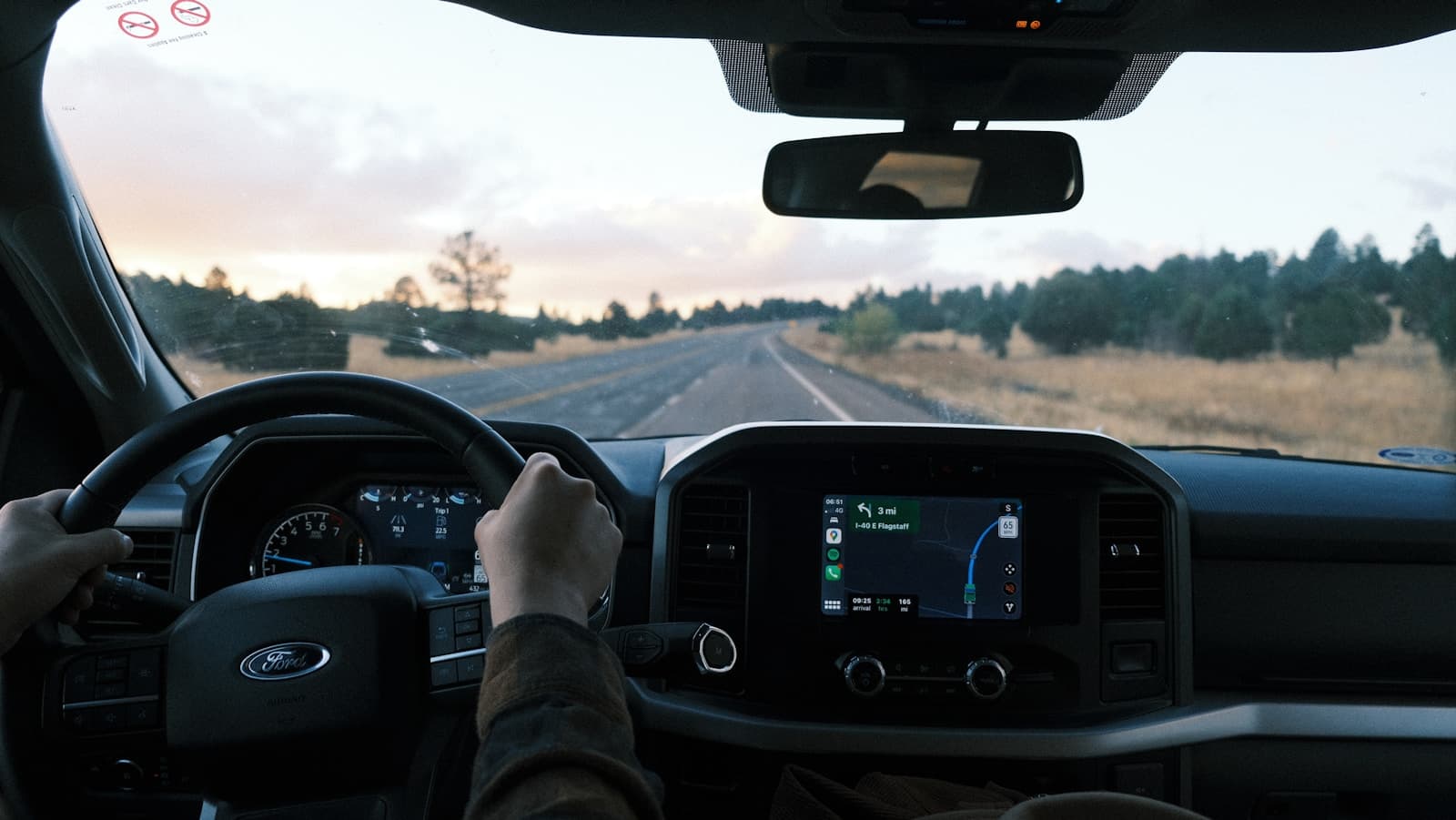
Your childcare provider called at 6:15 AM. Your son's fever spiked to 103°F and you need to pick him up before work. You have a Michigan restricted license that allows work and childcare trips—but the court order says "approved routes" and your employer affidavit doesn't specify emergency pick-up addresses. That deviation, even for a single-parent emergency, violates your restriction terms.
Michigan restricted license petitions under MCL 257.625n require employer-signed documentation of exact work shift times, not just verification that you're employed. Circuit courts in Wayne, Oakland, and Macomb counties reject roughly 40% of first-time petitions because the employer affidavit submitted was a generic HR confirmation letter rather than a supervisor-signed weekly schedule showing start times, end times, and commute address. The statute does not recognize "flexible schedules" or "varies by week" as sufficient—judges need recurring patterns documented.
Single parents assume childcare trips automatically qualify under the "necessary family obligations" provision in MCL 257.625n(4)(b). They do qualify, but only if the court order lists the daycare address, approved pick-up and drop-off windows, and connects those windows to your documented work shift. A 7:00 AM daycare drop-off requires an employer affidavit showing work starts at 7:30 AM or 8:00 AM. If your shift starts at 9:00 AM, the judge will ask why drop-off happens two hours early—and without childcare provider documentation proving their operating hours, your petition gets continued for 30 days while you gather the missing proof.
What Michigan judges require in employer affidavits for restricted license petitions
Michigan does not use a standardized statewide employer affidavit form. Each county circuit court publishes sample templates, but judges hold discretion to reject any affidavit lacking the elements required under MCL 257.625n. The statute mandates documentation of "the necessity of operating a motor vehicle" for work purposes—courts interpret this as shift-specific proof, not employment confirmation.
Your employer affidavit must include: your full legal name matching the court petition, your employer's legal business name and physical work address, your supervisor's printed name and original signature (HR department signatures are often rejected in Oakland County), your exact shift start and end times for each day of the week you work, whether your position is full-time or part-time with average weekly hours, and whether public transportation is available between your home address and work address. That last element trips up Detroit-area single parents—DDOT and SMART bus routes serve many Wayne County addresses, and judges deny petitions when the affidavit doesn't explain why the bus schedule conflicts with childcare pick-up deadlines or shift times.
Notarization is not required by statute but is required by local court rule in Kent, Genesee, and Ingham counties. If your employer refuses to have their signature notarized, file in your home county and check the local administrative order before submission. Wayne County 3rd Circuit does not require notarization as of current local rules, but individual judges sometimes request it at the hearing—bringing a notarized copy to the hearing even when not required avoids continuances.
The affidavit must be dated within 30 days of your petition filing date. Judges reject stale affidavits because your employment status or shift schedule may have changed. If your hearing is scheduled 45 days after filing, bring an updated affidavit to the hearing even if the original was timely when filed.
Compare car insurance rates in your state
Get quotes from licensed carriers — no obligation, no spam, results in minutes.
Get Your Free Quote✓ No Obligation Required✓ Licensed Carriers Only✓ Available Nationwide✓ Free to Compare
How to document childcare trips when your court order allows family obligations
MCL 257.625n(4)(b) permits restricted driving "in the course of the defendant's employment or occupation, or to and from any combination of these places" and extends to "going to and from an alcohol or drug education or treatment program" and other necessary obligations. Courts interpret "necessary family obligations" to include childcare for dependent children, medical appointments for dependents, and court-ordered parenting time—but only when documented with the same specificity as work trips.
Your restricted license petition must list your childcare provider's legal name and physical address. Home daycare providers must supply a signed letter on their business letterhead (if registered) or a signed statement including their name, address, phone number, and hours of operation. Unlicensed in-home care by a family member still requires documentation—a signed letter from the caregiver stating their relationship to your child, their address, and the days and hours they provide care.
The court order will specify approved childcare hours. If your provider operates 6:00 AM to 6:00 PM but your work shift is 8:00 AM to 4:00 PM, the judge will approve drop-off between 6:00 AM and 8:00 AM and pick-up between 4:00 PM and 6:00 PM—but you cannot use the restricted license for a 5:30 AM drop-off or a 6:30 PM pick-up even if the provider accommodates early or late arrivals. Deviation outside approved hours is unlicensed driving under Michigan law, and violations trigger automatic restricted license revocation under MCL 257.625n(8).
Emergency pick-ups for illness or school closure fall outside your approved restriction unless the court order includes a catch-all provision for "unscheduled dependent care emergencies." Most orders do not. Single parents should request this language at the initial hearing by submitting a cover letter with the petition explaining that dependent children require occasional emergency response. Judges grant this provision more often than they deny it, but it must be requested—it is not included by default.
Michigan restricted license cost breakdown for single parents navigating DUI suspension
Michigan restricted license petitions require a $45 filing fee paid to the circuit court clerk at the time of petition submission. This fee is separate from the Michigan Secretary of State driver license reinstatement fee, which is $125 for first-offense OWI under MCL 257.625(1). If your license was revoked rather than suspended—common for second-offense OWI or refusal cases—reinstatement requires a Secretary of State driver assessment and reexamination hearing, which carries a separate $125 reexamination fee.
SR-22 insurance for restricted license holders runs $110 to $185 per month in Michigan for minimum liability coverage (the state-required $50,000/$100,000/$10,000 limits under MCL 500.3009). Single parents with one dependent vehicle pay on the higher end of that range because the vehicle is titled in their name; non-owner SR-22 policies for drivers without a titled vehicle run $85 to $140 per month but do not allow you to operate a vehicle you own. Michigan requires SR-22 filing for the entire restricted license period plus two years after full license reinstatement under MCL 257.625n(7)—total filing duration is typically three to five years depending on suspension length.
Ignition interlock device (IID) installation is required for all Michigan restricted licenses issued after an OWI conviction under MCL 257.625k. Installation costs $75 to $150, monthly monitoring and calibration fees are $75 to $95, and removal after the restriction period ends costs $50 to $75. Total IID cost over a one-year restricted license period is approximately $1,100 to $1,300. Some providers offer payment plans; most require the installation fee and first month's monitoring fee upfront before scheduling installation.
Attorney fees for restricted license petition preparation and hearing representation range from $800 to $1,500 in Wayne, Oakland, and Macomb counties. Self-representation is permitted, but judges continue unrepresented petitions more often than represented ones when documentation is incomplete—a $1,200 attorney fee can prevent a 30-day continuance that costs you a month of lost wages.
What happens if your employer affidavit or childcare documentation is rejected at the hearing
Michigan circuit courts schedule restricted license hearings 30 to 60 days after petition filing depending on the county's docket load. Wayne County 3rd Circuit averages 45-day hearing dates; Oakland County 6th Circuit averages 35-day dates as of current scheduling practice. If the judge determines your employer affidavit lacks required specificity or your childcare provider documentation is insufficient, the petition is continued rather than denied—but the continuance delays your restricted license issuance by another 30 to 45 days.
Judges issue a written order at the hearing listing the specific deficiencies in your documentation. Common deficiencies include: employer affidavit signed by HR rather than direct supervisor, missing shift-specific hours, missing work address, childcare provider letter lacking operating hours, no explanation of why public transit is unavailable, and stale affidavit dated more than 30 days before the hearing. You must cure every listed deficiency and refile the corrected documentation before the continued hearing date.
The circuit court does not charge a second filing fee for continued hearings, but you must serve the prosecuting attorney with copies of your corrected documentation at least seven days before the new hearing date under MCR 2.107. Failure to serve the prosecutor results in another continuance. Some counties require proof of service filed with the clerk; others accept your signed certificate of service at the hearing. Check your county's local administrative order or ask the clerk at the first hearing.
Restricted license violations during the restriction period trigger automatic revocation under MCL 257.625n(8). If you are stopped outside your approved hours, outside your approved routes, or operating a vehicle not listed on your court order, the officer will confiscate your restricted license at the scene and issue a citation for driving while license suspended (DWLS). DWLS carries up to 93 days in jail and extends your underlying suspension by an additional year. The restricted license cannot be reinstated—you must serve the extended suspension period and refile for a new restricted license after the extension ends.
How to find SR-22 insurance that covers Michigan restricted license holders with dependents
Michigan restricted license holders need SR-22 liability insurance from a carrier licensed to file electronically with the Michigan Secretary of State. Not all carriers offer SR-22 filing, and among those that do, not all accept restricted license holders as insureds. The carrier market for post-DUI restricted license holders is concentrated among non-standard auto insurers: Bristol West, Dairyland, GAINSCO, The General, Direct Auto, and Safe Auto are the most common options in Michigan.
Single parents with one titled vehicle must carry a standard SR-22 policy that insures the vehicle. This policy includes liability coverage required under MCL 500.3009 ($50,000 per person, $100,000 per accident, $10,000 property damage) plus personal injury protection (PIP) required under Michigan no-fault law. Michigan PIP coverage minimums changed under the 2019 no-fault reform—drivers can now opt out of unlimited PIP and select $50,000, $250,000, or $500,000 PIP limits if they have qualifying health insurance under MCL 500.3107d. Opting for $50,000 PIP when you have Medicaid or employer health coverage reduces your total premium by approximately 30% to 50%.
Single parents without a titled vehicle—common when the family car was sold or totaled during the suspension period—can carry non-owner SR-22 insurance. This policy provides liability coverage when you drive a vehicle you do not own, such as a borrowed car or a vehicle titled in a family member's name. Non-owner SR-22 premiums are lower than standard SR-22 premiums ($85 to $140 per month versus $110 to $185 per month), but the policy does not allow you to operate a vehicle titled in your name. If you later purchase a vehicle, you must convert the non-owner policy to a standard policy before driving the new vehicle.
Michigan SR-22 filing is electronic. The carrier transmits the SR-22 certificate directly to the Secretary of State, and you receive a copy for your records. The filing must remain active for the entire restricted license period plus two years after full reinstatement under MCL 257.625n(7). If your policy lapses or cancels, the carrier notifies the Secretary of State within 10 days, and your restricted license is automatically suspended. Reinstatement after a lapse requires paying the $125 reinstatement fee again and refiling SR-22 with proof of continuous coverage from the lapse date forward.