New York's conditional license program grants college students approved-destination access after points accumulation, but class schedules and campus parking restrictions create compliance traps that don't exist for traditional work-only applicants.
Why College Students Face Conditional License Denial More Often Than Traditional Work Applicants
New York DMV approves conditional licenses for college attendance at 78% the rate of work-only applications, primarily because academic schedules don't fit the fixed-hour format DMV petitions require. A student with 8 a.m. Monday/Wednesday classes and 2 p.m. Tuesday/Thursday labs needs four separate time blocks across seven approved destinations (campus buildings, library, student housing, part-time job), while a traditional work applicant needs two blocks and two addresses.
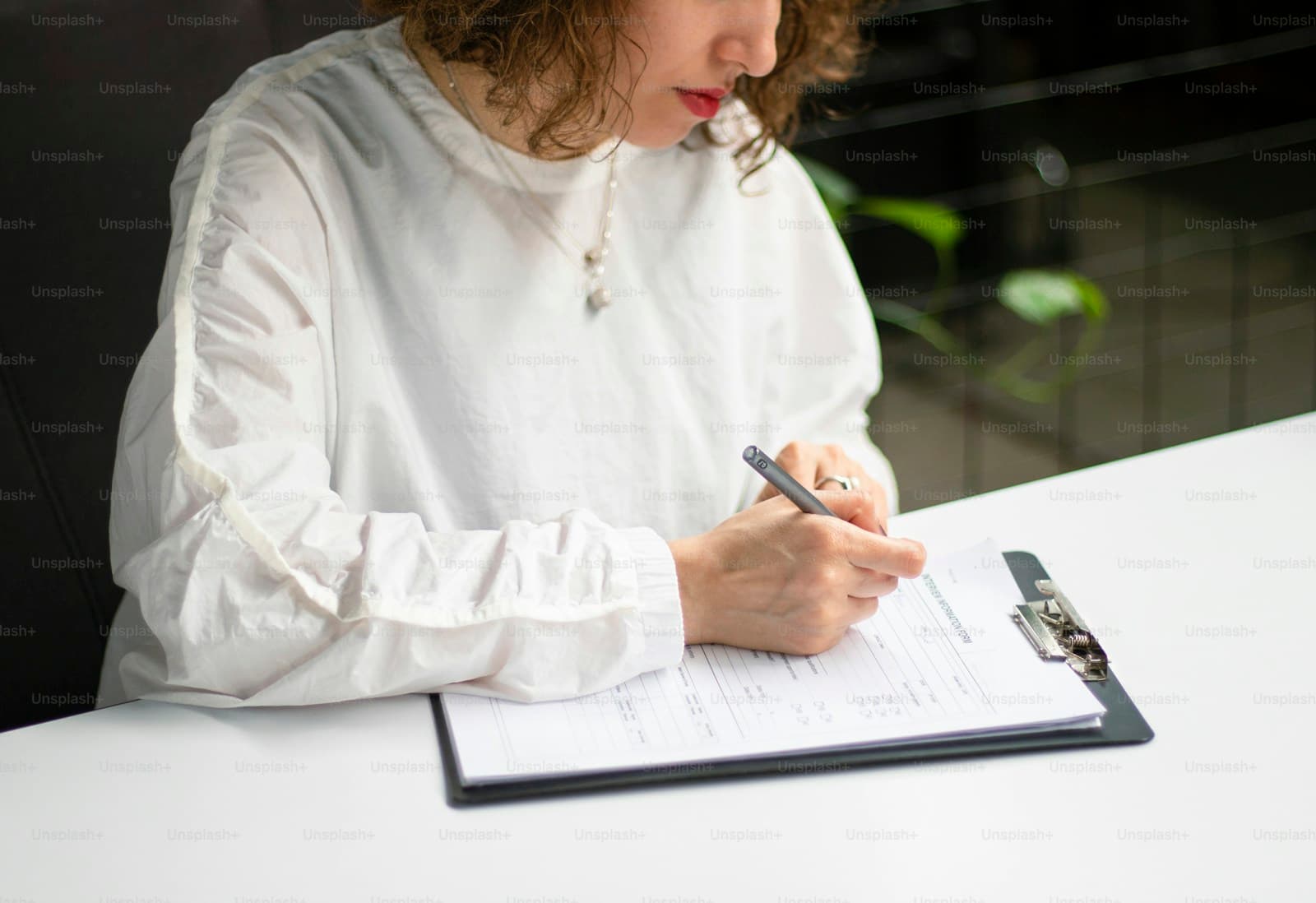
The application form (MV-304) asks for employer name, work address, and work hours—fields that map cleanly to a 9-to-5 job. Students must handwrite "Educational Institution" in the employer field, list the college registrar as the verification contact, attach a printed class schedule, and explain in the remarks section why multiple campus buildings constitute a single "work" location. Most county clerks accept this adaptation; some reject it as incomplete documentation and require a second $75 filing.
Points-triggered conditional licenses carry stricter approval standards than suspension-triggered applications. If your license was suspended for insurance lapse or failure to answer a summons, DMV grants conditional privileges administratively after proof of compliance. If you accumulated 11+ points but your license remains valid, you must prove hardship at a DMV hearing, where the examiner has discretion to deny based on driving history alone. College attendance qualifies as hardship, but the examiner will ask why you can't relocate closer to campus or use public transit—questions work applicants rarely face.
How Campus Parking Violations Revoke Conditional Licenses Without Moving Violations
DMV monitors conditional license compliance through the same violation-tracking system that counts points. Parking tickets issued by campus police or municipal enforcement in a college town appear in the same database as speeding citations. Most college students don't realize expired-meter tickets or overnight parking violations during approved hours count as non-compliance events that trigger 15-day suspension notices.
The conditional license order specifies approved hours and approved destinations separately. Driving to campus at 7:45 a.m. for an 8 a.m. class satisfies the time restriction. Parking in a faculty lot because the student lot was full violates the implicit route-and-destination restriction—DMV interprets parking enforcement as proof you deviated from your approved path. A $35 parking ticket becomes evidence of conditional license abuse, even if you never left campus grounds.
Revocation notices arrive by mail to the address on your license, not your campus address. Students living in dorms or off-campus housing miss the 10-day response window because the notice sits in their parents' mailbox across the state. By the time they learn about the revocation, the conditional license is void and they're driving unlicensed. Reinstatement requires a new $75 application, a new hearing, and proof the parking violation was resolved—often 6-8 weeks lost.
Compare car insurance rates in your state
Get quotes from licensed carriers — no obligation, no spam, results in minutes.
Get Your Free Quote✓ No Obligation Required✓ Licensed Carriers Only✓ Available Nationwide✓ Free to Compare
How to Structure a College-Specific Conditional License Application That Survives DMV Review
List every campus building you will enter by street address, not building name. "Student Union, 123 College Ave" is an approved destination. "Student Union" without the address is not. If your major requires lab access in three buildings, list all three with full addresses. If you change majors or drop a class mid-semester, you're driving to an unapproved destination even during approved hours.
Request time blocks that cover class start to class end plus 30 minutes before and after. An 8 a.m. class ends at 8:50 a.m., but you need until 9:20 a.m. to walk to the next building or return to your car. Requesting exactly 8:00-8:50 a.m. creates a compliance trap—any delay makes your drive home unlicensed. DMV examiners approve time blocks, not class schedules. Frame your petition around the time you'll be on the road, not the time you'll be in class.
Attach a letter from your college registrar or academic advisor on official letterhead confirming enrollment status, credit hours, and class locations. The MV-304 form includes an employer certification section at the bottom—this section must be completed by the registrar, not left blank. Many students submit the form without realizing the certification is required, then receive a deficiency notice 3-4 weeks later asking for documentation they thought was optional.
When Campus Housing Creates Unapproved-Destination Problems
Conditional licenses approve specific residential addresses. If you live in a dorm, your approved origin address is the dorm building. If you move to off-campus housing mid-semester, your conditional license becomes invalid the day you move—DMV requires a 15-day advance notice and amended application before you relocate. Most students move during winter or summer break and don't realize their spring semester driving is unlicensed until they're pulled over.
Campuses with multiple housing complexes create approval problems. If you're assigned to North Hall in August but reassigned to West Hall in October, the reassignment voids your conditional license even though both addresses are on-campus. DMV treats campus housing like any other address change—it requires prior approval, not post-move notification.
Students who live at home and commute face distance-based denials. New York DMV examiners weigh hardship claims against alternative transportation. A 15-mile commute from suburban Buffalo to UB's North Campus is approvable. A 60-mile commute from Rochester to Brockport triggers questions about why you didn't choose a closer school or relocate. The examiner's discretion is broader for educational conditional licenses than for work licenses, where employment location is treated as non-negotiable.
What Adding a Part-Time Job Does to Conditional License Approval Rates
Students who work part-time while attending college can request combined educational-and-employment conditional privileges, but the approval rate drops to 61% compared to 78% for education-only applications. Adding a second set of destinations and hours makes the petition look less like hardship and more like general-purpose driving.
DMV examiners ask why you need a job if you're a full-time student receiving financial aid or family support. The hardship standard requires proving you cannot meet essential obligations without driving—tuition and housing costs qualify, discretionary income does not. If your part-time job funds spring break trips or a car payment, the examiner will suggest you quit the job instead of granting driving privileges. If your part-time income pays rent or groceries, bring documentation (lease, bank statements showing regular expenses) to the hearing.
Work hours must not overlap class hours. If you're scheduled for a 9 a.m. class and a 9 a.m. shift on the same day, DMV interprets that as evidence you don't actually need both approved destinations. Conditional licenses are not granted for flexibility or convenience—they're granted for necessity. Your petition must show that every approved hour and destination is unavoidable.
How SR-22 Insurance Works for College Students on Conditional Licenses
New York does not require SR-22 filing for points-based conditional licenses unless the points came from alcohol-related violations or uninsured-driving citations. If you accumulated 11 points from speeding tickets, cell phone violations, or failure to yield, your conditional license does not trigger an SR-22 requirement. If any of those 11 points came from a DWAI, refusal to submit to a breath test, or an uninsured-at-fault accident, DMV requires SR-22 for the full conditional license period plus six months after full reinstatement.
SR-22 is not a separate insurance policy—it's a compliance certificate your insurer files with DMV confirming you carry at least New York's minimum liability limits ($25,000 per person, $50,000 per accident, $10,000 property damage). Your current carrier can usually add SR-22 filing to your parents' policy if you're listed as a covered driver, but expect a mid-term premium increase of $400-$900 over six months once the carrier learns about the points and conditional license.
Students without a car can meet SR-22 requirements through non-owner SR-22 policies, which cost $25-$50 per month from non-standard carriers. Non-owner policies cover you when driving a borrowed or rented vehicle and satisfy DMV's proof-of-insurance mandate without requiring vehicle ownership. If you borrow your roommate's car to drive to campus under your conditional license, a non-owner SR-22 policy is often cheaper than being added to your parents' policy as a high-risk driver.
What Happens to Your Conditional License When You Graduate or Transfer
Conditional licenses approved for college attendance expire when you graduate, even if the original approval period hasn't ended. If DMV granted a one-year conditional license in September of your senior year and you graduate in May, your conditional license becomes invalid the day after commencement. Graduating eliminates the hardship that justified the restriction—you no longer need to drive to campus because you're no longer a student.
Transferring to a different college mid-restriction requires a new application and new hearing. Your conditional license approves specific destinations tied to a specific institution. If you transfer from SUNY Albany to SUNY Binghamton, the Albany-campus addresses are void. You must file a new MV-304, pay a new $75 fee, and attend a new hearing to establish hardship at the Binghamton location. DMV does not allow address amendments for institutional changes—only for residential moves within the same commute pattern.
Students who complete their degree and enter the workforce cannot convert an educational conditional license into an employment conditional license without a gap. You must let the educational license expire, then file a new work-based application showing your employer details and work hours. Most examiners require a 30-day gap between the end of the educational license and the start of the employment license to verify the employment is genuine and not a backdoor extension of the restriction period.