
Occupational License + Ignition Interlock in Wisconsin: Timing Your IID Install
Free to compare
Wisconsin DMV Requires IID Proof Before Occupational License Approval
Wisconsin requires ignition interlock device installation proof submitted to DMV before your occupational license application is approved. Form MV3001 (Application for Occupational License) includes a mandatory section for IID certification, and applications submitted without it are returned unprocessed. The DMV does not issue the occupational license first and then check for IID compliance—installation comes before license issuance.
This creates a timing problem most applicants don't anticipate. You need the IID installed to get the occupational license, but most IID vendors require a valid driver's license number to start the installation process. Wisconsin's restricted-license system treats your occupational license as a separate license with its own credential number, not a notation on your suspended full license.
The practical solution: schedule your IID installation appointment using your suspended license number. The vendor installs the device on your vehicle regardless of current license status. Once installed, the vendor files Form MV3604 (IID Certificate of Installation) directly with Wisconsin DMV. You submit the vendor-provided copy of MV3604 with your occupational license application. Processing typically takes 5-10 business days after DMV receives complete documentation.

How to Sequence IID Installation and Occupational License Application
Contact an approved Wisconsin IID vendor immediately after your revocation or suspension order is entered. Wisconsin maintains a list of certified vendors on the DMV website—only devices installed by state-approved vendors satisfy the requirement. Schedule installation before filing your occupational license application.
Bring your suspension order, current vehicle registration, and payment to the installation appointment. Installation takes 60-90 minutes. The vendor calibrates the device, trains you on the blow pattern required to start your vehicle, and provides written operating instructions. Wisconsin IID devices require a rolling retest every 5-15 minutes while driving—failure to provide a passing breath sample triggers a horn alarm and violation report.
The vendor files your MV3604 certificate electronically with DMV within 24 hours of installation. Request a copy for your records and attach it to Form MV3001 when you file your occupational license application. Include your DMV hearing decision, employer affidavit (Form MV3003), SR-22 certificate of insurance, and $50 occupational license fee. Mail the complete packet to Wisconsin DMV Driver Improvement, PO Box 7918, Madison WI 53707-7918.


What Happens If You File Without IID Proof
Wisconsin DMV returns incomplete occupational license applications without processing. If you submit Form MV3001 without the IID certificate, your application is mailed back with instructions to resubmit once installation is complete. This delays your occupational license issuance by 2-4 weeks and extends the period you cannot legally drive for work.
Some applicants assume they can install the IID after receiving occupational license approval. Wisconsin statute 343.301(1g)(am) explicitly prohibits operating any vehicle without a functioning IID during the occupational license period. Driving your IID-equipped vehicle without a valid occupational license in hand is operating after revocation—a separate criminal offense carrying up to $2,500 fine and six months jail time.
Do not drive to work using the IID-equipped vehicle until your physical occupational license card arrives by mail. Wisconsin does not issue temporary occupational licenses. The approval letter from DMV is not a valid license document for law enforcement purposes.

Get Insured for the Drive to Work
Keep Driving to WorkIID Monthly Costs and Occupational License Duration
Wisconsin IID vendors charge $75-$100 installation fee plus $65-$85 monthly monitoring and calibration fees. Devices require recalibration every 30-60 days at the vendor's service location. Missing a scheduled calibration triggers a lockout violation reported to DMV, which can extend your IID requirement or revoke your occupational license.
Occupational license duration matches your underlying revocation or suspension period, typically 6-12 months for first-offense OWI, 12-18 months for refusal, and 24-36 months for repeat offenses. The IID requirement runs concurrently with your occupational license period and continues through full license reinstatement. Budget $780-$1,020 annually for IID costs alone.
Your total cost stack includes: IID installation and monitoring ($780-$1,020/year), SR-22 insurance premium increase (70-150% over standard rates), occupational license application fee ($50), DMV reinstatement fee ($200 first offense, $400+ repeat offenses), and potential attorney fees for the occupational license hearing if your case requires one. Realistic total first-year compliance cost runs $2,500-$4,500 depending on your insurance classification and violation history.

IID Violations That Revoke Your Occupational License
Wisconsin DMV monitors IID compliance in real time through vendor reporting. Violations that trigger occupational license revocation include: failed startup test (BAC above 0.02), failed rolling retest while driving, tampering with the device, circumventing the interlock, missed calibration appointment, or attempt to start the vehicle without providing a breath sample.
A single failed breath test does not automatically revoke your occupational license, but the violation is logged and reported. Three failed tests within a 30-day monitoring period triggers a DMV review and potential license revocation. Any indication of circumvention or tampering results in immediate revocation and extension of your underlying suspension period.
You cannot remove the IID early even if your occupational license expires. Wisconsin law requires the device remain installed through your full license reinstatement date. Removing the device before DMV authorization voids your reinstatement eligibility and restarts your revocation period from zero.

SR-22 Insurance Requirement Runs Parallel to IID
Wisconsin requires SR-22 certificate of insurance filed continuously during your occupational license period. The SR-22 requirement is separate from the IID requirement—you need both simultaneously. Your insurance carrier files Form SR-22 electronically with Wisconsin DMV proving you carry minimum liability coverage of 25/50/10 ($25,000 bodily injury per person, $50,000 per accident, $10,000 property damage).
Not all carriers write policies for drivers with OWI revocations and occupational license restrictions. Non-standard carriers that commonly write Wisconsin occupational license policies include Dairyland, Progressive, GAINSCO, Bristol West, and The General. Expect premiums 70-150% higher than standard rates. The carrier must know about your occupational license restriction and IID requirement—misrepresenting your license status voids coverage.
SR-22 filing costs $15-$25 as a one-time fee. The premium increase is the real cost. If your SR-22 policy lapses or cancels for any reason, the carrier notifies DMV within 24 hours and your occupational license is suspended immediately. You cannot reinstate without filing a new SR-22 and paying a $50 reinstatement fee.
Frequently Asked Questions
Can I install an ignition interlock device before my occupational license hearing?
Yes, and installing the IID before your hearing often strengthens your application. Wisconsin allows pre-hearing installation, and the vendor files the certificate with DMV immediately. Bringing proof of installation to your hearing demonstrates compliance readiness and can improve approval odds for discretionary occupational license grants.
What if my IID vendor can't schedule installation for 3 weeks?
Contact multiple approved Wisconsin IID vendors—availability varies significantly. LifeSafer, Intoxalock, Smart Start, and Guardian Interlock all operate in Wisconsin with different scheduling capacity. If all vendors have delays, document your installation appointment date and submit it with your occupational license application explaining the timeline. DMV may grant conditional approval pending installation proof.
Do I need the IID on every vehicle I own?
Wisconsin requires the IID installed on every vehicle registered in your name or regularly operated by you. If your household has multiple vehicles and your spouse drives one exclusively, that vehicle may be exempted with an affidavit, but the exemption is not automatic. Most occupational license holders install the IID on one vehicle and use that exclusively for approved purposes.
How long does Wisconsin require ignition interlock after an OWI?
First-offense OWI requires IID for 12-18 months from occupational license issuance through full reinstatement. Second offense requires 12-18 months minimum, third offense 24-36 months. Refusal to submit to chemical testing adds 12 months to the base IID period. The requirement continues after your occupational license expires until your full license is reinstated.
Can I drive to the IID calibration appointment on my occupational license?
Only if your court order or occupational license decision specifically lists IID maintenance as an approved purpose. Most Wisconsin occupational licenses limit approved driving to work, medical appointments, childcare, and school. Calibration appointments do not automatically qualify. Schedule calibration during approved hours or add IID maintenance to your approved purposes when filing Form MV3001.
Related Articles
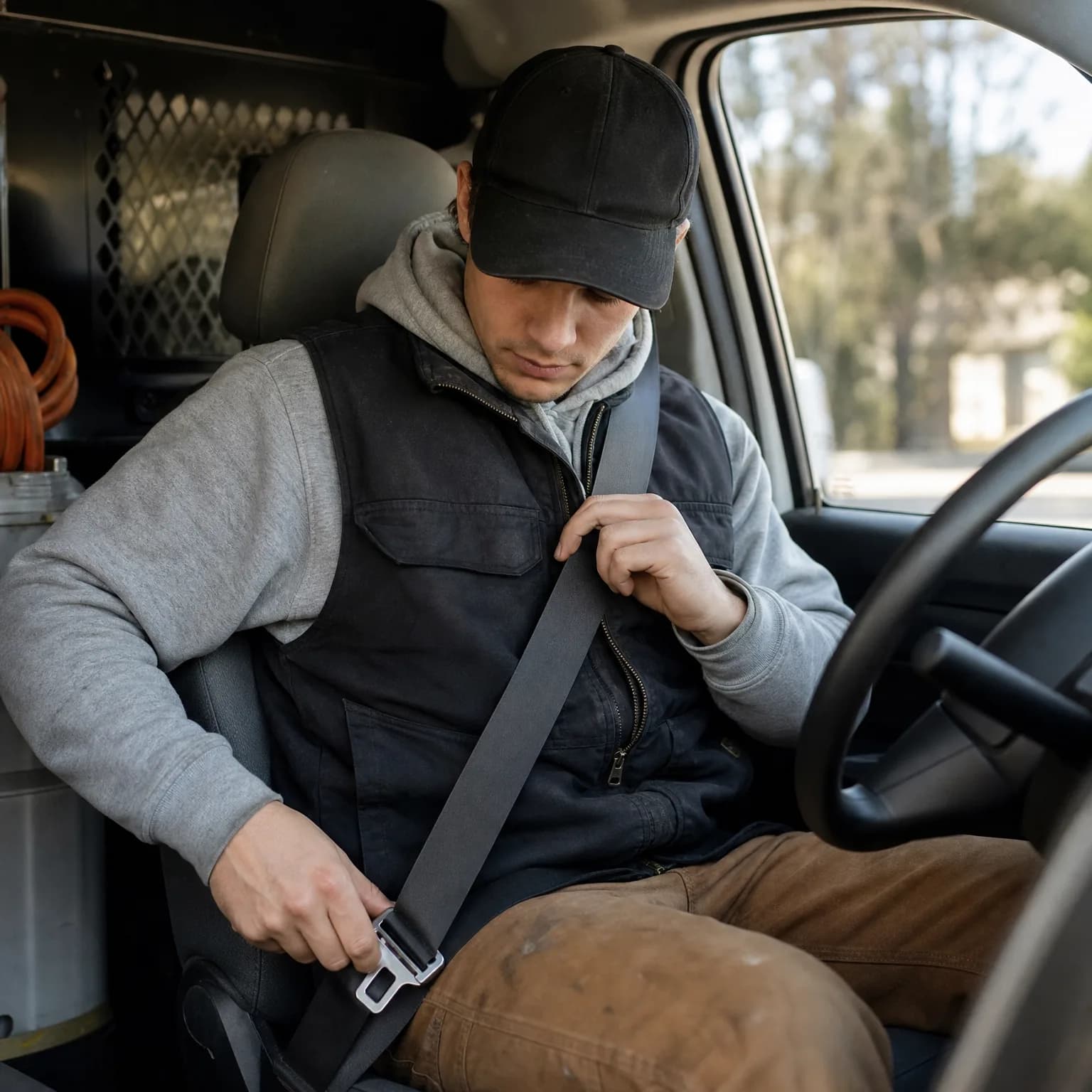
Wisconsin IID Cost for Occupational License: Full Breakdown
4/29/2026

Install IID Early in WI: Does It Start the Clock?
4/29/2026

IID Installation Timing for Indiana Work License
4/29/2026

Michigan Occupational License: IID Install Timing Guide
4/29/2026

WA Restricted License: IID Install Timing Explained
5/3/2026

Ohio Occupational License IID Install Timing Guide
4/29/2026