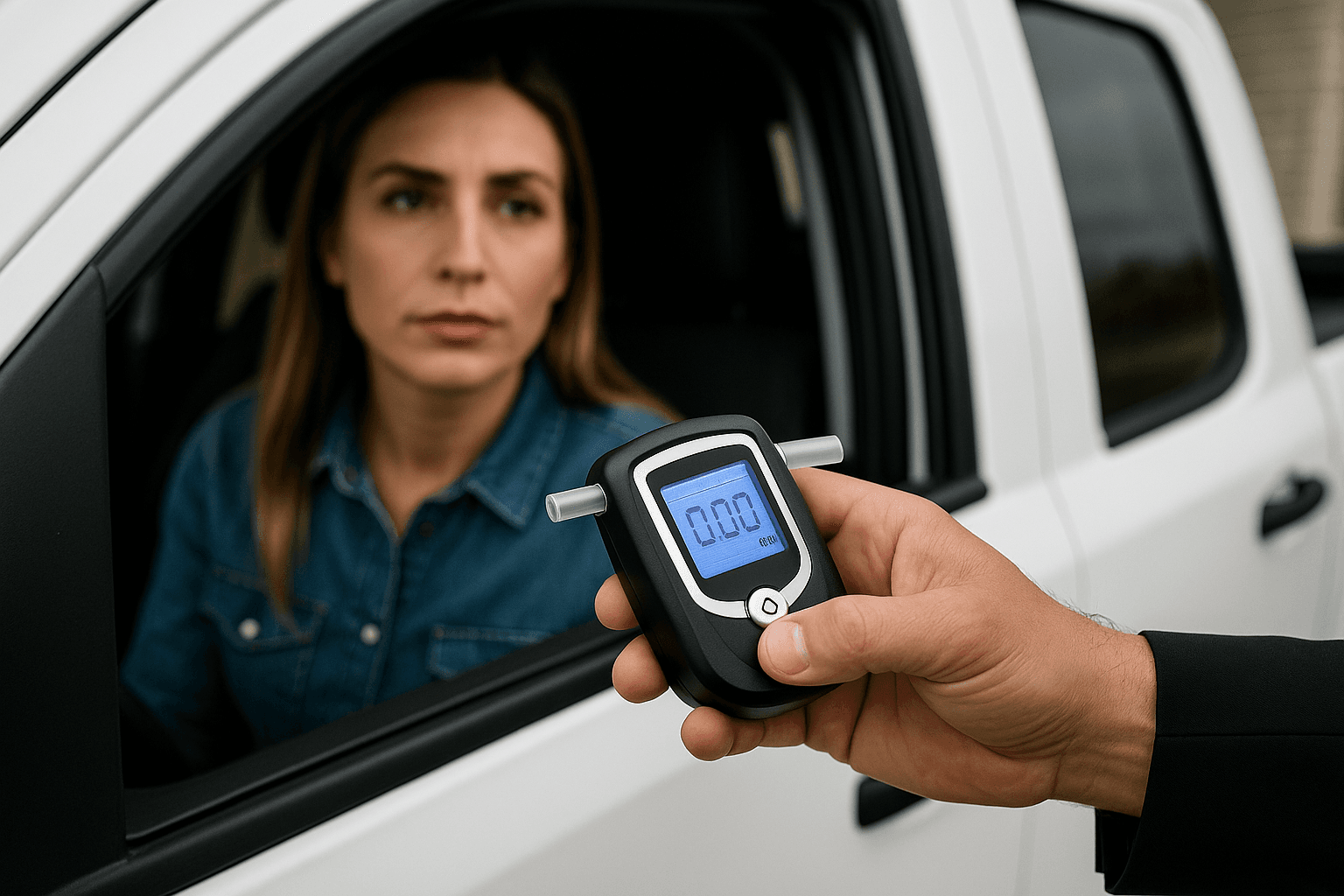
Phoenix restricted license hearings happen through Arizona MVD administrative process, not county court — unless your suspension was DUI-related. Here's the actual path, costs, and timelines for Maricopa County.
Phoenix Restricted License Applications: MVD Administrative Process vs Superior Court Hearing
Most Phoenix drivers applying for a restricted license after suspension never see a courtroom. Arizona MVD handles restricted driving privilege applications administratively for insurance lapse, multiple violations, child support suspensions, and unpaid tickets. You file Form 40-5125 at the Phoenix MVD office at 1801 W Jefferson Street, pay the $10 application fee, and receive a response within 10 business days. No judge, no hearing, no attorney required.
DUI suspensions follow a different path entirely. If your suspension resulted from a DUI conviction, you must petition Maricopa County Superior Court for a Special Ignition Interlock Restricted Driver License after serving the mandatory suspension period — 90 days for first offense, 1 year for second offense. The court holds a formal hardship hearing where you present evidence of employment need, proof of IID installation, and SR-22 filing. Attorney representation is not required but increases approval probability significantly.
The confusion comes from overlapping terminology. Maricopa County Justice Courts handle traffic violations and initial DUI arraignments, but they do not grant restricted driving privileges. Superior Court handles DUI-related restricted license petitions. MVD handles everything else. Phoenix drivers searching for 'restricted license hearing' often call the wrong office first, losing 2-3 weeks before finding the correct filing path.
What the MVD Administrative Process Actually Requires
The MVD administrative process grants restricted driving privileges for work, medical appointments, court-ordered obligations, and DUI program attendance. You must demonstrate employment at least 30 hours per week or enrollment in school with documentation from your employer or registrar. The privilege restricts you to approved routes during approved hours only — direct travel between home, work, medical providers, and program locations. No stops for errands, no detours, no personal travel.
You need current SR-22 filing before MVD approves your application. The SR-22 must show coverage effective date matching or preceding your application date. Arizona requires SR-22 filing for 3 years from the restricted license issue date for most violations, 2 years for insurance lapse. Expect monthly premiums between $140 and $280 through non-standard carriers — Bristol West, Dairyland, GAINSCO, and The General write most Phoenix SR-22 policies for suspended drivers.
Total upfront cost for MVD administrative restricted license: $10 application fee, $50 reinstatement fee paid before approval, first month SR-22 premium ($140–$280), and employer documentation if your employer charges administrative fees for verification letters. Budget $200–$350 total to get the license in hand. The privilege remains valid until your underlying suspension period ends or until you commit any moving violation, which revokes it immediately and extends your suspension.
Compare car insurance rates in your state
Get quotes from licensed carriers — no obligation, no spam, results in minutes.
Get Your Free Quote✓ No Obligation Required✓ Licensed Carriers Only✓ Available Nationwide✓ Free to Compare
Superior Court DUI Hardship Hearing Process and Timeline
Maricopa County Superior Court hardship hearings for DUI-related restricted licenses require a formal petition filed through the court clerk at 620 W Jackson Street in downtown Phoenix. You cannot file until you complete the mandatory suspension period — 90 days for first-offense DUI, 1 year for second offense, 3 years for aggravated DUI. Early filing gets rejected automatically with no fee refund.
The court schedules your hearing 4-6 weeks after petition filing. You present evidence proving severe hardship without driving privilege: employment verification letter specifying work hours and location, proof of IID installation from an Arizona-certified provider, SR-22 certificate of insurance, proof of enrollment in Arizona Traffic Survival School or DUI screening program if ordered. The judge evaluates whether your need justifies restricted privilege and whether you present acceptable risk with IID monitoring.
Approval rates vary by judge and case strength. First-offense DUI petitioners with stable employment, completed DUI programs, and clean record since conviction see approval rates around 70-80% in Maricopa County. Second-offense and aggravated DUI petitioners face stricter scrutiny — approval rates drop to 40-60%. Denial means waiting another 30-90 days before reapplying. Court filing fee is $175. Attorney representation adds $800–$2,500 but increases approval probability and reduces errors that trigger denial or delay.
SR-22 Filing Requirements and Carrier Availability in Phoenix
Arizona requires SR-22 filing for restricted license approval regardless of whether you go through MVD or Superior Court. The SR-22 proves continuous liability coverage at state minimums: $25,000 bodily injury per person, $50,000 per accident, $15,000 property damage. Your carrier files the SR-22 certificate directly with Arizona MVD electronically — you receive a paper copy for your records but do not file it yourself.
Non-standard carriers dominate the Phoenix SR-22 market for suspended drivers. Bristol West, Dairyland, GAINSCO, The General, Direct Auto, and Safe Auto write most policies. Standard carriers — State Farm, GEICO, Allstate — either decline to write suspended-driver policies or price them uncompetitively. Monthly premiums for Phoenix drivers with DUI or multiple violations range from $140 to $280 depending on violation severity, age, and coverage limits beyond state minimums.
SR-22 filing fee ranges from $15 to $50 depending on carrier. Your insurer charges this fee once at policy inception, then maintains the filing for the required duration. If your policy lapses even one day, your carrier files an SR-26 cancellation notice with MVD, which suspends your license again immediately and resets your SR-22 filing clock to zero. Continuous coverage for the full 2-3 year filing period is non-negotiable.
Ignition Interlock Device Requirements for DUI Restricted Licenses
All DUI-related restricted licenses in Arizona require certified ignition interlock device installation before the court grants your petition. You must use an Arizona-certified IID provider — Intoxalock, LifeSafer, Smart Start, and Guardian Interlock operate in Phoenix. Installation costs $70–$150. Monthly monitoring and calibration fees run $60–$90. Budget $800–$1,200 total for one year of IID compliance.
The IID requires you to provide a breath sample before the vehicle starts and periodically while driving (rolling retests). Failed tests, missed retests, or tampering evidence gets reported to Arizona MVD and the court. Violations trigger immediate restricted license revocation and extend your underlying suspension. The court requires IID for the full restricted license period — minimum 1 year for first-offense DUI, longer for subsequent offenses.
You pay IID costs out of pocket. Arizona offers indigent IID subsidy programs through some providers, reducing monthly costs to $20–$30 for drivers below federal poverty guidelines. Application requires income documentation and court approval. Most Phoenix DUI attorneys handle indigent IID applications as part of hardship petition preparation.
Common Application Mistakes That Cause Phoenix Restricted License Denial
Filing before your mandatory suspension period ends is the most common error. Arizona MVD and Superior Court both reject early applications automatically. First-offense DUI requires 90 days served. Second offense requires 1 year. Insurance lapse suspensions allow immediate application only after paying reinstatement fees. Verify your exact eligibility date with MVD before filing — calling the Phoenix office at 602-255-0072 gets you a suspension end date confirmation.
Incomplete employer documentation causes 30-40% of MVD administrative denials. The employment verification letter must state your job title, work schedule with specific days and hours, work address, and supervisor signature with contact phone number. Generic letters saying 'employed full-time' get rejected. Template letters from MVD Form 40-5125 instructions show exactly what employers must include.
SR-22 filing gaps between application date and coverage effective date trigger automatic denial. Your SR-22 certificate must show coverage effective on or before your restricted license application date. Backdating SR-22 coverage is not allowed. If your SR-22 shows effective date after application date, MVD denies your application and you refile once coverage is active. Coordinate SR-22 filing with your carrier 3-5 business days before submitting your restricted license application.
What Happens After Restricted License Approval in Maricopa County
MVD-approved restricted licenses arrive by mail 7-10 business days after approval. The physical license shows 'RESTRICTED' notation and lists your approved driving purposes. You must carry the license, your SR-22 proof of insurance, and employer verification letter every time you drive. Phoenix Police and Arizona DPS enforce restricted license conditions strictly — driving outside approved hours or routes is a Class 1 misdemeanor, which revokes your restricted privilege and adds 6 months to your underlying suspension.
Superior Court-approved DUI restricted licenses require you to return to MVD with your court order, IID installation certificate, and SR-22 filing to receive the physical license. This process adds another 5-7 business days. Your IID provider must submit monthly compliance reports to MVD. Any failed test, missed rolling retest, or tampering violation appears on these reports and triggers immediate license revocation.
Restricted license duration equals your remaining suspension period. If you were suspended for 1 year and apply after 90 days, your restricted license is valid for the remaining 9 months. Full license reinstatement requires completing your suspension period, maintaining SR-22 filing for the full required duration (2-3 years), paying all outstanding fees, and completing any court-ordered programs. Violations during your restricted license period extend everything — suspension, SR-22 requirement, IID monitoring.