Texas courts approve ODLs for essential work, but rideshare's variable routes and passenger-directed destinations clash with the court order's fixed-address requirement—most drivers don't realize this conflict until they're cited for unauthorized use.
Why Texas ODL Approval Is Structurally Difficult for Rideshare Drivers
Texas Occupational Driver License court orders require specific destination addresses for every approved trip purpose. The judge signs an order listing your workplace address, your home address, medical facilities, childcare locations, and education sites—each entry needs a street address. Rideshare driving has no fixed workplace address and no predictable destination list. Every shift involves passenger-determined routes that change trip by trip.
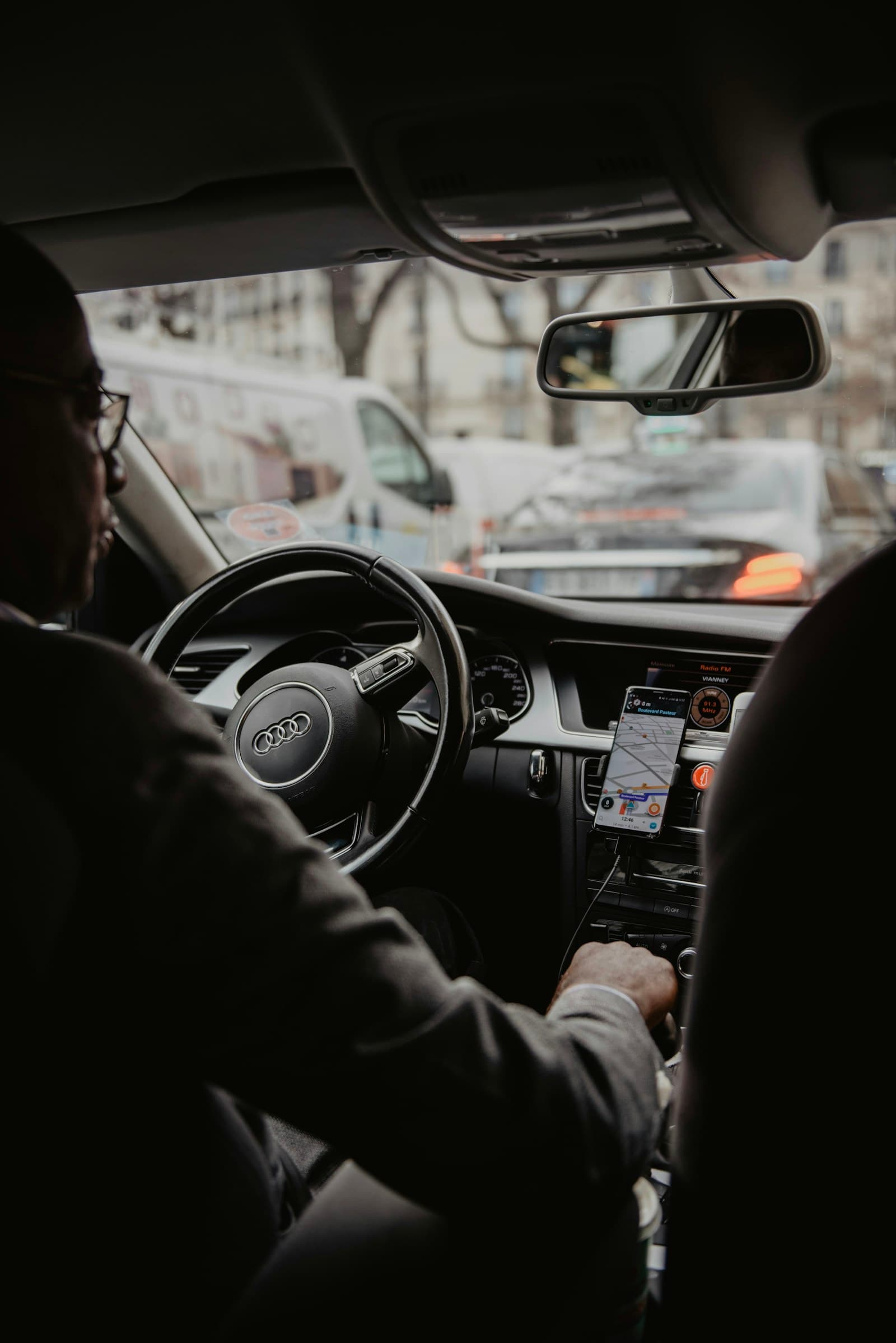
Most counties reject ODL petitions for rideshare work because the court cannot list every possible passenger pickup and dropoff location in a geographic area. Judges approve ODLs for jobs with fixed locations—a warehouse at 1500 Industrial Blvd, a restaurant at 400 Main Street, a construction site with a project address. Rideshare operates as on-demand transportation across an entire metro area. The petition asks the court to approve driving anywhere passengers request, and Texas law does not permit that level of discretion.
Some petitioners try listing the rideshare company's regional office as the workplace address. That strategy fails during enforcement because the ODL holder is never actually driving to or from that office—they're circulating through residential neighborhoods, commercial districts, airports, and entertainment zones picking up fares. A traffic stop three miles from any approved address on your order is an ODL violation regardless of whether you had a passenger in the car at the time.
What the ODL Court Order Actually Authorizes
The occupational driver license order from the court lists approved hours and approved locations separately. Most drivers focus on the hours—6:00 AM to 10:00 PM Monday through Saturday, for example—and assume those hours grant freedom to drive anywhere for work. The order does not work that way. Every destination must appear on the written order the judge signs.
Approved purposes in Texas typically include travel to and from work, travel required in the scope of employment, essential household duties (groceries, medical appointments, childcare, education), and attendance at court-ordered programs like DWI education classes or ignition interlock service appointments. The "travel required in the scope of employment" language seems broad, but enforcement interprets it narrowly. If your employer sends you to a client site, that trip is covered—if the client address was listed on your petition or if your employer provides documentation that the trip was work-assigned. Rideshare trips are self-assigned based on app dispatch, not employer direction to a specific location.
Violation of the ODL terms—driving outside approved hours, driving to non-approved locations, or driving for non-approved purposes—results in immediate license suspension and often adds criminal charges for driving while license invalid. The original suspension period does not pause while you hold the ODL. If you violate the order, you lose the occupational privilege and return to full suspension with additional penalties.
Compare car insurance rates in your state
Get quotes from licensed carriers — no obligation, no spam, results in minutes.
Get Your Free Quote✓ No Obligation Required✓ Licensed Carriers Only✓ Available Nationwide✓ Free to Compare
The SR-22 Requirement Applies Regardless of ODL Approval
Texas DPS requires SR-22 filing for the entire suspension period and typically for two years following reinstatement after a DWI conviction. The SR-22 is a separate compliance requirement from the ODL—you must maintain continuous SR-22 coverage whether the court grants occupational driving privileges or not. Most DWI suspensions in Texas carry mandatory SR-22, and many reckless driving or multiple-violation cases do as well.
Carriers that write SR-22 policies for suspended drivers fall into the non-standard market: Bristol West, Dairyland, Direct Auto, The General, GAINSCO, Acceptance, and Progressive's non-standard division. Monthly premiums for SR-22 liability policies after a DWI conviction in Texas run $120–$200/month for minimum 30/60/25 liability limits. If you add a vehicle to the policy—required if you own the car you drive—expect $180–$280/month depending on the vehicle, your age, and your county.
Rideshare drivers face an additional layer: your SR-22 personal auto policy does not cover commercial rideshare activity. Uber and Lyft provide liability coverage when you have a passenger in the car and supplemental coverage when the app is on but you have no passenger. That coverage applies only if you hold a valid driver license. An ODL is not a valid license for commercial driving purposes under Transportation Network Company insurance policies. Even if a court grants your ODL, the rideshare company's insurance will not cover you during a claim if the policy discovers you were driving under occupational restrictions.
Alternative Work Options That Fit ODL Restrictions
Petitioners with DWI suspensions succeed when they demonstrate employment at a fixed location with predictable routes. Delivery drivers for a single restaurant or a specific retail store can list the business address, common delivery zones, and the distribution center. The court evaluates whether the job genuinely requires driving and whether the route pattern is definable.
Warehouse positions, retail shifts, construction jobs, healthcare facilities, and office work all qualify as long as the employer provides documentation—a letter on company letterhead stating your hire date, your work address, your shift hours, and confirmation that the job requires you to drive to that location. Some courts also approve in-the-scope-of-employment driving if the employer lists client sites or service territories in the documentation. A plumber driving to job sites across a county can succeed if the employer submits a letter describing the service area and provides sample job addresses.
Gig economy work that involves fixed pickup locations works better than passenger rideshare. Package delivery for Amazon Flex, grocery delivery for Instacart, or food delivery for DoorDash still involves variable destinations, but the pickup point is often the same distribution center or store. Some counties approve these petitions when the applicant lists the warehouse address and describes the delivery function in the petition. Approval is inconsistent—Travis County judges have approved Instacart petitions, while Harris County typically denies them.
The safest path is employment that does not require driving during work hours but does require driving to reach the workplace. If you can document a job offer or current employment at a single address and your petition limits driving to commute and essential household errands, approval rates exceed 80% in most Texas counties for first-time DWI offenders past the statutory waiting period.
Ignition Interlock Adds Another Compliance Layer
Texas requires ignition interlock installation for all DWI convictions as a condition of ODL eligibility. The device must be installed in every vehicle you operate, and the court order will specify the IID requirement explicitly. Monthly IID costs run $70–$100 for the lease, calibration, and monitoring fee. Installation runs $100–$150 upfront.
The interlock device logs every start attempt, every rolling retest, and every violation event—failed breath tests, missed retests, or attempts to tamper with the unit. Those logs upload to the monitoring authority monthly, and violations reported to the court can result in ODL revocation. If you drive a vehicle without an installed interlock, that act alone violates the court order even if you are stone sober and driving during approved hours to an approved location.
Rideshare vehicles complicate IID compliance because you typically do not own the car. If you rent or borrow a vehicle for Uber or Lyft driving, that vehicle needs an interlock installed, and the vehicle owner must consent to installation. Most rental companies and private vehicle owners refuse IID installation. Driving your own vehicle solves the installation issue but triggers the insurance problem described earlier—your SR-22 policy will not cover commercial rideshare use, and the rideshare company's policy will not cover you under ODL restrictions.
What Happens If You Drive Rideshare on an ODL Anyway
Enforcement occurs during traffic stops and after accidents. The officer runs your license, sees the ODL restriction, and asks where you are headed. If you have a passenger in the car and the rideshare app visible on your phone, the stop produces an ODL violation citation. The violation charge is driving while license invalid (DWLI), a Class B misdemeanor in Texas carrying up to 180 days in jail and a $2,000 fine for repeat offenses.
The court revokes your ODL after a violation, and you return to full suspension. The revocation does not reduce the time remaining on your original suspension period—those days do not count as served. If you had 12 months of suspension remaining when the ODL was granted and you violate the order 6 months later, you return to full suspension with 12 months still on the clock, plus potential criminal penalties, plus an extended SR-22 filing period, plus additional reinstatement fees when you eventually become eligible again.
Insurance claims create the second enforcement pathway. If you are involved in an accident while driving rideshare under an ODL, the rideshare company's insurer investigates your license status. The policy excludes coverage for drivers operating under restricted licenses, and the claim is denied. You become personally liable for injuries and property damage. The accident report goes to DPS, and the ODL violation follows.
Some drivers assume they can avoid enforcement by only driving rideshare outside their listed work hours, treating rideshare as a second job the court does not know about. That strategy fails because the ODL does not authorize any driving outside the approved purposes—switching from your day job to rideshare at night does not convert rideshare into an approved purpose. The court order lists every approved purpose exhaustively. Anything not on the list is prohibited.
Cost Breakdown for ODL Petitioners in Texas
Filing an ODL petition in Texas involves multiple costs that stack before you receive any driving privilege. The court filing fee runs $150–$300 depending on the county. If you hire an attorney to prepare and present the petition, expect $750–$1,500 in legal fees. Some counties require attendance at a hardship hearing where the judge evaluates your petition in person; others process petitions administratively if you meet eligibility criteria.
SR-22 insurance premiums are the largest recurring cost. Budget $120–$200/month for a non-owner SR-22 liability policy if you do not own a vehicle, or $180–$280/month if you own the car and need comprehensive physical damage coverage. Those premiums continue for the entire suspension period and often for two years following full license reinstatement.
Ignition interlock installation costs $100–$150 upfront, and monthly monitoring fees run $70–$100. If your ODL period lasts 12 months, total IID cost is approximately $1,000–$1,300. DPS reinstatement fees apply when your suspension period ends—$125 for a first DWI suspension. Add $100–$200 for DWI education program completion, which most counties require before granting the ODL.
Total first-year cost for an ODL after a Texas DWI conviction typically runs $3,500–$5,000 when you include legal fees, SR-22 premiums, IID costs, and reinstatement fees. That figure assumes you do not violate the order and do not incur additional charges. Rideshare income during the ODL period would need to exceed those costs significantly to justify the risk and complexity, and most drivers discover the structural barriers make rideshare work impossible under ODL terms.