One violation outside your approved driving window triggers immediate license revocation, extends your underlying suspension, and often adds new criminal charges — California DMV doesn't issue warnings.
California Revokes Your Restricted License Immediately After One Violation
California DMV revokes your restricted license the moment you're cited for driving outside approved hours, approved routes, or approved purposes — no warning period, no grace window. The revocation is automatic under Vehicle Code 13353.2, which treats any violation of the restriction as willful non-compliance with court orders.
Your underlying suspension clock does not pause during revocation. If you had 18 months remaining on a DUI suspension when the restricted license was revoked, you now face that full 18 months without any driving privilege, plus potential extension penalties. Most drivers lose 6-12 additional months of eligibility before they can reapply for another restricted license.
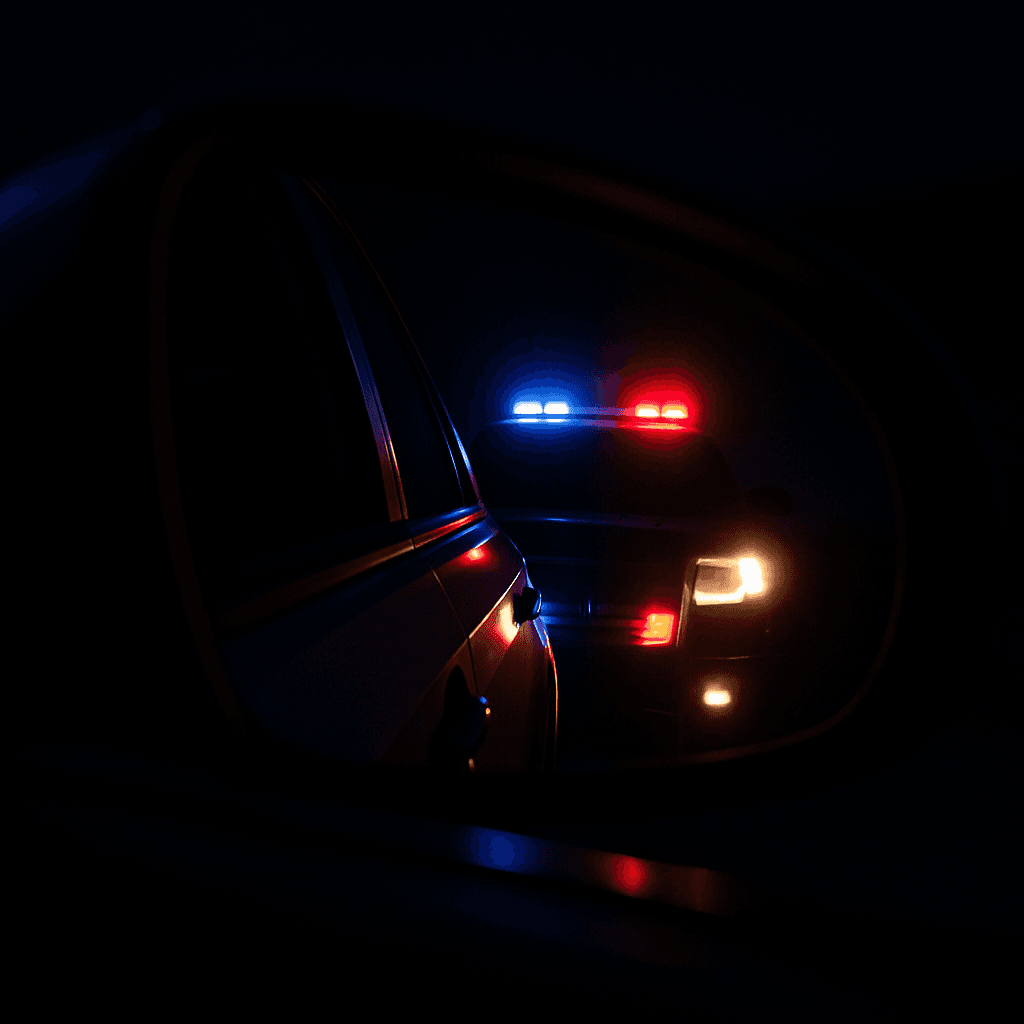
The officer who stops you will confiscate your physical license on the spot if the violation is clear — driving at 2 AM when your approved hours are 6 AM to 6 PM, or driving to a social event when your restriction permits work and DUI program only. You receive a temporary paper license marked "SUSPENDED" valid for 10 days, after which you have zero legal driving authority.
You Face Criminal Prosecution for Driving on a Suspended License
Driving outside your restricted license terms triggers a new charge under Vehicle Code 14601.2: driving while privilege suspended or revoked. This is a separate criminal violation, not a traffic infraction. First offense carries up to 6 months in county jail and fines up to $1,000, though most first-time violators receive probation, community service, and a fine in the $300-$800 range.
The charge appears on your criminal record, not just your driving record. Employers who run background checks will see it. If your original suspension was DUI-related, prosecutors often file this as a probation violation, which can reinstate jail time from the original DUI sentence that was previously suspended.
Court processing adds 4-8 weeks before sentencing. During that period, you have no restricted license, no legal way to drive to work, and the criminal case hanging over your DUI case or underlying violation. Many employers terminate drivers who lose their legal driving authority for any reason, and California does not require employers to accommodate suspended drivers.
Compare car insurance rates in your state
Get quotes from licensed carriers — no obligation, no spam, results in minutes.
Get Your Free Quote✓ No Obligation Required✓ Licensed Carriers Only✓ Available Nationwide✓ Free to Compare
SR-22 Requirement Extends and Premium Costs Increase 40-60%
California requires SR-22 filing for 3 years from the date of your original DUI or suspension trigger. A restricted license violation does not restart that 3-year clock, but it does extend your suspension period, which extends the time you must carry SR-22 coverage before reinstatement.
Carriers reclassify you as a multiple-violation high-risk driver the moment the 14601.2 charge appears on your record. Your SR-22 premium increases 40-60% above the rate you were paying under the restricted license. A driver paying $180/month for SR-22 liability coverage typically sees premiums rise to $250-$290/month after a violation, and that rate holds for the full remaining SR-22 period.
Some non-standard carriers — Dairyland, Bristol West, GAINSCO — will non-renew your policy entirely after a restricted license violation, forcing you to shop mid-term. Non-renewal during an SR-22 period creates a coverage gap, which California DMV treats as a new suspension trigger, adding another layer of penalties and extending your overall timeline by 6-12 months.
Reapplying for a Restricted License Requires a New Hearing and Waiting Period
California DMV does not automatically reinstate your restricted license after revocation. You must file a new request for a restricted license hearing, pay a $125 reissue fee, and wait 30-90 days for a hearing date. The hearing officer reviews the violation circumstances and decides whether to grant another restricted license or deny you entirely until your full suspension period ends.
Denial rates run 40-50% for drivers seeking a second restricted license after violating the first. DMV hearing officers view restricted license violations as evidence you cannot comply with court-ordered restrictions, which makes you ineligible for discretionary driving privileges. If denied, you wait out the full suspension with no legal driving authority.
If approved, your new restricted license carries the same terms as the original — approved hours, approved routes, employer verification, IID requirement if applicable — but the approval period is typically shorter. First restricted licenses in California run 12-18 months; second restricted licenses after violation run 6-12 months, and some hearing officers impose stricter hour windows or route limitations as a condition of approval.
Total Cost of a Restricted License Violation Runs $3,500-$6,000
The financial impact of one restricted license violation stacks in four layers. Court fines and fees for the 14601.2 charge run $300-$800 plus a $125 DMV reissue fee. SR-22 premium increases add $70-$110/month for the remaining filing period — if you have 24 months left, that's $1,680-$2,640 in additional premium cost.
If your carrier non-renews you, expect a $50-$75 policy reinstatement fee with your new carrier, plus potential down payment requirements of $400-$600 for high-risk drivers with multiple violations. Many non-standard carriers require 2-3 months of premium upfront after a restricted license violation because claim risk and non-payment risk both increase.
Attorney fees for defending the 14601.2 charge run $1,500-$3,000 if you hire representation, though many drivers in restricted license cases represent themselves or use a public defender. Lost wages during court dates, DMV hearings, and the period without legal driving authority add another $500-$2,000 depending on your employment situation and whether your employer holds your position.
What to Do If You're Stopped Outside Your Approved Hours
If stopped by law enforcement outside your approved driving window, provide your restricted license, proof of SR-22 insurance, and vehicle registration without volunteering additional information. The officer will verify your restriction terms through DMV dispatch and issue a citation for Vehicle Code 14601.2 if the violation is confirmed.
Contact your SR-22 carrier within 24 hours of the citation. Inform them of the charge and ask whether they will continue coverage or non-renew your policy. If they indicate non-renewal, begin shopping immediately — you have 10-20 days before the paper suspension notice expires and you need active SR-22 coverage filed with DMV to avoid a new lapse penalty.
File for a restricted license hearing within 10 days of revocation if you need driving privileges to maintain employment. The DMV hearing unit processes requests in 30-90 days, but filing early preserves your eligibility timeline. Include employer documentation, proof of continued DUI program enrollment if applicable, and any evidence that the violation was unintentional — wrong turn, medical emergency, GPS error — though hearing officers rarely overturn revocations based on intent arguments.