Washington requires both your ignition interlock device installation receipt AND employer verification before your IIL application is complete—most single parents miss the employer affidavit timing requirement and delay approval by 3-6 weeks.
Why Your Court-Approved IIL Application Sits Unprocessed at DOL
Your court granted the Ignition Interlock License. You installed the device. You submitted your application to Washington DOL. Then nothing happens for four weeks.
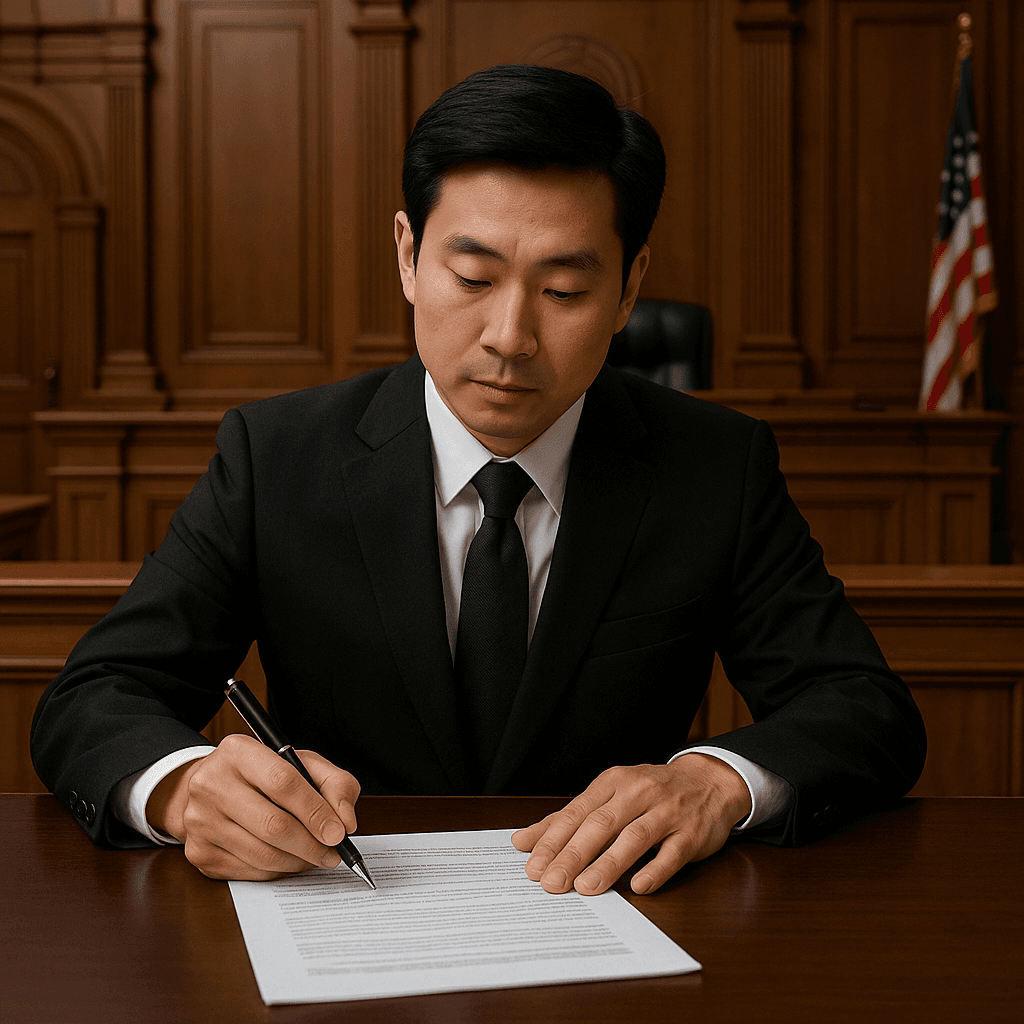
The problem: Washington DOL requires employer verification forms that include notarized affidavits AND specific shift-hour language the court order never mentions. Your court order lists "work" as an approved purpose. DOL wants exact start times, end times, days of the week, and employer contact information on a separate notarized form. Single parents managing childcare handoffs often list "work and daycare" on court petitions but submit employer forms that only verify job schedules—missing the daycare-pickup window entirely.
DOL sends no rejection notice. The application sits in pending status until you call and discover the employer form is incomplete. By then you've burned three to six weeks of the restriction period paying for an IID you can't legally use beyond the 60-day post-conviction temporary driving privilege most King County and Pierce County judges grant.
The fix: before you file with DOL, confirm your employer affidavit states exact shift hours ("Monday through Friday, 7:00 AM to 3:30 PM"), includes employer's printed name and title, phone number for DOL verification calls, notary seal, and notary signature date within 30 days of your DOL submission. If childcare pickup is approved in your court order, add a second affidavit from the daycare provider with the same specificity: facility name, address, pickup window ("3:45 PM to 4:15 PM Monday through Friday"), provider signature, notary seal.
What Single Parents Miss About Approved-Purpose Documentation
Washington courts approve IIL petitions for work, medical appointments, childcare, court-ordered treatment, and ignition interlock service appointments. DOL approves the same purposes—but only if you submit separate verification documents for each.
Most single parents assume the court order itself satisfies DOL's documentation requirement. It does not. The court order proves judicial approval. DOL wants third-party verification that the approved purposes are real, current, and time-specific. Your employer doesn't know your daycare schedule. Your daycare provider doesn't know your DUI treatment class schedule. You need separate notarized affidavits for each approved purpose listed in your court order.
Failure mode: you list work, daycare, and DUI treatment on your court petition. Judge approves all three. You submit an employer affidavit to DOL and assume you're covered. DOL processes the employer affidavit and restricts your IIL to work hours only—no daycare, no treatment. You drive to pick up your child at 4:00 PM inside what you believe is an approved window. You're cited for driving outside restriction. The citation triggers IIL revocation and often adds 30 days to your underlying suspension.
Single parents managing multiple daily stops need affidavits from every entity tied to an approved purpose: employer for work hours, daycare or school for pickup/drop-off windows, treatment provider for class schedules, medical provider for recurring appointment schedules if medical care is court-approved. Each affidavit must be notarized separately and dated within 30 days of DOL submission.
Compare car insurance rates in your state
Get quotes from licensed carriers — no obligation, no spam, results in minutes.
Get Your Free Quote✓ No Obligation Required✓ Licensed Carriers Only✓ Available Nationwide✓ Free to Compare
How Reckless Driving Changes Your IIL Eligibility in Washington
Washington requires ignition interlock installation for all DUI convictions, most reckless driving convictions involving alcohol, and some negligent driving first-degree convictions. Single parents convicted of reckless driving after plea negotiations from an original DUI charge face the same IIL requirement as straight DUI convictions—but most don't realize it until they attempt license reinstatement.
RCW 46.20.385 mandates IID installation for reckless driving convictions when the original arrest involved alcohol or drugs. The conviction record often doesn't state "alcohol-related" explicitly. DOL cross-references your arrest report. If the trooper noted odor of intoxicants, field sobriety tests, or portable breath test results in the arrest narrative, DOL classifies your reckless driving conviction as IID-eligible even if your plea agreement makes no mention of alcohol.
Single parents who negotiated reckless driving pleas to avoid DUI sentencing enhancements discover at their DOL hearing that IID is still required. The hearing examiner won't waive it. You must install the device, complete the restriction period, and pay for monthly monitoring—same as a DUI conviction.
The cost stack hits harder for single parents: $150 IID installation, $75-$90 per month monitoring fee, $150 removal fee, $20 DOL application fee, $75 occupational license fee if your suspension is employment-related, and SR-22 insurance premiums that typically run $80-$140/month for non-standard carriers post-reckless conviction. Total monthly carrying cost during the restriction period: $155-$230. Over a 12-month IIL restriction (standard for first-offense reckless with alcohol), total cost approaches $2,000-$2,800 before attorney fees.
SR-22 Filing Timing: Before or After IIL Approval?
Washington requires continuous SR-22 filing for the entire IIL restriction period plus any additional suspension time. Most single parents ask whether they need SR-22 before DOL approves the IIL or after. The answer: before.
DOL will not issue your Ignition Interlock License until proof of SR-22 filing is on record. You cannot drive legally on an IIL without active SR-22 coverage. The sequence: (1) obtain SR-22 policy from a licensed carrier, (2) carrier files SR-22 certificate electronically with DOL, (3) DOL confirms SR-22 filing in your driver record, (4) you submit IIL application with court order and employer affidavits, (5) DOL processes application and issues IIL. Reversing steps 1-3 and step 4 delays approval by the time it takes to obtain SR-22 filing—usually 1-3 business days if you move quickly, 1-2 weeks if you comparison-shop.
Single parents without a vehicle face a different trap: assuming they don't need insurance because they're borrowing a family member's car or using a work vehicle. Washington requires SR-22 regardless of vehicle ownership. If you don't own a car, you need non-owner SR-22 insurance—a liability-only policy that covers you as a driver in any vehicle you operate with permission. Non-owner SR-22 costs less than standard SR-22 (typically $40-$70/month) but serves the same filing function.
Lapse consequences: if your SR-22 policy cancels for nonpayment or you switch carriers without maintaining continuous filing, DOL receives an SR-26 cancellation notice. Your IIL is suspended immediately. Most single parents don't discover the suspension until they're stopped for an unrelated traffic issue or attempt to renew vehicle registration. Reinstatement after SR-22 lapse requires a new $75 reinstatement fee, proof of continuous SR-22 for 30 days post-lapse, and resubmission of IIL application documents—even if your original restriction period hasn't ended.
What Happens When Your Employer Won't Sign the Affidavit
Large employers with centralized HR departments often refuse to notarize individualized affidavits for restricted-license employees. Corporate policy prohibits line managers from signing legal documents. HR will verify employment dates and job title for background checks but won't confirm daily shift schedules on a notarized form a state agency requires.
Single parents working hourly retail, healthcare, or service-industry jobs face the worst version of this problem: rotating schedules that change weekly. Your court order requires specific hours. DOL requires employer verification of those hours. Your employer can't verify next month's schedule because it isn't set yet. The affidavit you submit today won't match your actual work hours in three weeks.
The workaround: request a letter from your employer on company letterhead stating your standard shift pattern ("Employee works rotating shifts, typically 30-40 hours per week, schedule set biweekly") and confirming your employment status. Attach this letter to a personal affidavit you draft stating your typical work hours and the fact that your schedule varies. Notarize your personal affidavit. Submit both to DOL with a cover note explaining the rotating-schedule situation. Some DOL examiners accept this. Some reject it and require resubmission.
If your employer outright refuses any documentation, you have three options: (1) find a new job with an employer willing to provide verification before your IIL application, (2) petition the court to modify your approved purposes to remove work and rely on other approved categories like treatment and medical, (3) wait out the full suspension period without restricted driving privileges. None of these are good options. Most single parents can't afford to lose a job over paperwork. Addressing the employer-affidavit problem before you petition for an IIL—at the attorney-consultation stage—saves weeks of delay and potential job loss.
Insurance Carriers That Actually Write IIL Policies in Washington
Not all carriers write SR-22 policies for drivers on Ignition Interlock Licenses. Fewer still write policies for single parents with reckless driving convictions after DUI plea negotiations. The non-standard carrier market in Washington breaks into three tiers based on violation severity and filing requirement.
Bristol West, Dairyland, and GAINSCO write the majority of Washington IIL policies. These carriers specialize in high-risk drivers and maintain electronic SR-22 filing systems that integrate with DOL. Monthly premiums for liability-only coverage (Washington minimums: 25/50/10) typically run $90-$140 for drivers with one reckless conviction and no prior DUI. Adding comprehensive and collision coverage—necessary if you're financing a vehicle—pushes monthly premiums to $180-$260.
Progressive and The General write selective IIL policies in Washington but decline applicants with multiple moving violations in the prior three years or any DUI within five years, even if reduced to reckless. If your reckless conviction stems from a negotiated DUI, these carriers often classify you in the DUI risk pool and either decline coverage or quote premiums comparable to straight DUI rates ($150-$220/month liability-only).
Non-owner SR-22 through carriers like Acceptance, Direct Auto, or SafeAuto costs less—$40-$75/month—but only works if you don't own a vehicle and won't be listed as a primary driver on anyone else's policy. Single parents borrowing a family member's car can use non-owner SR-22 as long as they aren't listed on the vehicle's title or registration. The moment you purchase or finance a vehicle, you must switch to a standard SR-22 policy within 30 days to avoid a lapse.
What to Do Right Now
If you're a single parent facing an Ignition Interlock License requirement after a reckless driving conviction in Washington, your first move is securing employer verification before you file your court petition. Call your HR department or direct supervisor today and ask whether they will sign a notarized affidavit confirming your work schedule. If they refuse, line up alternative documentation or adjust your petition strategy before your hearing.
Second: obtain SR-22 insurance quotes from non-standard carriers before your IIL application. Proof of SR-22 filing must be on record at DOL before they'll process your application. Waiting until after court approval wastes weeks. Expect monthly premiums between $90-$140 for liability-only coverage if you own a vehicle, $40-$75 if you need non-owner SR-22.
Third: if your approved purposes include childcare, medical appointments, or DUI treatment in addition to work, obtain separate notarized affidavits from each provider before DOL submission. One missing affidavit restricts your IIL to partial approved purposes and sets you up for violation citations when you drive to pick up your child.
Washington's IIL program keeps single parents employed during suspension—but only if the documentation is complete, specific, and notarized correctly the first time.