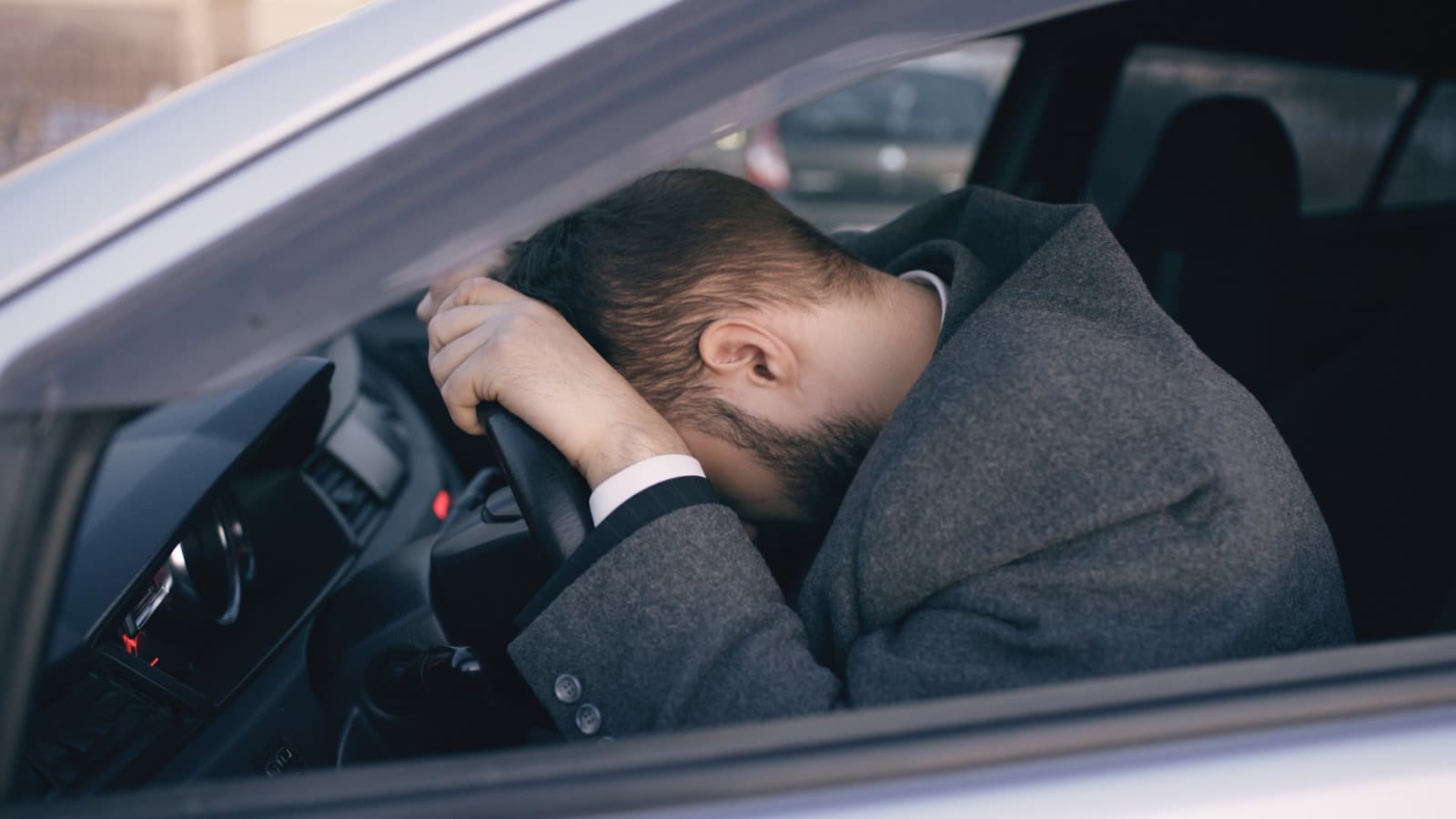
Alabama grants hardship licenses with route-specific restrictions, but rideshare drivers face a conflict: their work requires destination flexibility DMV permits don't allow. Most discover this incompatibility after approval.
Why Alabama's hardship license structure conflicts with rideshare work
Alabama Law Enforcement Agency issues hardship licenses with two restrictions simultaneously: approved time windows AND approved destination addresses. Your hardship order might authorize Monday-Friday 6 AM to 6 PM, but it also specifies exact addresses you're permitted to drive to—typically your employer's address, your home address, medical facilities, and childcare locations. Rideshare work fundamentally requires accepting trip requests to unknown destinations. Every ride outside your pre-approved address list counts as driving outside the scope of your hardship license, even if it occurs during your approved hours.
Most drivers assume time-window compliance covers them. Alabama circuit courts and ALEA interpret hardship privileges narrowly: deviation from approved routes during legal hours still constitutes unlicensed driving. A DUI checkpoint or traffic stop during a rideshare trip reveals the conflict immediately—the passenger destination doesn't match any address on your hardship order. The violation typically triggers hardship license revocation and extends your underlying suspension period.
The application process doesn't flag this conflict. Circuit court clerks process hardship petitions without evaluating whether your stated employment is compatible with the address-restricted format. Most rideshare drivers list their employment accurately, receive approval, and discover the structural incompatibility only after their first shift produces a violation.
What Alabama circuit courts approve as 'work purposes' under hardship orders
Alabama circuit courts grant hardship licenses for employment purposes when the petitioner demonstrates no alternative transportation exists. The statute requires employer verification on company letterhead stating work hours, work address, and confirmation that the employee cannot perform their job remotely or via public transportation. Traditional employment fits this format cleanly: a warehouse worker drives to one address five days a week during consistent hours.
Rideshare employment complicates the employer-verification requirement. Uber and Lyft provide contractor verification letters, but these letters cannot specify a single work address because the work itself is geographically variable. Some Alabama circuit courts reject hardship petitions when the stated employment lacks a fixed location. Other courts approve the petition but list the driver's home address as the sole approved destination, rendering the hardship license functionally useless for rideshare work.
Delivery services (DoorDash, Instacart, Amazon Flex) face the same structural conflict. The work requires traveling to multiple commercial addresses and residential addresses throughout the metro area. Alabama's hardship license format accommodates point-to-point commuting, not area-based gig work.
Compare car insurance rates in your state
Get quotes from licensed carriers — no obligation, no spam, results in minutes.
Get Your Free Quote✓ No Obligation Required✓ Licensed Carriers Only✓ Available Nationwide✓ Free to Compare
Route monitoring and violation detection in Alabama hardship license cases
Alabama Law Enforcement Agency does not install GPS monitoring on hardship license holders, but police encounters reveal violations immediately. During any traffic stop, the officer requests your driver's license and proof of insurance. When you present a hardship license, the officer reviews the terms printed on the license document itself. If the current time falls outside your approved hours or the current location deviates from your approved route between approved addresses, the officer typically issues a citation for driving while license suspended.
Passenger presence during the stop makes the violation obvious. A rideshare passenger in your vehicle traveling to a residential address not listed on your hardship order creates clear evidence you're operating outside the scope of your restricted privilege. The passenger's destination address appears in the citation, and that address becomes part of the revocation record when ALEA processes the violation.
Some drivers attempt geographic workarounds—accepting only trips that terminate near an approved address listed on the hardship order, then claiming they were traveling to that approved destination when stopped. Alabama circuit courts and ALEA view this as fraudulent compliance. The hardship license authorizes direct travel between approved locations for approved purposes. Detouring to transport a paying passenger does not fall within the work-commute purpose the court approved, even if the ultimate destination is technically on your approved list.
SR-22 insurance complications when hardship license terms are violated
Alabama requires SR-22 filing for hardship license eligibility after most suspension triggers. Points accumulation suspensions typically require three years of continuous SR-22 coverage starting from the reinstatement date. Your SR-22 carrier files proof of financial responsibility with ALEA monthly. When your hardship license is revoked for a violation, your underlying suspension period often extends, and your SR-22 filing period restarts from the new reinstatement date.
Non-standard carriers (Bristol West, Direct Auto, Dairyland, GAINSCO) that write SR-22 policies ask whether you hold a hardship license during the application process. Most do not ask whether your employment is compatible with the hardship license's route restrictions. The carrier issues the SR-22 filing based on your license status, not your compliance risk. When a violation occurs, the carrier typically receives notification from ALEA within 10-15 days. Some carriers non-renew the policy at the next renewal date. Others allow the policy to continue but increase premiums at renewal to reflect the violation.
Rideshare-specific insurance endorsements do not solve the hardship license conflict. Progressive, Allstate, GEICO, and State Farm offer rideshare coverage for drivers with full unrestricted licenses. These endorsements cover the gap between personal liability and the rideshare company's commercial policy during Period 1 (app on, no passenger). Hardship license violations occur during Period 2 and Period 3 (en route to passenger and passenger in vehicle), when the rideshare company's commercial policy is primary. The issue isn't insurance coverage—it's that the driving itself violates the terms of your restricted license.
Alternative work arrangements that align with Alabama hardship license restrictions
Alabama hardship licenses work cleanly for employment at a fixed location with consistent hours. If you're suspended due to points accumulation and need to maintain income, jobs with single-site addresses fit the hardship structure: retail, warehouse, manufacturing, food service at one location, office work. Your employer provides verification listing one work address. Your circuit court petition lists that address. Your approved hardship order allows direct travel between home and that work address during your shift hours.
Remote work eliminates route restrictions entirely. If your employment can be performed from home, you avoid the hardship license application process altogether. The suspension affects your ability to drive, not your ability to work. Some drivers shift from rideshare to remote customer service, remote sales, or remote data entry during the suspension period, then return to rideshare work once full license privileges are reinstated.
Public transportation and carpooling reduce hardship license dependence but don't replace rideshare income. Birmingham, Mobile, Huntsville, and Montgomery operate limited public transit. Most suburban and rural areas in Alabama lack viable public transportation. Carpooling with another rideshare driver allows you to continue earning as a passenger-side navigator or account manager while the other driver operates the vehicle. Some drivers form partnerships during suspension periods: one driver operates the vehicle, both split the fare income. This requires trust and clear income-sharing agreements, but it keeps you economically active without violating hardship license terms.
What happens after your full Alabama license is reinstated
Alabama hardship licenses terminate automatically when your underlying suspension period ends and you complete full reinstatement. Points-accumulation suspensions typically last 60-90 days for a first suspension. Your reinstatement requires paying a $125 fee to ALEA, providing proof of SR-22 insurance, and surrendering your hardship license document. Once reinstated, your full driving privileges return and the route restrictions disappear.
Your SR-22 filing requirement continues for three years after reinstatement. You can return to rideshare work immediately upon reinstatement, but your SR-22 policy must remain active and continuous. Any lapse in SR-22 coverage triggers automatic re-suspension under Alabama law. Non-standard carriers that issued your SR-22 during the hardship period often retain you as a customer after reinstatement. Premiums typically decrease 15-25% once the hardship license restriction is removed, because your risk profile improves when route restrictions no longer apply.
Rideshare platforms (Uber, Lyft) conduct annual background checks that include license status verification. If your hardship license was revoked for a violation during the restriction period, that revocation appears on your MVR. Some platforms deactivate drivers after hardship violations even if full privileges are later reinstated. Maintaining clean compliance during the hardship period—by avoiding rideshare work entirely until reinstatement—protects your platform eligibility once you're legally able to resume.