Alabama courts require employer affidavits before approving hardship petitions, but most reckless driving defendants submit generic HR letters that judges reject—delaying license approval by weeks and forcing resubmission with additional hearing fees.
Why Most Alabama Reckless Driving Employer Letters Get Rejected at Hardship Hearings
Alabama circuit courts require employer affidavits for hardship license petitions after reckless driving convictions, but judges reject approximately 40% of initial petitions because the employer documentation lacks legally required specificity. Your HR department's standard employment verification letter—the kind used for apartment applications—does not meet Alabama hardship hearing standards.
Judges need three elements your generic HR letter probably doesn't contain: your exact work schedule broken down by day and hour, the physical street address of your workplace, and a notarized statement from a supervisor with hiring authority confirming termination will occur if you cannot drive. Most employers send a one-paragraph letter confirming you work full-time. That triggers immediate rejection.
Rejection doesn't just delay your hearing. Jefferson County and Mobile County courts charge a $200 petition filing fee each time you submit—resubmission after rejection means paying twice. The employer affidavit must be rewritten to Alabama's standard before you file, not after the judge denies your first attempt.
What Alabama Courts Actually Require in the Employer Affidavit
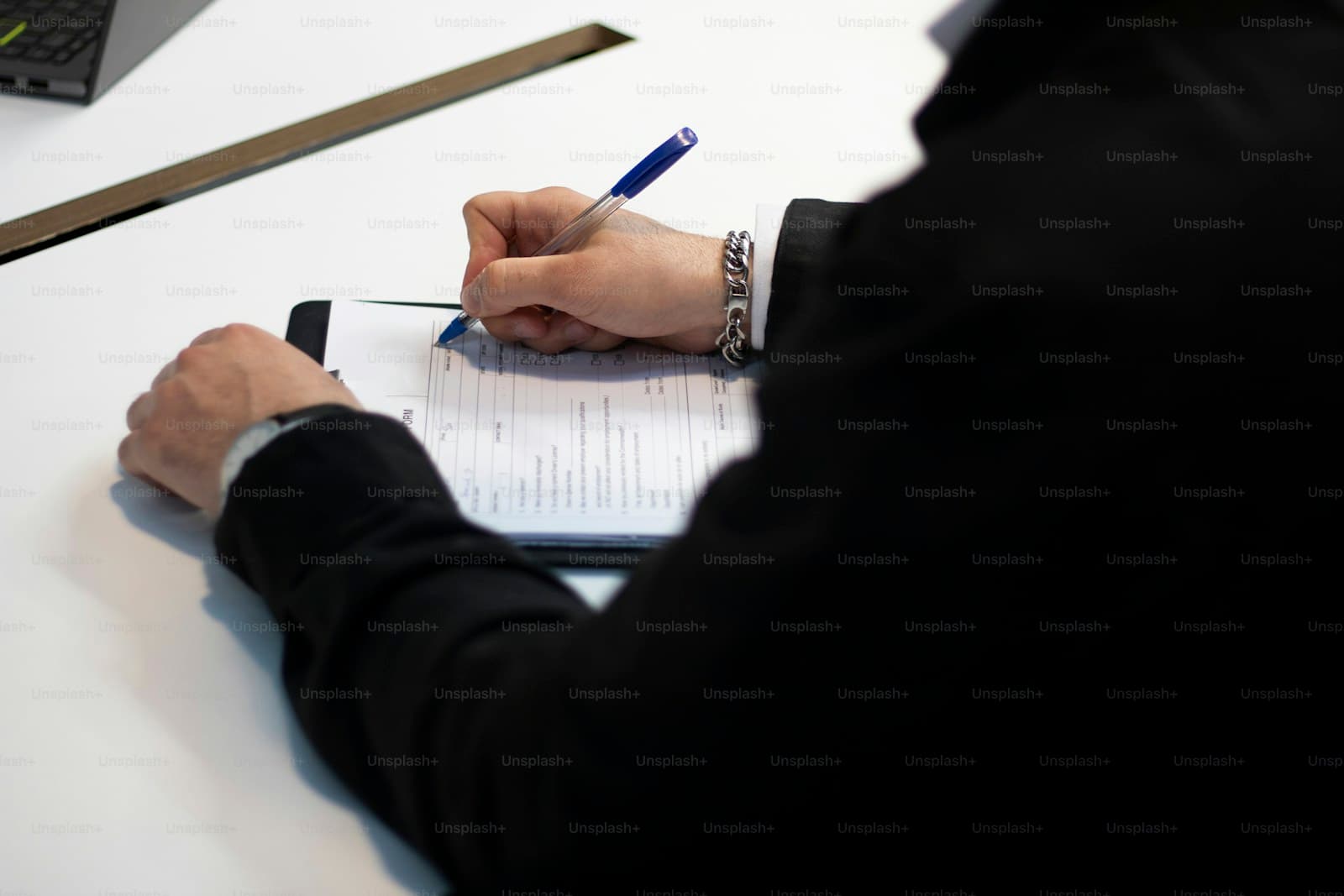
Alabama hardship license petitions require employer affidavits formatted as sworn statements, not business letters. The affidavit must be signed by a supervisor with direct hiring and termination authority—not HR staff, not a shift lead—and notarized within 30 days of your hearing date.
The document must state your exact work schedule: Monday 7:00 AM to 3:30 PM, Tuesday 7:00 AM to 3:30 PM, and so on for every shift in your typical week. Generic phrasing like "full-time hours" or "Monday through Friday" gets rejected. Judges cross-reference these hours against the driving privileges you request in your petition—if your affidavit says you work until 3:30 PM but you request driving privileges until 6:00 PM, the discrepancy triggers denial.
The affidavit must include the complete street address of your workplace, not just the company name. If your job requires travel to multiple sites—construction workers, home health aides, delivery drivers—the affidavit must list every regular work location or describe the geographic service area with specific county or city boundaries. Vague descriptions like "various locations in the Birmingham area" do not satisfy the standard.
Finally, the affidavit must contain an explicit termination statement: "[Employee name] will be terminated if they cannot legally drive to work." Alabama judges interpret hardship as employment necessity, not inconvenience. If your employer hedges with language like "driving is preferred" or "may affect employment status," expect denial.
Compare car insurance rates in your state
Get quotes from licensed carriers — no obligation, no spam, results in minutes.
Get Your Free Quote✓ No Obligation Required✓ Licensed Carriers Only✓ Available Nationwide✓ Free to Compare
Court Order vs DMV Path: Alabama Uses Hardship Hearings, Not Administrative Applications
Alabama does not offer DMV administrative applications for restricted licenses after reckless driving convictions. You must petition the circuit court that handled your case for a hardship license order, which requires a formal hearing before a judge. This is not a paperwork submission—you or your attorney must appear and present evidence.
The hearing typically occurs 30 to 60 days after you file the petition, depending on the court's docket. Jefferson County, Montgomery County, and Mobile County process the highest volumes and schedule hearings on dedicated hardship docket days. Smaller counties may require individual scheduling, which can extend timelines to 90 days.
If the judge grants your petition, the court issues a signed order specifying your approved driving hours and approved destinations. You take that order to the Alabama Law Enforcement Agency Driver License Division, pay the $100 hardship license issuance fee, and receive the physical restricted license. The license is valid only during the hours and for the destinations listed in the court order—deviation from either voids the privilege and can result in a new charge of driving without a valid license.
Most Alabama reckless driving convictions carry a six-month suspension. The hardship license does not shorten that period—it creates a narrow exception for work, medical appointments, and sometimes childcare or education. The full suspension term continues to run, and you must complete it before applying for full license reinstatement.
Single Parent Hardship Petition: Adding Childcare Routes to the Court Order
Alabama courts recognize childcare as a qualifying hardship purpose, but you must request it explicitly in your petition and provide documentation for every location. The employer affidavit alone will not cover school drop-off or daycare pickup—those require separate supporting documents.
You need a letter from your child's school or daycare facility on official letterhead, signed by the principal or director, stating your child's name, the days and times you are responsible for drop-off and pickup, and the facility's street address. If you share custody and the other parent handles some transportation, the letter must specify which days you are responsible. Judges reject vague custody arrangements.
The court order will list childcare destinations separately from work destinations. If your child attends school at 123 Main Street and your workplace is at 456 Oak Avenue, the order authorizes driving only between your home, the school, and your workplace during approved hours. A stop at a grocery store between school and work—even a five-minute errand—violates the order.
If your children attend multiple schools or you use both daycare and after-school care, every location must appear in the petition with supporting documentation. Alabama judges do not grant broad geographic flexibility. You identify every necessary stop in advance, or you cannot legally make it under the hardship license.
SR-22 Filing Requirement and the Non-Standard Carrier Market
Alabama requires SR-22 filing for reckless driving convictions as a condition of both hardship license issuance and full reinstatement. The SR-22 must remain active for three years from the date the court grants your hardship petition or the date you reinstate your full license, whichever comes first.
SR-22 is not a type of insurance—it is a certificate your insurer files with the Alabama Law Enforcement Agency proving you carry at least the state minimum liability coverage: $25,000 per person, $50,000 per accident for bodily injury, and $25,000 for property damage. If your current carrier offers SR-22 filing, expect a mid-policy endorsement fee of $25 to $50 and a premium increase at your next renewal. Many standard carriers do not offer SR-22 filing for reckless driving convictions and will non-renew your policy instead.
Non-standard carriers specialize in high-risk SR-22 cases and typically offer better rates than mid-policy endorsements from standard carriers trying to exit the relationship. Alabama drivers with reckless driving convictions report monthly SR-22 premiums between $110 and $190 per month from non-standard carriers like Dairyland, The General, Direct Auto, and GAINSCO. Estimates based on available industry data; individual rates vary by age, vehicle, and county.
If you do not own a vehicle, you need a non-owner SR-22 policy. This provides liability coverage when you drive a vehicle you do not own—such as a family member's car—and satisfies Alabama's SR-22 filing requirement. Non-owner policies typically cost $30 to $60 per month, significantly less than standard auto policies, because they do not cover a specific vehicle. The SR-22 certificate attached to a non-owner policy carries the same legal weight as one attached to a standard policy.
Cost Breakdown: What Single Parents Pay for Alabama Hardship License and SR-22
Alabama's hardship license process for single parents after reckless driving convictions stacks five separate cost categories, and most drivers underestimate the total.
Court petition filing fee: $200 in most counties, paid when you submit the hardship petition. If the judge denies your petition due to insufficient documentation, you pay another $200 to refile. Attorney fees for hardship petition representation: $500 to $1,200 depending on county and case complexity. Some attorneys charge flat fees; others bill hourly for hearing preparation and court appearance. You can represent yourself, but pro se petitions have lower approval rates when employer documentation or childcare schedules are complex.
Alabama Law Enforcement Agency hardship license issuance fee: $100, paid after the court grants your petition. SR-22 filing fee: $25 to $50 one-time charge from your insurer. SR-22 premium: $110 to $190 per month for 36 months, totaling $3,960 to $6,840 over the filing period. Non-owner SR-22 policies reduce this to approximately $1,080 to $2,160 total.
Full license reinstatement fee after the suspension ends: $175. Total first-year cost for a single parent using an attorney and carrying standard SR-22 insurance: approximately $2,500 to $4,000, depending on legal fees and insurance rates. Budget realistically—underestimating forces drivers to let coverage lapse, which triggers automatic hardship license revocation and a new suspension for driving uninsured.
What Happens If You Violate Hardship License Terms
Alabama hardship licenses operate under zero-tolerance enforcement. A single violation—driving outside approved hours, traveling to an unapproved destination, or allowing SR-22 coverage to lapse—triggers immediate revocation and often results in a new criminal charge.
If a law enforcement officer stops you while driving under a hardship license, the officer verifies your route and time against the court order on file. Deviation from either results in a citation for driving without a valid license, a Class C misdemeanor carrying up to three months in jail and a $500 fine. The hardship license is revoked on the spot, and you must serve the remainder of your original suspension with no driving privileges.
SR-22 lapse is the most common violation. If your insurer cancels your policy or you switch carriers without ensuring the new carrier files SR-22 immediately, Alabama receives a lapse notification within 10 days. The state suspends your hardship license automatically and sends a notice to your last known address. Most drivers do not realize their license is suspended until they are stopped and arrested for driving under suspension.
Violating hardship license terms often extends your total suspension period. If your original reckless driving suspension was six months and you violate the hardship terms at month four, the remaining two months restart from the violation date, and you are ineligible to reapply for hardship privileges. Some counties impose additional suspension time as penalty for hardship violations—Jefferson County commonly adds 90 days.