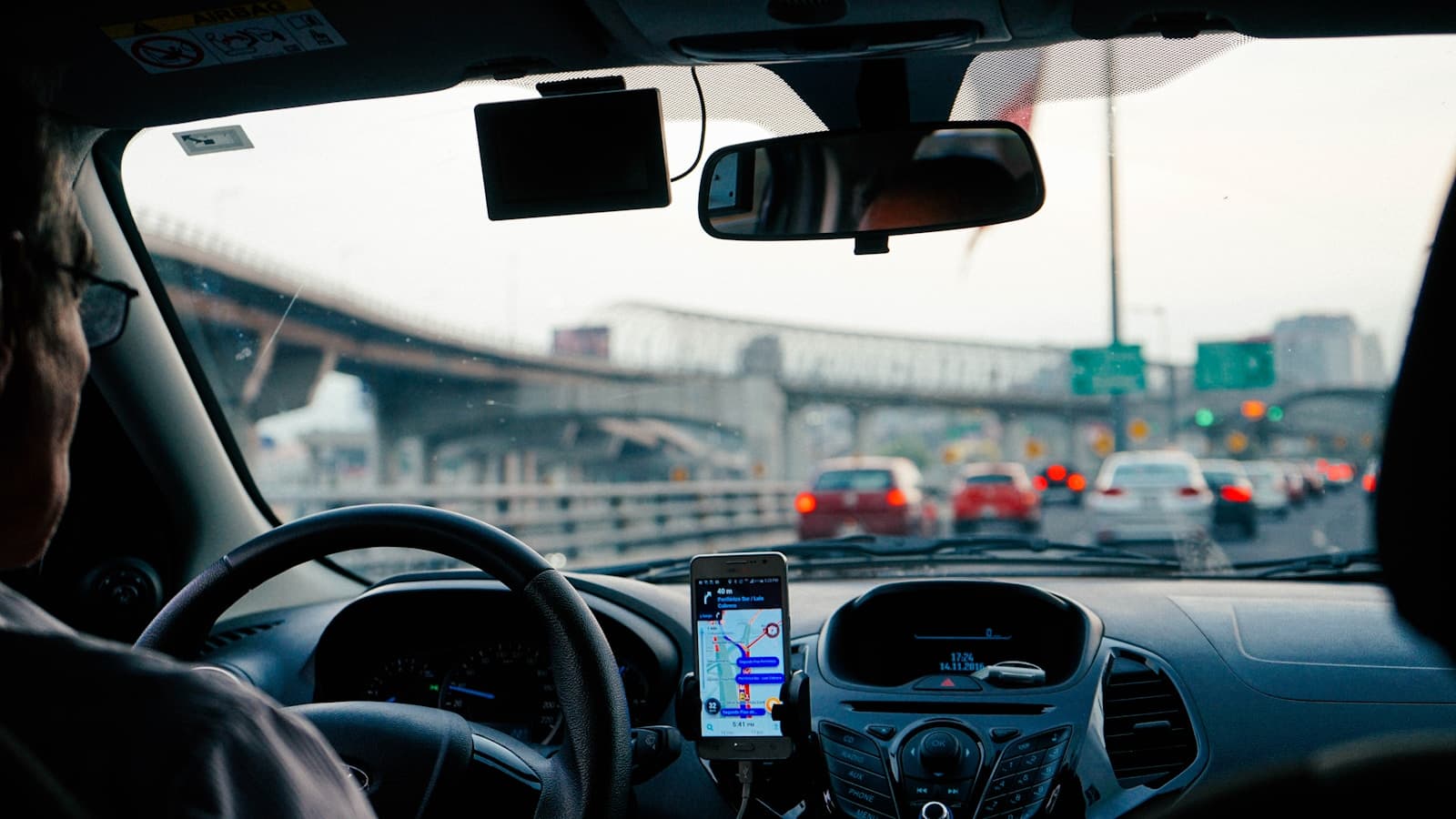
Your reckless driving conviction suspended your license mid-shift, and now you need employer affidavits for rideshare work that doesn't have a traditional employer. Arizona's Special Ignition Interlock Restricted Driver License (SIIRDL) process requires documentation most gig workers can't produce.
Why rideshare drivers face documentation barriers Arizona's SIIRDL process wasn't designed for
Arizona's Special Ignition Interlock Restricted Driver License requires an employer affidavit stating your job title, work hours, and routes. Uber and Lyft don't issue these. You're classified as an independent contractor, not an employee.
Most rideshare drivers facing reckless driving suspensions assume SIIRDL eligibility is automatic because they need income. The court and MVD both require proof of employment necessity, but the standard MVD Form 40-5156 employer verification assumes W-2 employment with fixed schedules and designated routes.
Rideshare work operates on flexible hours across variable service areas. No manager signs off on your schedule. No HR department completes affidavits. The mismatch between gig work structure and Arizona's documentation requirements kills applications before they reach approval.
What Arizona courts actually accept in place of traditional employer affidavits
Maricopa County Superior Court clerks have processed SIIRDL petitions with contractor agreements from rideshare platforms combined with three consecutive months of 1099 earnings statements showing consistent income. This is not published guidance—it's accepted practice.
Your contractor agreement with Uber or Lyft establishes the work relationship. Your earnings statements prove income dependency. Together they demonstrate employment necessity without a traditional employer affidavit. Courts evaluate whether losing driving privilege destroys your income, not whether your work fits a W-2 structure.
Pinal and Pima County courts follow similar patterns. Yavapai and Coconino County clerks are less consistent—some accept platform documentation, others require third-party notarized business verification. Geographic inconsistency means documentation preparation varies by where your reckless driving citation was issued.
Compare car insurance rates in your state
Get quotes from licensed carriers — no obligation, no spam, results in minutes.
Get Your Free Quote✓ No Obligation Required✓ Licensed Carriers Only✓ Available Nationwide✓ Free to Compare
How the court order phase differs from MVD administrative processing
Arizona SIIRDL eligibility requires two approvals: court petition approval first, then MVD administrative processing. The court evaluates whether your work necessity justifies restricted driving. MVD confirms you've installed ignition interlock, submitted SR-22 proof of insurance, and paid reinstatement fees.
Court petition filing happens in the county where your reckless driving conviction occurred. You petition for a court order granting SIIRDL eligibility. Filing fee is typically $50-$85 depending on county. Approval timeline runs 15-30 days if documentation is complete.
Once the court grants your order, you take it to Arizona MVD with proof of ignition interlock installation, SR-22 certificate, and the $20 restricted license fee. MVD processes administratively—they don't reevaluate your employment need. Court approval is the documentation gate. MVD is the compliance gate.
Why your rideshare service area creates route restriction conflicts
Arizona SIIRDL court orders specify approved destinations: workplace address, childcare, medical appointments, DUI education classes. Rideshare drivers operate across entire metro service areas. Your workplace is everywhere riders request pickup.
Most judges approve SIIRDL petitions with service-area boundary language instead of fixed addresses. Example: "Permitted to operate within Maricopa County rideshare service area during platform-active hours." This requires your attorney to request non-standard order language during the petition hearing.
Drivers who submit pro se petitions without attorney representation typically receive fixed-route orders listing their home address as the only approved destination. That order is worthless for rideshare work. The court assumes you're driving to a building. Correcting the order after approval requires refiling—another $50-$85 fee and 15-30 day delay.
The ignition interlock installation timing trap that delays approval
Arizona MVD will not issue your SIIRDL until ignition interlock is installed and the installer submits verification directly to MVD. Most rideshare drivers lease vehicles or drive rentals. Ignition interlock installation in a leased vehicle requires written lessor consent.
Enterprise, Hertz, and most fleet lessors prohibit ignition interlock installation in their vehicles. You can't modify a leased asset without violating your contract. If you're leasing the vehicle you drive for Uber or Lyft, you cannot complete SIIRDL processing until you secure a different vehicle you own outright or obtain rare lessor approval.
Installation itself costs $100-$150 upfront, plus $75-$90 monthly monitoring. For a 12-month SIIRDL restriction period (standard for first reckless driving convictions), total ignition interlock cost runs $1,000-$1,230. Budget this separately from SR-22 insurance premiums and reinstatement fees.
SR-22 filing requirements and the rideshare coverage gap
Arizona requires continuous SR-22 filing for the entire SIIRDL restriction period plus one additional year after full license reinstatement. Reckless driving convictions trigger mandatory SR-22 regardless of whether the violation involved alcohol.
Rideshare drivers face a coverage structure problem. Your personal auto policy with SR-22 endorsement covers personal driving. Uber and Lyft provide commercial liability coverage during active trips. But SR-22 filing attaches to your personal policy, not the rideshare platform's commercial policy.
If your personal carrier non-renews your policy mid-restriction, your SR-22 filing lapses. MVD receives electronic notice within 24 hours and revokes your SIIRDL immediately. You need a non-standard carrier that writes SR-22 policies for post-violation drivers AND allows rideshare use. Non-standard carriers like Bristol West, Dairyland, and GAINSCO write this coverage, but premiums typically run $140-$210/month compared to $85-$110/month for standard-market drivers.
What happens when you violate SIIRDL route or hour restrictions
Arizona law enforcement officers access SIIRDL status during traffic stops. If you're driving outside approved hours or beyond approved service areas, the stop becomes an aggravated driving on a suspended license charge—a Class 1 misdemeanor carrying up to six months jail time.
Your SIIRDL order specifies permitted hours. Most rideshare drivers request 24/7 platform-active authorization because demand peaks vary. If your court order restricts you to 6 AM-10 PM and you accept a 10:30 PM ride request, you're driving illegally even though the platform allowed the trip.
Violation consequences stack: immediate SIIRDL revocation, extension of your underlying suspension period by 90-180 days, and potential criminal prosecution. The court will not grant a second SIIRDL petition after revocation. Your path back to legal rideshare driving extends by months, often forcing job loss regardless.