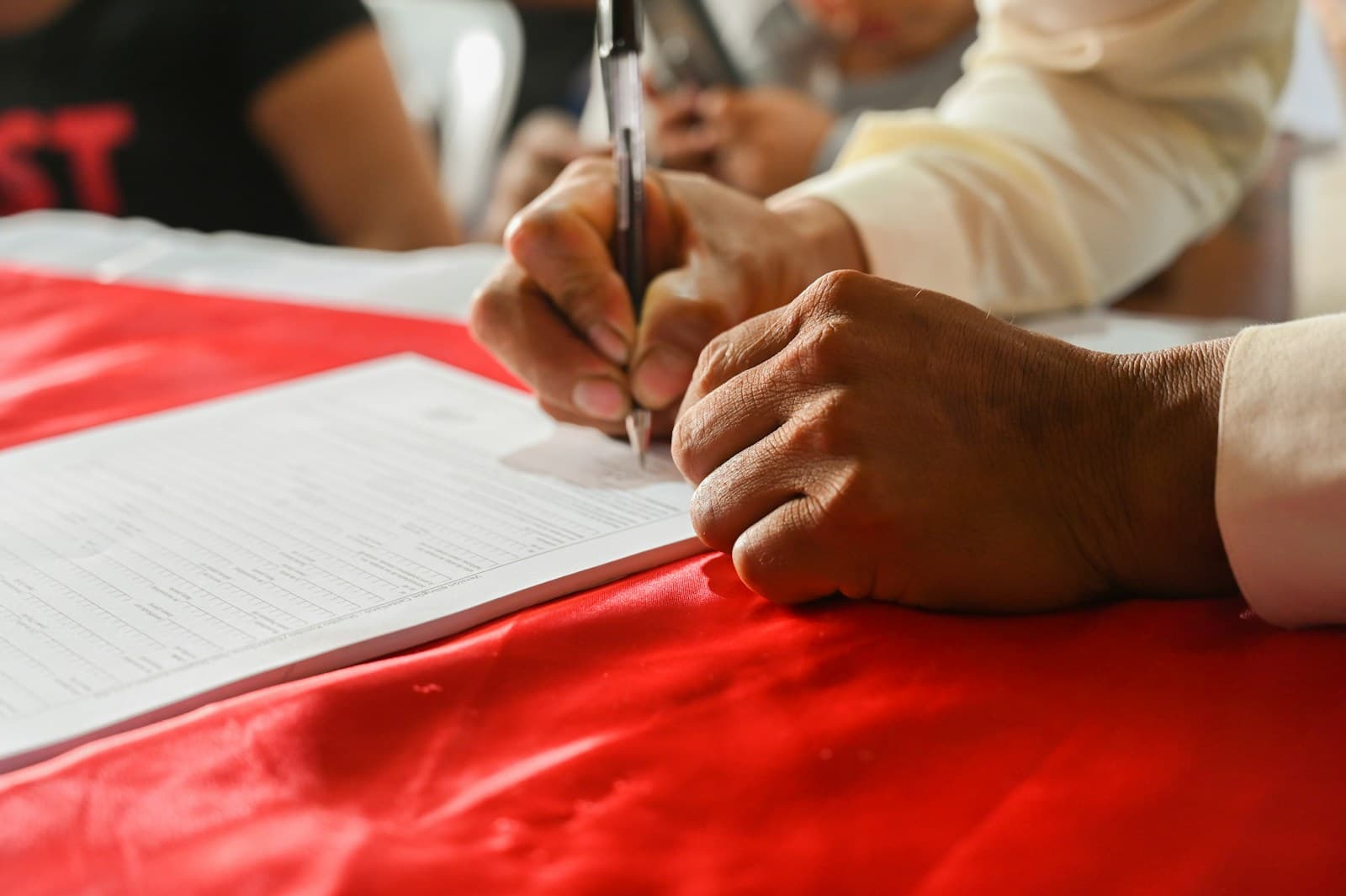
California DMV requires employer verification and court-ordered route approval before issuing your restricted license—but most drivers don't realize the court order must list specific addresses, not just job titles, or DMV rejects the application outright.
Why Your Employer Letter and Court Order Must Match Exactly
California DMV cross-references your court-ordered restricted license destination list against your employer's verification letter before issuing the license. If your court order lists "123 Main St, Sacramento" as an approved work location but your employer letter states you work at "Downtown Sacramento Office," DMV rejects the application. The agency requires exact address matching, not functional equivalence.
This documentation mismatch is the most common rejection reason for California restricted license applications after points accumulation suspensions. Unlike DUI-triggered restricted licenses that follow Vehicle Code 13352 with standardized forms, points-based suspensions fall under VC 12810 and lack pre-formatted employer verification templates. Employers unfamiliar with DMV's address-matching requirement submit letters describing job duties and work schedules without listing the exact street address the court approved.
The rejection notice arrives 15-20 business days after filing. By that point, you've already lost three weeks of potential restricted driving. Resubmission requires a new employer letter, a new DMV filing appointment, and another $125 reissue fee. Most drivers don't catch the mismatch until the second rejection.
How California Court Orders Structure Approved Driving Routes
California Superior Court issues your restricted license order after a Vehicle Code 13352 or 23575 hearing for DUI cases, or administratively under VC 12810 for negligent operator points accumulation. The order specifies approved purposes (work, DUI program attendance, medical appointments, childcare in some counties) and lists each approved destination by full street address. The court does not approve broad geographic zones or city names.
Sacramento County and Los Angeles County courts include a schedule grid in the order: days of the week, departure and arrival times, and origin-to-destination address pairs. If you work Monday-Friday 8am-5pm at 500 Capitol Mall, Sacramento, CA 95814, the order states exactly that. If your shift changes or your employer moves locations mid-restriction period, the court order becomes invalid for the new address. You must petition the court to amend the order before driving to the new location.
San Diego and Orange County courts use narrative format instead of grids, but the specificity requirement is identical. "Petitioner is authorized to drive between residence at [full address] and place of employment at [full address] during hours necessary for work attendance" is the standard phrasing. Deviation from listed addresses during listed hours counts as driving on a suspended license under VC 14601, a misdemeanor that extends your underlying suspension by six months and disqualifies you from restricted license eligibility.
Compare car insurance rates in your state
Get quotes from licensed carriers — no obligation, no spam, results in minutes.
Get Your Free Quote✓ No Obligation Required✓ Licensed Carriers Only✓ Available Nationwide✓ Free to Compare
What California DMV Requires in Employer Verification Letters
DMV Form DL 205 is the employer affidavit California requires for restricted license issuance after court order approval. The form itself is a single-page template available at dmv.ca.gov, but the instructions do not clarify the address-matching requirement that causes most rejections. Section 3 of the form asks employers to "verify applicant's need to drive for employment" and includes fields for employer name, address, phone, and supervisor signature.
The critical field is "work location address." This must match the address listed in your court order character-for-character. If your court order lists "500 Capitol Mall, Suite 1200, Sacramento, CA 95814" but your employer writes "500 Capitol Mall, Sacramento 95814" without the suite number, DMV flags it as a mismatch. Suite numbers, building letters, and unit designations count as part of the address.
Employers who operate multiple locations must specify which location the court approved. If your court order lists the downtown office but your employer letter lists the corporate headquarters address where HR is located, DMV rejects the application. The employer verification confirms you work at the approved address, not that you are employed by the company generally. Multi-site employers should reference the court order directly when completing DL 205 to avoid this error.
When Employer HR Departments Refuse Court-Specific Documentation
Large employers with centralized HR operations often use standardized employment verification letters that list corporate headquarters, not the site-specific address where you physically work. HR departments unfamiliar with California restricted license procedures resist customizing letters to match court orders, citing company policy or liability concerns. This creates a documentation deadlock: DMV will not issue the license without employer verification listing the court-approved address, but your employer will not modify their standard letter format.
The solution is to request both the standard HR employment verification letter and a site supervisor letter on company letterhead. The site supervisor letter states: "[Your name] is employed at [exact address from court order] as [job title]. Work schedule is [days and hours from court order]. This letter supplements corporate HR verification dated [date] and confirms work location for California DMV restricted license application." Site supervisors have more flexibility than centralized HR and can customize letters without triggering policy concerns.
If your employer still refuses, California law does not require a specific letter format. Any document on company letterhead, signed by a supervisor or HR representative, that confirms your employment at the court-approved address satisfies DMV's requirement. Payroll records showing the work location, shift schedules listing the site address, or facility access logs can serve as supplemental documentation if submitted with a cover letter explaining why the employer cannot provide DL 205. DMV field offices have discretion to accept alternative verification when the reason for non-standard documentation is documented.
How Points Accumulation Affects Restricted License Eligibility Compared to DUI Cases
California treats negligent operator points suspensions differently from DUI suspensions in restricted license eligibility. Under VC 12810, if you accumulate 4 points in 12 months, 6 points in 24 months, or 8 points in 36 months, DMV issues a negligent operator suspension. You are eligible to apply for a restricted license immediately after the suspension effective date, with no mandatory waiting period. DUI suspensions under VC 13352 require 30 days of hard suspension before restricted license eligibility begins.
However, points-based restricted licenses do not include the same approved purposes as DUI-triggered licenses. DUI restricted licenses approve work, DUI program attendance, and medical treatment. Points-based restricted licenses approve work and medical treatment only. If you need to drive for court-ordered classes, DMV will not approve that purpose unless the class is medical treatment (e.g., physical therapy, mental health counseling ordered by a court). Parenting classes, traffic school, and similar court-ordered programs are not approved purposes.
California does not require SR-22 filing for points-based negligent operator suspensions unless one of the underlying violations was failure to maintain insurance under VC 16029 or an at-fault uninsured accident. If your points came from speeding tickets, cell phone violations, or at-fault accidents where you had valid insurance, SR-22 is not required. If any violation in your points total involved driving uninsured, DMV adds SR-22 filing as a condition of restricted license issuance and maintains that requirement for three years from the date you file proof.
The Cost Stack California Drivers Face for Restricted Licenses After Suspension
California restricted license applications after points accumulation carry a front-loaded cost structure that most drivers underestimate. DMV charges $125 for restricted license issuance. If your suspension was triggered by a failure-to-appear or failure-to-pay violation, you must clear the underlying ticket and pay a $55 reinstatement fee before DMV will process the restricted license application. If your suspension includes a court-ordered restriction, some counties charge separate petition fees: Sacramento County charges $85, Los Angeles County charges $120, and San Diego County charges $100.
If SR-22 filing is required, expect SR-22 insurance premiums in California to run $140-$220/month for liability-only coverage through non-standard carriers (Acceptance, Dairyland, GAINSCO, Bristol West, Direct Auto). Estimates based on available industry data; individual rates vary by county, driving history, and coverage selections. Most California drivers suspended for points do not own the vehicle they were driving when cited. Non-owner SR-22 policies cost $90-$150/month and satisfy California's proof of financial responsibility requirement without insuring a specific vehicle.
Total first-month cost for California restricted license after points suspension: $125 DMV fee + $55-$120 reinstatement/petition fees + $140-$220 SR-22 premium (if required) = $320-$465 if SR-22 applies, or $180-$245 if SR-22 is not required. Budget an additional $200-$400 if you hire an attorney to petition the court for the restriction order. Employers do not charge for verification letters, but some drivers report paying notary fees ($15-$25) when employers require notarization of supervisor-signed letters.
What Happens When You Drive Outside Court-Approved Hours or Routes
California restricted license violations are prosecuted as driving on a suspended license under VC 14601.1(a). If law enforcement stops you while driving outside your court-approved hours, to a destination not listed in your court order, or on a day your order does not authorize, you are charged with a misdemeanor. First offense carries 5 days to 6 months in county jail, $300-$1,000 fine, and vehicle impoundment for up to 30 days. The court revokes your restricted license immediately upon conviction.
DMV extends your underlying negligent operator suspension by six months from the date of the VC 14601 conviction. If your original suspension was one year and you violated your restricted license at month four, your total suspension period becomes 10 months (original suspension) + 6 months (extension) = 16 months from the original suspension start date. You are ineligible to reapply for a restricted license during the extension period. The court may grant restricted license reinstatement after the extension, but approval is discretionary and many judges deny second restricted license petitions after violation convictions.
California does not provide grace periods or warnings for restricted license violations. DMV monitors compliance through law enforcement reports, not through proactive audits. If you are stopped during a violation but the officer issues a warning instead of citing you, DMV does not receive notice and your restricted license remains valid. However, if the officer runs your license and documents the stop, that record is accessible to prosecutors if you are later charged with a violation. The safest practice is to treat your court order as a hard boundary: if the destination, time, or day is not explicitly listed, do not drive.