California DMV requires employer documentation for rideshare restricted licenses, but Uber and Lyft won't provide the traditional affidavit format courts expect — most drivers don't discover this conflict until their hearing date.
Why Rideshare Drivers Face Unique Restricted License Documentation Barriers in California
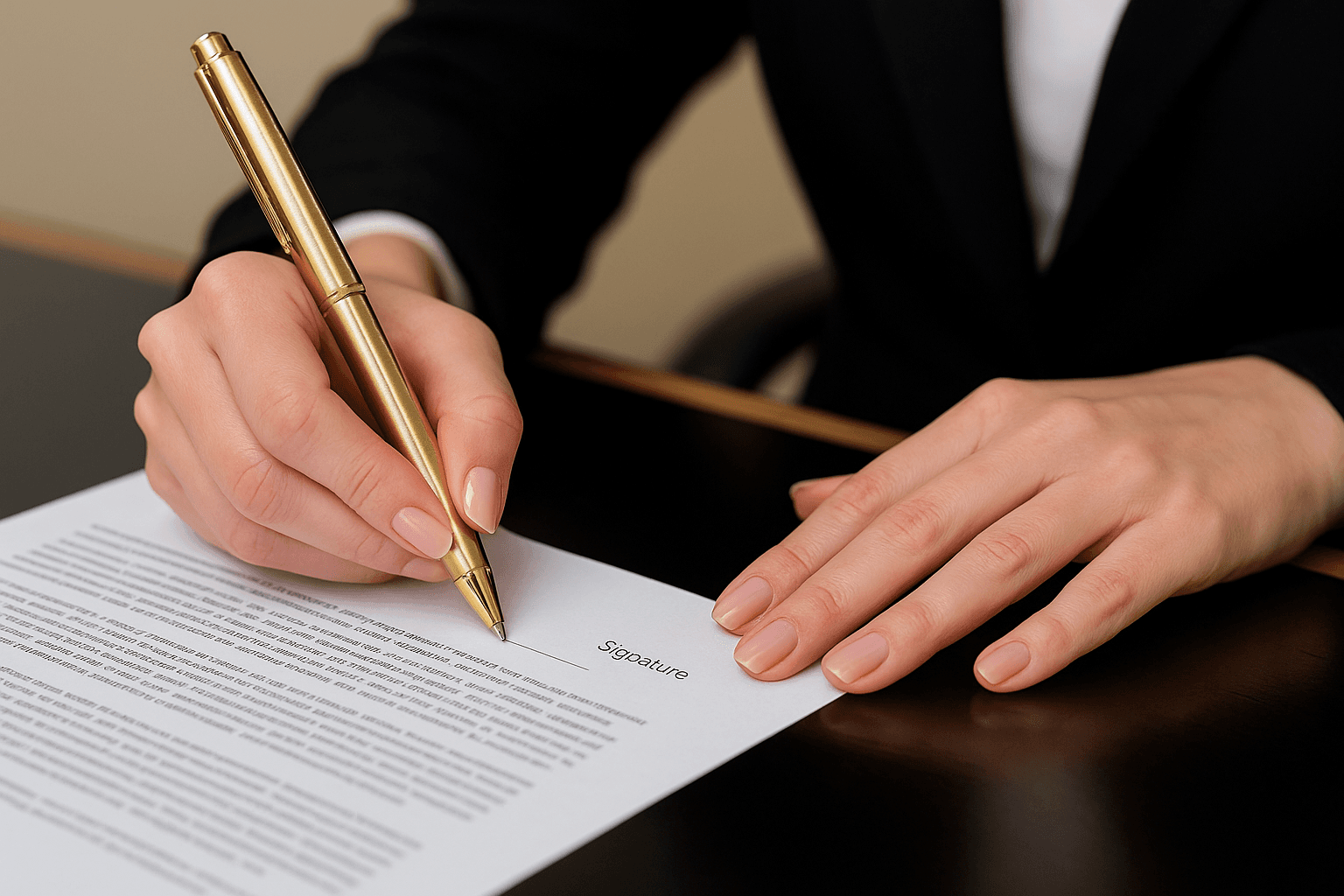
California courts require a signed employer verification affidavit as part of every restricted license (IDP) petition after DUI. The standard DMV form 5054 demands employer letterhead, supervisor signature, work schedule confirmation, and business address verification. Uber, Lyft, and DoorDash classify drivers as independent contractors, not employees, and their legal departments will not sign documents that imply an employment relationship.
Most rideshare drivers discover this conflict at the court hearing itself. They submit the DMV form with a screenshot of their driver account status or weekly earnings summary, assuming platform documentation proves work necessity. Judges deny these petitions immediately because the verification does not meet statutory requirements under California Vehicle Code 13353.3.
The approval pathway exists, but it requires reframing your work relationship in the petition itself. You are not employed by Uber — you operate as a self-employed transportation provider who contracts with the platform. The documentation strategy shifts entirely once you accept this classification.
What California Courts Actually Accept as Proof of Self-Employment Need
Self-employed applicants prove work necessity through business operation documentation, not employer affidavits. California judges approve restricted license petitions for rideshare drivers when the following appear together: a business license or DBA filing showing transportation services as the registered activity, three months of platform earnings statements showing consistent weekly income, a signed declaration under penalty of perjury stating your work hours and service area, and proof of vehicle registration in your name.
The declaration replaces the employer affidavit. You state your typical work schedule (e.g., Monday through Friday, 6 AM to 3 PM, serving San Francisco and Peninsula areas), your average monthly gross income from rideshare driving, and the fact that loss of driving privilege eliminates your primary income source. Courts evaluate self-employment petitions under the same necessity standard as W-2 employment — you must prove driving is essential to earning a living, not discretionary.
San Francisco, Los Angeles, and San Diego Superior Courts process the highest volume of rideshare restricted license cases in the state. Approval rates for properly documented self-employment petitions run 55-65% in these jurisdictions, compared to 80-85% for traditional employer-affidavit cases. The gap reflects documentation quality, not bias against gig work.
Compare car insurance rates in your state
Get quotes from licensed carriers — no obligation, no spam, results in minutes.
Get Your Free Quote✓ No Obligation Required✓ Licensed Carriers Only✓ Available Nationwide✓ Free to Compare
How California's Restricted License Program Works for DUI Suspensions
California grants restricted driving privileges through the Ignition Interlock Device (IID) program for first and repeat DUI offenders. You may apply immediately after suspension begins — no waiting period required. The restriction allows driving to and from work, during work hours, to and from DUI program classes, and to and from medical appointments for you or immediate family members. All driving requires an IID installed in every vehicle you operate.
The court process differs from DMV administrative restricted licenses. Administrative IID restricted licenses (available through DMV without a court hearing) permit the same driving purposes but do not require employer verification or court approval. Most rideshare drivers pursue the administrative path because it eliminates the employer-affidavit barrier entirely. You submit form DL 920 to DMV with proof of IID installation and SR-22 filing. DMV issues the restricted license within 7-10 business days.
Court-ordered restricted licenses become necessary when your suspension includes additional penalties beyond standard DUI — repeat offenses within 10 years, DUI causing injury, or refusal of chemical testing. These cases require a formal court hearing where the judge evaluates your petition, reviews your driving record, and determines whether restricted privileges serve public safety. The employer-documentation requirement applies only to court petitions, not administrative DMV applications.
Route and Hour Restrictions That Rideshare Drivers Violate Without Realizing It
California restricted licenses specify approved purposes, not approved routes. You may drive to work, during work, and from work — but the definition of "during work" creates enforcement risk for rideshare drivers most don't anticipate. Picking up a passenger in San Jose and dropping them in Sacramento counts as work-related driving. Picking up a passenger at 2 AM when your declared work schedule stated 6 AM to 3 PM does not.
CHP and local law enforcement verify restricted license compliance by comparing your current activity against the court order or DMV restriction notice. If you stated Monday-Friday day shifts in your petition but you're stopped during a Saturday night ride, you are driving on a suspended license regardless of whether you're actively transporting a passenger. The platform's dispatch system does not enforce your legal driving hours — that responsibility is entirely yours.
Violation consequences are immediate and unforgiving. Driving outside approved hours or purposes triggers a new misdemeanor charge under Vehicle Code 14601.2, restricted license revocation, and extension of the underlying suspension period by 6-12 months. Most rideshare drivers assume the IID prevents illegal driving — it does not. The IID prevents drunk driving. It does nothing to enforce hour or purpose restrictions.
IID Installation and Monthly Costs Rideshare Drivers Must Budget For
California requires IID installation before restricted license approval. Installation costs run $75-$150 depending on provider and vehicle type. Monthly monitoring and calibration fees add $75-$100. You must return for recalibration every 60 days, and missed appointments trigger lockout mode — the vehicle will not start until calibration is completed.
Rideshare platforms require advance notification before operating a vehicle with an IID installed. Uber and Lyft both permit IID-equipped vehicles but may deactivate your account if passengers report the device without prior disclosure on your driver profile. The platforms treat IID presence as a safety disclosure issue, not a DUI penalty — you must update your driver account settings to reflect the restriction before resuming rides.
Total restricted license cost stack for California rideshare drivers includes IID installation ($75-$150), IID monthly fees ($75-$100/month for the restriction period), DMV reissue fee ($55), SR-22 insurance premium increase (typically $80-$140/month for non-standard carriers), and DUI program enrollment fee ($650-$1,000 depending on county and first vs second offense). Budget $1,200-$1,800 in upfront costs and $155-$240/month in ongoing compliance costs for the restriction period.
SR-22 Filing and Insurance for California Rideshare Restricted Licenses
California requires continuous SR-22 filing for the entire restricted license period and three years total from the DUI conviction date. The SR-22 is a liability insurance certification filed by your carrier directly with DMV. Lapse for any reason — missed payment, policy cancellation, carrier non-renewal — triggers automatic suspension and revokes your restricted license immediately.
Rideshare drivers face a layered insurance requirement most don't understand until their first claim. Your personal SR-22 policy covers personal driving only. Uber and Lyft provide commercial liability coverage while you're actively transporting passengers, but that coverage does not satisfy your SR-22 filing requirement. You must maintain both: a personal auto policy with SR-22 endorsement for all non-platform driving, and platform-provided commercial coverage for passenger transport.
Non-owner SR-22 policies do not work for rideshare drivers who own vehicles. The non-owner policy covers you when driving borrowed or rental vehicles, but it excludes vehicles registered in your name. If you operate a rideshare vehicle you own, you need a standard auto policy with SR-22 endorsement, not a non-owner policy. Expect monthly premiums of $140-$220 through non-standard carriers like Dairyland, Bristol West, The General, or GAINSCO. Your platform-provided coverage remains separate and does not reduce your personal SR-22 premium.
What Happens If Your Rideshare Restricted License Petition Is Denied
California courts deny restricted license petitions for insufficient documentation, prior restricted license violations, or failure to demonstrate genuine hardship. Denial does not prevent reapplication, but you must wait 30 days before submitting a new petition. Each petition requires a new filing fee (typically $85-$125 depending on county) and a new court hearing date.
Most rideshare driver denials trace to the employer-affidavit gap described earlier. Judges expect either a traditional employer signature or complete self-employment business documentation. Earnings screenshots and account status letters fall short because they prove platform participation, not business operation necessity. The second petition must include business registration, signed declarations, and three months of income records to overcome the first denial.
While waiting for restricted license approval or reapplication, consider whether non-owner SR-22 insurance serves as a bridge if you can borrow a vehicle for essential trips. Non-owner policies satisfy California's SR-22 filing requirement and cost less than standard policies, but they only cover you when driving vehicles you do not own. This strategy works if a family member or friend will let you use their car for grocery trips or medical appointments during the restricted license application period.