Colorado courts require employer affidavits for rideshare drivers applying for probationary licenses post-reckless conviction, but Uber and Lyft refuse to provide them until drivers prove DMV approval—a circular documentation trap most drivers don't discover until their hardship hearing.
Why Rideshare Driver Status Breaks Colorado's Probationary License Application Process
Colorado courts require employer affidavits verifying work necessity before approving probationary licenses after reckless driving convictions. Traditional employers issue these letters before court hearings. Rideshare platforms won't.
Uber and Lyft classify drivers as independent contractors, not employees. Neither platform issues pre-approval employment verification letters for court proceedings. Both require proof of valid licensure before reactivating driver accounts. This creates a documentation impasse: you cannot prove employment necessity without platform confirmation, and platforms will not confirm without license reinstatement.
Most rideshare drivers discover this problem 48-72 hours before their scheduled hardship hearing, when their attorney requests the employer affidavit. By then, alternative documentation strategies require court continuances that delay license restoration 30-45 days. The path forward exists, but it requires understanding what Colorado courts accept as proof of work necessity when traditional employer letters are unavailable.
What Colorado Courts Accept as Employment Verification When Rideshare Platforms Won't Provide Letters
Colorado probationary license petitions require demonstration that driving is essential to earning a living. Courts do not mandate a specific document format. What they require is verifiable proof of income dependency on platform driving.
Acceptable documentation packages typically include: (1) 1099-NEC or 1099-K forms from Uber or Lyft showing prior-year earnings, (2) year-to-date earnings statements downloaded from the driver portal, (3) weekly trip summaries or payment receipts for the 90 days preceding suspension, (4) signed affidavit from the applicant attesting that rideshare driving constitutes their primary income source, and (5) proof of platform driver account status (screenshot of active account dashboard with identifiable information visible).
Jefferson County and Arapahoe County courts routinely approve petitions using this documentation structure. Denver County judges apply stricter scrutiny and may request supplemental evidence of job search attempts for traditional employment. El Paso County requires applicants to demonstrate why alternative employment is not feasible—evidence of limited job market access or specialized skills tied to rideshare work strengthens petitions there.
Attorneys experienced in Colorado hardship license cases know this workaround. Pro se applicants do not. If you are filing without counsel, contact the court clerk 10-14 days before your hearing to confirm what employment verification formats the assigned judge accepts. Judges have discretion, and county-level variation is significant.
Compare car insurance rates in your state
Get quotes from licensed carriers — no obligation, no spam, results in minutes.
Get Your Free Quote✓ No Obligation Required✓ Licensed Carriers Only✓ Available Nationwide✓ Free to Compare
How Colorado's Probationary License Approval Timeline Affects Rideshare Account Reactivation
Colorado probationary licenses are court-granted, not DMV-administrative. After a reckless driving conviction, the suspension period is typically 30-90 days depending on prior violations. You may petition for a probationary license immediately after conviction, but court calendars determine actual hearing dates.
Metro-area courts schedule hardship hearings 21-35 days from petition filing. Rural county courts often schedule within 14 days. Approval at the hearing does not produce a physical license that day. The court issues a signed order authorizing DMV to issue the probationary license. You must then submit the court order to DMV along with $95 reinstatement fee and proof of SR-22 insurance filing.
DMV processes probationary license applications within 5-7 business days after receiving complete documentation. Most drivers regain driving privileges 4-6 weeks post-conviction if they file immediately and provide complete documentation packages. Riders who delay filing or submit incomplete employer verification often wait 8-12 weeks.
Uber and Lyft reactivate driver accounts only after probationary license issuance and updated driver profile submission. Platform background check systems flag license status changes. You must upload the new probationary license and current insurance certificate showing SR-22 endorsement. Reactivation typically takes 3-5 business days after document upload. Total timeline from conviction to resumed rideshare earnings: 5-8 weeks under optimal conditions, 10-14 weeks when documentation errors occur.
What Probationary License Route Restrictions Mean for Rideshare Driving in Colorado
Colorado probationary licenses authorize driving only for court-approved purposes during specified hours. Standard approvals permit travel to and from a primary place of employment, medical appointments, education, and court-ordered programs. Rideshare driving does not fit this structure.
Rideshare work requires unrestricted geographic movement within platform operating zones. Drivers cannot pre-specify routes or destinations. Colorado judges address this by approving geographic boundaries rather than specific routes for rideshare drivers. Typical approved zones include: entire county of residence, city limits of Denver or Colorado Springs, or multi-county metro areas (Denver-Aurora-Lakewood combined).
Approved hours must align with platform activity patterns. Judges typically approve 6 AM to 2 AM daily for full-time rideshare drivers. Part-time drivers receive narrower windows (Friday-Sunday evenings, weekday rush hours). The court order specifies both the geographic zone and the approved time windows. Driving outside approved hours or beyond approved boundaries constitutes probationary license violation and triggers immediate revocation.
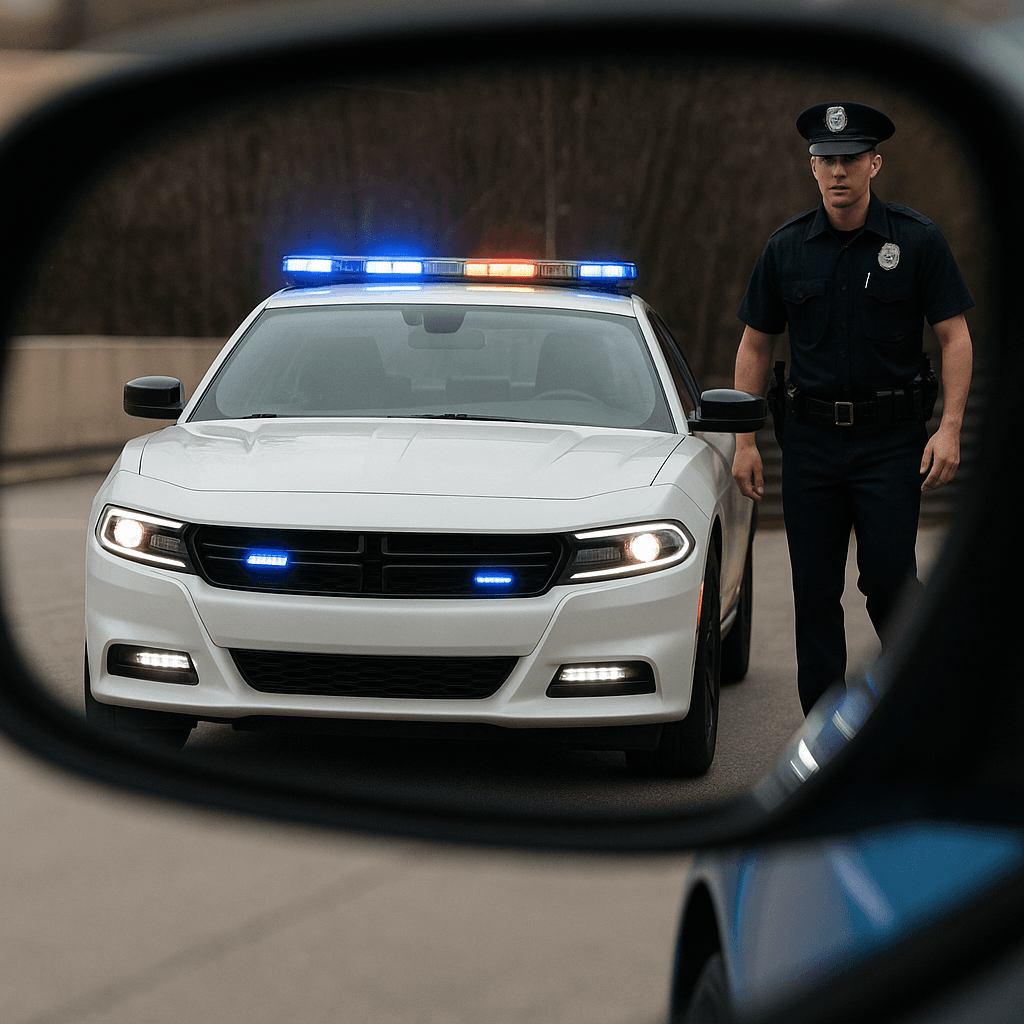
Colorado State Patrol officers cannot verify probationary license compliance during routine traffic stops by checking destination. They verify time of stop against approved hours and location against approved zones. If stopped at 3 AM in Boulder County with a probationary license authorizing Denver County 6 AM-2 AM driving, you are operating unlicensed. Violation consequences: probationary license revocation, extension of underlying suspension period, and potential criminal charges for driving under restraint.
SR-22 Insurance Requirements and Costs for Colorado Probationary License Holders
Colorado requires continuous SR-22 filing for three years following reckless driving convictions when probationary licenses are granted. The SR-22 is a liability insurance certificate filed by your carrier directly with Colorado DMV. It verifies you maintain at least Colorado's minimum liability coverage: $25,000 per person / $50,000 per accident for bodily injury and $15,000 for property damage.
Standard carriers (State Farm, Allstate, Progressive) rarely accept rideshare drivers with recent reckless convictions and active SR-22 requirements. Non-standard carriers that specialize in high-risk driver markets handle these cases: Bristol West, Dairyland, GAINSCO, The General, and National General write policies for drivers in this situation.
SR-22 liability-only policies for rideshare drivers with reckless convictions typically cost $140-$240 per month in Colorado. This covers personal driving only. Rideshare platforms require commercial rideshare endorsements or separate policies covering periods when the app is active. Rideshare-specific coverage adds $60-$110 per month to total insurance costs.
Total monthly insurance cost for a Colorado rideshare driver with probationary license and SR-22 requirement: $200-$350. Over the three-year SR-22 filing period, total insurance expense runs $7,200-$12,600. Most drivers do not budget for this when calculating whether rideshare income justifies hardship license petition costs. Honest budgeting matters: if monthly insurance costs exceed net rideshare earnings after platform fees and fuel, pursuing traditional employment may be more financially viable than maintaining probationary license compliance.
Cost Stack: What Colorado Rideshare Drivers Actually Pay for Probationary License Reinstatement
Colorado's probationary license process front-loads costs that most drivers underestimate. The visible DMV reinstatement fee is $95. Actual total costs run $2,100-$4,800 depending on whether you hire counsel and whether your vehicle requires ignition interlock device installation.
Breakdown: DMV reinstatement fee $95, SR-22 filing fee (one-time carrier charge) $25-$50, attorney fees for hardship petition $800-$1,500 (waived if filing pro se but approval rates drop significantly without counsel), court filing fee $50-$120 depending on county, and first month SR-22 premium $200-$350.
Colorado does not require ignition interlock devices for standalone reckless driving convictions unless alcohol was involved. If your reckless charge was alcohol-related or you have prior DUI history, IID installation is mandatory. IID costs add: installation $75-$150, monthly monitoring $75-$100, and removal fee $50-$75. Over a 12-month IID requirement, total device costs run $1,000-$1,350.
Most rideshare drivers finance these costs from savings or credit. Platform income stops immediately upon suspension and does not resume for 5-8 weeks post-conviction under optimal petition timelines. Budget for 6-10 weeks of zero rideshare income while covering SR-22 premiums and reinstatement costs. Drivers without emergency savings often cannot sustain this gap and lose their probationary license opportunity by missing court dates or letting SR-22 policies lapse during the waiting period.
What Happens If You Drive for Uber or Lyft on a Probationary License and Get Stopped
Colorado probationary licenses authorize driving only during approved hours within approved geographic zones for approved purposes. Rideshare driving is an approved purpose only if explicitly stated in your court order. If your order authorizes rideshare work within Denver County 6 AM-2 AM and you are stopped at 8 PM in Denver with the Lyft app active, you are compliant.
If you are stopped outside approved hours, outside approved zones, or without rideshare work listed as an approved purpose in your court order, the officer will treat you as driving under restraint. Colorado Revised Statutes §42-2-138 classifies driving under restraint as a class 2 misdemeanor traffic offense for first violation, punishable by up to 90 days in jail and $150-$300 fine.
Probationary license revocation is immediate upon conviction for driving under restraint. Your underlying suspension period extends, and you lose eligibility to reapply for probationary privileges for the duration of the extended suspension. Most judges will not grant a second probationary license to drivers who violated the terms of the first.
Rideshare drivers face an additional consequence: platform deactivation. Uber and Lyft monitor driver records continuously. A driving under restraint charge triggers automatic account review. Conviction results in permanent deactivation in most cases. Even if you eventually regain full licensure, platform reactivation after a restraint violation is rare. The probationary license is not a workaround for unrestricted rideshare driving. It is a narrow, tightly monitored privilege designed to prevent total income loss during suspension—not to restore normal earnings capacity.