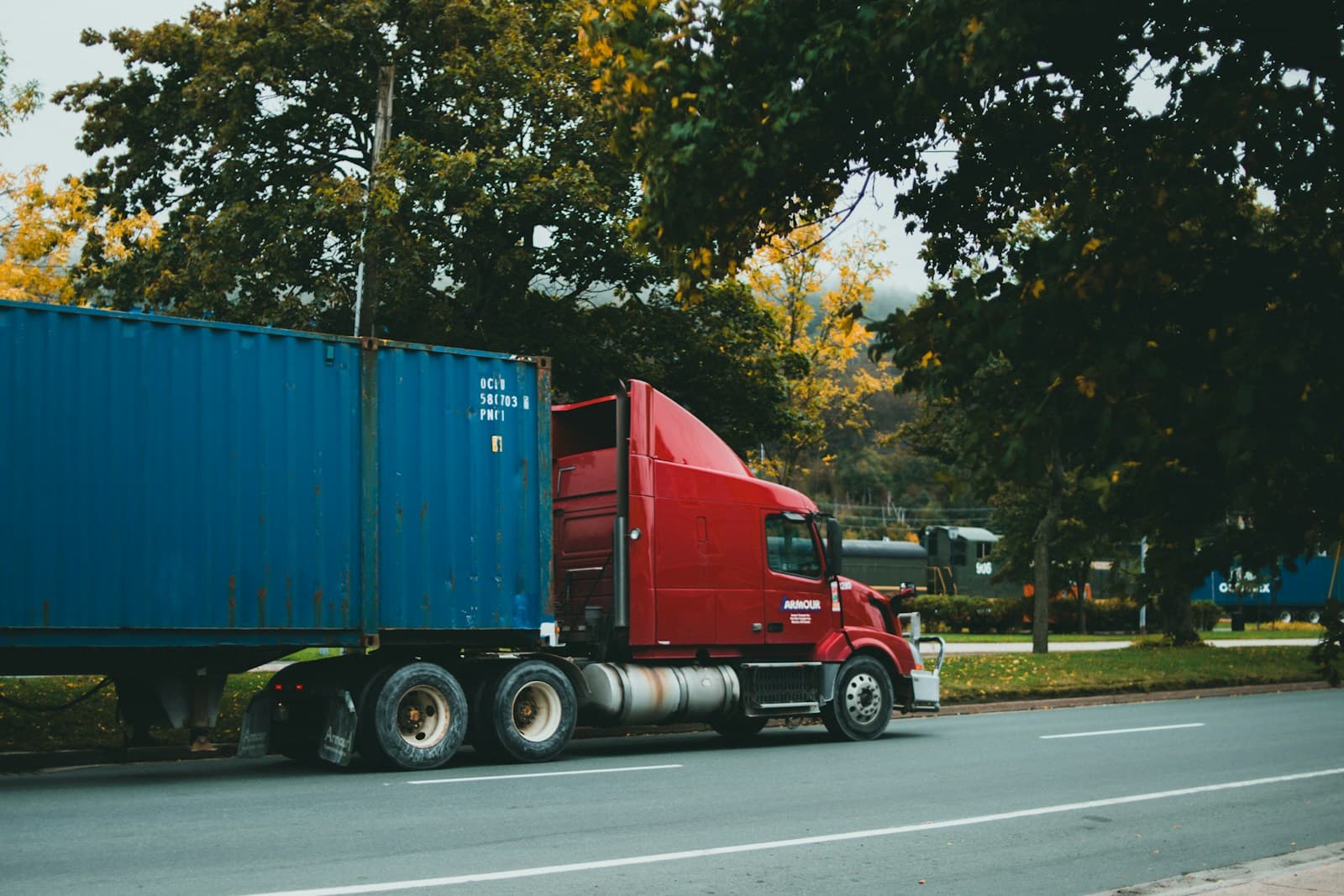
New York's conditional license program explicitly excludes commercial drivers. If you hold a CDL and lose your license to DUI or points, your employer's deadline just became your crisis.
CDL Holders Are Statutorily Barred From New York's Conditional License Program
New York Vehicle and Traffic Law Section 1196(7)(a) explicitly excludes anyone holding a commercial driver license from conditional license eligibility. This is not a discretionary DMV decision or a judge's call at your hardship hearing. The statute categorically bars CDL holders, regardless of whether the suspension arose from a commercial or personal vehicle violation.
The exclusion applies even if you drive commercially only part-time, even if your suspension stems from a personal DUI in your own car, and even if your employer is willing to document hardship. Class A, Class B, and Class C CDL holders face identical treatment: no conditional privilege exists under New York law.
Most DUI defense attorneys know conditional licenses exist. Far fewer flag the CDL exclusion before a client pays the $75 hardship hearing application fee and waits 3-4 weeks for a hearing that will be denied in under two minutes.
What New York Conditional Licenses Normally Allow — And Why CDL Drivers Don't Get That Option
A New York conditional license permits driving to and from work, during work hours if your job requires it, to medical appointments, to court-ordered programs like DDP or IDP, and to childcare pickup. The license typically runs for the duration of your underlying suspension — often 90 days for a first DUI refusal, 6 months for a first conviction, or longer for repeat offenses.
Conditional licenses require SR-22 filing (Form FS-20 in New York), proof of IDP or DDP enrollment for alcohol-related suspensions, a $75 application fee, and approval from a DMV hearing officer. Approval rates for non-CDL applicants run above 80% when paperwork is complete and the suspension type is eligible.
CDL holders lose access to this entire framework. There is no commercial-equivalent conditional privilege, no restricted CDL for work-only driving, and no hardship carve-out for owner-operators or delivery drivers whose income depends on daily road access. You are suspended in full, immediately, for the entire duration.
Compare car insurance rates in your state
Get quotes from licensed carriers — no obligation, no spam, results in minutes.
Get Your Free Quote✓ No Obligation Required✓ Licensed Carriers Only✓ Available Nationwide✓ Free to Compare
Why the CDL Exclusion Exists — Federal Standards Override State Hardship Rules
The Federal Motor Carrier Safety Administration sets minimum CDL disqualification standards under 49 CFR Part 383. A first DUI in any vehicle triggers a mandatory 1-year CDL disqualification. A second lifetime DUI disqualifies you permanently. New York cannot issue a restricted commercial privilege without violating federal law.
State conditional license programs operate under state police powers — they govern Class D and Class E licenses. CDL suspensions are federally regulated. New York's workaround was exclusion: deny CDL holders access to conditional licenses entirely, rather than create a two-tier system that invites federal preemption challenges.
This means a non-CDL driver suspended for refusing a breath test can apply for a conditional license 30 days post-suspension and return to work in 4-6 weeks. A CDL holder with an identical refusal remains fully suspended for 90 days minimum, loses their CDL for one year, and often loses their job before reinstatement completes.
Your Reinstatement Timeline If You Hold a CDL in New York
If your Class D or E personal license is suspended for DUI or points, you serve the full suspension before reinstatement. First refusal: 90 days. First DWI conviction: 6 months. Repeat offenses extend to 1-3 years depending on prior history.
During that suspension, your CDL is simultaneously disqualified under federal rules — 1 year for a first alcohol-related offense, 3 years if the violation occurred in a commercial vehicle, permanent for a second lifetime offense. The two timelines do not sync. You may complete your personal license suspension in 6 months but remain CDL-disqualified for another 6 months.
Reinstatement requires completing your suspension period, paying a $100 civil penalty for DWI or refusal cases, filing SR-22 proof of insurance for 3 years, completing the Drinking Driver Program, and paying a $50 reinstatement application fee. Total cost before insurance: $225-$375 depending on suspension type. Budget 6-12 weeks after eligibility to receive your reinstated license.
SR-22 Filing and Insurance for Suspended CDL Holders in New York
New York requires SR-22 filing (Form FS-20) for 3 years following any DWI conviction or refusal. Your insurer files the form electronically with DMV. If your policy cancels or lapses even one day during the 3-year period, DMV receives notice and re-suspends your license immediately.
CDL holders typically face SR-22 premiums 90-150% higher than their pre-suspension baseline. A clean-record CDL driver paying $1,800/year might see post-DUI premiums of $3,400-$4,500/year. Carriers writing high-risk CDL policies include Progressive Commercial, Geico, and specialty non-standard carriers like The General and Dairyland.
If you no longer own a vehicle but need SR-22 coverage to reinstate your license, non-owner SR-22 policies provide liability-only coverage starting around $50-$80/month. These policies satisfy the SR-22 requirement without insuring a specific vehicle, useful for drivers who lost their truck or whose employer provides the commercial vehicle.
What To Do Right Now If You're a Suspended CDL Holder in New York
Confirm your exact suspension end date and CDL disqualification period by requesting your full driving record from NYS DMV. The two periods often differ. Your personal license may reinstate months before your CDL becomes eligible.
Enroll in the Drinking Driver Program immediately if your suspension is alcohol-related. DDP completion is mandatory for reinstatement and classes fill quickly in metro areas. Delay adds 4-8 weeks to your timeline. Costs run $225-$325 depending on provider.
Secure SR-22 coverage before your reinstatement date. Non-standard carriers require 7-10 days to process high-risk applications and file FS-20 electronically. Starting the process 3-4 weeks before eligibility prevents reinstatement delays. If you're judgment-shopping between carriers, compare total 3-year cost, not just the first month's premium.
Employer Communication — What CDL Suspension Actually Means for Your Job
Most trucking companies, delivery services, and transit employers cannot hold a position open for 90 days, let alone 6-12 months. Federal law prohibits employing a disqualified CDL driver in any capacity requiring a CDL, even for local or intrastate routes.
If your job offers non-driving roles during your disqualification, you may remain employed. But most CDL-dependent employers treat disqualification as immediate job separation. Reinstatement does not guarantee rehire — many carriers refuse to employ drivers with any DWI history due to insurance underwriting restrictions.
Document everything: suspension notice, DDP enrollment receipt, SR-22 filing confirmation, reinstatement application submission. If your employer is willing to consider you post-reinstatement, proof of compliance and timeline clarity improve your odds. Silence or vague promises of "working it out" typically result in replacement hiring within 30 days.