New York conditional licenses aren't guaranteed after suspension. Courts grant them only when you meet waiting periods, complete DDP, and prove genuine hardship — here's the eligibility map most drivers never see before applying.
What Makes New York's Conditional License Different From Other States
New York calls it a conditional license, but the eligibility structure works differently than hardship licenses in most other states. You cannot apply immediately after suspension. The state requires completion of the Drinking Driver Program (DDP) before conditional privilege is granted for alcohol-related suspensions, and the DMV reviews your underlying suspension cause to determine which application path you follow.
Most states allow administrative DMV applications for restricted driving privileges. New York routes some cases through DMV and others through a court hardship hearing. DUI cases with aggravating factors — refusal, prior DUI within 10 years, injury accident — require judicial approval. Standard first-offense DUI cases can go through DMV after DDP completion. The path determines your timeline and approval probability.
Conditional licenses in New York are valid for approved purposes only: work, medical treatment, childcare, DDP attendance, and court-ordered obligations. The license lists approved hours and destinations. Driving outside those parameters — even once — triggers immediate revocation and typically extends your underlying suspension by 60 days to 1 year depending on the violation.
When You Can Apply: Waiting Periods by Suspension Type
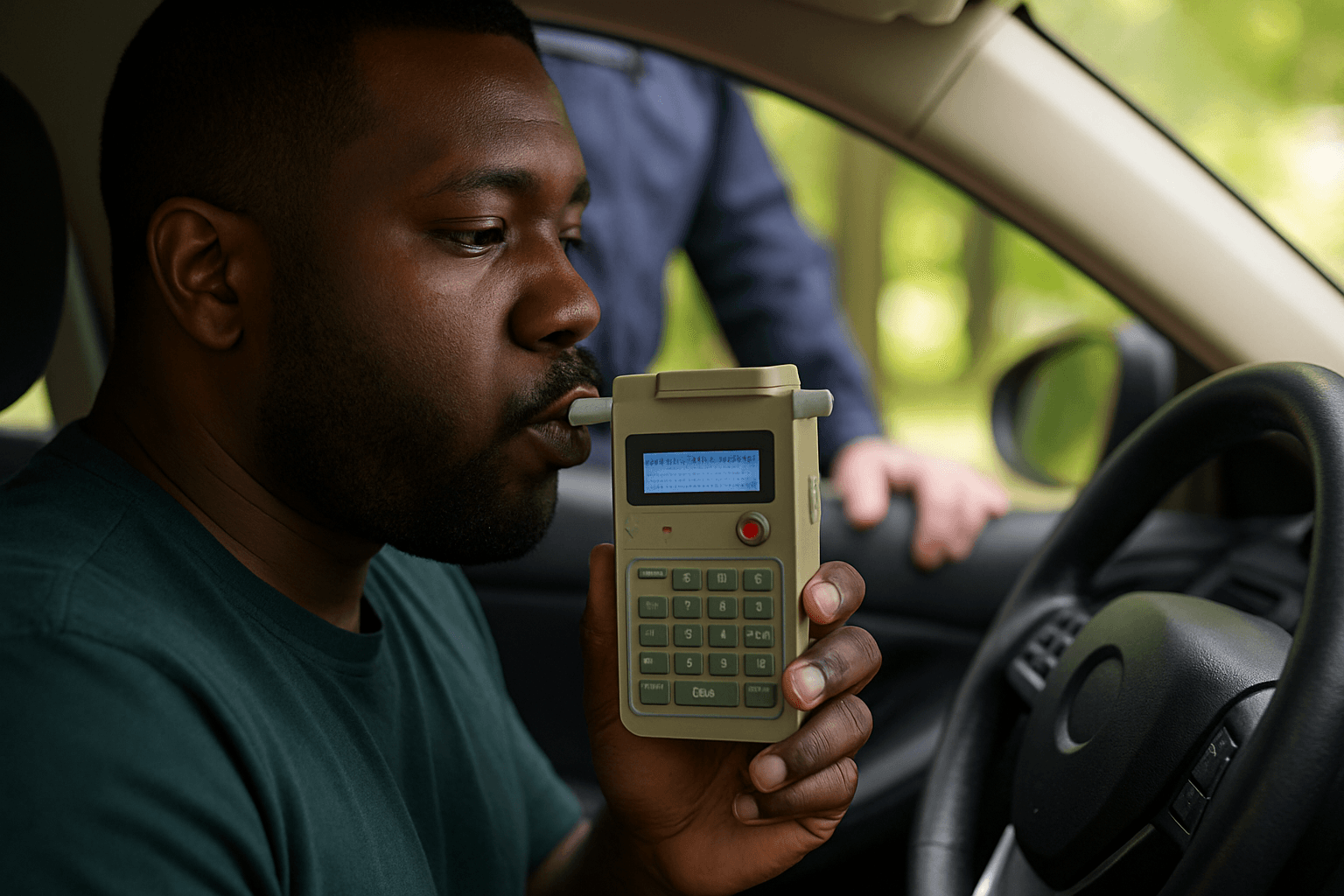
DUI first offense (no aggravating factors): eligible after completing at least half of the 7-week Drinking Driver Program, typically 4 weeks post-enrollment. Your suspension runs 6 months minimum, but conditional privilege can be granted around week 4 if DDP progress is verified and you submit SR-22 proof of insurance.
DUI with refusal or prior within 10 years: 1-year revocation minimum with no conditional privilege for the first 12 months. After 12 months, you may apply for a post-revocation conditional license if you completed DDP and maintain SR-22 filing, but approval requires a hardship hearing and is not automatic.
Multiple violations (11 points in 18 months, multiple speeding tickets, cell phone violations stacking to suspension threshold): eligible after 30 days if suspension is definite-length. Indefinite suspensions (child support, failure to answer summons, insurance lapse) require clearance of the underlying cause before conditional application opens. You cannot apply while the suspension reason remains unresolved.
Compare car insurance rates in your state
Get quotes from licensed carriers — no obligation, no spam, results in minutes.
Get Your Free Quote✓ No Obligation Required✓ Licensed Carriers Only✓ Available Nationwide✓ Free to Compare
The DDP Completion Trap Most Drivers Miss
New York requires Drinking Driver Program completion for conditional license eligibility on alcohol-related suspensions, but completion has two meanings and most drivers confuse them. Completing the 7-week classroom portion satisfies the conditional license requirement. Completing the full remedial program — classroom plus any required victim impact panel, evaluation follow-up, or treatment referral — satisfies the full license reinstatement requirement.
You can hold a conditional license while finishing the full remedial program. The DMV issues conditional privilege after verifying classroom attendance and SR-22 filing. But if you stop attending DDP sessions after receiving the conditional license, the DMV revokes it immediately and you start over. DDP programs report attendance weekly to DMV.
The 7-week program costs $225 to $275 depending on county, runs one evening per week, and cannot be accelerated. Missing a session extends your timeline by a full week. Most drivers underestimate the scheduling rigidity — if you travel for work or have rotating shifts, verify session times before enrolling or you may miss sessions and delay conditional eligibility by a month or more.
Court vs DMV Path: How Your Case Gets Routed
Standard DUI first offense with no refusal and BAC under 0.18: DMV handles conditional license application. You submit form MV-75C, proof of DDP enrollment, SR-22 certificate, $50 application fee, and employer verification letter. Approval typically takes 10 to 15 business days if paperwork is complete.
DUI with aggravating factors (refusal, BAC 0.18 or higher, injury accident, prior DUI): requires hardship hearing in the county where the offense occurred. You file a petition, pay court fees ($200 to $300 depending on county), and present evidence of genuine hardship at a hearing before a judge. The judge has full discretion. Approval rates vary by county but typically run 40% to 60% for first hearings when hardship is employment-related and documented with employer letters.
Multiple-violation suspensions: DMV administrative process. No hearing required unless the suspension involves criminal charges. Approval is routine if you meet the 30-day waiting period and submit complete documentation.
SR-22 Filing and the Carrier Reality in New York
New York requires SR-22 proof of insurance before conditional license approval for any alcohol-related suspension or serious violation. The filing must stay active for 3 years from the date of conviction, not the date of filing. If you file SR-22 6 months after conviction, you still owe 3 years from conviction date — the clock does not reset.
Most standard carriers (State Farm, GEICO, Progressive) non-renew policies after DUI conviction or multiple violations. You move to the non-standard market: Bristol West, Dairyland, Direct Auto, Kemper, National General, Titan. Monthly premiums for SR-22 conditional license coverage in New York typically run $180 to $320 per month for liability-only minimums ($25,000/$50,000/$10,000). Full coverage on a financed vehicle often exceeds $400 per month.
Some non-standard carriers will not write conditional license policies if you also need an ignition interlock device. IID is required for all DUI convictions in New York — first offense gets 6 months minimum, refusal or high BAC gets 12 months. The carrier must endorse the policy to reflect IID installation. Not all non-standard carriers offer that endorsement. Verify IID endorsement availability before purchasing the policy or you pay for coverage the DMV will not accept.
What Actually Gets Approved: Purpose and Hour Restrictions
New York conditional licenses limit you to specific approved purposes, and the DMV lists them explicitly on the license itself. Work and medical treatment are automatically approved if you provide documentation. Childcare is approved if you submit proof of custody or a court order establishing parental responsibility. DDP attendance is always approved because it's a condition of eligibility.
Approved hours depend on your work schedule. If you work 9-to-5 Monday through Friday, your conditional license restricts driving to those hours plus a 1-hour buffer before and after for commute. If you work nights or rotating shifts, you submit a letter from your employer stating your exact schedule, and the DMV issues restrictions matching that schedule. Driving outside approved hours for any reason — grocery store, friend's house, gas station — is a violation.
The license lists approved destinations by address. Your home, workplace, doctor's office, DDP location, and childcare provider addresses appear on the conditional license. Deviating from the approved route between those destinations can trigger a violation if you are stopped. Most conditional license holders are pulled over at higher rates because the license flags the driver's status to law enforcement during routine stops.
When Conditional License Is Not Possible
New York denies conditional license applications outright in specific circumstances, and most drivers do not learn this until after paying application fees and waiting weeks for a decision. Commercial driver's license holders suspended for DUI cannot receive conditional privileges for commercial driving. You may receive conditional privileges for personal driving only, which does not help if your job requires a CDL.
Felony DUI (third offense within 10 years, or DUI causing serious injury or death): no conditional license for a minimum of 18 months, and post-revocation conditional privileges require hardship hearing with no guaranteed approval. Judges deny felony DUI conditional applications at much higher rates — often 70% to 80% denial in the first hearing.
Drivers under 21 face stricter rules. Zero-tolerance violations (any detectable BAC under 21) result in 6-month suspension with no conditional privilege available for the first 90 days. After 90 days, conditional eligibility opens, but only for drivers who can prove enrollment in school or employment. Recreational or social driving is never approved for under-21 conditional licenses.