You received a DUI conviction in New York and need to drive to work. A conditional license lets you drive during suspension, but requires SR-22 filing, strict route limits, and passing a waiting period most drivers get wrong.
When You Can Apply for a Conditional License in New York After a DUI
New York counts your conditional license waiting period from your conviction date, not from the date your suspension begins or the date you receive your DMV suspension notice. For a first DUI (VTL 1192), you must wait a minimum of 30 days from conviction before you can apply for a conditional license. For a second DUI within 10 years, the waiting period extends to 45 days, and for refusal of a chemical test, you face 90 days.
Most drivers lose weeks of eligibility by waiting for their suspension letter to arrive before starting the application process. Your conviction date starts the clock. If you were convicted on March 1st, you can file your conditional license application on March 31st, regardless of when DMV processes your suspension or mails your notice.
You must also enroll in and attend the NYS Drinking Driver Program (DDP) before DMV will issue the conditional license. The program runs 7 weeks and costs $225–$300 depending on county. Some counties allow conditional license approval contingent on DDP enrollment; others require proof of attendance at the first session before issuing the license. Call your county DMV before applying to confirm their specific sequencing requirement.
What a New York Conditional License Actually Allows You to Do
A New York conditional license restricts you to driving for employment, education, medical care for yourself or a dependent, court-ordered programs like DDP, and essential household activities when no alternative transportation exists. You must carry documentation proving your approved purpose every time you drive: employer letter on company letterhead stating your work hours and address, class schedule and school address, medical appointment confirmation, or DDP attendance schedule.
Your conditional license does not authorize social driving, errands unrelated to the approved categories, or driving outside the hours and routes you listed on your DMV application (form MV-45C). If you're stopped outside your approved parameters, your conditional license is revoked immediately and your full suspension period restarts from zero. Many counties also require you to install an ignition interlock device (IID) even during the conditional license period, adding $75–$125/month to your cost.
The conditional license is valid only during your suspension period. For a first DUI, that's typically 6 months. For a second DUI or refusal, it can extend to 1 year or longer. Once your suspension ends and you pay the $100 civil penalty reinstatement fee, you can apply for full license restoration assuming you've completed DDP and served the full suspension.
Compare car insurance rates in your state
Get quotes from licensed carriers — no obligation, no spam, results in minutes.
Get Your Free Quote✓ No Obligation Required✓ Licensed Carriers Only✓ Available Nationwide✓ Free to Compare
SR-22 Filing Requirement and How It Connects to Your Conditional License
New York does not use the term SR-22. The state requires an FS-1 form filed by your insurance carrier, which serves the identical function: proof of continuous liability coverage filed directly with DMV. You cannot be approved for a conditional license without an active FS-1 on file. Your carrier must file it electronically before DMV will process your conditional license application.
The FS-1 requirement lasts for 3 years from your conviction date in most first-DUI cases. If you let your policy lapse or cancel at any point during those 3 years, your carrier notifies DMV within 24 hours and your conditional license is revoked immediately. Your full suspension restarts and you return to zero driving privileges until you refile and repay all fees.
Not all carriers write FS-1 policies. Most standard carriers (GEICO, State Farm, Progressive) either non-renew DUI drivers at policy expiration or surcharge so heavily that monthly premiums exceed $400. The non-standard carrier market for New York FS-1 policies includes Direct Auto, Bristol West, Dairyland, The General, and GAINSCO. Expect monthly premiums between $180–$350 depending on your county, vehicle, coverage limits, and whether you're required to carry an IID endorsement.
Court Path vs DMV Path and Which One Controls Your Timeline
Your DUI triggers two separate processes: a criminal court case and a DMV administrative suspension. The criminal court imposes fines, DDP enrollment, possible jail time, and probation terms. DMV suspends your license under VTL 1193 and controls conditional license eligibility. The waiting period and conditional license approval come from DMV, not the court.
Some drivers assume their attorney negotiated conditional driving privileges as part of a plea deal. That is not how New York works. Your attorney may negotiate a reduced charge (DWAI instead of DUI, for example) which shortens your suspension and waiting period, but the conditional license itself is a separate DMV application you must file on form MV-45C after your waiting period expires.
If you pled to DWAI (VTL 1192.1) instead of DUI (VTL 1192.2 or 1192.3), your suspension drops to 90 days and you have no waiting period for a conditional license. You can apply immediately. If you were convicted of Aggravated DUI (VTL 1192.2-a, BAC 0.18% or higher), your waiting period extends to 45 days and you face a mandatory 1-year revocation, not suspension, which requires a full re-application and driver responsibility assessment payment after the revocation ends.
What the Conditional License Application Costs and What Happens If You're Denied
The conditional license application itself (form MV-45C) costs $75 and must be filed at a DMV office in person. You cannot file online or by mail. Bring your conviction paperwork, proof of DDP enrollment, and your FS-1 confirmation from your insurance carrier. If DMV denies your application because your FS-1 hasn't been filed yet or you haven't met the waiting period, you forfeit the $75 fee and must reapply with a new payment.
Add the DDP enrollment fee ($225–$300), the FS-1 insurance premium increase (typically $1,200–$2,400 annually above your prior rate), IID installation and monitoring if required ($150 install + $75–$125/month), and the $100 civil penalty reinstatement fee due when your suspension ends. Total first-year cost for most first-DUI conditional license holders in New York runs $2,500–$4,500 depending on county and carrier.
If you're denied, DMV will state the reason on your denial letter: insufficient waiting period, missing FS-1, incomplete DDP enrollment, or disqualifying conviction (for example, a second DUI within 5 years in some counties). You can reapply once the deficiency is corrected, but each application requires a new $75 fee. Most denials happen because drivers apply too early or their carrier hasn't transmitted the FS-1 to DMV yet even though the policy is active.
How Ignition Interlock Requirement Affects Conditional License Eligibility
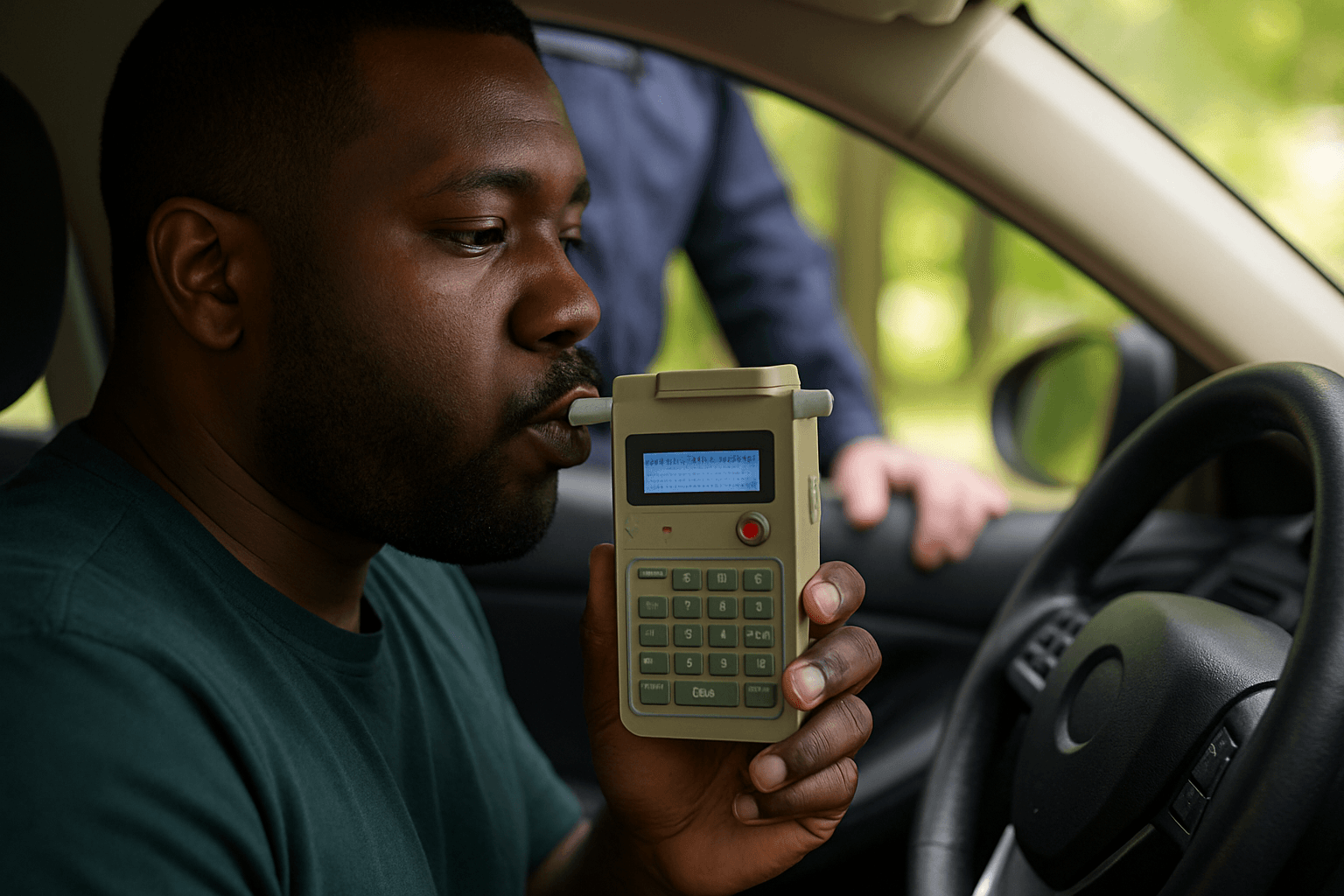
New York law requires ignition interlock installation for all DUI convictions with BAC 0.08% or higher, even during the conditional license period. You must install the IID before DMV will approve your conditional license application. The device remains on your vehicle for the entire suspension period plus an additional 6–12 months after full license restoration depending on your BAC level and prior record.
The IID monitors every startup and requires rolling retests while driving. Any failed test, missed rolling retest, or tamper alert is reported to DMV within 48 hours and results in immediate conditional license revocation. You also pay for calibration visits every 30–60 days at $15–$30 per visit. Installation runs $100–$150; monthly monitoring runs $75–$125. The total IID cost over an 18-month period (6-month suspension + 12-month post-restoration) typically exceeds $1,800.
If you don't own a vehicle, New York still requires IID installation on any vehicle you will operate, including employer-owned vehicles if you're driving for work under your conditional license. Your employer must consent to IID installation in writing on the conditional license application. Many employers refuse, which eliminates work driving as an approved conditional license purpose. In that case, your only option is non-owner FS-1 insurance, which proves financial responsibility but does not allow you to drive. You remain without driving privileges until your suspension ends and you pay all reinstatement fees.