New York DMV accepts conditional license applications 30 days before your suspension ends, but most drivers don't know what to assemble during the waiting period — meaning they lose another 2-4 weeks to paperwork after they're technically eligible.
What You Can Assemble During the Suspension Waiting Period
New York DMV does not process conditional license applications until 30 days before your suspension ends, but that pre-application window is when most drivers lose weeks to missing paperwork. The conditional license requires five documents at application: employer letter on company letterhead stating your work address and required commute hours, SR-22 certificate of insurance filing confirmation from your carrier, proof of Impaired Driver Program (IDP) or Drinking Driver Program (DDP) completion if court-ordered, ignition interlock device installation verification if required, and payment for the $50 application fee plus any outstanding suspension termination fees.
Most drivers wait until they're eligible to apply, then spend 3-4 weeks chasing their employer for a signed letter, waiting for SR-22 confirmation from a carrier they just bought coverage from, or discovering their DDP completion certificate was never mailed. Every document except the employer letter can be assembled during your suspension. SR-22 insurance can be purchased and filed 60-90 days before you apply. IID can be installed and verified 45 days out. DDP certificates are mailed 2-3 weeks after course completion — if you finished your program but never received the certificate, request a duplicate now, not the week you're eligible.
The employer letter is the only document that cannot be dated more than 30 days before application, but you can draft the exact text your employer needs to sign, confirm they'll provide it on letterhead, and identify the signer now. Drivers who assemble everything except the final employer signature before the 30-day window get conditional license approval in 7-10 business days. Drivers who start gathering documents the day they're eligible wait 4-6 weeks.
How SR-22 Filing Works Before You're Licensed Again
New York requires SR-22 filing at the time of conditional license application, which creates a procedural problem: you need insurance on a vehicle you cannot legally drive yet, and most carriers will not write a policy effective before your license is reinstated. The solution is an SR-22 policy with a future effective date, issued 15-30 days before your application date. The carrier files the SR-22 with DMV immediately, but the policy and premium obligation do not activate until the effective date you specify.
Not all carriers write future-dated SR-22 policies. Non-standard carriers that serve post-suspension drivers — Bristol West, Direct Auto, Dairyland, The General, GAINSCO — will issue future-dated SR-22 filings if you provide your anticipated conditional license approval date. The SR-22 certificate arrives by mail 5-10 business days after purchase. If you apply for your conditional license before the certificate arrives, DMV rejects the application and you resubmit when it does.
If you do not own a vehicle, New York accepts non-owner SR-22 policies for conditional license applications. A non-owner policy provides liability coverage when you drive a vehicle you do not own — your employer's truck, a family member's car, a rental. Premium typically runs $40-$80/month for minimum 25/50/10 liability limits plus SR-22 filing. The SR-22 filing itself costs $15-$25 depending on carrier. New York requires SR-22 for 3 years from the date of reinstatement, not from the date of conviction or suspension.
Compare car insurance rates in your state
Get quotes from licensed carriers — no obligation, no spam, results in minutes.
Get Your Free Quote✓ No Obligation Required✓ Licensed Carriers Only✓ Available Nationwide✓ Free to Compare
What the Employer Letter Must Contain
DMV rejects conditional license applications if the employer letter is missing required elements or formatted incorrectly, and there is no standard form — your employer writes it freehand on company letterhead. The letter must state: your full legal name as it appears on your DMV record, your job title, your work site street address (not a P.O. box), your required work days and exact hours (e.g. Monday-Friday, 7:00 AM to 3:30 PM), and a signature from a supervisor, HR representative, or business owner with printed name and title. The letter must be dated within 30 days of your application date.
DMV rejects vague language. "John works full-time" is insufficient. "John Doe, Construction Foreman, is required to report to 1250 Broadway, Albany, NY Monday through Friday, 6:30 AM to 3:00 PM" is correct. If your job requires variable hours or multiple sites — delivery driver, home health aide, sales rep — the letter must list all work locations with street addresses and describe the geographic territory or route structure. "Required to travel within Albany, Rensselaer, and Schenectady counties for client visits, Monday-Friday, 8:00 AM to 6:00 PM" is acceptable.
If you are self-employed, the letter is a signed affidavit on your business letterhead or a notarized statement describing your work address, hours, and business nature. DMV scrutinizes self-employment claims more closely — include your business EIN, a copy of your business registration or DBA filing, and a recent invoice or contract showing active work. If your employer refuses to write the letter or will not sign it, you are not eligible for a conditional license. New York grants conditional driving privileges for employment only, and DMV interprets that strictly.
IID Installation and Verification Timeline
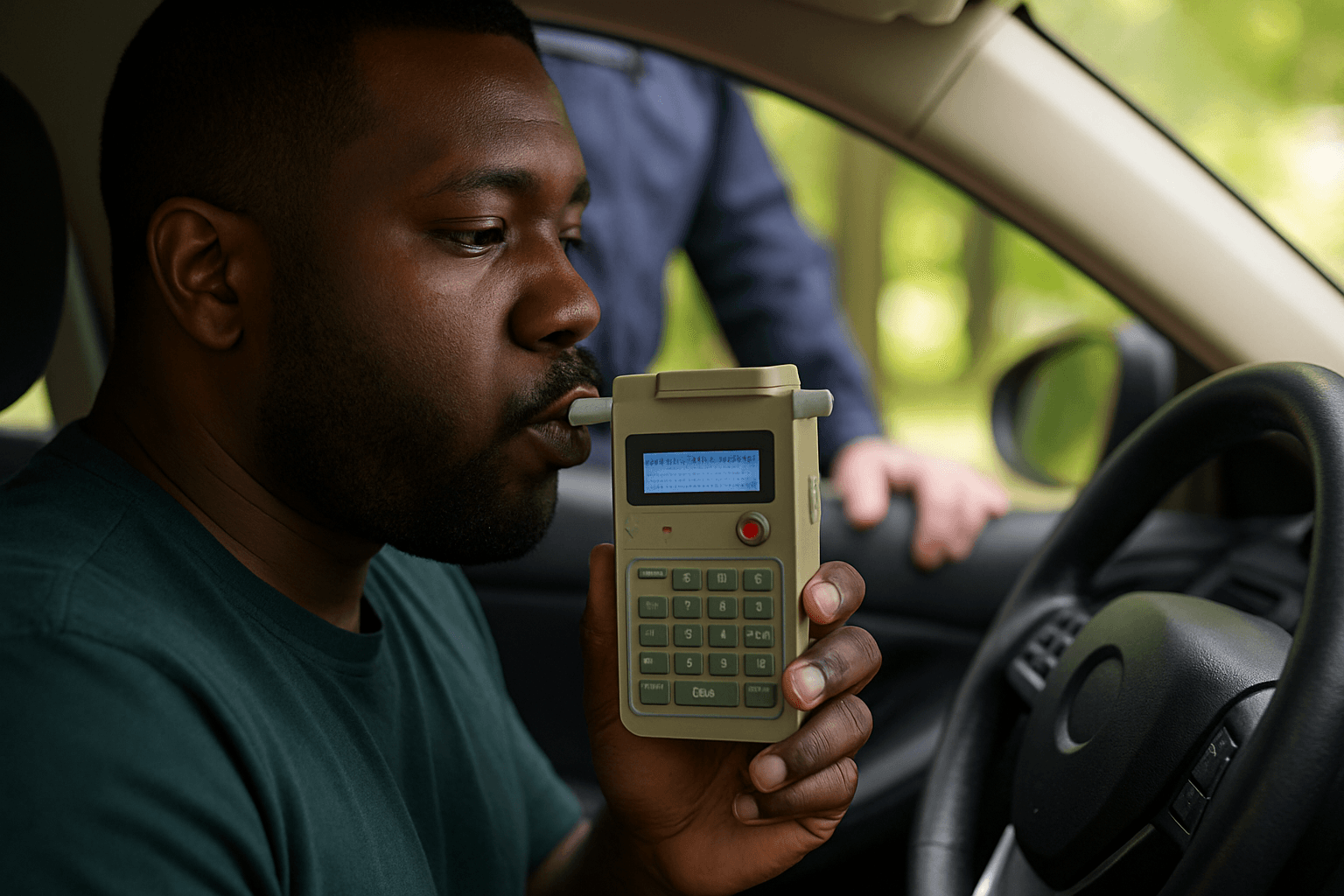
If your suspension resulted from a DWI conviction with BAC over 0.08% or refusal to submit to a chemical test, New York requires ignition interlock device installation before conditional license approval. The IID must be installed by a state-approved vendor, and you must provide DMV with the installation verification certificate at application. Installation cannot occur until you have a vehicle registered in your name or written permission from the registered owner authorizing IID installation.
Approved IID vendors in New York include LifeSafer, Intoxalock, Smart Start, and Guardian Interlock. Installation appointments typically require 5-10 business days notice, and the appointment itself takes 60-90 minutes. The vendor provides a dated installation certificate immediately after the appointment — this is the document DMV requires. Installation cost runs $100-$150, plus monthly monitoring and calibration fees of $75-$100. You pay these costs for the entire duration of your conditional license, typically 12 months minimum.
If you do not own a vehicle and plan to drive an employer's vehicle under your conditional license, the employer must consent in writing to IID installation, and the device must be installed on the specific vehicle you will drive. Most employers refuse. If your employer refuses IID installation, you cannot obtain a conditional license that permits driving an employer's vehicle. Your only option is to purchase and register a vehicle in your name, install IID on that vehicle, and use it for your approved work commute. Conditional licenses do not permit IID-exempt driving under any circumstances during the restriction period.
DDP Completion and Certificate Timing
New York courts require Drinking Driver Program completion as a condition of suspension termination for most DWI convictions, and DMV requires proof of DDP completion before approving a conditional license application. DDP is a 7-week course offered by state-certified providers, typically meeting one evening per week. The course costs $225-$275 depending on county, paid at enrollment. Completion certificates are mailed by the program provider to both you and DMV 10-15 business days after your final session.
If you completed DDP months or years ago but never received the certificate, contact the provider directly and request a duplicate. Most providers charge $15-$25 for duplicate certificates and mail them within 5 business days. If the provider is no longer in operation or cannot locate your records, contact the NYS OASAS (Office of Addiction Services and Supports) at 518-473-3460 — they maintain a statewide database of DDP completions and can issue verification letters. DMV accepts OASAS verification letters in place of original certificates.
If your suspension is not DWI-related — accumulation of points, failure to pay fines, insurance lapse — DDP is not required and you do not submit a certificate. Conditional license eligibility for non-DWI suspensions depends on suspension type and duration. Administrative suspensions for insurance lapse or failure to answer a ticket do not qualify for conditional licenses at all. Only definite-term suspensions with a specific end date qualify, and only if the underlying reason was a moving violation, accumulation of points, or court-ordered suspension.
Application Submission and Approval Timeline
New York processes conditional license applications at DMV offices, not online. You must appear in person at a DMV office with all required documents: the completed MV-299 conditional license application form, employer letter on company letterhead dated within 30 days, SR-22 certificate of insurance, proof of IID installation if required, DDP or IDP completion certificate if required, and payment for the $50 application fee. If you owe suspension termination fees or driver responsibility assessment fees, you must pay those in full before DMV will process the application.
DMV reviews the application on the spot and either approves it immediately, requests additional documentation, or denies it. If approved, you receive a temporary conditional license document valid for 45 days while DMV produces your permanent restricted license card. The permanent card arrives by mail in 10-15 business days. If DMV requests additional documentation — a clearer employer letter, updated SR-22 filing, or proof of fee payment — you must return with corrected documents and restart the review. Most denials result from employer letters missing required details, SR-22 filings not yet processed in DMV's system, or outstanding fees the applicant did not know existed.
Once issued, the conditional license restricts you to driving for employment purposes only, during the hours and routes specified in your employer letter. Driving outside approved hours, for non-work purposes, or without an operational IID if required results in immediate conditional license revocation and extension of your underlying suspension. Conditional licenses are valid for the remainder of your suspension period or 12 months, whichever is shorter. At the end of your suspension, you apply for full license reinstatement — a separate process requiring payment of reinstatement fees and proof of continuous SR-22 coverage.