
How to Prepare for Your California Restricted License Application
Free to compare
What You Can Do During California's 30-Day Hard Suspension
California imposes a mandatory 30-day hard suspension after a DUI before you're eligible to apply for a restricted license. You cannot drive at all during this period, but you can assemble the three required application documents: employment verification, SR-22 proof of insurance, and ignition interlock device enrollment confirmation.
Most drivers wait until day 30 to start gathering paperwork. That's a mistake. The SR-22 filing alone takes 3-7 business days to process after you buy a policy. IID installation appointments often run 10-14 days out in metro areas. Employer verification letters require HR approval, which can take a week if your company uses a central payroll service.
Start the process on day 1 of your suspension. By day 30, you'll have a complete application packet ready to submit the moment you're eligible, instead of extending your non-driving period by another 2-3 weeks while you wait for documents to arrive.
How to Get Your Employment Verification Letter
California DMV requires a signed letter from your employer on company letterhead confirming your job title, work address, scheduled hours, and your need to drive to maintain employment. The letter must include your supervisor's name and direct contact number — DMV calls to verify in approximately 40% of applications.
Request the letter from HR or your direct supervisor as soon as your suspension begins. Provide them with the specific language DMV expects: "[Your name] is employed as [job title] and is scheduled to work [days and hours]. Their employment requires driving between [home address] and [work address]. Failure to drive will result in job loss." Generic letters that don't mention driving necessity or specific hours get rejected.
If you're self-employed, you'll need business registration documents, a recent tax return showing active income, and a notarized statement explaining why you must drive for your business. Self-employment applications face higher scrutiny and longer processing times — expect 4-6 weeks instead of the standard 2-3.
How to File SR-22 Before Your Restricted License Appointment
You need active SR-22 insurance coverage before DMV will process your restricted license application. The SR-22 is a liability certificate filed by your insurance carrier directly with California DMV, proving you carry at least the state minimum: 15/30/5 liability coverage.
Call non-standard carriers that specialize in DUI cases: Bristol West, Dairyland, GAINSCO, Direct Auto, and Acceptance all write California SR-22 policies for suspended drivers. Expect monthly premiums between $180-$320 depending on your age, county, and violation details. The carrier files the SR-22 electronically within 24 hours of binding coverage, but DMV's system takes 3-7 business days to register the filing in your driver record.
Do not wait until day 29 to buy coverage. If the filing doesn't register by your eligibility date, your application gets delayed. Buy the policy by day 20 of your suspension to ensure the SR-22 appears in DMV's system when you apply. Request a physical SR-22 certificate from your carrier and bring it to your DMV appointment as backup — some field offices still require paper proof even when the electronic filing is complete.
Get Insured for the Drive to Work
Keep Driving to WorkHow to Schedule and Complete IID Enrollment
California requires ignition interlock device installation before issuing a restricted license for any DUI conviction. You must use a state-certified IID provider — the current list appears on DMV's website under "IID Providers" — and the device must remain installed for the full restricted license period, typically 12 months for a first DUI.
Call three certified providers for installation quotes. Costs run $70-$125 for installation, then $60-$90 per month for monitoring and calibration. LifeSafer, Intoxalock, and Smart Start operate statewide and usually offer the shortest wait times for appointments. Book installation for day 25-28 of your suspension so the device is active when you apply but you're not paying monthly fees during the hard suspension period when you can't drive anyway.
The provider gives you an enrollment verification document immediately after installation. This document — showing your name, vehicle VIN, device serial number, and installation date — is the third required piece of your DMV application packet. Without it, DMV will not process your restricted license request regardless of your other documentation.

What to Bring to Your DMV Restricted License Appointment
On day 31 or later, you can apply for your restricted license at any California DMV field office. No appointment is required, but expect 2-4 hour wait times at metro offices. Bring six items: your current driver license or DMV printout showing suspension status, the signed employer verification letter, your SR-22 certificate or carrier confirmation showing active filing, the IID enrollment verification from your device provider, a completed DL 44 application form, and $125 in fees — $55 reissue fee plus $70 for the restricted license itself.
DMV processes complete applications in 10-15 minutes. Incomplete applications get rejected and you'll need to return with missing documents, extending your time without driving. If your SR-22 filing doesn't show as active in DMV's system despite your carrier filing it, request a manual verification — this adds 30-45 minutes but prevents a rejection.
You receive a temporary restricted license paper document valid for 90 days while DMV mails your permanent card. The restriction allows driving only between home and work during scheduled hours, to and from DUI program appointments, and to and from the IID service center for required calibration. Any other driving — including errands, side trips, or non-work travel — violates the restriction and triggers immediate revocation plus an additional 6-month suspension.
How Much the Complete Process Costs and How Long It Actually Takes
Budget $2,200-$3,400 for the full restricted license process in California. That breaks down to $1,800-$2,600 for 8-12 months of SR-22 insurance premiums paid upfront or monthly, $125 for DMV fees, $70-$125 for IID installation, $60-$90 per month for IID monitoring, and $400-$800 if you hire a DUI attorney to handle the DMV hearing and paperwork — not required but cuts processing time significantly.
Timeline with proper preparation: 30 days hard suspension, then 1 day for DMV application processing if your packet is complete, then immediate restricted driving privileges. Timeline without preparation: 30 days hard suspension, then 2-3 weeks waiting for SR-22 filing to register and IID installation, then 1 day for DMV processing — total of 6-7 weeks before you can drive to work instead of 4-5 weeks.
The preparation window during your hard suspension is the only part of this process you control. Use it.
Frequently Asked Questions
Can I start the restricted license application before my 30-day hard suspension ends?
No. California DMV will not accept restricted license applications until day 31 after your suspension start date. You can gather all required documents during the 30 days, but you cannot submit the application or receive approval until the hard suspension period is complete.
What happens if my employer won't write a verification letter?
Without employer verification, DMV denies your restricted license application. If your employer refuses, you have three options: find new employment that will verify, apply for unemployment-based hardship reinstatement (rare and difficult), or wait out the full suspension period. DMV does not grant restricted licenses for job searching.
Do I need SR-22 insurance if I don't own a car?
Yes. California requires SR-22 proof regardless of vehicle ownership. If you don't own a car, buy a non-owner SR-22 policy — it costs $40-$80 per month and satisfies the DMV filing requirement. You still need the IID installed in any vehicle you plan to drive under the restricted license, even if you borrow it.
How long does the restricted license last in California?
Typically 12 months for a first DUI, 24 months for a second. The restriction remains in effect until your full license is reinstated, which requires completing your DUI program, maintaining SR-22 coverage for 3 years from the conviction date, and paying all reinstatement fees. The IID must stay installed for the full restricted period.
Can I drive outside my approved work hours with a restricted license?
Only to DUI program classes and IID calibration appointments. Any other driving — errands, emergencies, side jobs — violates the restriction. A single violation triggers immediate license revocation, adds 6 months to your suspension, and often results in a new misdemeanor charge. Law enforcement can verify your restriction status and approved hours during any traffic stop.
Related Articles
CA Restricted License After Uninsured Driver Suspension
4/29/2026
CA Restricted License Hearing Prep & SR-22 Coordination
4/29/2026
NY Conditional License Prep During Suspension Wait
4/29/2026

Oregon Restricted License Prep: What to Gather First
4/29/2026
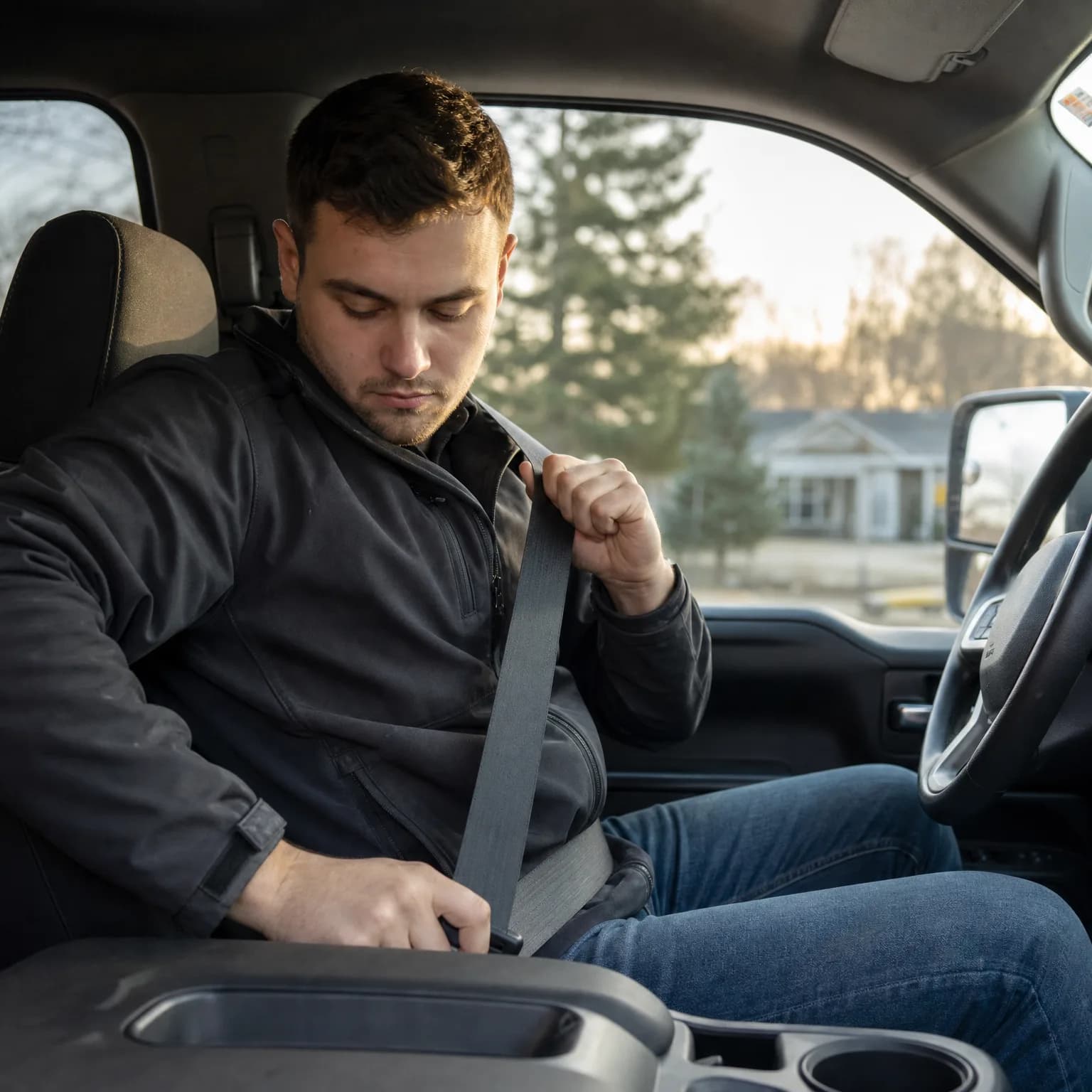
CA Restricted License vs Wait: Cost Analysis for Suspended Drivers
4/29/2026
Restricted License Application in San Francisco, CA
4/29/2026