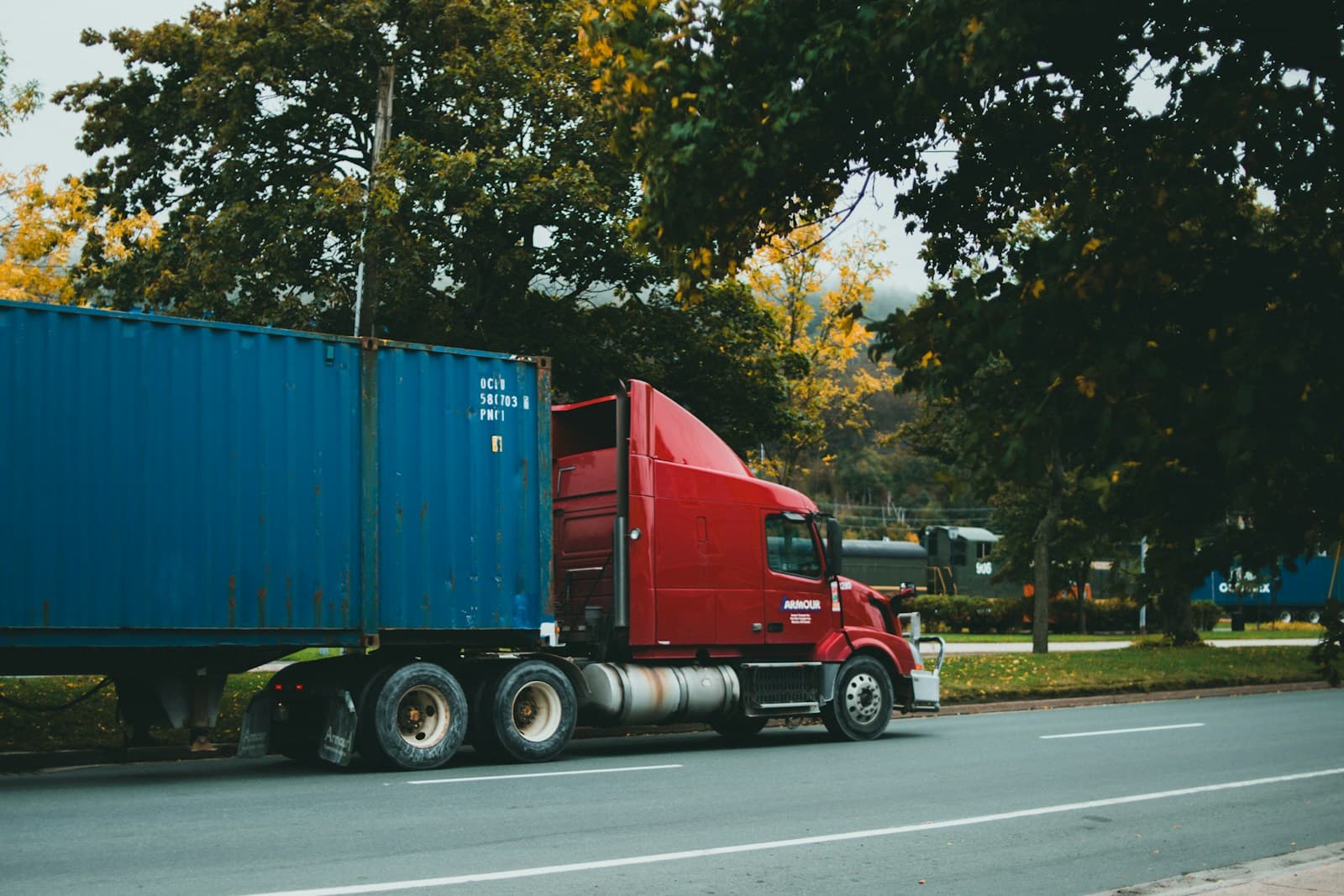
District of Columbia's limited permit program requires pre-approved destination addresses, not just approved hours. Commercial drivers reinstating after reckless convictions often miss this—route deviation during legal hours still counts as unlicensed operation.
Why DC's Limited Permit Targets Destination Addresses, Not Just Time Windows
Your reckless driving conviction triggered a CDL suspension, your employer needs you on the road Monday, and you filed for DC's limited permit assuming approved work hours would cover all job-related driving. The District's program doesn't work that way. Limited permit applications require specific destination addresses—your employer's office, client sites, delivery zones, or dispatch locations—before DMV grants approval. Approved hours establish when you can drive; approved destinations establish where.
Most CDL holders discover this restriction after approval, when their permit paperwork lists each authorized address individually. Deviation to an unlisted job site—even during your approved 6 AM to 6 PM window—constitutes driving without a valid license under DC Code § 50-1403.01. The violation typically triggers immediate permit revocation and extends your underlying suspension period by 6–12 months, depending on whether the deviation involved another traffic offense.
The address requirement exists because limited permits are exemptions to suspension, not partial reinstatements. DC DMV treats each approved destination as a separate conditional privilege. Your employer's dispatch center at 1250 H Street NE is authorized; a client site at 3400 Connecticut Avenue NW is not unless you listed it on your application. The distinction matters most for commercial drivers whose job sites change weekly or monthly—fixed-route operators face fewer compliance risks than drivers serving variable locations.
How Reckless Driving Convictions Affect CDL Limited Permit Eligibility in DC
Reckless driving under DC Code § 50-2201.04 carries mandatory CDL suspension for 30–90 days depending on prior record. Your eligibility for a limited permit begins 15 days after the suspension effective date, provided you meet three conditions: enrollment in a DMV-approved driver improvement program, proof of SR-22 insurance filing, and verification of employment requiring commercial driving.
DC DMV distinguishes between personal-vehicle and commercial-vehicle reckless convictions when evaluating limited permit applications. If your reckless conviction occurred while operating a commercial vehicle, you face federal disqualification rules under 49 CFR § 383.51 in addition to DC suspension. Federal disqualification prohibits limited permit approval for commercial driving during the disqualification period—typically 60 days minimum for first offenses. Your limited permit, if granted, would authorize personal driving only (commuting to work, medical appointments) until the federal disqualification period expires.
Personal-vehicle reckless convictions don't trigger federal disqualification, so your limited permit can authorize commercial driving immediately after the 15-day waiting period. The application requires your employer to submit a notarized letter detailing your job duties, typical routes, client addresses, and shift schedule. Most DC employers use DMV Form DC-PD-009, available through the Adjudication Services office at 95 M Street SW.
Compare car insurance rates in your state
Get quotes from licensed carriers — no obligation, no spam, results in minutes.
Get Your Free Quote✓ No Obligation Required✓ Licensed Carriers Only✓ Available Nationwide✓ Free to Compare
Building Your Destination List: What DC DMV Approves and Denies
DC limited permit applications allow up to 10 distinct destination addresses beyond your residence. Employers typically list the company's primary office, regular delivery zones, client sites visited at least twice monthly, and any required training or certification facilities. Each address needs street number, quadrant designation (NW/NE/SW/SE), and a brief justification explaining why that location is essential to your employment.
DMV denies vague geographic descriptions. "Northeast DC delivery area" or "client sites in Wards 7 and 8" won't pass application review. You need actual street addresses: "2800 Georgia Avenue NW (weekly client site)," "1100 4th Street SW (dispatcher office)," "4250 Connecticut Avenue NW (monthly service location)." The more specific your justification, the higher your approval probability. "Customer deliveries" is generic; "biweekly parts delivery to fleet maintenance contractor" demonstrates necessity.
Some employers resist providing client addresses due to confidentiality concerns or because job sites change unpredictably. This creates a documentation gap that delays or kills limited permit approval. If your employer cannot list 10 addresses, list as many as they can verify—most applications succeed with 4–6 well-documented destinations. The risk is operational: every unlisted address becomes off-limits for the permit's duration, typically 6–12 months depending on your suspension length.
Route Compliance vs Hour Compliance: Why Both Matter Simultaneously
Your limited permit specifies approved hours (6 AM–6 PM weekdays, for example) and approved destinations. Violation of either condition revokes the permit. Most CDL holders track hours carefully because shift violations are obvious. Destination violations are less intuitive—you're working, during approved hours, for your approved employer, but at an address not listed on your permit.
DC Metropolitan Police and DMV enforcement officers cross-reference limited permit restrictions during traffic stops. If you're pulled over at 10 AM on a Tuesday (within your approved hours) but the stop occurs at 5100 Wisconsin Avenue NW and that address isn't on your permit, you're driving on a suspended license under DC law. The stop doesn't need to involve another violation—a routine inspection is sufficient to discover the mismatch.
The consequence is permit revocation plus criminal charges under DC Code § 50-1403.01, which carries fines up to $1,000 and potential jail time for repeat offenses. Your underlying suspension period extends by the amount of time you drove on the revoked permit, often 6–12 months. Most commercial drivers cannot afford that extension—it exceeds the timeframe most employers will hold a position.
Amending Your Destination List Mid-Permit
Job sites change. Clients relocate. Employers add contracts. DC allows limited permit amendments through the Adjudication Services office, but the process takes 10–15 business days and requires your employer to submit updated documentation justifying the new address. You cannot drive to the new location until the amendment is formally approved and you receive updated permit paperwork.
The amendment fee is $25 per address addition as of current DC DMV policy. Most employers batch address changes to minimize administrative burden—requesting amendments quarterly rather than per job site. This creates operational risk: your employer assigns you a delivery to a new client address next Tuesday, but the amendment won't process for two weeks. You either decline the assignment (risking your job) or drive to the unapproved address (risking permit revocation).
Some CDL holders structure their initial application with placeholder addresses—locations their employer might use in the next 6–12 months—to avoid amendment delays. DC DMV allows this as long as each address includes a credible employment justification. "Potential future client site" is too vague; "backup dispatch location if primary office relocates" is acceptable if the employer verifies the contingency in their notarized letter.
SR-22 Filing Requirements for CDL Limited Permit Approval
Reckless driving convictions in DC require continuous SR-22 filing for 3 years from the conviction date, not the suspension end date. Your limited permit application will not process without proof of active SR-22 coverage meeting DC's minimum liability limits: $25,000 per person, $50,000 per accident for bodily injury, and $10,000 for property damage.
CDL holders face narrower carrier options than personal-vehicle drivers. Most standard carriers (GEICO, State Farm, Progressive) either decline SR-22 coverage for commercial drivers or require commercial auto policy endorsements that push monthly premiums to $300–$500. Non-standard carriers specializing in post-violation coverage—Bristol West, Direct Auto, Dairyland, The General—typically offer personal-vehicle SR-22 policies for $140–$220/month but exclude commercial use.
If your limited permit authorizes personal driving only (because you're serving a federal CDL disqualification), a standard SR-22 personal auto policy works. If your permit authorizes commercial driving, you need a commercial auto policy with SR-22 endorsement, which typically runs $400–$600/month depending on your vehicle class and cargo type. Some CDL holders maintain separate personal and commercial policies to isolate SR-22 costs, but DC requires the SR-22 filing to cover all driving authorized by your limited permit.
What Happens If Your Employer Won't Provide Address Documentation
Some employers refuse to provide client addresses on limited permit applications due to confidentiality agreements, competitive concerns, or administrative burden. Without employer documentation, DC DMV denies the application. You cannot substitute your own client list—the employer must verify each address in their notarized letter.
If your employer won't cooperate, your options narrow to non-driving work (if available), unemployment, or finding a new employer willing to complete the paperwork before you regain full driving privileges. Most CDL holders in this position pursue expedited full reinstatement rather than limited permit approval. Full reinstatement requires completing your suspension period, paying the $98 reinstatement fee, maintaining SR-22 for the full 3-year filing period, and passing a knowledge retest if your suspension exceeded 6 months.
Full reinstatement avoids the destination restriction entirely but costs you the income during the suspension period. For a 60-day reckless driving suspension, that's 8–9 weeks without driving income. Most employers won't hold a CDL position that long unless you have seniority or specialized skills. The limited permit, despite its restrictions, preserves employment for drivers whose employers will navigate the documentation process.