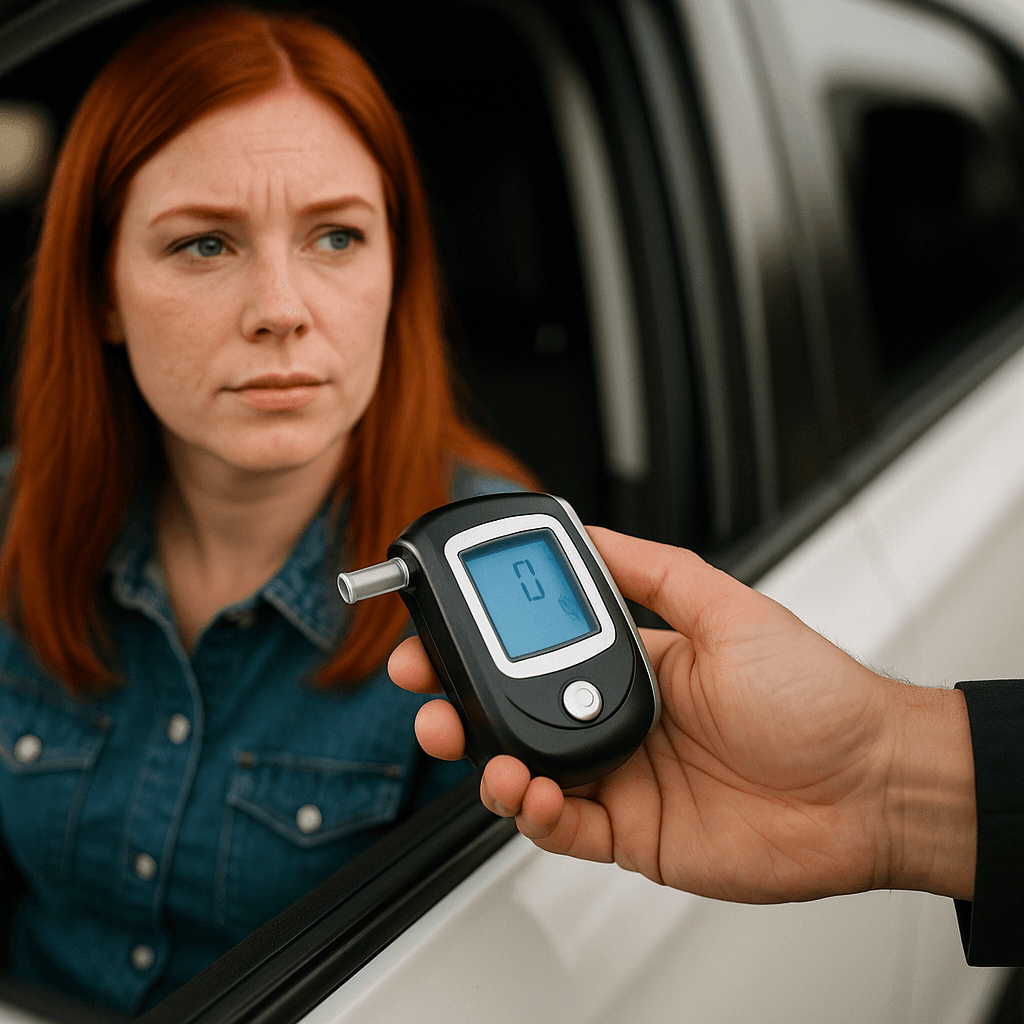
Kentucky suspends your license for driving uninsured and again if your SR-22 lapses. Here's how to get a hardship license for work, what it costs, and how to avoid resetting your filing clock.
Kentucky Suspends Your License Twice for the Same Uninsured Violation
Kentucky's Department of Vehicle Regulation suspends your license for a minimum of 90 days when you're caught driving without insurance. If you then file SR-22 to meet reinstatement requirements but let that SR-22 lapse at any point during the required 3-year filing period, Kentucky issues a second 90-day suspension starting from the lapse date.
This dual-suspension structure catches most drivers off guard. The first suspension stems from KRS 186A.040, which mandates proof of financial responsibility. The second triggers automatically under KRS 187.410 the moment your insurer notifies the state of SR-22 cancellation. Both suspensions require separate reinstatement fees, separate SR-22 filings, and separate hardship license applications if you need to drive for work.
The lapse suspension resets your 3-year SR-22 filing clock to day zero. If you were 18 months into your filing period when the lapse occurred, you now owe 3 full years from the date you refile, plus the new 90-day suspension. Kentucky does not prorate or credit time already served.
How to Apply for a Kentucky Hardship License After 30 Days
Kentucky allows hardship license applications 30 days into your suspension, not 90. KRS 186.560 authorizes the Transportation Cabinet to grant limited driving privileges for employment, medical treatment, educational purposes, or court-ordered programs after the first 30 days of any suspension not involving DUI.
You must complete three steps before applying. First, file SR-22 with a Kentucky-licensed carrier—Bristol West, Direct Auto, Dairyland, GAINSCO, and The General write most hardship license cases. Second, pay the $40 reinstatement fee to the Kentucky Transportation Cabinet even though your full reinstatement date is 60 days away. Third, obtain a signed letter from your employer on company letterhead stating your job title, work address, required work hours, and confirmation that loss of driving privilege threatens your employment.
The application requires a $50 hardship license fee, proof of SR-22 filing, the paid reinstatement receipt, and your employer letter. You file in person at your county circuit court clerk's office, not the DMV. The clerk forwards your petition to a hearing officer who reviews within 10 business days. Approval is not automatic—the state denies roughly 15% of hardship applications for incomplete documentation or failure to demonstrate genuine hardship.
Compare car insurance rates in your state
Get quotes from licensed carriers — no obligation, no spam, results in minutes.
Get Your Free Quote✓ No Obligation Required✓ Licensed Carriers Only✓ Available Nationwide✓ Free to Compare
Approved Purposes and Route Restrictions on a Kentucky Hardship License
Kentucky hardship licenses authorize driving for work commute, work-related duties during employment hours, medical appointments for yourself or immediate family members, court-ordered substance abuse or driver improvement programs, and educational institution attendance if you're enrolled. The license does not cover grocery shopping, childcare drop-off unless the child requires medical care, or any recreational travel.
Your approval order specifies exact routes and time windows. If your job runs 7 AM to 3 PM and you live in Lexington with a workplace in Georgetown, your hardship license authorizes direct travel on US-25 or I-75 between those cities during the hours 6:30 AM to 3:30 PM Monday through Friday only. Driving on that route at 4 PM on a weekday violates the restriction. Driving to a gas station two miles off-route violates the restriction. Both violations revoke the hardship license immediately and often trigger a new willful violation charge under KRS 186.620.
Kentucky State Police and local law enforcement run your plate and know you hold a hardship license. Traffic stops outside your approved hours or routes result in immediate citation and hardship license revocation. The state does not grant second hardship licenses during the same suspension period.
What SR-22 Lapse Costs in Kentucky: The Full Financial Stack
Kentucky charges $40 to reinstate after the initial uninsured driver suspension. When your SR-22 lapses and triggers the second suspension, you pay another $40 reinstatement fee. If you apply for a hardship license during either suspension, add the $50 hardship application fee. Your total state fees run $90 for a single suspension with hardship license, or $130 if you lapse and need two hardship licenses across both suspensions.
SR-22 insurance premiums for uninsured driver violations in Kentucky average $110 to $185 per month depending on your county, age, and vehicle. Jefferson County and Fayette County rates run 20-30% higher than rural counties due to higher uninsured motorist claim frequency. Drivers under 25 pay an additional 40-60% over base rates. Your SR-22 filing itself costs $25 to $50 annually depending on carrier, paid separately from your premium.
Budget $1,800 to $3,200 total for the first year post-suspension. That includes 12 months of SR-22 insurance premiums at $110/mo minimum, two reinstatement fees if you lapse, one hardship license application, and the SR-22 filing fee. If you avoid lapse and maintain continuous coverage for the full 3-year filing period, your total cost drops to roughly $4,500 to $7,000 over three years. A second lapse adds another $40 reinstatement fee, another suspension period, and often a 15-25% premium increase when you refile with a new carrier.
Which Carriers Write Hardship License SR-22 Policies in Kentucky
Kentucky hardship license holders need non-standard carriers willing to write SR-22 during an active suspension, not after reinstatement. Standard carriers like State Farm, GEICO, and Progressive decline most hardship license applications or require full reinstatement before quoting.
Bristol West, Direct Auto, Dairyland, GAINSCO, The General, Safe Auto, and Acceptance Insurance write the majority of Kentucky hardship license SR-22 policies. These carriers specialize in suspended license cases and file SR-22 electronically with the Kentucky Transportation Cabinet within 24 hours of policy inception. Monthly premiums with these carriers range from $110 to $185 depending on your county, vehicle, and coverage limits.
You must carry Kentucky's minimum liability limits: $25,000 bodily injury per person, $50,000 bodily injury per accident, and $25,000 property damage. Some hardship license approval orders require higher limits—$50,000/$100,000/$50,000—if your underlying violation involved an at-fault accident. Confirm required limits with the circuit court clerk before binding coverage. Buying minimum limits when your order requires higher limits voids your hardship license and counts as driving on a suspended license.
How to Avoid Resetting Your SR-22 Clock During the 3-Year Filing Period
Your SR-22 lapses the day your insurer cancels your policy for non-payment or voluntary cancellation. Kentucky receives electronic notice of cancellation within 24 hours. Your suspension begins the day after cancellation, and your 3-year SR-22 filing clock resets to zero the moment you refile.
Set up automatic payment with your carrier to eliminate non-payment lapse risk. If you need to switch carriers during your filing period, bind the new policy before canceling the old one. Your new carrier files SR-22 on the effective date of the new policy; your old carrier files SR-22 cancellation notice the day your old policy ends. A gap of even one day between these dates triggers lapse and suspension.
If your financial situation deteriorates and you cannot afford your current premium, call your carrier and request a payment plan before missing a payment. Most non-standard carriers offer 15- or 30-day extensions on past-due premiums to avoid lapse. If you own your vehicle and can stop driving temporarily, switch to a non-owner SR-22 policy rather than canceling coverage entirely. Non-owner SR-22 policies in Kentucky cost $35 to $65 per month and maintain your filing continuity even when you're not driving.
What Happens After You Complete the 3-Year SR-22 Filing Period
Kentucky requires SR-22 for 3 years from your reinstatement date if your suspension stemmed from an uninsured driver violation. Your carrier notifies the state when your filing period ends, and the SR-22 requirement lifts automatically. You do not need to file paperwork or pay a fee to terminate SR-22.
Your insurance rates drop 30-50% once the SR-22 requirement lifts, assuming no additional violations during the filing period. Standard carriers become available again 6 to 12 months after your SR-22 period ends if your record is otherwise clean. If you accumulated additional violations or lapses during the SR-22 period, you remain in the non-standard market for 3 to 5 years from the date of the most recent violation.
Do not cancel your policy the day your SR-22 period ends. Maintain continuous coverage for at least 6 months post-SR-22 to prove insurance stability when you shop for standard carrier coverage. A coverage gap immediately after SR-22 lifts signals risk to underwriters and keeps you in the non-standard market longer.