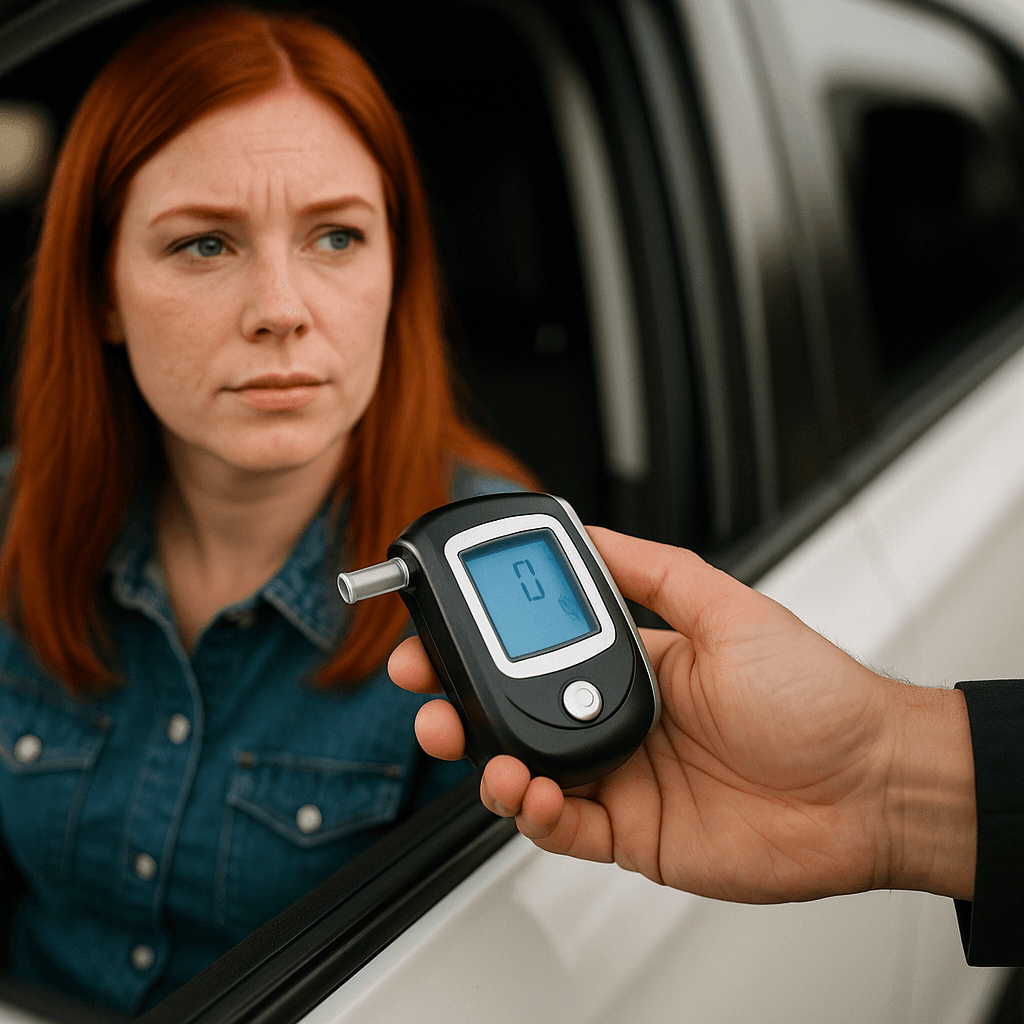
Kentucky suspends driving privileges for under-21 drivers at .02% BAC. Most qualify for a hardship license 30 days after suspension, but SR-22 filing and ignition interlock device installation are mandatory.
What triggers hardship license eligibility after a Kentucky under-21 DUI
Kentucky suspends driving privileges for 30-180 days for drivers under 21 convicted of DUI with a BAC of .02% or higher—far below the .08% threshold for adults. Most under-21 drivers become eligible for a hardship license 30 days after the suspension begins, provided they complete a state-approved alcohol education program and file SR-22 insurance.
The waiting period applies even for first-time offenders with no prior record. Kentucky Transportation Cabinet regulation 601 KAR 13:030 sets the 30-day minimum for hardship eligibility after zero-tolerance violations. Courts cannot waive this period, and DMV staff cannot grant early consideration.
You apply through the Kentucky Transportation Cabinet's Division of Driver Licensing, not through the court that issued the conviction. The hardship application requires proof of enrollment or completion of an alcohol education program, SR-22 filing confirmation from your insurer, proof of employment or school enrollment, and a $40 application fee. If you're still in high school or enrolled in college, school attendance qualifies as an approved purpose.
SR-22 filing duration extends two years beyond your hardship period
Kentucky requires SR-22 filing for the duration of your suspension plus two additional years after full license reinstatement. For a 90-day suspension under zero-tolerance DUI, you file SR-22 for approximately 2 years and 3 months total—not just the 90 days most young drivers expect.
This means your SR-22 premium surcharge continues long after your hardship license converts back to a full unrestricted license. A typical under-21 driver with zero-tolerance DUI pays $140–$220 per month during the SR-22 period compared to $90–$130 monthly before the violation. Over two years post-reinstatement, that's an additional $1,200–$2,160 in elevated premiums.
Carriers report SR-22 filings to the Kentucky Transportation Cabinet electronically. If your policy lapses or cancels during the SR-22 period—even one day—the carrier must notify the state within 15 days, which triggers immediate suspension of your hardship license and resets your SR-22 clock to zero.
Compare car insurance rates in your state
Get quotes from licensed carriers — no obligation, no spam, results in minutes.
Get Your Free Quote✓ No Obligation Required✓ Licensed Carriers Only✓ Available Nationwide✓ Free to Compare
Ignition interlock device requirement for Kentucky under-21 hardship licenses
Kentucky mandates ignition interlock device installation for all hardship licenses issued after DUI conviction, including zero-tolerance cases involving drivers under 21. The IID stays installed for the duration of your hardship period and cannot be removed until you reinstate your full license.
IID installation costs $75–$150, with monthly monitoring fees of $60–$90. For a 90-day hardship period, total IID costs run $255–$420. You're responsible for scheduling installation with a state-approved vendor within 7 days of hardship license approval. The Transportation Cabinet maintains a list of approved vendors by county on its website.
Violations logged by the IID—failed breath tests, missed rolling retests, or tampering alerts—are reported to the Transportation Cabinet within 48 hours. A single confirmed violation typically results in immediate hardship license revocation and extension of your underlying suspension by 60–180 days. Most under-21 drivers lose their hardship privilege permanently after one IID violation.
Approved purposes and route restrictions under Kentucky hardship licenses
Kentucky hardship licenses for under-21 DUI cases allow travel only for employment, school attendance, medical care, and alcohol treatment program appointments. You must submit documentation proving each approved purpose: an employer letter on company letterhead stating your work schedule and address, school enrollment verification, or medical appointment confirmations.
The hardship license restricts you to direct routes between your home and approved destinations during approved hours only. Deviation from approved routes—even stopping for gas or groceries—constitutes a violation that can result in immediate license suspension. Kentucky State Police and local law enforcement access your hardship restrictions in real time during traffic stops.
If your work schedule changes or you add a medical appointment, you must file an amendment with the Transportation Cabinet and pay a $25 modification fee. Processing takes 7–10 business days, during which your hardship license does not cover the new destination or schedule. Most young drivers underestimate this inflexibility—employers who schedule irregular shifts or on-call hours create compliance problems hardship licenses cannot accommodate.
Which carriers write SR-22 policies for under-21 zero-tolerance DUI in Kentucky
Standard carriers—State Farm, GEICO, Progressive's standard-risk division—typically cancel under-21 drivers after zero-tolerance DUI conviction. You'll move to non-standard carriers that specialize in high-risk SR-22 filings: Dairyland, The General, Bristol West, Safe Auto, GAINSCO, and Direct Auto write most Kentucky under-21 SR-22 business.
Non-standard carriers charge higher base premiums and assess larger surcharges for under-21 age and DUI violations combined. Monthly premiums for minimum liability coverage with SR-22 typically run $160–$240 for drivers under 21 in Kentucky, compared to $85–$130 for clean-record drivers in the same age bracket. Adding a parent as a named insured sometimes reduces premiums by 15–25%, but the parent assumes liability for any covered accidents.
Some non-standard carriers refuse to write policies for drivers under 21 with DUI convictions if the driver owns the vehicle. Non-owner SR-22 policies—covering you when driving someone else's car—cost $40–$70 monthly and satisfy Kentucky's SR-22 filing requirement even during your hardship period. If you're living at home and driving a parent's vehicle, non-owner SR-22 often costs less than being added to the family policy after a zero-tolerance violation.
Total cost breakdown for Kentucky under-21 hardship license after zero-tolerance DUI
Kentucky under-21 drivers face a cost stack ranging from $3,100 to $6,800 over the full compliance period for a first-time zero-tolerance DUI with 90-day suspension. The hardship application fee is $40, full license reinstatement fee is $40, court fines run $200–$500, and mandatory alcohol education program costs $150–$350.
SR-22 insurance premiums for 2 years and 3 months total approximately $3,600–$5,940 at $160–$240 monthly. IID installation and monitoring for 90 days adds $255–$420. Attorney fees for hardship license representation average $750–$1,500 in Kentucky, though some drivers apply pro se.
This total does not include potential civil penalties, towing and impound fees from the arrest, increased insurance premiums that persist beyond the SR-22 period, or opportunity costs from employment restrictions. Kentucky employers in retail, food service, and warehouse sectors frequently terminate employees who cannot work variable shifts due to hardship license route restrictions. Most under-21 drivers budget only for court fines and reinstatement fees—the SR-22 duration and IID monitoring costs are where financial planning breaks down.
How hardship license violations extend your SR-22 requirement
Any violation of your Kentucky hardship license conditions—driving outside approved hours, deviating from approved routes, or triggering an IID failure—results in immediate suspension of the hardship privilege and extends your SR-22 filing requirement by the length of the new suspension. A single route deviation caught during a traffic stop typically adds 60 days to your suspension, which adds 60 days plus two additional years to your SR-22 term.
Kentucky State Police citation data shows hardship license violations occur in approximately 18% of cases, most commonly for unapproved route travel and missed IID rolling retests. Each violation resets your compliance clock and requires a new hardship application with another $40 fee and 30-day waiting period before you can reapply.
SR-22 premiums compound with each suspension extension. Carriers view hardship violations as high-risk behavior and apply additional surcharges ranging from 20–40% on top of the existing DUI surcharge. A driver who started at $180 monthly after the initial zero-tolerance DUI can see premiums jump to $250–$300 monthly after a hardship violation, and those elevated rates persist for the entire extended SR-22 period.