Michigan's occupational license restricts you to approved vehicles only. Driving a friend's car or switching vehicles without DMV approval terminates your license and extends your suspension.
Michigan's Occupational License Restricts You to Pre-Approved Vehicles Only
Michigan's occupational license — called a restricted license in court documentation — limits you to vehicles listed on your court order or DMV approval letter. You cannot drive a borrowed car, rental, or any vehicle not pre-approved without filing an amendment with the court or Secretary of State.
The restriction appears in your court order under "approved vehicles" by year, make, model, and VIN. If you were granted an occupational license after a DUI or multiple moving violations, the judge listed specific vehicles at the hearing. Driving any vehicle not on that list counts as operating without a valid license under MCL 257.904, which terminates your restricted privilege and extends your underlying suspension by the full original duration.
Most drivers discover this restriction after borrowing a parent's car for an emergency or renting while their approved vehicle is in the shop. The occupational license does not function like a standard driver's license — it is a conditional privilege tied to specific vehicles, specific hours, and specific routes. Deviation from any condition revokes the privilege.
How to Add a Vehicle to Your Michigan Occupational License
Adding a vehicle requires filing a motion to modify your restricted license order with the circuit court that granted your original license. You cannot add a vehicle through the Secretary of State — all changes flow through the court that issued your order.
You file a Motion to Modify Restricted License in the same court where you received your original occupational license. Include the new vehicle's year, make, model, VIN, registered owner name, and proof of SR-22 insurance covering that vehicle. Most counties require a $20–$50 filing fee and 10–20 business days for the judge to review and sign the amended order. You cannot drive the new vehicle until the amended order is signed and filed with the Secretary of State.
If you need to drive the vehicle before the amendment is processed — for example, your approved car breaks down and you need a replacement to get to work — you do not have a legal option. Michigan law does not recognize emergency exceptions for occupational license vehicle restrictions. Drivers who cannot wait for court processing often lose their jobs because the amendment timeline exceeds their employer's patience.
Compare car insurance rates in your state
Get quotes from licensed carriers — no obligation, no spam, results in minutes.
Get Your Free Quote✓ No Obligation Required✓ Licensed Carriers Only✓ Available Nationwide✓ Free to Compare
SR-22 Insurance Complications When Switching Vehicles
Your SR-22 filing must cover every vehicle listed on your occupational license order. If you add a vehicle to your court order, you must add it to your SR-22 policy before driving it — even if the amendment is approved.
Michigan requires SR-22 for the full 1–2 year occupational license period, depending on your violation. The SR-22 certificate filed with the Secretary of State lists your policy number, coverage limits, and insured vehicles. If you drive a vehicle not listed on your SR-22, your carrier files an SR-26 cancellation notice with the state, which terminates your occupational license within 7 days.
Adding a vehicle to your SR-22 policy triggers a new premium calculation. Non-standard carriers like Bristol West, Dairyland, and GAINSCO recalculate your rate based on the new vehicle's year, value, and theft risk. Switching from a 2008 sedan to a 2018 SUV can increase your monthly SR-22 premium by $40–$80. Carriers require 24–48 hours to process the vehicle addition and file the updated SR-22 with the state, which means you face a 2–3 day gap between court approval and insurance clearance.
What Happens If You're Caught Driving an Unapproved Vehicle
Driving a vehicle not listed on your occupational license order counts as driving while license suspended (DWLS) under Michigan law. The penalty is immediate occupational license revocation, extension of your underlying suspension, and criminal charges.
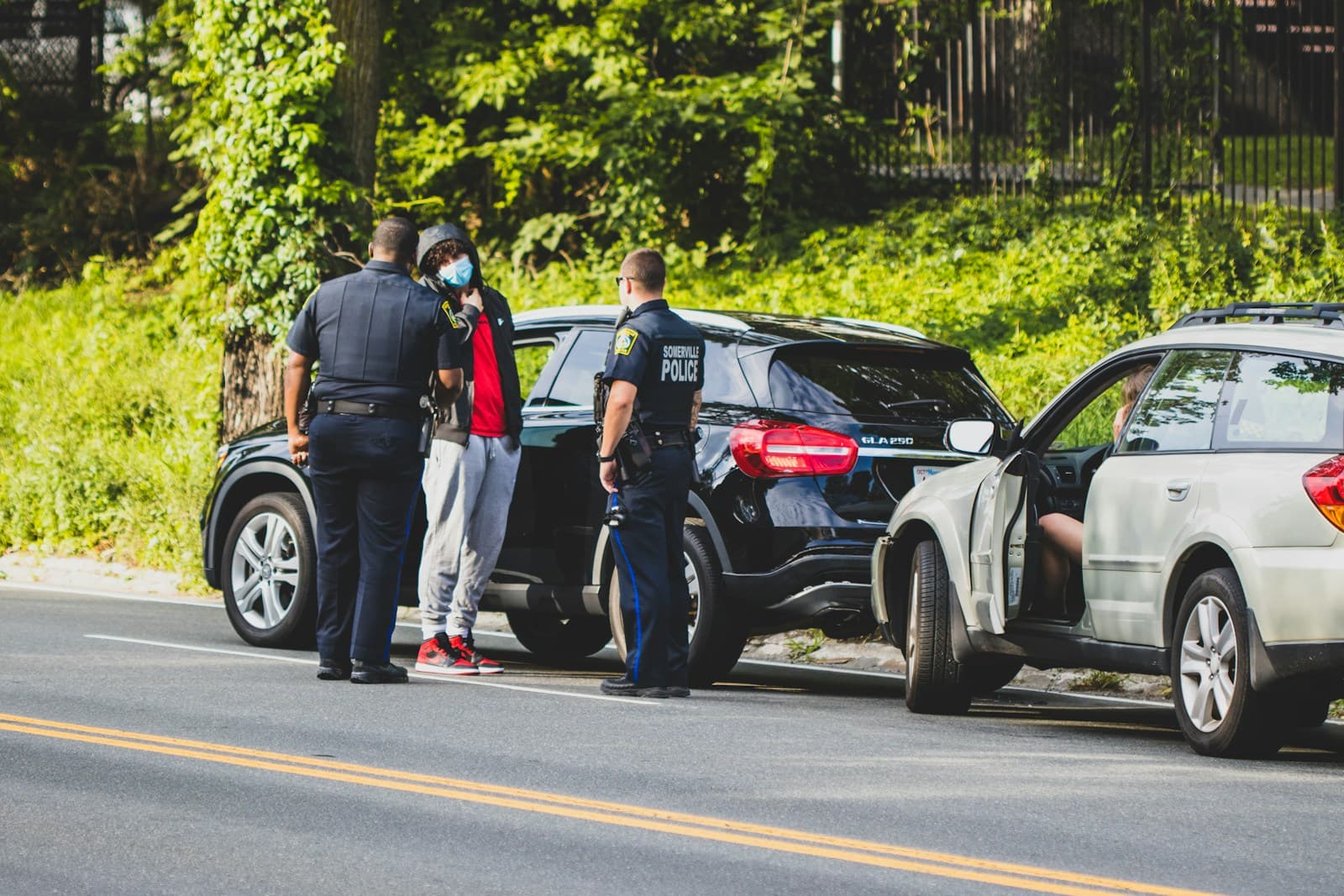
Michigan State Police and local departments check your restricted license conditions during every traffic stop. The officer pulls your court order from the Law Enforcement Information Network (LEIN) system, which shows approved vehicles, approved hours, and approved routes. If the vehicle you're driving does not match the VIN on your order, you're arrested on the spot for DWLS. The charge carries up to 93 days in jail and a $500 fine for a first offense, plus automatic occupational license termination.
Your underlying suspension extends by the full original duration. If you were 8 months into a 1-year suspension and lost your occupational license at month 8, your suspension clock resets to zero. You serve the remaining 4 months plus the full original 12 months — 16 months total from the revocation date. The court will not grant a second occupational license during the extended suspension period in most counties.
Rental Cars and Borrowed Vehicles Create the Highest Risk
Rental vehicles and borrowed cars trigger the most occupational license violations in Michigan because drivers assume their restricted license works like a normal license. It does not.
If your approved vehicle is in the shop and you rent a replacement, you cannot drive it on your occupational license unless you file a court amendment and add it to your SR-22 policy before pickup. Enterprise, Hertz, and Budget do not verify occupational license restrictions — they only check that you hold a valid Michigan driver's license, which your restricted license satisfies. The rental contract does not protect you from DWLS charges if the vehicle is not on your court order.
Borrowing a family member's car creates the same violation. Drivers often borrow a parent's or spouse's vehicle for a single trip, assuming a one-time exception exists. Michigan law recognizes no such exception. The occupational license restriction applies to every instance of driving, every vehicle, every trip. One unapproved trip is enough to terminate your license and extend your suspension.
Some Counties Allow Blanket Vehicle Approval in the Original Order
A small number of Michigan counties — primarily Oakland and Washtenaw — allow judges to approve "any vehicle insured under the petitioner's SR-22 policy" in the original occupational license order, which eliminates the need for amendments when switching vehicles.
This blanket approval language appears in the "approved vehicles" section of your court order. Instead of listing specific VINs, the order states you may operate any vehicle covered by your SR-22 filing. You still must add each new vehicle to your SR-22 policy and wait for your carrier to file the updated certificate with the Secretary of State, but you skip the court amendment process.
Most counties do not offer this option. Wayne, Macomb, Kent, and Genesee counties require vehicle-specific approval by VIN in nearly all cases. If your county uses VIN-specific approval, you cannot negotiate for blanket language after your hearing — the vehicle restriction is embedded in the signed court order and cannot be modified without filing a motion.