Michigan grants occupational licenses with strict hour and route restrictions. Violate them once — even accidentally — and you lose the license, your job pathway, and often face extended suspension.
Michigan's Occupational License Covers Specific Routes, Not Just Time Windows
Your Michigan occupational license restricts you to the exact routes you documented in your petition. The Secretary of State approves travel from your home address to your work address during specific hours, and most grants include one medical facility and one childcare location if you requested them. The restriction is geographic and temporal simultaneously.
If your approved route is I-94 to I-275 southbound and you take Telegraph Road instead because of construction, you are operating outside your restriction. If your approval covers 6 AM to 6 PM Monday through Friday and you drive at 5:45 AM, you are in violation. Michigan State Police and local agencies enforce these restrictions through traffic stops, and the Secretary of State revokes the occupational license immediately upon notification.
Most drivers assume the license works like a curfew: stay within your approved hours and you're fine. That is incorrect. The petition you filed included a map or written description of your route. That route is part of the court order or Secretary of State approval. Deviation is treated the same as driving on a suspended license.
What Counts as an Approved Purpose Under Michigan Law
Michigan MCL 257.904 allows occupational licenses for employment, court-ordered treatment programs, educational programs, medical appointments, and support obligations including childcare. The statute does not include grocery shopping, personal errands, or social obligations. Your petition must document each purpose with employer verification, school enrollment proof, or medical provider contact information.
Employment purposes cover travel to and from a single worksite or multiple worksites if you work multiple part-time jobs. If your employer requires you to travel to client sites or job locations that change daily, you must document this in your petition as a variable-location job and provide a letter from your employer explaining the business necessity. Secretary of State approval for variable-location jobs is inconsistent across hearing officers.
Medical appointments require documentation at the time of the petition or a subsequent modification request. Emergency medical situations are not covered. If you drive to an emergency room during non-approved hours, you are technically in violation, though prosecution depends on the circumstances and law enforcement discretion.
Compare car insurance rates in your state
Get quotes from licensed carriers — no obligation, no spam, results in minutes.
Get Your Free Quote✓ No Obligation Required✓ Licensed Carriers Only✓ Available Nationwide✓ Free to Compare
How SR-22 Filing Works With Your Occupational License
Michigan requires SR-22 filing for all occupational license holders. The SR-22 must be active before the Secretary of State issues the occupational license, and it must remain active for the entire restriction period plus any additional filing duration ordered by the court or the Driver Assessment and Appeal Division.
Your SR-22 filing starts the day your carrier electronically files the certificate with the Michigan Department of State. If your occupational license is approved but your SR-22 lapses even one day, the Secretary of State suspends the occupational license and you return to full suspension status. Reinstatement requires a new SR-22 filing, a reinstatement fee, and often a new petition depending on how long the lapse lasted.
Non-standard carriers write most occupational license SR-22 policies in Michigan: Bristol West, Dairyland, GAINSCO, Direct Auto, and Acceptance. Monthly premiums typically run $180 to $320 for minimum liability coverage with SR-22 endorsement, higher if you have a DUI or multiple violations on record. Occupational license holders cannot use non-owner SR-22 policies if they own a vehicle registered in their name.
What Happens During a Traffic Stop on an Occupational License
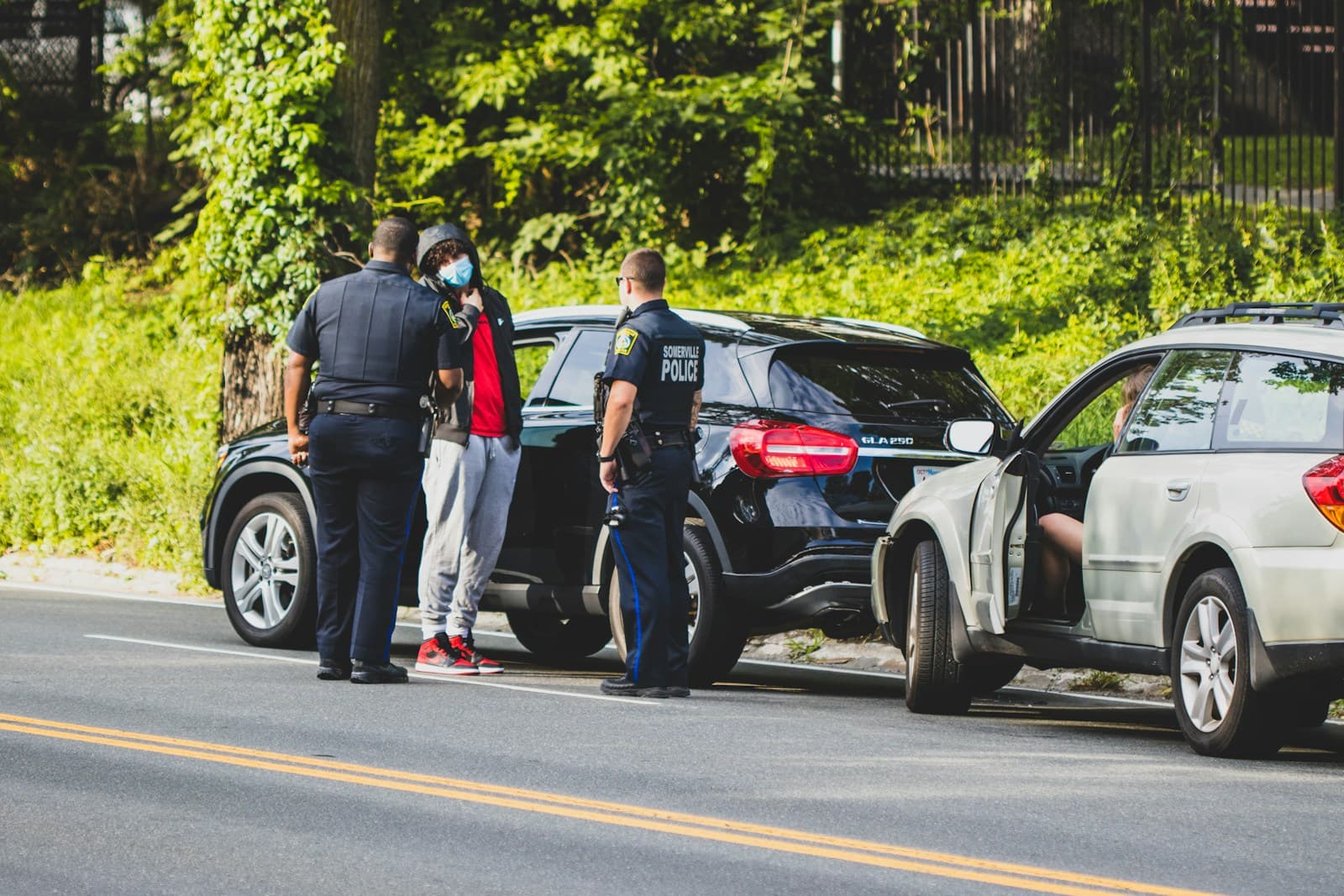
Michigan law enforcement can verify your occupational license restrictions in real time through the Law Enforcement Information Network (LEIN). When you hand over your license, the officer sees your restriction code, approved hours, and approved destinations. If the stop occurs outside those parameters, you will be cited for driving on a suspended license under MCL 257.904(3)(a).
The citation triggers an automatic Secretary of State review. The occupational license is revoked, and the underlying suspension period is often extended by 30 to 90 days depending on the original violation that caused the suspension. If your occupational license was granted after a DUI, the violation can trigger additional penalties under your probation terms.
You cannot argue hardship, GPS error, or emergency circumstances at the roadside. Those defenses must be raised at a formal hearing after the revocation. Most drivers lose these hearings unless they have documentation proving the stop location or time was recorded incorrectly by law enforcement.
Modifying Your Approved Hours or Routes After Approval
Michigan allows modification requests if your employment hours change, you start a new job, or you need to add a medical provider or childcare location. The modification requires a new petition filed with the Driver Assessment and Appeal Division, employer verification for the new hours or location, and a $45 modification fee.
Modification approval takes 10 to 21 days. You cannot operate under the new hours or routes until the Secretary of State processes the modification and updates your restriction code. If your employer changes your shift start time from 7 AM to 6 AM and you begin driving at 6 AM before the modification is approved, you are in violation.
Some hearing officers approve temporary expansions by phone in genuine emergency situations, such as a spouse's hospitalization requiring childcare route changes. This is discretionary and not guaranteed. The safer approach is to request modification as soon as you know your circumstances are changing.
Cost Stack for the First 90 Days
Michigan occupational license costs begin with a $45 petition filing fee and a $125 reinstatement fee paid to the Secretary of State before the license is issued. If you hire an attorney to prepare the petition and represent you at the hearing, fees typically run $800 to $1,500 depending on complexity and whether the case involves a DUI or multiple violations.
SR-22 insurance runs $180 to $320 per month for minimum liability coverage. If your DUI or violation requires an ignition interlock device, installation costs $100 to $150 and monthly monitoring and calibration fees add $75 to $100. Total first-90-day cost for an occupational license with SR-22 and IID typically runs $2,200 to $3,800.
If you violate the occupational license restrictions and lose the permit, you pay the full cost stack again to reapply, plus any additional fines, court costs, or extended suspension penalties. Most drivers cannot afford a second round.
How Long You'll Drive on Restricted Status
Michigan occupational licenses run for the duration of your underlying suspension or until the Secretary of State grants full reinstatement. A first-offense DUI suspension is 30 days hard suspension, followed by 150 days restricted. You can apply for an occupational license after the 30-day hard suspension, meaning you drive restricted for up to 150 days.
Multiple-violation suspensions and repeat DUI suspensions run longer. A second DUI within seven years triggers a minimum one-year revocation with no occupational license eligibility for the first 45 days. After 45 days, you can petition for an occupational license, but the total restriction period often runs 12 to 24 months depending on Driver Assessment and Appeal Division hearing outcomes.
SR-22 filing duration is separate from the occupational license period. Michigan requires SR-22 for two years after license reinstatement for most DUI and serious violations. Your occupational license may end after six months, but your SR-22 requirement continues for the full two-year period.