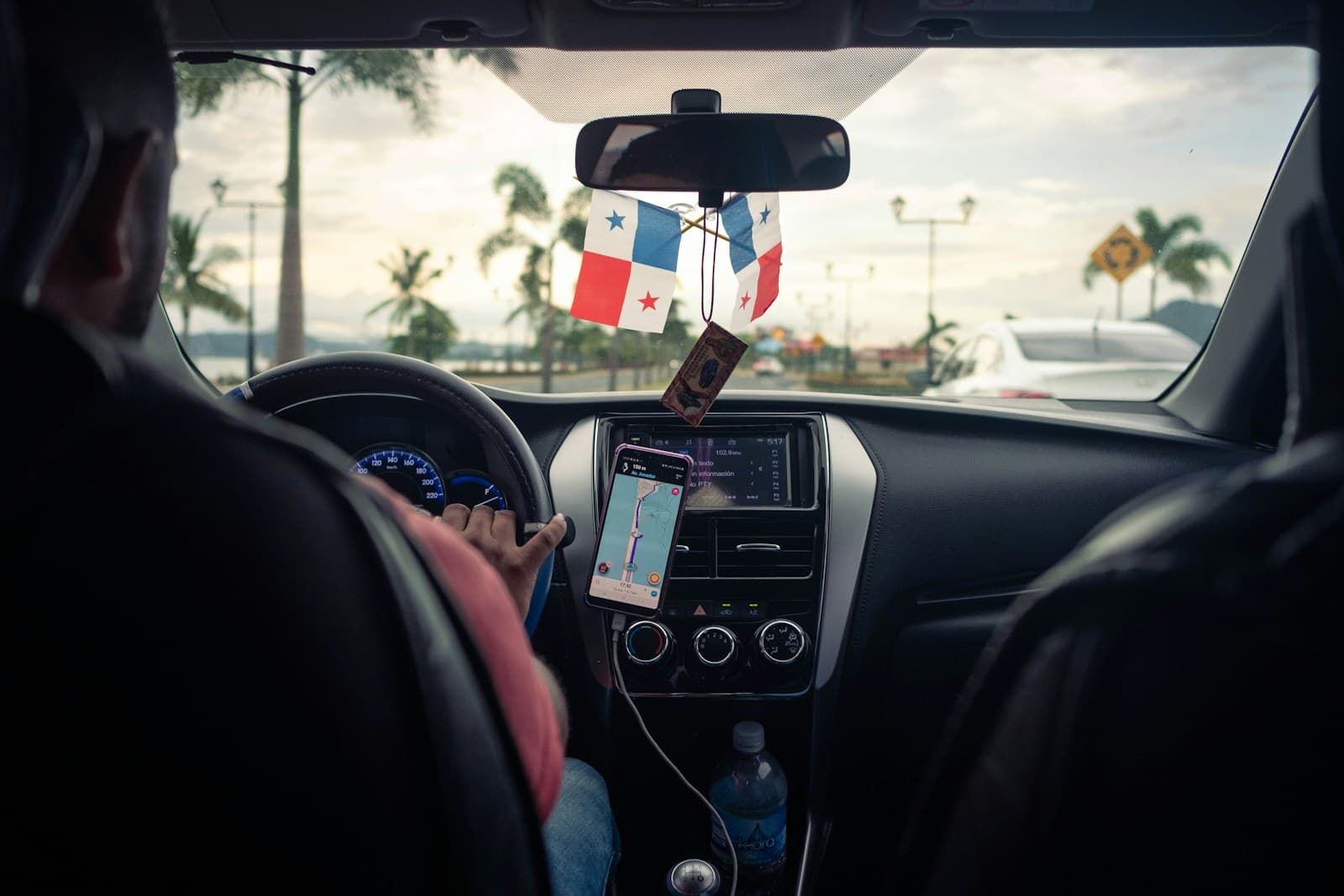
Florida's Business Purpose Only license doesn't cover rideshare or delivery driving—most drivers don't discover this until their first approved-route violation ends their license and extends their underlying suspension.
Why Florida BPO Licenses Exclude Rideshare Work
Florida's Business Purpose Only license explicitly prohibits commercial passenger transport, which includes rideshare driving for Uber, Lyft, or any platform requiring passengers in your vehicle. The statute governing BPO licenses (Florida Statutes 322.271) limits approved purposes to employment driving, education, medical appointments, and childcare—none of which permit carrying passengers for compensation.
Most rideshare drivers don't learn this until they file their BPO petition and the DMV denies it based on employer documentation showing rideshare work. Some discover it only after approval when a traffic stop reveals they're driving passengers during approved hours, which DMV and courts treat as operating outside the license scope even if the time block was approved.
Delivery driving creates a separate gray area. Food delivery (DoorDash, Uber Eats, Instacart) sometimes qualifies as employment driving if the employer documentation describes it as package delivery rather than passenger transport. DMV hearing officers evaluate this case-by-case. Amazon Flex and traditional courier work have higher approval rates because no passengers occupy the vehicle.
What Approved Purposes Actually Cover Under Florida BPO
Florida DMV approves BPO licenses for four categories: business purposes (employment driving to and from work or during work if the job requires driving), educational purposes (commuting to school or required training), medical purposes (appointments for you or immediate family), and church attendance. Employment driving is the broadest category but carries the strictest documentation requirements.
Business purposes require employer verification on company letterhead stating your job title, work address, scheduled hours, and whether driving is required during work. If your job involves driving during the workday—construction foreman visiting job sites, home health aide traveling between patients—the employer letter must list each destination address or provide a geographic service area boundary. Routes are not assumed. DMV approves specific addresses.
Most applicants don't realize medical purposes cover only your own appointments and those of minor children or elderly parents living in your household. You cannot drive a friend to dialysis under a BPO license, even during approved hours. Church attendance is limited to one location and must be documented with a letter from the church office confirming service times and address.
Compare car insurance rates in your state
Get quotes from licensed carriers — no obligation, no spam, results in minutes.
Get Your Free Quote✓ No Obligation Required✓ Licensed Carriers Only✓ Available Nationwide✓ Free to Compare
The Route Violation Trap Most Drivers Hit First
Florida BPO licenses authorize driving to and from approved destinations during approved hours. Both conditions must be satisfied simultaneously. Driving to an approved location outside approved hours violates the license. Driving during approved hours to a non-approved location violates the license. Either violation triggers automatic revocation and often adds 90 days to your underlying suspension.
The most common violation: stopping for errands between approved destinations. You finish your warehouse shift at 3pm, your BPO license approves driving from work to home from 2pm to 4pm, and you stop at Walgreens for prescriptions on the way. That stop is a violation. Walgreens is not an approved destination. The fact that it occurred during approved hours and on a reasonable route home does not matter.
Some counties issue warnings for first-time minor deviations. Most do not. A traffic stop 0.4 miles off your approved route to avoid highway construction can end your BPO license if the officer documents it and DMV reviews the stop location against your approved petition.
DMV does not notify you before revoking a BPO license for route violations. Most drivers learn their license was revoked when they're cited for driving with a suspended license during what they believed were approved hours.
How Points Accumulation Changes Your BPO Eligibility Window
Florida suspends licenses for point accumulation on a tiered schedule: 12 points in 12 months triggers a 30-day suspension, 18 points in 18 months triggers a 90-day suspension, and 24 points in 36 months triggers a one-year suspension. BPO license eligibility depends on which tier applies and whether you completed a driver improvement course before suspension.
For 30-day suspensions (12 points), you can apply for a BPO license immediately after the suspension begins. No waiting period applies. For 90-day suspensions (18 points), you can apply after serving 30 days of the suspension. For one-year suspensions (24 points), you cannot apply for a BPO license until you have served 90 days of hard suspension.
Most drivers suspended for points accumulation don't realize their rideshare or delivery income disqualifies them from BPO approval even after they satisfy the waiting period. You must secure alternate employment and obtain employer documentation before filing. The 30-day or 90-day waiting period does not pause while you job-hunt—it runs from the suspension effective date regardless of when you find qualifying work.
What Happens to Your SR-22 Requirement After BPO Denial
Florida does not require SR-22 filing for points-based suspensions unless the violation that triggered the points involved an at-fault accident, leaving the scene, or driving without insurance. If your suspension resulted purely from accumulating citations (speeding, running red lights, careless driving), you do not need SR-22 to reinstate after serving the suspension period.
If your point accumulation included an uninsured-driving citation or an at-fault crash, Florida requires proof of insurance for three years post-reinstatement, but that proof is not SR-22—it's FR-44, Florida's higher-liability filing. FR-44 requires $100,000/$300,000 bodily injury liability and $50,000 property damage liability, double the state minimum. Rideshare and delivery drivers face higher FR-44 premiums because personal-use policies exclude commercial activity, requiring a commercial or hybrid policy that covers both personal and platform driving.
Most non-standard carriers (Bristol West, Direct Auto, Dairyland, GAINSCO) offer FR-44 filing but do not write hybrid rideshare policies. You need a carrier that writes Transportation Network Company (TNC) endorsements and also provides FR-44 certificates. That carrier pool is small: Progressive, State Farm, and Allstate write TNC coverage in Florida, but not all agents are appointed to bind FR-44 policies for suspended drivers. Expect monthly premiums of $280–$450 for FR-44 TNC coverage post-suspension.
Employment Alternatives That Qualify for BPO Approval
If you relied on rideshare or delivery income before suspension, the fastest path to BPO approval is employment that requires driving to a fixed location on a documented schedule. Warehouse jobs, retail positions, restaurant work, and healthcare roles with set shifts qualify as long as the employer provides verification on company letterhead.
Jobs that require driving during work qualify but face heavier documentation scrutiny. If you're a delivery driver for a pizza chain, the employer letter must list the delivery radius or provide a boundary map. If you're a field service technician, the employer must list client addresses or define the service territory. DMV does not approve open-ended driving permissions.
Some drivers pivot to remote work during the suspension period and file BPO petitions covering only medical appointments and errands. This rarely succeeds. Florida DMV grants BPO licenses for hardship cases where loss of driving privilege threatens employment, education, or essential medical care. Convenience alone does not qualify as hardship.
The cost to obtain employer documentation, file the BPO petition, and maintain compliance runs $1,200–$2,400 depending on whether you hire an attorney to draft the petition. That figure includes the $65 BPO application fee, the reinstatement fee (which varies by suspension length), and FR-44 insurance if required for your violation type.