Georgia DMV expects continuous insurance documentation before hardship permit approval, but most college students discover their lapse days after termination — when the 60-day reinstatement fee clock has already started.
Why Georgia's Insurance Lapse Timeline Traps College Students
Your insurance carrier terminated your policy 45 days ago for non-payment. You discovered the lapse yesterday when campus parking required proof of insurance. Georgia's 60-day reinstatement window started the day your carrier filed the lapse notice with DDS, not the day you found out.
Georgia DDS assesses a $25 lapse fee if you reinstate within 60 days of termination. After 60 days, the fee jumps to $210 and requires SR-22 filing for three years. Most college students assume the clock starts when they receive the suspension notice. It does not. The termination date your carrier reported to DDS is day one.
The hardship license application cannot proceed until your license status shows as valid or conditionally reinstated in the DDS system. If you apply for the hardship permit while your license is still suspended for the lapse, DDS denies the petition automatically. You must resolve the underlying suspension first, then petition for limited driving privileges separately.
What Georgia's Limited Driving Permit Actually Covers for Students
Georgia calls it a limited driving permit, not a hardship license. The permit restricts driving to specific purposes approved by the court: work, school, medical appointments, DUI risk reduction coursework if applicable, and childcare for your dependents. Social driving, campus events, and grocery trips are not approved purposes unless you can prove no alternative transportation exists.
The permit specifies approved hours and approved destinations by street address. Your employer must submit a letter on company letterhead listing your job title, work address, and scheduled shift hours. Your college registrar must submit a letter listing your enrolled courses, campus address, and class schedule. DDS cross-references these documents against your driving log if you are stopped during the restriction period.
Violation of the permit terms — driving outside approved hours, driving to unapproved destinations, or driving for unapproved purposes — revokes the permit immediately and extends your underlying suspension by six months. Most students do not realize the permit is not a restricted version of normal driving. It is conditional driving under court supervision.
Compare car insurance rates in your state
Get quotes from licensed carriers — no obligation, no spam, results in minutes.
Get Your Free Quote✓ No Obligation Required✓ Licensed Carriers Only✓ Available Nationwide✓ Free to Compare
How to Reinstate After an Insurance Lapse Before Applying for the Permit
Contact a non-standard carrier that files SR-22 certificates in Georgia within 24 hours of policy binding. Bristol West, Direct Auto, Dairyland, GAINSCO, and Safe Auto all file electronically with Georgia DDS. Your carrier files the SR-22 certificate directly; you do not file it yourself.
If you are within the 60-day window from your original termination date, DDS waives the SR-22 requirement and assesses only the $25 lapse fee. If you are past 60 days, SR-22 filing is mandatory for three years from the date of reinstatement, and the reinstatement fee is $210. Verify your termination date by calling DDS Driver Services at 678-413-8400 before you buy coverage.
Once your carrier confirms SR-22 filing or your lapse fee is paid and insurance is active, DDS updates your license status to valid within 3-5 business days. Only after your status shows valid can you petition for the limited driving permit. The permit is not a substitute for full reinstatement. It is an additional restriction layered on top of a reinstated license for drivers with certain violation types.
The Hardship Permit Application Process in Georgia
Georgia requires a court petition, not a DDS administrative application. You file a petition for limited driving permit with the court that has jurisdiction over your suspension. For insurance lapse suspensions, this is typically the Superior Court in the county where you reside. Court filing fees are approximately $50-$80 depending on county.
Your petition must include: proof of SR-22 insurance filing or proof of continuous coverage if within the 60-day window, employer verification letter on company letterhead, school registrar verification letter, a proposed driving schedule listing approved hours and destinations, and a $25 permit issuance fee payable to DDS after court approval. The court schedules a hearing within 10-15 business days of filing.
At the hearing, the judge evaluates whether your need for the permit is genuine and whether your proposed schedule is narrowly tailored to employment and education only. Judges deny petitions when the proposed schedule is too broad, when employment verification is missing, or when the applicant has additional unresolved violations on record. Georgia approval rates for insurance lapse cases are approximately 75-80% when documentation is complete.
What Georgia's SR-22 Requirement Costs for College Students
SR-22 is not a separate insurance policy. It is a certificate your carrier files with DDS proving you carry at least Georgia's minimum liability limits: $25,000 bodily injury per person, $50,000 bodily injury per accident, and $25,000 property damage. Georgia does not permit collision or comprehensive-only policies to satisfy SR-22 requirements. Liability coverage is mandatory.
Non-standard carriers specializing in SR-22 filings charge approximately $90-$160 per month for minimum liability coverage in Georgia. Full coverage with collision and comprehensive typically costs $180-$280 per month for drivers under 25 with a lapse history. The SR-22 filing fee itself is $25-$50, paid once at the start of the filing period.
If your SR-22 policy lapses or cancels during the three-year filing period, your carrier notifies DDS within 24 hours. DDS suspends your license again immediately and requires a new three-year SR-22 period starting from the date of the new filing. Payment lapses restart the clock. Maintaining continuous coverage for the full three years is the only way to clear the SR-22 requirement.
Non-Owner SR-22 for Students Without a Vehicle
If you do not own a vehicle but still need a valid Georgia license and limited driving permit for occasional use of a parent's car or a campus rideshare program, non-owner SR-22 coverage satisfies DDS filing requirements. Non-owner policies provide liability coverage when you drive a vehicle you do not own and do not have regular access to.
Non-owner SR-22 premiums in Georgia typically cost $40-$70 per month, significantly less than standard SR-22 policies. The same non-standard carriers that write standard SR-22 policies also offer non-owner SR-22: Bristol West, Direct Auto, Dairyland, and Safe Auto all write non-owner policies in Georgia with same-day SR-22 filing.
Non-owner SR-22 does not cover a vehicle you own, a vehicle registered in your name, or a vehicle you have regular access to (defined as more than 12 times per year in most policy language). If you purchase a vehicle during the SR-22 period, you must convert to a standard SR-22 policy within 30 days or risk a lapse notification to DDS.
What Happens If You Drive Outside Permit Terms
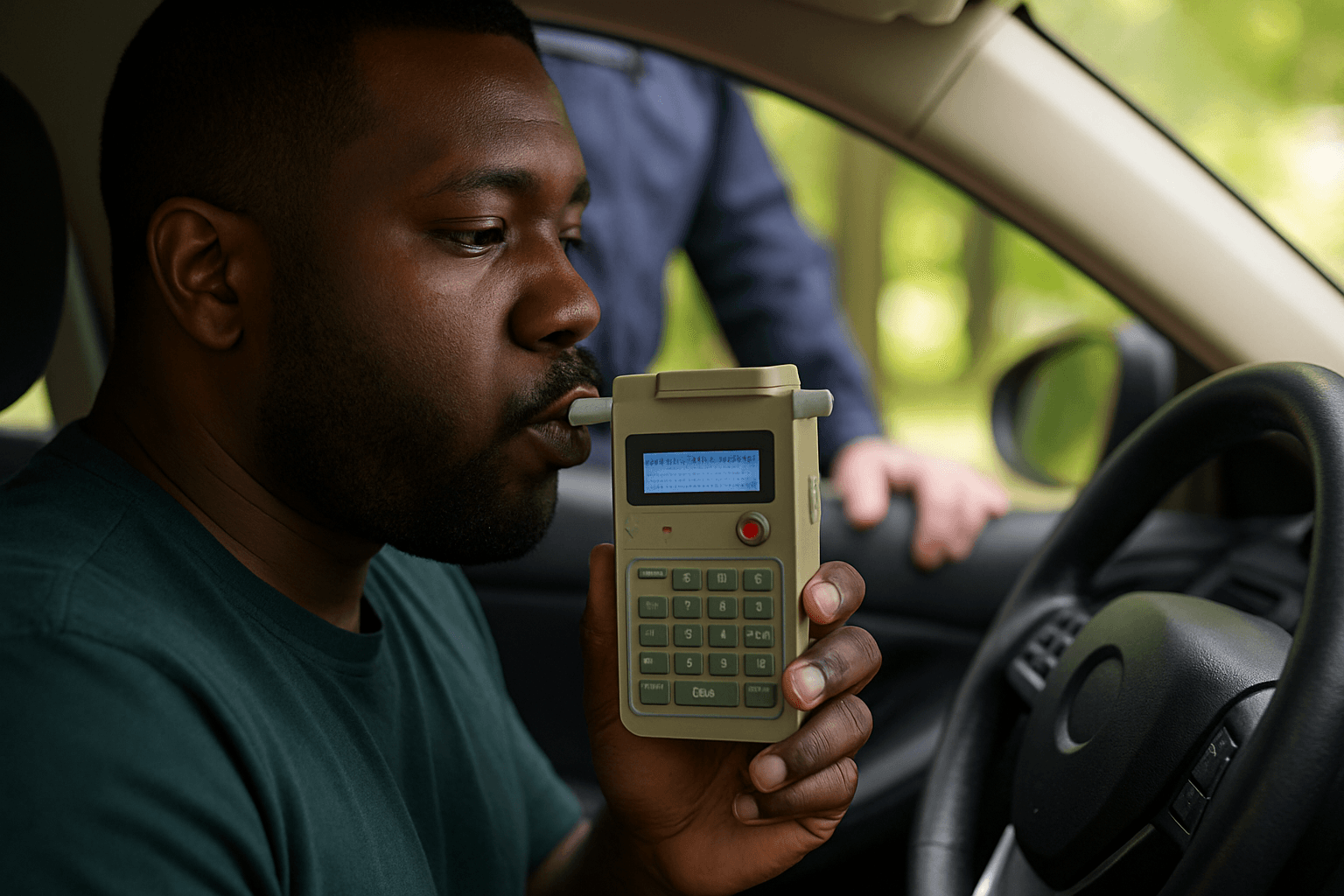
Georgia State Patrol and local law enforcement officers have real-time access to DDS records showing limited driving permit holders, approved hours, and approved destinations. If you are stopped outside your approved schedule or outside your approved route, the officer verifies your permit status on-site. Violation is not a judgment call. It is binary.
Driving outside permit terms is prosecuted as driving on a suspended license under O.C.G.A. § 40-5-121. Penalties include immediate arrest, vehicle impoundment, a fine of $500-$1,000, and possible jail time of 2-10 days. Your limited driving permit is revoked on the spot, and your underlying suspension is extended by six months from the date of the violation.
Most students assume minor deviations — stopping for gas on the way to work, picking up a classmate, or detouring to avoid traffic — fall within the permit's spirit. They do not. The permit is a court order. Deviation from the order, regardless of intent, is a criminal violation. Adherence to the exact approved schedule is non-negotiable.