Georgia courts can require SCRAM continuous alcohol monitoring or breath testing while you hold a hardship license — compliance gaps revoke both the device approval and your driving privilege.
Georgia Hardship License Approval Does Not Override Court-Ordered Alcohol Monitoring
The Georgia Department of Driver Services issues your hardship license based on DDS-issued suspension relief. The superior court or state court that sentenced you for DUI controls alcohol monitoring as a pretrial or probation condition. These are parallel systems with separate violation consequences.
If your court order requires SCRAM continuous alcohol monitoring or twice-daily breath testing, you must maintain compliance with the monitoring vendor while driving under your hardship license. The monitoring company — typically SCRAM Systems, BI Incorporated, or Sentinel Offender Services in Georgia — reports test results and compliance status directly to your probation officer or pretrial services. A missed test, tamper alert, or confirmed alcohol detection generates an automatic violation report.
Violation of the monitoring condition does not wait for your next court hearing. Probation officers in most Georgia jurisdictions file a violation motion within 48-72 hours of a confirmed compliance gap. The court can revoke probation, reinstate jail time, and notify DDS to cancel your hardship license. You lose both the monitoring approval and your driving privilege simultaneously.
SCRAM Continuous Alcohol Monitoring vs Portable Breath Testing: What Georgia Courts Order
Georgia judges assign one of two primary alcohol monitoring technologies for DUI defendants holding hardship licenses. SCRAM ankle bracelets measure transdermal alcohol concentration every 30 minutes and transmit data to a base station nightly. The device detects alcohol consumption within 12-24 hours, including attempts to obstruct the sensor. Monthly cost runs $300-$450 including installation, device rental, and monitoring service.
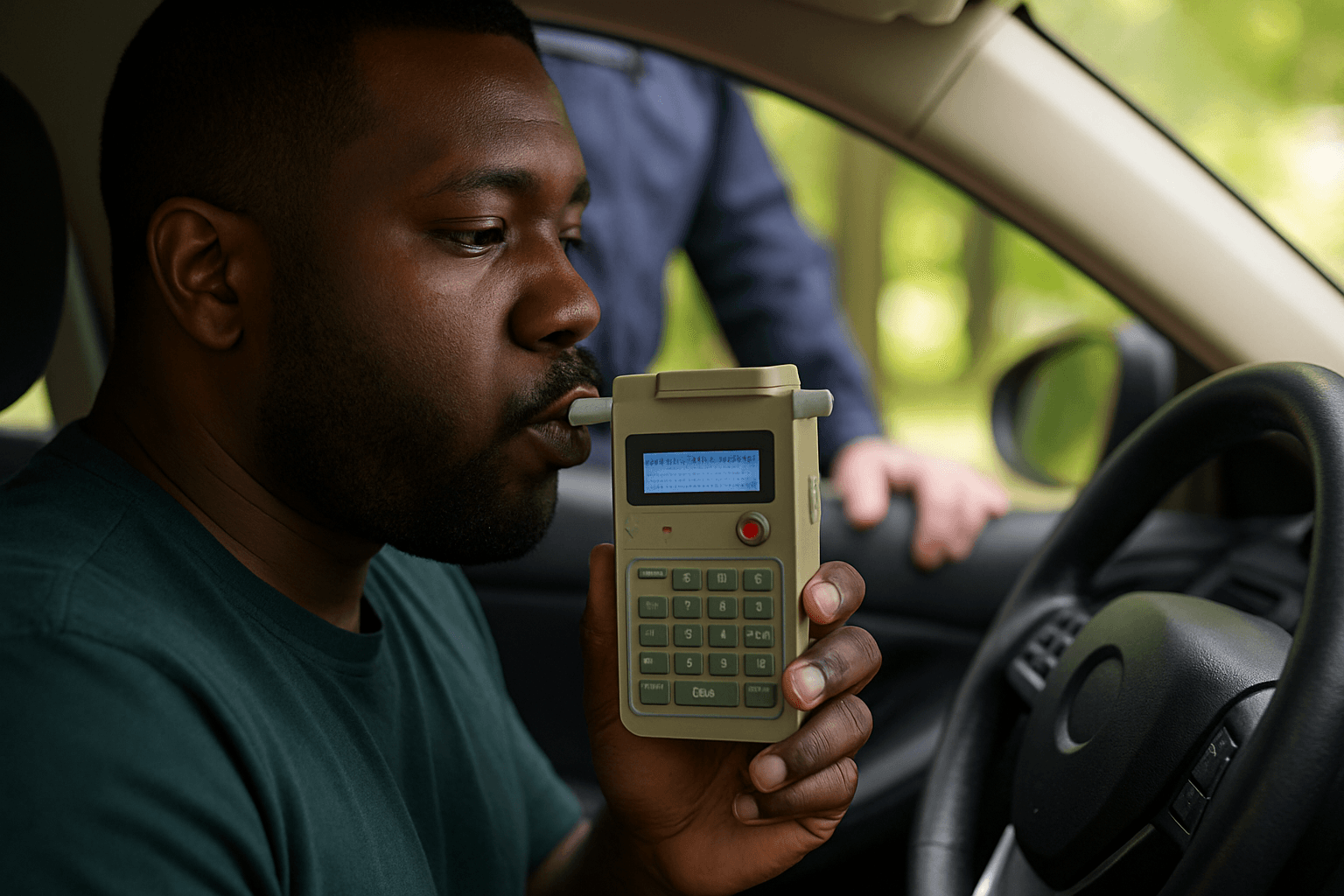
Portable breath testing devices require the defendant to blow into a handheld unit at scheduled times — typically twice daily, 12 hours apart, with random third tests. The device captures a facial photo during each test and GPS coordinates to confirm your location. You submit test results via cellular modem built into the unit. Monthly cost runs $150-$250. Missed test windows close after 10-15 minutes; late tests register as compliance violations.
Georgia superior courts lean toward SCRAM for second or third DUI offenses, high BAC cases over 0.15, and probation sentences longer than 12 months. State courts and municipal courts use portable breath devices more frequently for first-offense DUI with hardship license approval. The choice depends on your sentencing judge and county probation department protocol.
Compare car insurance rates in your state
Get quotes from licensed carriers — no obligation, no spam, results in minutes.
Get Your Free Quote✓ No Obligation Required✓ Licensed Carriers Only✓ Available Nationwide✓ Free to Compare
How Alcohol Monitoring Violations Revoke Your Georgia Hardship License
Your monitoring vendor transmits compliance data to Georgia probation services daily. Confirmed violations — missed tests, tamper alerts, or alcohol detection events — generate automatic violation reports within 24 hours. The probation officer files a motion to revoke probation or modify conditions with the court.
Once the violation motion is filed, the court issues a notice to appear for a violation hearing, typically scheduled 14-30 days out. Pending the hearing, most judges do not automatically suspend your hardship license, but the probation officer can request a hold on your driving privilege. If the judge finds a willful violation at the hearing, standard sanctions include revocation of hardship license eligibility, reinstatement of the suspended jail sentence, and extension of the monitoring period.
Georgia DDS receives hardship license revocation orders from the court electronically through the court reporting system. Your driving privilege terminates the day the court order is entered. You do not receive a grace period to arrange alternative transportation. If you continue driving after revocation, you face a new charge for driving on a suspended or revoked license, which adds 2 points and a mandatory 12-month additional suspension under Georgia law.
SR-22 Insurance Requirements Continue During Alcohol Monitoring Periods
Georgia requires SR-22 certificate filing for hardship license approval after DUI suspension. The SR-22 remains active for the entire period you hold the hardship license plus any subsequent license reinstatement monitoring period — typically 3 years total from your DUI conviction date. Alcohol monitoring compliance does not shorten the SR-22 filing duration.
Your SR-22 carrier must maintain continuous coverage without lapses. If you cancel your policy, fail to pay premiums, or allow coverage to lapse, the insurer notifies Georgia DDS electronically within 24 hours. DDS cancels your hardship license immediately and restarts the suspension clock. You cannot reinstate the hardship license until you refile SR-22 and pay a $210 reinstatement fee plus a $15 license reissue fee.
SR-22 insurance for Georgia DUI drivers with concurrent alcohol monitoring runs $110-$190 per month for minimum liability coverage through non-standard carriers. Expect quotes from Direct Auto, Acceptance Insurance, The General, and National General. Carriers view active monitoring as neutral or slightly positive for underwriting — it signals court supervision and reduced recidivism risk.
What Happens If You Fail Alcohol Monitoring While on a Georgia Hardship License
A confirmed alcohol detection event — defined as transdermal alcohol concentration above 0.02 for SCRAM or breath sample above 0.00 for portable breath devices — triggers immediate violation reporting. The monitoring vendor uploads the event data to your probation officer within hours. Probation files a violation motion the next business day in most Georgia jurisdictions.
You receive written notice of the violation and a court hearing date. The hearing focuses on whether the alcohol detection was confirmed, whether you consumed alcohol knowingly, and whether the violation justifies sanction. SCRAM generates approximately 5-8% false positives from environmental alcohol exposure — hand sanitizer, cleaning products, yeast-heavy foods — but the burden is on you to prove an alternative source. Confirmed intentional consumption results in hardship license revocation in 80-90% of Georgia cases.
After revocation, you lose eligibility to reapply for hardship relief for a minimum of 6 months in most Georgia counties. The original DUI suspension clock does not pause during that period. If your underlying DUI suspension was 12 months and you lose hardship eligibility 4 months in, you still face the remaining 8 months of hard suspension plus the 6-month waiting period for new hardship application. Total non-driving time extends to 14 months before you can request relief again.
Budgeting the Combined Cost of Hardship License, Monitoring, and SR-22 in Georgia
Georgia hardship license applicants post-DUI face a stacked cost structure spanning court fees, monitoring devices, insurance premiums, and DDS reinstatement. Court application fees for hardship hearing run $150-$300 depending on superior or state court jurisdiction. DDS charges a $210 license reinstatement fee when you apply for the hardship permit plus a $10 limited driving permit issuance fee.
SCRAM ankle monitoring adds $300-$450 monthly. Portable breath testing devices cost $150-$250 monthly. Both programs require upfront installation fees of $50-$100. SR-22 insurance premiums for Georgia DUI drivers average $110-$190 per month for state minimum liability coverage. First-year total cost typically reaches $4,200-$6,800 depending on monitoring type and insurance tier.
If you drive a financed or leased vehicle, your lender requires comprehensive and collision coverage on top of liability and SR-22. Full-coverage SR-22 policies for Georgia DUI cases run $210-$340 per month. Combined with SCRAM monitoring, annual cost exceeds $8,500. Most Georgia hardship licenses are approved for 12 months, meaning you carry this cost stack for the full year before standard license reinstatement eligibility.