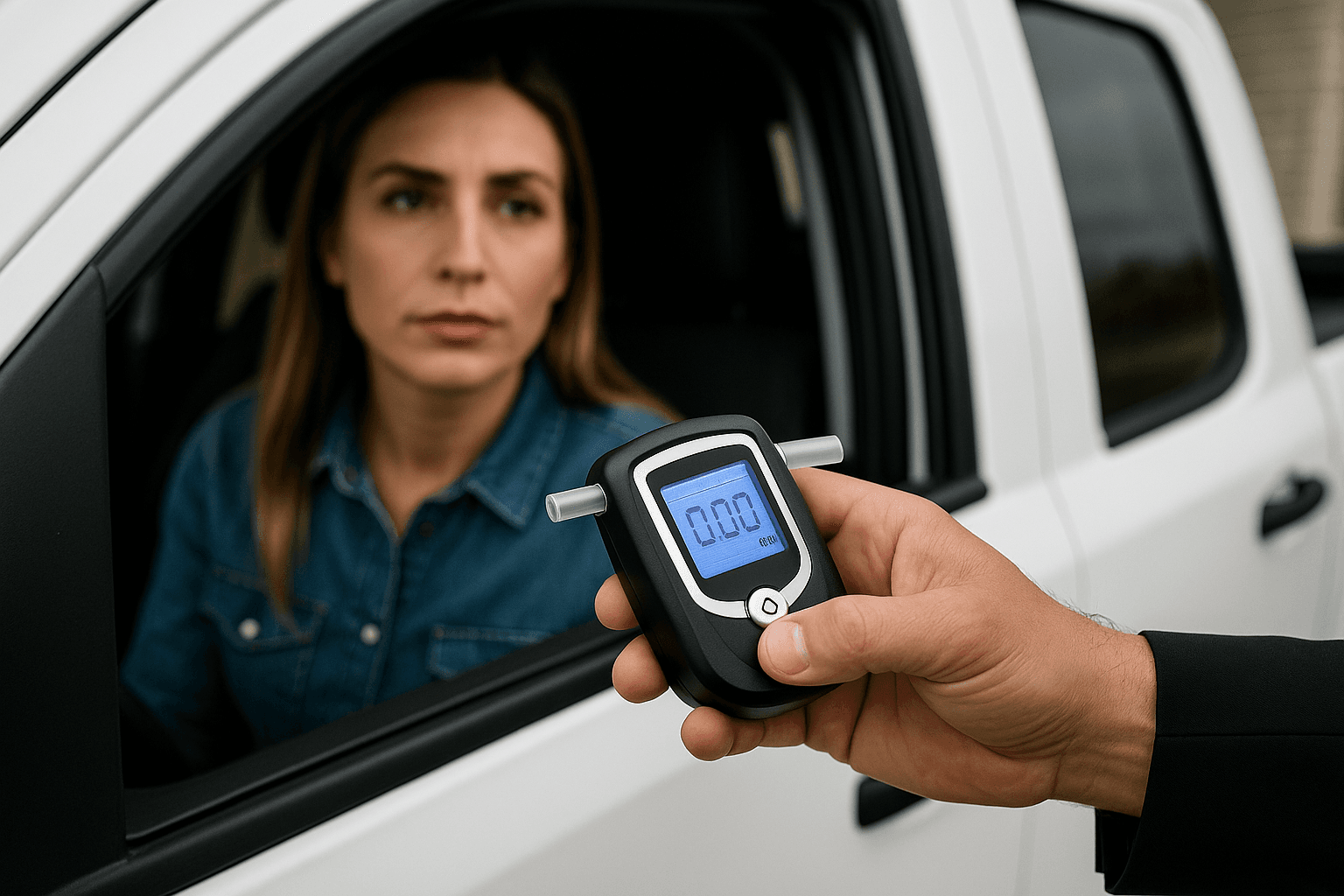
Missouri grants Limited Driving Privileges even with an active IID or SCRAM requirement, but carriers won't write SR-22 until you prove device compliance. Here's how the timelines, costs, and carrier rules actually work.
Missouri Limited Driving Privilege Works During Active IID or SCRAM Monitoring
Missouri courts grant Limited Driving Privileges while you're on an Ignition Interlock Device or SCRAM continuous alcohol monitoring program. The restriction doesn't block hardship approval. Your application goes through the same circuit court process whether you have device monitoring or not: file a Petition for Limited Driving Privilege in the county where your suspension was issued, attend the hearing with proof of employment or essential need, and pay the $50 filing fee plus $20 restricted license issuance.
The device requirement shows up as a condition on the order. If your underlying DWI conviction or administrative revocation included IID as part of sentencing, the court writes it directly into your Limited Driving Privilege approval. You're authorized to drive for work, medical appointments, alcohol treatment, and court-ordered programs — but only in a vehicle equipped with the specified device. Violation of the device condition revokes the privilege immediately and extends your underlying suspension.
Timing matters more than most petitions realize. Missouri law allows Limited Driving Privilege petitions 30 days after a DWI revocation or 15 days after an administrative alcohol suspension. You can file while your device installation appointment is pending, but you cannot legally drive under the privilege until the device is installed and the SR-22 is active. Most drivers gain court approval in 2-4 weeks, but coverage doesn't start until both compliance steps are complete.
SR-22 Carriers Require Device Installation Documentation Before Issuing Policies
Non-standard carriers writing Missouri SR-22 for IID or SCRAM cases require proof of device installation before they'll bind coverage. This isn't a Missouri legal rule — it's underwriting policy across Bristol West, Direct Auto, The General, GAINSCO, and Progressive's high-risk division. You submit your Limited Driving Privilege court order, and the carrier asks for your IID or SCRAM provider installation certificate showing the device serial number, installation date, and monitoring service agreement.
Without that certificate, the application stalls. Carriers classify active alcohol monitoring as a material risk factor. They won't issue an SR-22 filing based on a court order alone because the order authorizes driving contingent on device compliance, and compliance requires installation. The gap costs drivers time: you're approved to drive by the court, but you can't get coverage to actually start driving legally until the device provider completes installation and sends you documentation.
Budget for device costs before SR-22 shopping. Missouri IID installation runs $70-$150, with monthly monitoring fees of $60-$90. SCRAM ankle monitoring costs $300-$450 for installation and setup, plus $10-$15 per day for continuous monitoring service. Most monitoring agreements require 90-day minimums. If you're on IID, expect to carry it for 6 months minimum under Missouri's reinstatement rules for first DWI; repeat offenses extend that to 1-5 years depending on the number of priors.
Compare car insurance rates in your state
Get quotes from licensed carriers — no obligation, no spam, results in minutes.
Get Your Free Quote✓ No Obligation Required✓ Licensed Carriers Only✓ Available Nationwide✓ Free to Compare
Court-Ordered vs Voluntary Monitoring Changes How Carriers Price Your SR-22
Missouri distinguishes between IID required by court order and IID chosen voluntarily to qualify for early reinstatement. If your DWI conviction or Suspended and Revoked Driver statute violation mandated IID as part of sentencing, carriers classify it as court-ordered monitoring and price your SR-22 accordingly — typically 80-110% higher than a standard policy. If you installed IID voluntarily to satisfy Missouri's Ignition Interlock Restricted Driving Privilege program and shorten your hard suspension, some carriers offer slightly lower surcharges because voluntary compliance signals lower re-offense risk.
SCRAM monitoring almost always triggers the higher pricing tier. Continuous alcohol monitoring is reserved for repeat offenders, high-BAC cases, or probation conditions tied to multiple DWI convictions. Carriers treat SCRAM as a marker for elevated long-term risk. Monthly SR-22 premiums for SCRAM cases in Missouri run $140-$220 for state minimum liability, compared to $85-$140 for non-monitored SR-22 filers.
Your device provider reports compliance data directly to the court and often to the Missouri Department of Revenue. Violations — failed startup tests, missed rolling retests, tamper alerts, or SCRAM alcohol detection events — generate automatic reports. Carriers don't monitor device data in real time, but a compliance violation that triggers a probation revocation or privilege suspension will appear on your driving record within 10-20 days. That record check happens at renewal, and violations during your policy term usually result in non-renewal rather than mid-term cancellation.
Limited Driving Privilege Approval Timeline Runs Parallel to Device Installation
Missouri courts process Limited Driving Privilege petitions in 14-30 days from filing to hearing. Device installation typically takes 7-14 days from provider intake to completed setup. You can run both processes simultaneously, but your legal driving authorization doesn't activate until all three elements align: signed court order, installed and active monitoring device, and filed SR-22 with your carrier confirmation number submitted to Missouri Department of Revenue.
Most drivers lose time by sequencing these steps instead of running them in parallel. File your petition immediately after your suspension notice, contact an IID or SCRAM provider the same week to schedule installation, and start SR-22 quotes as soon as you have a court hearing date. Carriers can begin underwriting before your final court order if you provide the petition and hearing notice, but they won't issue the policy until you submit the signed order and device certificate.
Employers rarely wait 45-60 days for you to complete this process. Missouri law doesn't require employers to hold positions for suspended drivers, even when a Limited Driving Privilege is pending. If your job requires daily driving, communicate your timeline clearly: petition filed [date], hearing scheduled [date], device installation [date], expected SR-22 filing [date]. Most employers tolerate a 3-4 week gap if you show documented progress. A vague "I'm working on it" without dates typically results in termination.
Approved Routes and Hours Apply Even with Device Compliance
Missouri Limited Driving Privilege authorizes driving only for court-approved purposes during court-approved hours, regardless of your device monitoring status. Standard approvals cover direct routes between home and work, work-related travel within your employment scope, medical appointments, child care, school, alcohol treatment programs, and court-ordered obligations. The privilege does not authorize personal errands, social visits, or recreational travel.
Your device doesn't override the route and hour restrictions. Installing an IID or wearing a SCRAM monitor satisfies the alcohol-monitoring compliance condition, but it doesn't expand your approved driving window. If your court order limits you to 6 a.m. to 6 p.m. weekdays for work commutes, driving at 8 p.m. for groceries violates the privilege even if your IID shows zero alcohol. Law enforcement in Missouri has access to your Limited Driving Privilege details through the Department of Revenue database during traffic stops.
Violations compound quickly. Driving outside approved hours or purposes triggers privilege revocation, extends your underlying suspension by the time remaining on the original suspension, and often adds a new criminal charge under Missouri Revised Statutes 302.321 for driving while revoked. Your carrier will non-renew your SR-22 policy at the next term if a revocation appears on your record. Budget and plan as if the privilege restrictions are absolute — because legally, they are.
Total Cost Stack for Missouri Hardship License with Alcohol Monitoring
Missouri's combined hardship license and monitoring compliance costs run $2,200-$4,100 in the first year, depending on device type and SR-22 carrier. Court filing fees total $70 ($50 petition, $20 restricted license). IID installation and 12-month monitoring cost $790-$1,230. SCRAM installation and 90-day monitoring run $1,200-$1,800. SR-22 premium for state minimum liability with monitoring surcharge averages $1,680-$2,640 annually, paid monthly at $140-$220.
Add reinstatement fees if you're transitioning from revocation to Limited Driving Privilege. Missouri charges $45 for reinstatement after most DWI suspensions, but repeat offenders or Persistent Offender classifications pay $200. If your suspension included a Failure to Maintain Financial Responsibility component, add another $20 reinstatement fee and $400-$500 in back SR-22 premiums to cover the lapse period.
Attorney fees for contested petitions or complex eligibility cases range from $500-$1,500. Most drivers with straightforward employment documentation and first-offense DWI handle petitions pro se using forms from the Missouri State Courts website. Repeat offenders, CDL holders, or cases involving injury accidents typically need representation because courts apply stricter scrutiny to privilege approvals for high-risk histories.