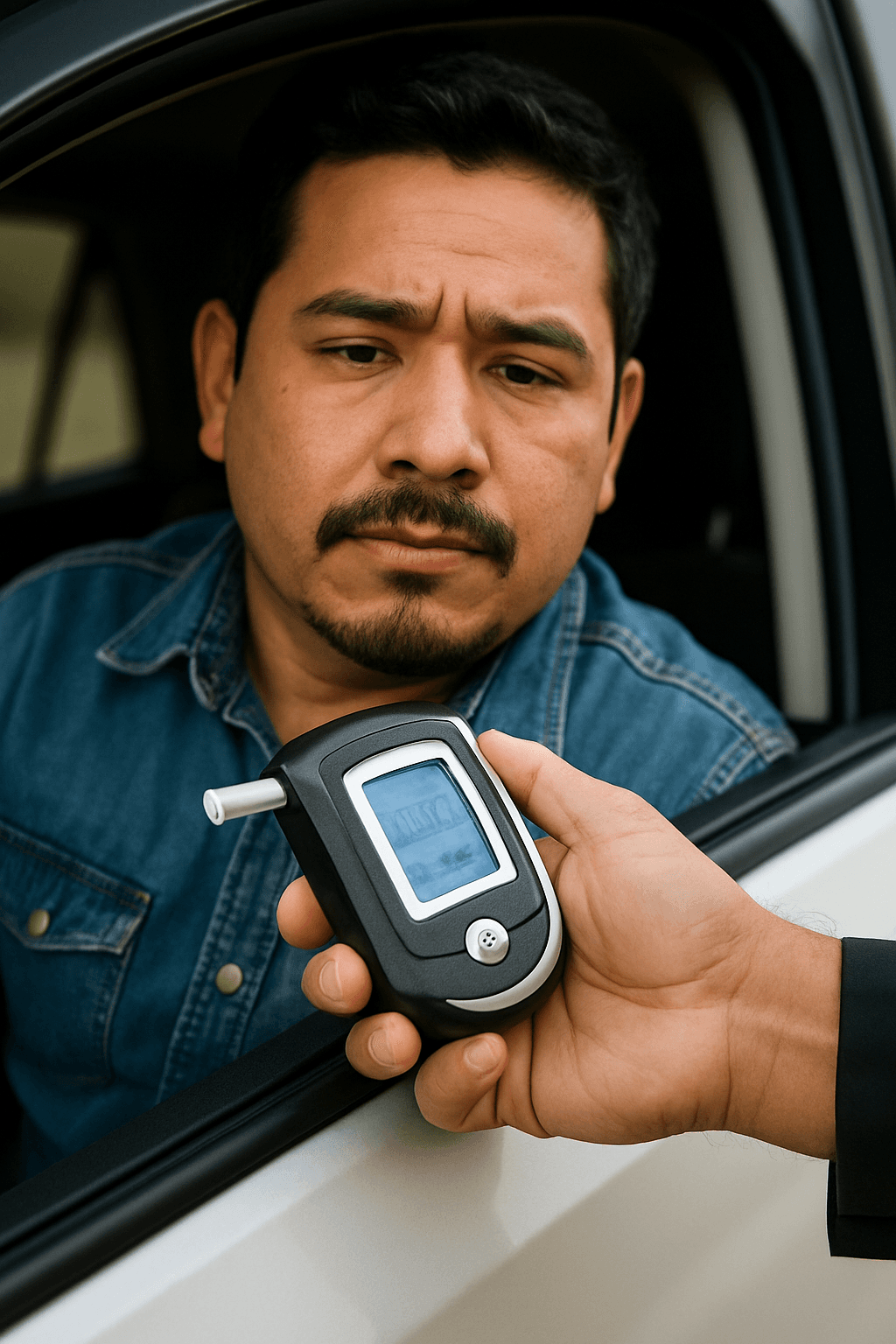
Missouri DMV issues your hardship license immediately at approval, but you cannot legally drive until your ignition interlock is installed and certified. Here's how to schedule installation so you're not holding a useless license for days.
Why Your Hardship License Approval Date Doesn't Match Your Legal Drive Date
Missouri issues your hardship license the day your hearing officer approves it or your administrative review clears. You walk out with a physical Restricted Driving Privilege card. That card is not permission to drive.
You cannot legally operate a vehicle until three conditions are met: your ignition interlock device is professionally installed, the installer submits certification to the Missouri Department of Revenue, and your SR-22 filing is active with the state. The gap between license issuance and these clearances typically runs 3 to 7 days if you schedule installation after your hearing. That's a week of holding a license you cannot use.
Most drivers assume the hardship hearing is the final gate. It is the first gate. The IID installer and your SR-22 carrier control when you actually drive.
Schedule Your IID Installation Before Your Hardship Hearing, Not After
Call IID providers the week before your hardship hearing and request the earliest available installation slot for the day after your anticipated approval date. Installers in St. Louis, Kansas City, and Springfield typically book 4 to 7 days out. Rural Missouri locations may require 10+ days.
You do not need license approval to schedule installation. Providers understand the hearing timeline and will hold an appointment if you explain you are awaiting hardship license approval. If your hearing is denied or postponed, you cancel the installation appointment with 24 hours' notice at no penalty.
If you schedule installation after your hearing approval, you add the installer's full booking lead time to your non-driving period. A Friday hearing approval with Monday installation scheduling often means you cannot drive until the following Wednesday or Thursday.
Compare car insurance rates in your state
Get quotes from licensed carriers — no obligation, no spam, results in minutes.
Get Your Free Quote✓ No Obligation Required✓ Licensed Carriers Only✓ Available Nationwide✓ Free to Compare
What Happens at the IID Installation Appointment
Installation takes 60 to 90 minutes. The technician hardwires the device to your ignition system, calibrates the breath sensor, and trains you on startup procedures, rolling retests, and lockout conditions. You must bring your hardship license, valid photo ID, vehicle registration, and proof of insurance with active SR-22 endorsement.
The installer photographs your device serial number, calibration reading, and installation timestamp, then submits certification to the Missouri Department of Revenue electronically. Certification typically processes within 24 hours. Until that certification clears, your hardship license remains non-operational even with the device installed.
Some installers offer same-day certification upload with 2-hour Revenue processing if you schedule a morning appointment. Ask explicitly whether the provider offers expedited certification when booking your slot.
Your SR-22 Filing Must Be Active Before You Drive, Not Just Purchased
Missouri requires continuous SR-22 coverage from your first legal drive under hardship license through your full license reinstatement. Your carrier files the SR-22 certificate electronically with the Department of Revenue, but processing takes 1 to 3 business days from the date you purchase the policy.
If you buy SR-22 insurance the day of your hardship hearing, your filing may not show active in the state system when your IID installation clears. You cannot legally drive until both the IID certification and SR-22 filing appear in Revenue records. Coordinate your SR-22 purchase 3 to 5 days before your anticipated hearing date to ensure filing is processed when your license issues.
Carriers that write Missouri hardship license policies with IID endorsement include Bristol West, Direct Auto, Dairyland, GAINSCO, and Acceptance. Not all SR-22 carriers will insure a vehicle with an interlock requirement. Confirm IID compatibility when requesting quotes.
First Legal Drive: Confirming All Three Clearances Before You Start the Car
Before your first trip under hardship license, call the Missouri Department of Revenue Driver License Bureau at 573-751-4600 and request verbal confirmation that your IID certification and SR-22 filing both show active in your driving record. This call takes 5 to 10 minutes and prevents a driving-while-suspended charge if one clearance is delayed.
If either clearance is missing, do not drive. A trooper or municipal officer who runs your license during a traffic stop will see hardship license issuance but no IID certification or no SR-22 compliance. Missouri treats this as driving while suspended, which revokes your hardship privilege and extends your underlying suspension by 90 days minimum.
Once all three elements clear — physical hardship license, certified IID installation, and active SR-22 filing — your first legal drive is to your approved employment location during your approved hours only. Deviation from approved routes or purposes during your first 30 days results in immediate revocation in most Missouri counties.
How Much the Full IID and Hardship License Process Costs
Missouri charges a $45 hardship license application fee and a $20 reinstatement fee at approval. IID installation runs $75 to $150 depending on vehicle type and provider location. Monthly IID lease and calibration costs $75 to $100, paid every 30 days for the duration of your restriction (typically 90 days minimum, up to the full suspension period for repeat DWI).
SR-22 insurance premiums for a driver with DWI and IID requirement typically run $140 to $280 per month, or $1,680 to $3,360 annually. If you need non-owner SR-22 because you do not have a vehicle, monthly premiums drop to $30 to $60, but you cannot fulfill IID requirements without access to a vehicle with an installed device.
Total first-month cost stack: $65 hardship license fees, $75–$150 installation, $75–$100 first month IID lease, $140–$280 first month SR-22 premium. Expect $355 to $595 upfront before your first legal drive. Budget an additional $215 to $380 per month for the duration of your hardship period.