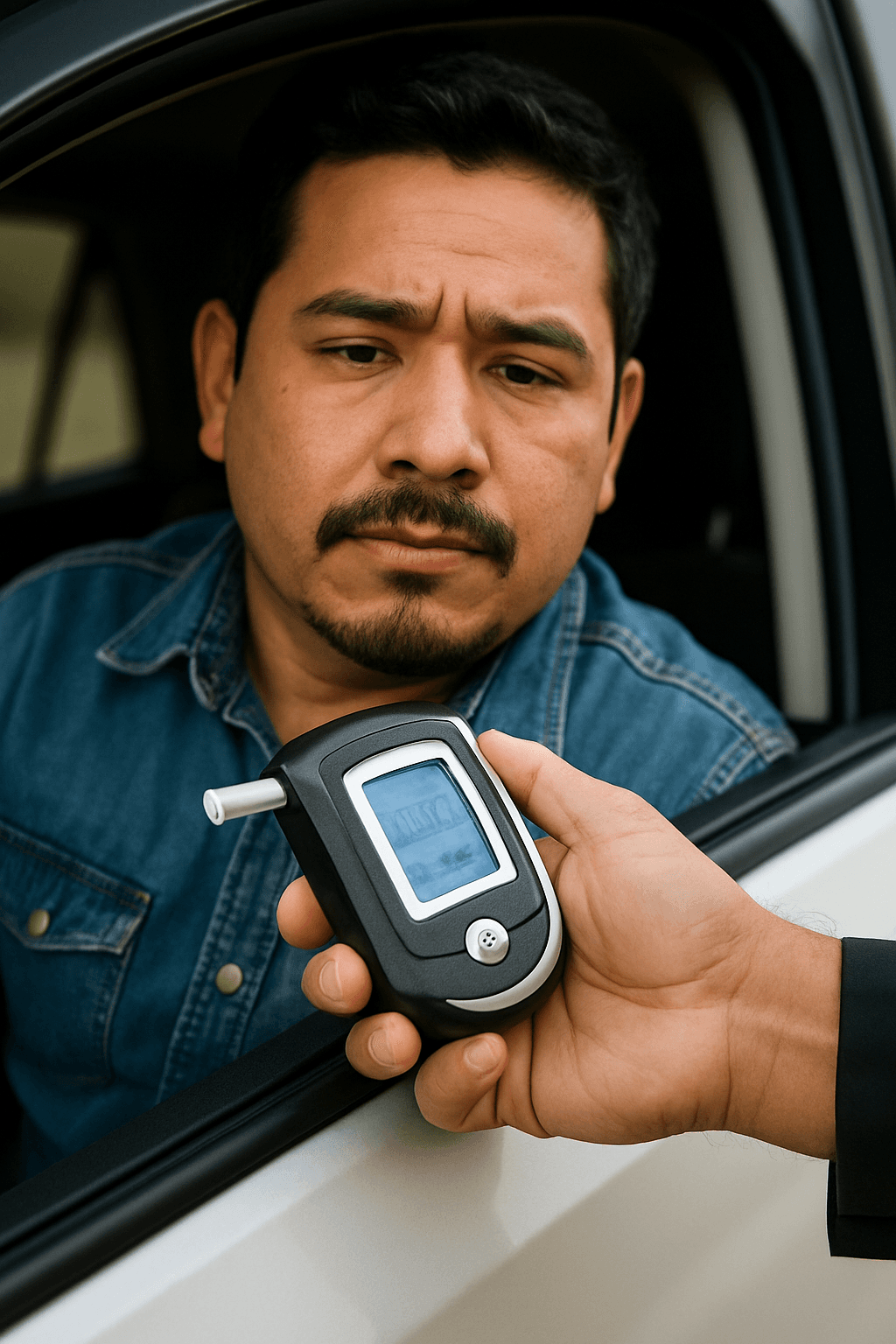
Mississippi hardship licenses require ignition interlock before your first drive. Here's exactly when to schedule installation so you're legal the day your restricted license starts.
Mississippi Hardship License Requires Active IID Before First Drive
Mississippi hardship licenses approved after DUI suspension require proof of ignition interlock installation before the license becomes legally valid. The Mississippi Department of Public Safety does not issue a separate grace period between approval and first drive. Your hardship license approval letter states the start date, but you cannot legally use that license until an IID provider submits enrollment confirmation to DPS.
Most drivers schedule installation after receiving approval, creating a 3-7 day gap where they hold a hardship license but cannot legally drive. Employers expect you the day your license starts. Law enforcement treats hardship violations as knowing violations — no warning, immediate revocation.
The correct sequence: apply for hardship license, schedule IID installation for the day before your anticipated approval date or the approval date itself, attend installation with the vehicle you'll drive, and confirm the provider files enrollment with DPS before you drive to work. The installation appointment takes 60-90 minutes. Providers require 2-5 business days advance notice in most Mississippi counties.
How to Schedule IID Installation Around Hardship License Timing
Mississippi hardship license approval takes 10-21 days after your hearing if granted by circuit court, or 7-14 days if processed administratively through DPS for eligible first-offense cases. Circuit court paths issue an order with a specific start date. DPS administrative approvals issue a letter with a validity period start date.
Call an IID provider 3-5 days after your hardship hearing or DPS application submission. Request installation for the day before your expected approval date if the court gave you a specific start date, or within 48 hours of receiving your approval letter if processed administratively. Providers serving Mississippi include Intoxalock, LifeSafer, Smart Start, and Guardian Interlock. Most operate mobile installation units for rural counties where fixed shops don't exist.
Bring your approval letter or court order, the vehicle title or registration proving you own or are listed on the vehicle, a valid photo ID, and payment for installation ($75-$150) plus first month monitoring ($60-$90). The provider photographs the installation, tests the device, trains you on rolling retests, and files enrollment confirmation with DPS electronically within 24 hours. You cannot drive legally until that filing completes. Confirm filing status by calling DPS Driver Services at 601-987-1274 before your first work commute.
Compare car insurance rates in your state
Get quotes from licensed carriers — no obligation, no spam, results in minutes.
Get Your Free Quote✓ No Obligation Required✓ Licensed Carriers Only✓ Available Nationwide✓ Free to Compare
What Happens If You Drive Before IID Enrollment Is Filed
Driving on a hardship license without active IID enrollment is treated as driving on a suspended license under Mississippi Code § 63-1-53. The hardship order requires IID as a condition — failure to meet that condition voids the restricted privilege. A traffic stop during the gap between approval and IID enrollment typically results in citation, vehicle impoundment, and immediate hardship license revocation.
Revocation for hardship violation extends your underlying suspension by 90 days minimum in most Mississippi circuits. Some courts impose the full remaining suspension period without hardship eligibility. You return to zero driving privileges and lose the employment exemption that justified the hardship license in the first place.
Employers rarely hold positions open through a second suspension. Mississippi does not allow retroactive IID enrollment to cure a violation. The filing timestamp must precede the drive. Schedule installation before your hardship start date or do not drive until enrollment confirmation is received.
Mississippi Hardship License SR-22 Requirement and IID Monitoring Costs
Mississippi requires SR-22 filing for the full hardship license period, typically 90 days to 1 year depending on offense and suspension length. Your insurer files the SR-22 certificate with DPS electronically. The SR-22 requirement begins the same day as your hardship license — not after, not during a grace period. Lapse of SR-22 during the hardship period triggers automatic license suspension under Mississippi law.
Hardship-licensed drivers pay non-standard SR-22 auto insurance premiums, typically $110-$190/month for state minimum liability coverage through carriers like Dairyland, GAINSCO, Direct Auto, or Acceptance. Add IID monitoring costs: $60-$90/month for data downloads, calibration appointments every 30-60 days, and lockout service calls if you fail a rolling retest. Total monthly cost for hardship license compliance runs $170-$280 plus fuel to reach calibration appointments.
IID lease is separate from insurance. Your insurer does not pay for or manage the device. Budget for both expenses starting the day your hardship period begins. Missed calibration appointments trigger device lockout and a violation report to DPS, which revokes your hardship license even if insurance remains active.
IID Violations That Revoke Mississippi Hardship Licenses
Mississippi IID programs report violations to DPS within 48 hours. Violations include failed startup test (BAC above 0.02%), failed rolling retest, missed calibration appointment, tampering or circumvention attempt, and driving a non-IID vehicle during the hardship period. Any violation triggers hardship license review. Three violations in 90 days result in automatic revocation under Mississippi ignition interlock rules.
Failed tests below 0.04% BAC generate a warning on first occurrence. Failed tests at or above 0.04% count as violations immediately. Rolling retests occur randomly every 15-45 minutes while driving. You have 5 minutes to pull over safely and provide a breath sample. Missing the retest window by one second logs as a violation.
Tampering includes disconnecting the device, using compressed air, having another person blow into the device, or driving a different vehicle not equipped with IID unless that vehicle is employer-owned and your hardship order explicitly allows non-IID employer vehicles for work purposes only. Most Mississippi hardship orders do not include that exemption. Every drive must be in your IID-equipped vehicle. One drive in a borrowed car ends your hardship license.
What to Tell Your Employer About Hardship License and IID Restrictions
Mississippi hardship licenses restrict you to employer-approved routes and employer-verified work hours. Your employer must complete an affidavit listing your work address, shift hours, and essential job duties that require driving. The court or DPS issues a hardship order matching those hours and routes. Deviation from approved hours or routes is a violation even if you're driving for work.
Tell your employer the hardship license requires ignition interlock in your personal vehicle, limits driving to work and work-related errands within approved hours, and prohibits personal errands or non-work stops. If your job requires driving a company vehicle, clarify whether your hardship order allows employer vehicles or requires IID in every vehicle you operate. Most Mississippi orders require IID in all vehicles — company fleet exemptions are rare and must be stated explicitly in the order.
Employers cannot fire you for having a hardship license, but they can terminate you if the restrictions prevent you from performing essential job duties. A delivery driver whose hardship order allows home-to-work only cannot fulfill the job. A warehouse worker whose hardship order allows commute plus delivery runs within a 25-mile radius can. Provide your employer a copy of the hardship order so they understand the boundaries. Employers who ask you to drive outside approved hours or routes are asking you to violate your license — and the violation consequence is yours, not theirs.