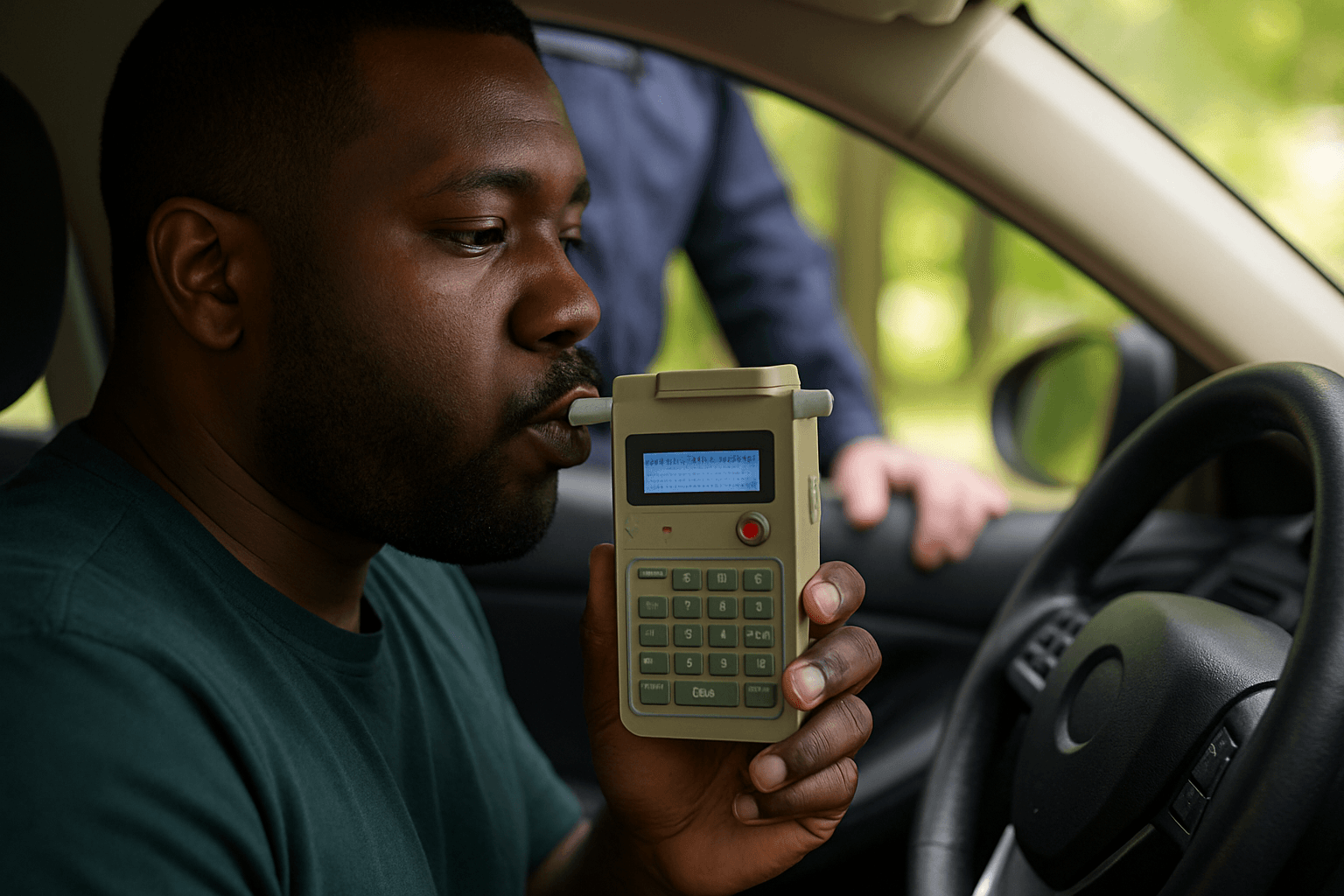
West Virginia's occupational license requires a hardship hearing in Kanawha County Circuit Court. The hearing determines whether you can drive to work during suspension — approval depends on documented proof of hardship and clean hearing performance.
West Virginia Requires a Circuit Court Hearing — Not a DMV Application
West Virginia does not grant occupational licenses through DMV administrative review. You must petition Kanawha County Circuit Court for a hardship hearing under WV Code §17B-2-3a, present sworn testimony, and convince a judge that losing your license creates an undue hardship that threatens your employment. The hearing is adversarial — the prosecuting attorney may cross-examine you, question your documentation, or argue against approval if your suspension stems from DUI or multiple violations.
The hearing is typically scheduled 3–6 weeks after petition filing, depending on court docket availability. You may file immediately after suspension begins — West Virginia has no mandatory waiting period for first-time occupational license petitions. Repeat petitions after denial or revocation face longer delays and lower approval rates.
Approval is never automatic. Kanawha County Circuit Court grants occupational privileges to roughly 60–70% of petitioners who present complete documentation and credible testimony. Denied petitions cannot be refiled for 90 days unless circumstances materially change.
What Documentation the Court Requires at the Hearing
The petition must include a verified employer letter on company letterhead stating your job title, work address, scheduled work hours, and a statement that termination will occur if you cannot drive. The letter must be signed by a supervisor or HR representative with contact information the court can verify. Generic letters or self-employment claims without tax documentation are frequently rejected.
You must provide proof of SR-22 insurance coverage issued by a licensed West Virginia carrier. The SR-22 filing must be active on the hearing date — not pending, not quoted, but filed and confirmed with the DMV. Most petitioners use non-standard carriers (Bristol West, Dairyland, GAINSCO, Direct Auto) that specialize in high-risk SR-22 filings. Proof of insurance is a threshold requirement; the hearing will not proceed without it.
The court also requires a completed Petition for Occupational License form (available from the Kanawha County Circuit Clerk), a certified copy of your driving record from the West Virginia DMV, and payment of the $86 petition filing fee. If your suspension includes a DUI conviction, the court may require proof of enrollment in the West Virginia Alcohol Test and Lock Program or completion of a state-approved DUI safety program before granting approval.
Compare car insurance rates in your state
Get quotes from licensed carriers — no obligation, no spam, results in minutes.
Get Your Free Quote✓ No Obligation Required✓ Licensed Carriers Only✓ Available Nationwide✓ Free to Compare
How the Hardship Hearing Works in Kanawha County Circuit Court
The hearing is conducted in open court before a circuit judge. You will be sworn in and asked to testify under oath about the nature of your employment, the distance and route to work, whether public transportation or rideshare is available, and what efforts you have made to arrange alternative transportation. The judge evaluates whether job loss is imminent and whether your testimony is credible and consistent with the documentation submitted.
The prosecuting attorney may cross-examine you on the events leading to your suspension, prior violations, or inconsistencies in your petition. If your suspension stems from DUI or refusal to submit to chemical testing, expect questions about alcohol or drug use, treatment participation, and whether you pose a public safety risk. The hearing is not a retrial of the underlying offense, but the judge has broad discretion to deny occupational privileges if convinced you are not rehabilitated or will violate the restrictions.
If approved, the judge issues an order specifying approved purposes (work, medical appointments, DUI program attendance, grocery shopping in some cases), approved days and hours, and approved routes. The order is binding — any deviation voids the occupational license immediately and subjects you to driving under suspension charges, which carry jail time and extend your original suspension by 6–12 months.
Approved Restrictions and What Happens If You Violate Them
West Virginia occupational licenses are among the most restrictive in the country. Approved purposes typically include direct travel to and from work during scheduled shifts, travel to medical appointments with advance court approval, and travel to court-ordered DUI programs or ignition interlock service appointments. Personal errands, social visits, and grocery shopping are not automatically approved — you must petition for each additional purpose and demonstrate necessity.
Approved hours are set by the judge and match your documented work schedule plus reasonable travel time. If your shift changes, you must file a motion to modify the court order before driving the new hours — oral permission from your employer is not sufficient. Route restrictions are enforced by law enforcement through random stops; officers can verify your occupational license terms through the DMV database and arrest you on the spot for non-compliance.
Violation of any restriction — driving outside approved hours, deviating from approved routes, or operating a vehicle without ignition interlock if required — results in immediate revocation of the occupational license and additional criminal charges. West Virginia treats occupational license violations as driving under suspension, which carries 6 months to 1 year in jail, $100–$500 fines, and an automatic 6-month extension of your underlying suspension. There is no warning system.
SR-22 Filing and Ignition Interlock Device Requirements
West Virginia requires SR-22 filing for the entire duration of your occupational license plus the remainder of your underlying suspension. If your original suspension was 1 year and you receive an occupational license after 2 months, you must maintain SR-22 for the remaining 10 months plus any additional time the occupational license is active. SR-22 lapses — even for one day — reset your filing requirement to zero and revoke your occupational privilege immediately.
SR-22 coverage through non-standard carriers typically costs $140–$220 per month for liability-only policies meeting West Virginia's 25/50/25 minimum requirements. The SR-22 filing fee is $65, paid to the carrier. Total first-year cost including premiums, filing, and reinstatement fees typically runs $2,200–$3,400 depending on violation history and age.
If your suspension stems from DUI or refusal to submit to chemical testing, West Virginia mandates ignition interlock device installation under the Alcohol Test and Lock Program. The device must be installed before the occupational license hearing and remain installed for the full suspension period — typically 15 days to 1 year depending on BAC level and prior offenses. Monthly IID costs run $70–$100 for rental, calibration, and monitoring, adding $840–$1,200 annually to your total compliance cost.
How Long the Occupational License Lasts and What Happens After
West Virginia occupational licenses are granted for the duration of your underlying suspension, not a fixed term. If your suspension is 6 months, the occupational license expires when the suspension ends. If your suspension is indefinite (pending completion of DUI program or payment of reinstatement fees), the occupational license remains valid until the court revokes it or you satisfy the reinstatement conditions.
Once your suspension ends, you must pay the DMV reinstatement fee — $65 for most suspensions, $100 for DUI-related suspensions — and provide proof of continuous SR-22 coverage throughout the suspension period. If your SR-22 lapsed at any point, the DMV will not reinstate your license until you refile SR-22 and complete the full required filing period from the lapse date forward.
After reinstatement, West Virginia requires continued SR-22 filing for 3 years from the conviction date for DUI offenses and 2 years for most non-DUI suspensions. Occupational license holders often confuse the suspension end date with the SR-22 end date — they are separate timelines. Failing to maintain SR-22 through the full required period triggers a new suspension and restarts the entire process.
Total Cost to Obtain and Maintain an Occupational License in Charleston
The petition filing fee is $86, paid to the Kanawha County Circuit Clerk when you file. Attorney fees for representation at the hardship hearing range from $500 to $1,200 depending on complexity and whether the prosecuting attorney contests your petition. Self-representation is permitted but approval rates drop significantly without legal counsel familiar with circuit court procedure.
SR-22 insurance premiums run $140–$220 per month for most petitioners, totaling $1,680–$2,640 annually. Add the $65 SR-22 filing fee and $65–$100 DMV reinstatement fee at suspension end. If ignition interlock is required, monthly costs of $70–$100 add $840–$1,200 annually.
Total first-year cost for an occupational license in Charleston typically ranges from $3,200 to $5,500 when attorney fees, SR-22 premiums, IID rental, court fees, and reinstatement costs are combined. Drivers who attempt to cut costs by skipping attorney representation or shopping cut-rate SR-22 carriers often face denial, non-compliance penalties, or SR-22 lapses that extend their suspension and double total costs.