Knox County uses court-supervised hardship hearings for most DUI and suspension cases. What happens in your hearing, what documents the judge needs to see, and how employment verification changes the outcome.
Knox County Hardship Hearings Use Court Process, Not DMV Administrative Filing
Tennessee routes most hardship license petitions through court hearings in Knox County, not through administrative DMV filings like many states. If you lost your license to DUI, multiple violations, insurance lapse, or failure to pay child support, your path to a restricted driving privilege runs through a county court hearing where a judge evaluates your employment need and compliance history.
Knox County General Sessions Court handles the majority of hardship petitions. The hearing is scheduled 2-4 weeks after your attorney files the petition. You appear in front of a judge with documentation proving employment, proof of SR-22 insurance filing, enrollment in required DUI school if applicable, and any additional compliance steps the court ordered at sentencing.
The hearing is not automatic approval. The judge evaluates whether you meet the statutory hardship criteria under Tennessee Code Annotated 55-50-502: employment necessity, family medical transport, or educational enrollment. Employment is the most common qualifying reason. The court expects your employer to verify shift times, work location, and the consequences of losing your driving privilege.
What the Judge Looks for in Your Knox County Hardship Petition
Knox County judges evaluate three core criteria: employment necessity, compliance with underlying suspension conditions, and insurance proof. Your petition must establish that losing your license creates genuine employment hardship — not inconvenience, but job loss or inability to perform core duties.
Employer verification carries significant weight. A letter on company letterhead stating your job title, work address, shift schedule, and that transportation is essential to continued employment is minimum. Stronger petitions include a supervisor's signed affidavit confirming you will lose your position without driving access. The court distinguishes between jobs requiring a license (delivery driver, sales rep with territory coverage) and jobs requiring reliable transportation to reach a worksite. Both qualify, but the documentation differs.
SR-22 proof is non-negotiable. You must present proof of SR-22 insurance filing before the hearing. Tennessee requires SR-22 for 3 years following DUI conviction or insurance-lapse suspension. The judge will not grant a hardship license without verified SR-22 on file with the Tennessee Department of Safety. Bring the SR-22 certificate from your carrier — not just a policy declaration page.
Compare car insurance rates in your state
Get quotes from licensed carriers — no obligation, no spam, results in minutes.
Get Your Free Quote✓ No Obligation Required✓ Licensed Carriers Only✓ Available Nationwide✓ Free to Compare
Timeline and Filing Process in Knox County Courts
Your attorney files the hardship petition with Knox County General Sessions Court after your license suspension takes effect. Tennessee does not allow hardship petitions until the suspension begins. For DUI cases, most defendants become eligible 45 days after conviction if they complete alcohol assessment and enroll in DUI school.
The petition filing requires court fees typically totaling $250-$400 in Knox County, separate from attorney fees. Once filed, the court schedules your hearing within 2-4 weeks. You receive a hearing date by mail or through your attorney. Missing the hearing without prior continuance request usually results in automatic denial.
If the judge grants the hardship license, the order goes to the Tennessee Department of Safety for issuance. Processing takes 7-10 business days from court approval to physical license availability. You pick up the restricted license at a Tennessee Driver Services Center — not at the courthouse. During the gap between approval and license issuance, you cannot legally drive even with the signed court order.
Approved Purposes and Route Restrictions Under Knox County Orders
Tennessee hardship licenses restrict driving to court-approved purposes only. Knox County judges typically approve work commute, work-related driving during employment hours, travel to DUI school or court-ordered treatment, medical appointments for yourself or immediate family, and educational enrollment travel if applicable.
The court order specifies approved hours, not just purposes. A typical Knox County work-related hardship license allows driving Monday-Friday 6:00 AM to 6:00 PM, adjusted for your documented shift schedule. Weekend driving requires separate justification — weekend work shifts, weekend DUI classes, or medical appointments scheduled outside weekday hours.
Route restrictions vary by case. Some Knox County orders require direct routes only between home, workplace, and approved destinations. Others allow reasonable deviation for fuel, childcare drop-off if work-related, or emergency situations. Violating the approved purposes or hours voids the hardship license immediately and extends the underlying suspension. Knox County officers and Tennessee Highway Patrol enforce hardship restrictions actively. Carry your court order, employer letter, and current insurance card every time you drive.
SR-22 Insurance Requirement and Carrier Availability in Tennessee
Tennessee requires SR-22 filing for the full duration of your hardship license period plus the underlying suspension. For DUI cases, that typically means 3 years of continuous SR-22 coverage. Letting your SR-22 lapse even one day triggers automatic license re-suspension and resets your filing period to zero.
Not all carriers write SR-22 policies for hardship license holders. Tennessee's non-standard SR-22 market includes Bristol West, Dairyland, Direct Auto, GAINSCO, The General, and Safe Auto. Monthly premiums for DUI-related SR-22 policies with hardship license restrictions typically run $140-$280/mo in Knox County, depending on age, vehicle, and violation history. Estimates based on available industry data; individual rates vary by driving history, vehicle, coverage selections, and location.
You need proof of SR-22 filing before your hardship hearing. Contact carriers at least 10 days before your scheduled court date. The carrier files the SR-22 certificate electronically with the Tennessee Department of Safety, then sends you a paper copy for the hearing. Bring both the SR-22 certificate and your current insurance declaration page to court.
Ignition Interlock Requirement for DUI-Related Hardship Licenses
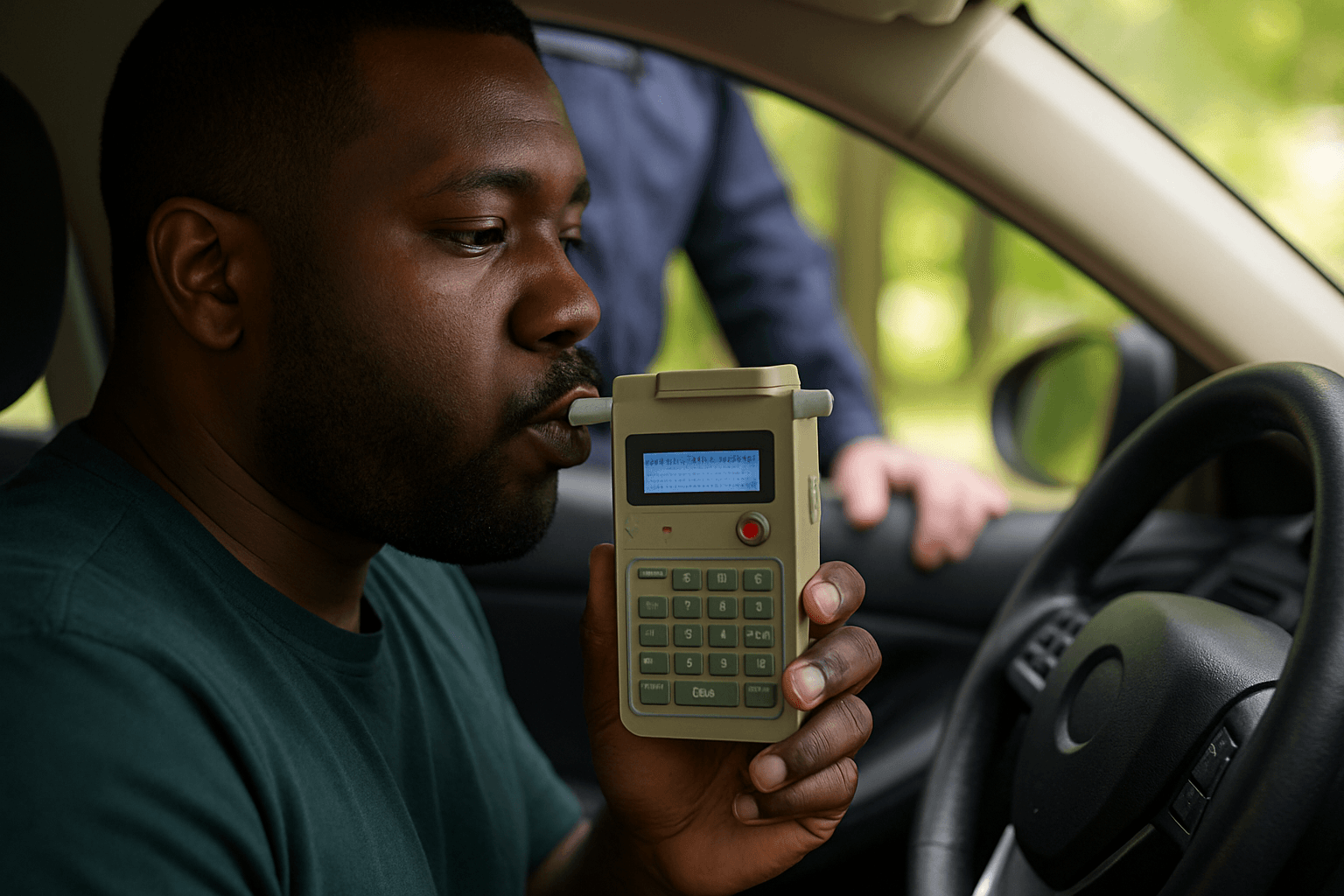
Tennessee requires ignition interlock devices for all DUI-related hardship licenses under TCA 55-10-419. Knox County courts enforce this strictly. If your suspension stems from DUI conviction or refusal to submit to testing, your hardship license approval includes mandatory IID installation.
You arrange IID installation through a Tennessee-certified provider before the court issues the hardship license. Installation costs run $75-$150, with monthly monitoring and calibration fees of $60-$90. The device stays installed for the full hardship license period — typically 1 year minimum for first DUI, longer for repeat offenses.
IID violations reported to the court void your hardship license. Violations include failed breath tests, tampering, missed calibration appointments, or attempts to bypass the device. Knox County judges rarely grant second chances on IID violations. The original suspension period resumes in full, and you become ineligible for another hardship petition for 6-12 months depending on the violation severity.
Cost Breakdown for Knox County Hardship License Process
The full cost to obtain and maintain a Knox County hardship license typically runs $2,200-$4,500 over the first year. Court filing fees add $250-$400. Attorney fees for petition preparation and hearing representation range $750-$1,500 in Knox County depending on case complexity.
SR-22 insurance premiums constitute the largest ongoing expense. Expect $1,680-$3,360 annually ($140-$280/mo) for DUI-related SR-22 coverage. IID installation and first-year monitoring add another $800-$1,200. Tennessee driver license reinstatement fees run $75-$150 depending on suspension type.
DUI school enrollment, required before hardship eligibility, costs $250-$400 for the state-mandated program. Alcohol assessment fees add $100-$200. These are one-time expenses but must be paid before filing your hardship petition. Budget realistically — most Knox County hardship cases require 4-6 months from suspension effective date to final license issuance when you account for DUI school completion, filing, hearing, and processing time.