West Virginia requires SR-22 filing before hardship license approval, but most carriers won't quote SR-22 for a license you don't have yet. Only a handful of non-standard carriers solve this timing problem without forcing you to wait weeks.
West Virginia hardship licenses require SR-22 before approval, creating a carrier timing problem
West Virginia's hardship license approval process requires proof of SR-22 filing at the time you submit your application to the circuit court. You cannot be approved without it. The problem: most standard carriers and even some non-standard carriers refuse to issue SR-22 certificates for a hardship license you don't possess yet, arguing they need a valid license number to file against. This creates a circular dependency that costs drivers weeks of delay and often results in denied hardship applications for incomplete documentation.
Only a small subset of non-standard carriers — Bristol West, Dairyland, Direct Auto, The General, and GAINSCO — will issue SR-22 certificates based on a pending hardship application and your suspended license number. These carriers understand West Virginia's hardship process and structure their filings to satisfy the court requirement before approval. Progressive and GEICO, the two largest SR-22 filers nationally, typically decline hardship license SR-22 requests until after approval, making them unusable for the initial application.
The hardship license itself restricts you to court-approved purposes only: employment, medical appointments for yourself or immediate family, DUI treatment program attendance, and court-ordered obligations. Routes and hours are specified in the court order. Violation of any restriction revokes the hardship license immediately and typically adds 6–12 months to your underlying suspension period.
How to find carriers that will quote SR-22 before your hardship license is approved
Call carriers directly and ask this exact question: "Will you issue an SR-22 certificate for a pending West Virginia hardship license application using my suspended license number?" Most phone representatives will not know the answer. Ask to speak with an underwriter or SR-22 filing specialist. If they cannot confirm same-day filing capability for pending hardship applications, move to the next carrier.
Bristol West and Dairyland handle pending hardship SR-22 filings in West Virginia most consistently. Both maintain dedicated SR-22 underwriting teams familiar with hardship license timing requirements. Direct Auto and The General also write these policies but approval timelines vary by location and underwriter discretion. GAINSCO operates through independent agents in West Virginia and approval depends on the agent's familiarity with hardship cases.
Expect monthly premiums between $140 and $280 for minimum liability coverage with SR-22 filing. West Virginia requires 25/50/25 liability minimums, but most hardship applications recommend 50/100/50 limits to demonstrate financial responsibility to the court. The higher limits add approximately $30–$50/month to your premium. The SR-22 filing fee itself is typically $25–$50, paid once at policy inception.
Compare car insurance rates in your state
Get quotes from licensed carriers — no obligation, no spam, results in minutes.
Get Your Free Quote✓ No Obligation Required✓ Licensed Carriers Only✓ Available Nationwide✓ Free to Compare
What the hardship license application process requires beyond SR-22
West Virginia hardship licenses are granted by circuit court judges through a hardship hearing, not through DMV administrative process. You must file a petition in the circuit court of the county where you reside, pay a $100 filing fee, and request a hearing date. Hearing dates are typically scheduled 3–6 weeks after petition filing, depending on court calendar availability.
Your petition must include: the SR-22 certificate from your carrier, employer documentation on letterhead specifying your work address and required hours, proof of enrollment in a state-approved DUI safety program if your suspension stemmed from DUI, and a proposed driving schedule with specific routes and timeframes. Missing any required document results in automatic denial without the option to supplement after the hearing.
The judge evaluates whether your employment need constitutes genuine hardship and whether granting restricted driving privileges serves public safety. Approval rates vary significantly by county. Kanawha and Cabell counties approve roughly 60–70% of hardship petitions. More rural counties approve 80–85%. Judges deny hardship petitions most frequently when: the proposed schedule includes non-work stops, the employer documentation is vague about required hours, or the applicant has multiple prior hardship revocations on record.
When you can apply and how long the hardship license lasts
West Virginia allows hardship license applications immediately after suspension if the suspension resulted from DUI first offense, accumulation of 12+ points, or failure to pay fines. DUI second offense and refusal cases require a 45-day waiting period before hardship eligibility begins. DUI third offense and felony cases are ineligible for hardship licenses under any circumstances.
The hardship license duration matches your remaining suspension period, up to a maximum of 1 year. If your underlying suspension is 2 years, your hardship license is valid for 1 year, after which you must reapply if suspension time remains. The SR-22 filing requirement runs for the full suspension period plus 3 years in most DUI cases, meaning your SR-22 continues well beyond hardship license expiration.
Violating hardship license restrictions — driving outside approved hours, deviating from approved routes, or driving for unapproved purposes — revokes the hardship license immediately and adds 6–12 months to your underlying suspension. Law enforcement in West Virginia routinely stops vehicles during early morning and late evening hours in counties with high hardship license issuance specifically to verify compliance. A single violation typically disqualifies you from future hardship applications for the remainder of your suspension.
What happens to your SR-22 requirement if your hardship application is denied
SR-22 filing must remain active for the full duration of your suspension period regardless of whether your hardship license application is approved or denied. If the court denies your hardship petition, your SR-22 continues as proof of financial responsibility but you remain without driving privileges. Cancelling your SR-22 or allowing it to lapse resets your suspension clock to zero in West Virginia — a 1-year suspension becomes 1 year plus however much time you already served.
Most carriers allow you to maintain an SR-22 policy without an active hardship license by converting to a non-owner SR-22 policy if you do not own a vehicle. Non-owner SR-22 policies cost $35–$70/month for state minimum liability coverage and satisfy West Virginia's continuous financial responsibility requirement. This is the correct structure if your hardship petition is denied and you need to preserve your suspension progress while preparing to reapply.
If you are denied, you can refile a hardship petition after addressing the deficiencies the judge cited. Most denials stem from insufficient employer documentation or vague driving schedules. Refiling requires paying the $100 petition fee again and waiting for a new hearing date. Your SR-22 policy must remain active continuously during this period.
How ignition interlock requirements layer on top of hardship SR-22 policies
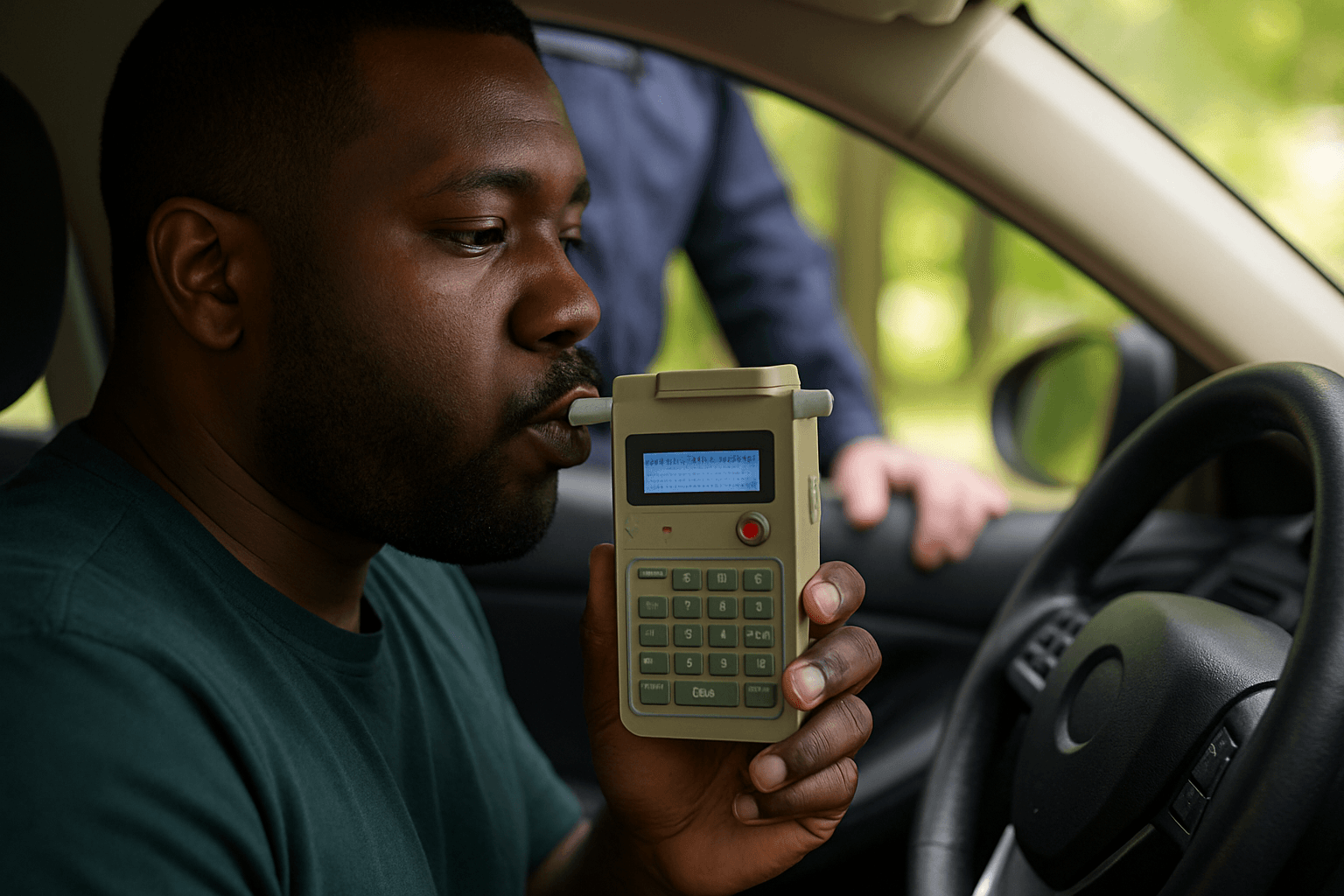
West Virginia requires ignition interlock devices for all DUI-related hardship licenses, regardless of offense number or BAC level. The IID must be installed before your hardship hearing and the installation receipt must be submitted with your petition. Monthly IID costs run $70–$100 for device lease, monitoring, and calibration. This cost stacks on top of your SR-22 premium.
Your SR-22 policy must explicitly list the IID restriction. Not all carriers writing SR-22 for hardship licenses automatically include IID notation. Confirm with your carrier that the SR-22 certificate filed with the court and with DMV includes the IID restriction code. Missing this notation can result in hardship denial even if the device is installed.
IID violations — failed rolling retests, missed calibration appointments, or tampering alerts — are reported to DMV within 24 hours and result in immediate hardship license revocation. West Virginia contracts with Intoxalock, LifeSafer, and Smart Start as approved IID providers. All three integrate reporting directly with DMV monitoring systems. A single failed rolling retest typically adds 90 days to your suspension period and disqualifies you from hardship reapplication during that extension.
Total cost to obtain and maintain a hardship license with SR-22 in West Virginia
Budget $1,800–$3,200 for the first six months of hardship license operation. This includes: $100 court filing fee, $200–$400 for attorney consultation if you retain counsel for the petition, $25–$50 SR-22 filing fee, $840–$1,680 for six months of SR-22 insurance premium at $140–$280/month, $420–$600 for six months of IID lease and monitoring at $70–$100/month, and $85 reinstatement fee paid to DMV upon final suspension completion.
Attorney representation is not required for hardship petitions but increases approval probability in contested cases. Attorneys familiar with West Virginia hardship procedures typically charge $300–$500 for petition preparation and hearing representation. This cost is justified if your petition includes complicating factors: multiple prior suspensions, vague employer documentation, or a county with low approval rates.
Hardship license insurance premiums decrease after 12–18 months of claim-free driving with no violations, but SR-22 filing must continue for the full required period. Expect your premium to drop 15–25% at first renewal if no incidents occur. Cancelling SR-22 before the required period ends — even one day early — triggers a new suspension and restarts the filing clock.