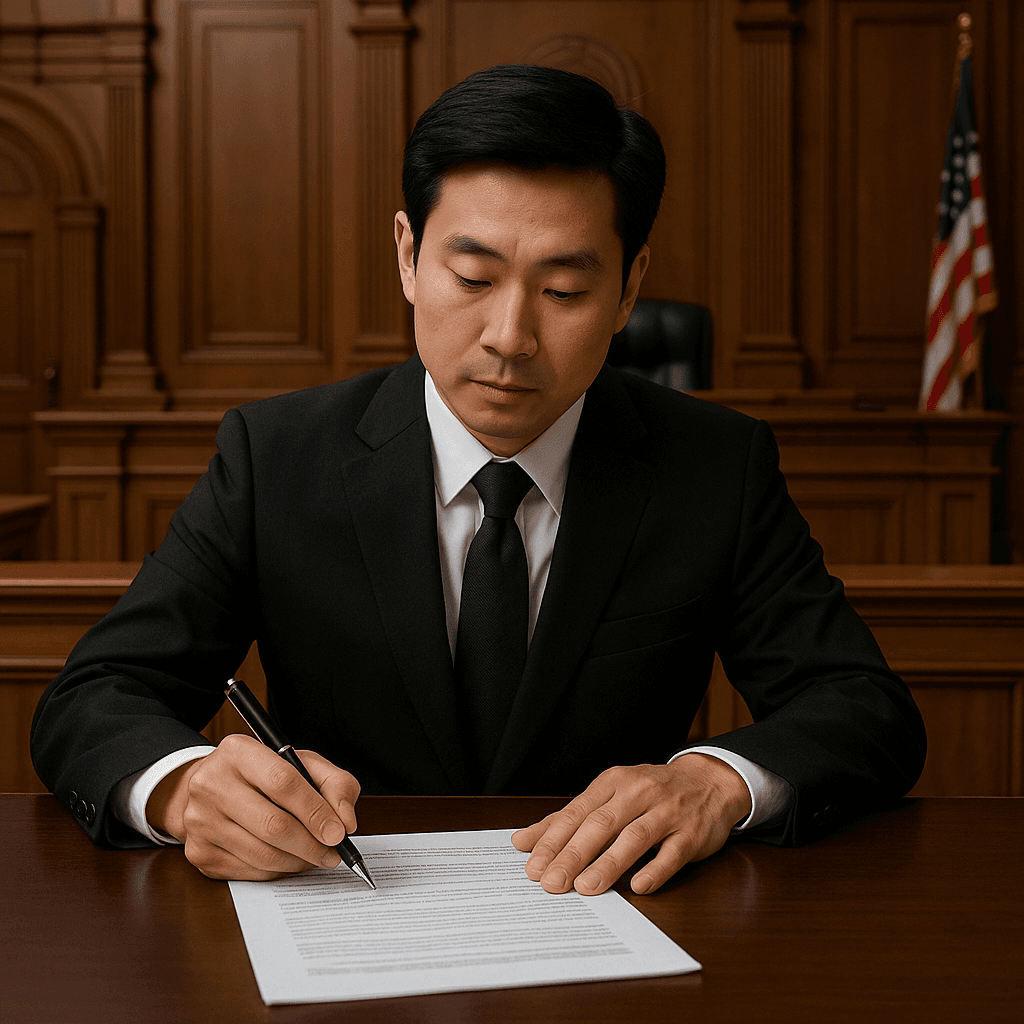
Hawaii's restricted license requires both a court petition and employer affidavit, but most reckless driving defendants don't realize the affidavit must list shift times, job address, and supervisor contact before the court hearing—submitting generic employment letters wastes weeks and a $50 refile fee.
What documentation does Hawaii require for a restricted license after reckless driving?
Hawaii courts require two documents for restricted license approval: a completed court petition form and an employer affidavit that includes your specific shift schedule, work location address, and supervisor contact information. The affidavit is not optional and cannot be replaced with a generic employment verification letter. District courts in Honolulu, Hilo, and Kailua-Kona reject petitions when the employer affidavit omits shift times or supervisor phone numbers, even when employment itself is verified.
Most defendants bring HR letterhead confirming employment status and salary. Hawaii statute HRS 286-106 requires the affidavit to prove necessity, not just employment. The court needs to know your exact work hours to determine whether your requested driving times match your employment schedule. Generic letters delay approval by 2-4 weeks while you secure proper documentation and refile.
The employer affidavit must be signed by a direct supervisor or manager who can verify your schedule under penalty of perjury. HR departments can provide the document, but the signature cannot come from a centralized corporate office that does not know your actual shift pattern. Courts verify supervisor contact information during the hearing, and unreachable contacts trigger denials.
How does Hawaii's court order process differ from DMV administrative approval?
Hawaii grants restricted licenses exclusively through district court petition. There is no DMV administrative approval path. You cannot walk into a driver licensing office and apply directly. The process begins with a court filing in the district where your reckless driving case was adjudicated or where you currently reside.
The court hearing typically occurs 10-20 days after you file your petition, depending on district court calendars. Oahu calendars run 15-18 days from filing to hearing. Big Island and Maui circuits average 12-14 days. You must attend the hearing in person. Remote appearances are not permitted for restricted license petitions. The judge reviews your petition, employer affidavit, and driving record during the hearing, then issues an order granting or denying the request.
Once the judge signs the order, you take the certified court order to any driver licensing center to receive the physical restricted license. The court order itself does not authorize driving. You must complete the DMV transaction and receive the card before operating a vehicle under restricted terms. Most defendants assume the signed order is enough and drive immediately after the hearing. That counts as driving on a suspended license.
Compare car insurance rates in your state
Get quotes from licensed carriers — no obligation, no spam, results in minutes.
Get Your Free Quote✓ No Obligation Required✓ Licensed Carriers Only✓ Available Nationwide✓ Free to Compare
What hours and destinations can Hawaii restricted licenses cover?
Hawaii restricted licenses authorize driving for work, medical appointments, DUI education classes (if ordered), and court-ordered obligations. The court order specifies approved hours and approved destinations. Most judges approve a 12-hour window that covers commute time, shift duration, and minor deviations for direct routes. Driving outside the approved time window or to unapproved destinations violates the restriction, even if the trip is employment-related.
Your employer affidavit determines the approved hours. If your affidavit states you work Monday through Friday, 7:00 AM to 4:00 PM, the court will typically authorize driving from 6:00 AM to 5:00 PM on those days. Weekend driving is not automatically included. If your job requires Saturday shifts, your affidavit must document those hours explicitly. Judges deny petitions when requested hours exceed employment needs by more than two hours on either end.
Approved destinations are listed by street address in the court order: your home address, your work address, medical provider addresses if claimed, and DUI program locations if applicable. Side trips during approved hours still violate the restriction. Hawaii law does not recognize "emergency" exceptions for childcare, grocery stops, or vehicle breakdowns. The only legally compliant trips are direct routes between listed addresses during approved hours.
Does reckless driving in Hawaii trigger SR-22 filing requirements?
Yes. Hawaii requires SR-22 filing for reckless driving convictions under HRS 286-136. The SR-22 must be active before the court issues your restricted license order and remain active for three years from the conviction date. You cannot petition for a restricted license without proof of SR-22 filing already on record with the state.
SR-22 is not insurance. It is a form your insurance carrier files with the Hawaii DMV certifying you carry liability coverage at state minimum limits: $20,000 bodily injury per person, $40,000 per accident, and $10,000 property damage. Most standard carriers (GEICO, State Farm, Progressive, Allstate) file SR-22 endorsements for existing policyholders, but reckless driving convictions often trigger non-renewal at the next policy term. Non-standard carriers that specialize in post-conviction filing include Dairyland, Bristol West, GAINSCO, The General, and Direct Auto.
SR-22 premiums in Hawaii typically cost $140–$220 per month depending on your age, vehicle, and driving history prior to the reckless conviction. The filing fee itself is $25–$50, charged once when the carrier submits the form. If your SR-22 lapses at any point during the three-year period, the DMV suspends your restricted license immediately and extends your filing requirement. You cannot cure a lapse retroactively. You must refile, pay reinstatement fees, and petition the court again for restricted driving privileges.
What happens if you violate Hawaii restricted license terms?
Hawaii law treats restricted license violations as driving on a suspended license, a misdemeanor carrying up to 30 days in jail and a $1,000 fine under HRS 286-136. The violation also revokes your restricted license and extends your underlying suspension. Most violations occur when drivers assume approved hours apply to unapproved destinations or when they drive on days not listed in the court order.
Police officers verify restricted license compliance during traffic stops by checking the court order on file with the DMV system. If the stop occurs outside your approved hours or en route to an unapproved address, the officer will cite you for unlicensed operation. You cannot argue emergencies or necessity. The court order defines the only lawful scope of operation. Judges rarely reinstate restricted privileges after a violation. The standard remedy is serving the full suspension period without restricted relief.
Employment changes also trigger compliance issues. If your employer relocates, your work hours shift, or you change jobs, your existing court order no longer matches your employment reality. You must petition the court for an amended order before driving under the new schedule or to the new work address. Driving to a new job location with an order listing your old employer's address is a violation, even during previously approved hours.
What does the full cost of a Hawaii restricted license include?
Hawaii's restricted license cost stack includes court filing fees ($50–$75 depending on district), attorney fees if you hire representation ($400–$800 for petition preparation and hearing appearance), DMV restricted license issuance fee ($5), SR-22 filing fee ($25–$50), and SR-22 insurance premiums ($140–$220/month). Total first-month cost typically runs $800–$1,200. Over the three-year SR-22 period, total cost is approximately $5,500–$8,500.
Most defendants budget only for the court filing and DMV fees. They discover the SR-22 premium increase after the hearing when they attempt to obtain insurance. Non-standard carriers quote based on your full driving record, including the reckless conviction, prior violations, and age. Drivers under 25 with a reckless conviction and one prior speeding ticket often see quotes in the $200–$280/month range. Stacking a second moving violation onto a reckless record can push premiums above $300/month.
Amortizing the one-time costs across the restriction period clarifies the true monthly burden. If you pay $600 in upfront fees and $180/month in SR-22 premiums over 36 months, your total cost is $7,080. Divided by 36 months, the true monthly carrying cost is $197. That number matters for employment decisions. If your job pays $18/hour and requires a 45-minute commute, the restricted license costs roughly 11 hours of gross monthly income.