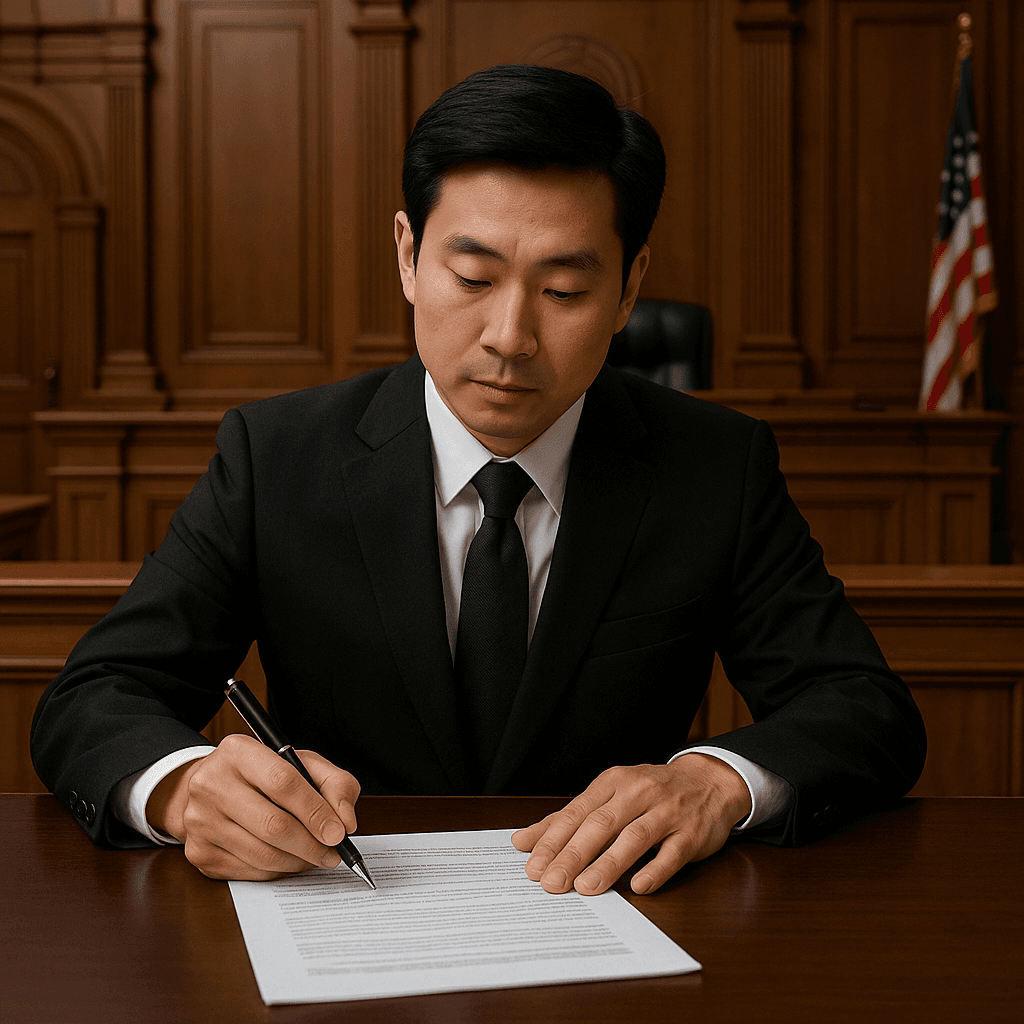
Hawaii judges deny restricted license petitions when employer affidavits lack shift documentation and route specificity. Single parents face unique documentation burdens because childcare stops count as personal errands unless pre-approved in the court order.
Why Hawaii Family Court Requires Two Separate Affidavits for Single Parents
Hawaii restricted driving permits approved after reckless driving convictions allow travel for work and medical appointments. Childcare stops do not automatically qualify as approved purposes under HRS §291E-61.5. Single parents assume their employer affidavit covers the full commute including daycare drop-off, but Hawaii judges treat childcare as a separate approval category requiring independent sworn documentation from the childcare provider.
The employer affidavit establishes work necessity and shift times. The childcare provider affidavit establishes the facility's operating hours, the child's enrollment status, and why the parent cannot use alternative transportation. Without both documents, judges typically approve work-only driving and deny the childcare component. This creates an impossible choice: drive illegally to drop off your child, or skip work.
Most single parents discover this requirement at the hardship hearing when the judge asks for the childcare affidavit and denies the petition for incomplete documentation. Rescheduling the hearing adds 30-45 days to the timeline and requires a new $50 filing fee in most Hawaii family courts.
What the Hawaii Employer Affidavit Must Contain to Survive Judicial Review
Hawaii courts reject employer affidavits that describe job duties without documenting the transportation necessity. The affidavit must state: (1) your specific shift start and end times, (2) whether alternative shift times exist, (3) whether public transportation serves the route during your shift hours, (4) whether remote work or job-sharing arrangements are available, and (5) the employer's policy on absenteeism and termination.
Judges routinely deny petitions when the affidavit states "employee is required to commute to work" without explaining why the employer cannot accommodate the suspension through schedule modification or remote work. Reckless driving convictions do not create presumptive hardship in Hawaii the way DUI convictions sometimes do in other states. You must prove actual job loss is imminent and no alternative exists.
The affidavit must be notarized and signed by a supervisor with hiring or termination authority. HR-department form letters on company letterhead satisfy the signature requirement but often fail the content test because they omit shift-time specificity and alternative-transportation analysis. Bring a draft affidavit to your supervisor that includes all five required elements rather than asking them to write one from scratch.
Compare car insurance rates in your state
Get quotes from licensed carriers — no obligation, no spam, results in minutes.
Get Your Free Quote✓ No Obligation Required✓ Licensed Carriers Only✓ Available Nationwide✓ Free to Compare
Route Specificity: Why Most Hawaii Restricted License Petitions Fail Judicial Review
Hawaii restricted driving permits specify approved origin and destination addresses, not just approved time windows. HRS §291E-61.5(c) allows the court to impose "such restrictions and conditions as the court deems appropriate." Most judges interpret this to mean you can drive from your home address to your work address during approved hours and nowhere else.
Single parents who list home, work, and daycare as three separate addresses without explaining the route sequence face denial or approval with restrictions that make compliance impossible. If your daycare is 2 miles east of your home and your workplace is 10 miles west, the direct route from home to work does not pass the daycare. Judges will not approve a 4-mile detour unless your affidavit explains the childcare timing window makes the detour necessary.
The petition must include a written route description with street names and a map showing the relationship between home, childcare, and work. Most attorneys recommend Google Maps screenshots with the route highlighted and mileage calculated. Judges deny petitions that list addresses without route context because they cannot verify the request is narrowly tailored to employment necessity.
Court Order vs DMV Documentation: Which One Law Enforcement Actually Checks
Hawaii restricted licenses are approved by family court order, not by DMV administrative process. The court order specifies your approved hours, routes, and purposes. DMV issues the physical restricted license after receiving the court order, but the DMV-issued card does not list your approved routes or hours. Law enforcement pulls the court order during traffic stops, not the DMV database.
Most single parents carry only the DMV-issued restricted license card and leave the court order at home. When stopped outside approved hours or off approved routes, they cannot prove compliance on the spot. The officer cites them for driving on a suspended license under HRS §291E-62, which carries a mandatory 3-day jail sentence for second offenses. The court order is your only defense.
Carry three documents at all times: the DMV-issued restricted license, the signed court order with route and hour specifications, and the employer affidavit. Some Hawaii attorneys recommend keeping the childcare provider affidavit in the vehicle as well, particularly during morning and evening commute hours when the childcare stop is most likely to be questioned.
SR-22 Filing Timing: Why Most Hawaii Drivers Apply in the Wrong Order
Hawaii requires SR-22 filing for reckless driving convictions under HRS §287-20. The filing must remain active for 3 years from the conviction date. Most drivers assume they file SR-22 after the court approves the restricted license, but Hawaii judges require proof of SR-22 filing at the hardship hearing before approving the petition.
Without proof of SR-22 coverage at the hearing, judges continue the case to allow time for filing. This delays approval by 15-30 days depending on court calendar availability. Continued cases require a second appearance, which means a second day off work for most petitioners.
File SR-22 with a non-standard carrier before your hardship hearing. Bring the SR-22 certificate to the hearing as proof of financial responsibility. Carriers that write Hawaii SR-22 policies for reckless driving convictions include Bristol West, Dairyland, GAINSCO, and Direct Auto. Monthly premiums for minimum liability coverage with SR-22 endorsement typically range from $110 to $190 depending on age and county. If you do not own a vehicle, non-owner SR-22 policies cost approximately $40 to $70 per month and satisfy the filing requirement.
The Cost Stack Most Single Parents Do Not Budget For
Hawaii restricted license approval involves multiple non-refundable fees that accumulate before you receive driving privileges. Court filing fee: $50 in most Hawaii family courts. Attorney consultation: $200-$400 for petition drafting and hearing representation, though some drivers file pro se. Notary fees for employer and childcare affidavits: $10-$20 total. DMV restricted license issuance fee: $5. SR-22 filing fee: $15-$50 depending on carrier. First-month SR-22 premium: $110-$190 for standard policies, $40-$70 for non-owner.
Total upfront cost before approval typically ranges from $400 to $720 for single parents filing without an attorney, or $600 to $1,120 with attorney assistance. Monthly carrying cost for the SR-22 filing period: $110-$190 for 36 months, totaling approximately $3,960-$6,840 over the full filing period.
Most single parents do not budget for the affidavit-revision cycle. If your first petition is denied for insufficient documentation and you refile with corrected affidavits, you pay a second $50 filing fee and potentially a second attorney consultation fee. Hawaii courts do not refund filing fees for denied petitions.
What Happens When Your Employer Changes Shift Times After Approval
Hawaii restricted license court orders specify approved driving hours based on your employer affidavit. When your employer changes your shift schedule, the court order does not automatically update. Driving during your new shift hours outside the originally approved time window violates the court order and counts as driving on a suspended license.
You must file a motion to modify the restricted license order before driving the new schedule. The motion requires a new employer affidavit documenting the schedule change and why it is mandatory rather than voluntary. Some Hawaii family courts hear modification motions within 10-15 days; others calendar them 30-45 days out. During the gap between schedule change and court approval, you cannot legally drive to work.
Most single parents in this situation drive the new schedule and hope they are not stopped. This is a high-risk strategy. Hawaii law enforcement increasingly cross-references restricted license stops against court order hour specifications using mobile access to family court records. A stop during unapproved hours triggers automatic arrest in some counties because the officer cannot verify compliance without the updated court order.