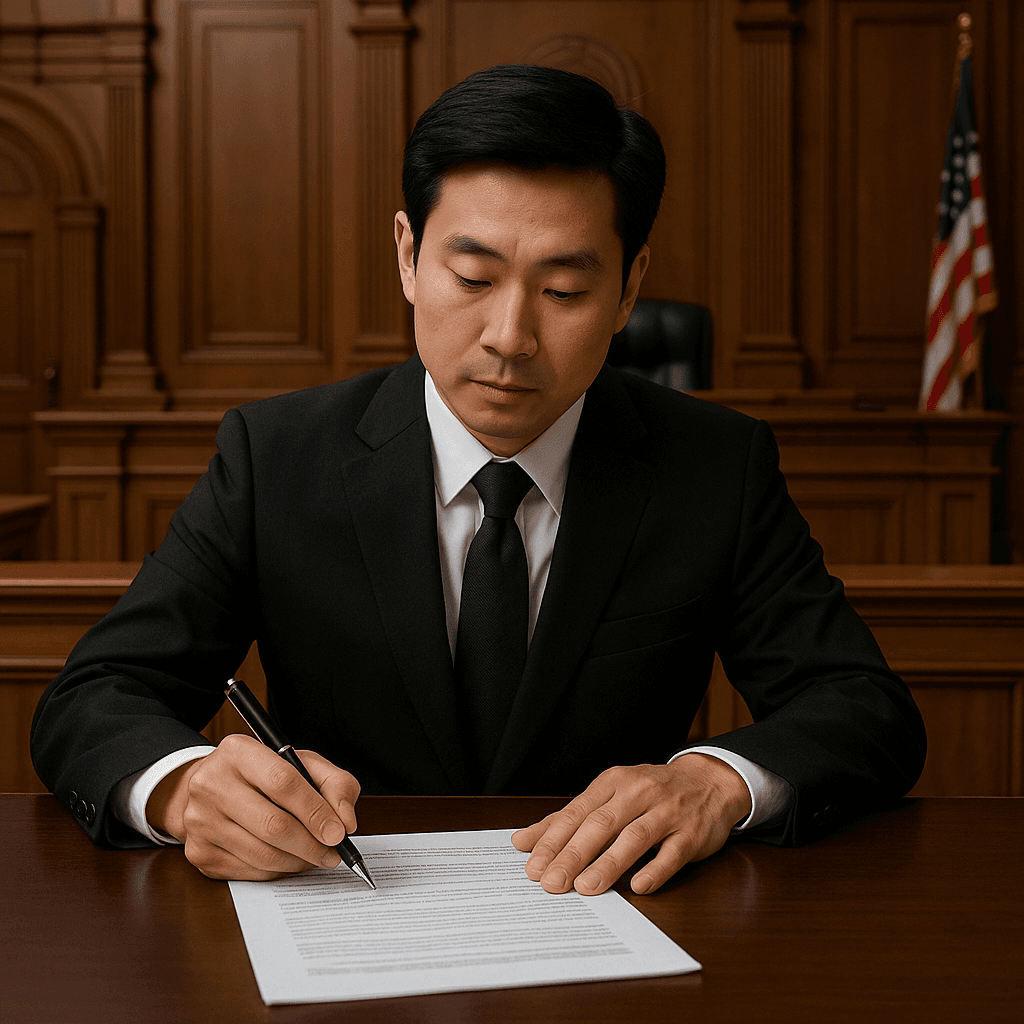
Hawaii DMV grants restricted licenses for points accumulation, but most single parents don't realize childcare trips require separate court approval beyond the standard work-route authorization—missing this during the petition costs weeks and a second filing fee.
Why Hawaii Single Parents Face a Two-Track Restricted License Application
Hawaii issues restricted licenses through two separate approval paths: administrative DMV applications for simple work-only routes, and district court petitions for multi-purpose driving that includes childcare, medical appointments, or school transport. Single parents typically need the court petition path, but most file through DMV first because the administrative form is easier to find online.
DMV administrative applications approve work commutes only: home to job site, job site to home, during approved shift hours. Deviation to pick up children from daycare, even when it falls within your work schedule, violates the restriction. District court petitions allow judges to approve multiple destination categories simultaneously—work, childcare facility addresses, medical providers, and children's school locations—but require a formal hardship hearing with 15-30 days' notice.
The application fee is identical ($50 at time of filing), but court petitions add attorney costs if you hire representation for the hearing. Most single parents don't realize the DMV path excludes childcare until after approval, when their restriction paperwork lists only their employer's address. Refiling through district court then requires waiting for the next available hearing date, typically 3-5 weeks out in Honolulu County, plus a second $50 filing fee because the original DMV-issued restriction remains active and must be formally amended by court order.
What Points Accumulation Does to Hawaii Driving Privileges
Hawaii suspends licenses at 12 points within one year or 18 points within two years. The suspension is administrative: once your point total crosses the threshold, the system generates an automatic suspension notice with a 30-day countdown to the effective date. You do not receive a hardship hearing automatically—you must petition for one.
Common point triggers for single parents: speeding 20+ mph over the limit (4 points), failure to yield (4 points), texting while driving (4 points), unsafe lane change (3 points). Three moderate violations within 12 months puts most drivers at or near the 12-point threshold. Hawaii does not dismiss points for traffic school completion after accumulation triggers the suspension, though completing a defensive driving course before crossing 12 points can prevent one 4-point violation from counting.
The suspension period for points accumulation ranges from 3 months (12-14 points) to 6 months (15-17 points) to 1 year (18+ points). Restricted license eligibility begins immediately upon suspension—you do not need to wait out a portion of the suspension first, unlike DUI cases which require 30 days of total restriction before hardship applications are accepted.
Compare car insurance rates in your state
Get quotes from licensed carriers — no obligation, no spam, results in minutes.
Get Your Free Quote✓ No Obligation Required✓ Licensed Carriers Only✓ Available Nationwide✓ Free to Compare
How to Structure a Restricted License Petition for Childcare Routes
District court petitions require three categories of documentation: proof of hardship, proof of approved destinations, and proof of financial responsibility. Hardship proof for single parents typically includes: custody documentation (divorce decree, parenting plan, or sole custody order), employer letter stating your shift schedule and confirming termination consequences if you cannot commute, and childcare provider letter listing the facility's operating hours and your child's enrollment.
Approved destination proof requires specific street addresses, not just facility names. List your home address, employer's work site address, childcare facility address, pediatrician's office address if you're requesting medical trip authorization, and children's school address if relevant. The court order will reference these addresses explicitly—route deviation to an unlisted address during approved hours still counts as unlicensed driving even if the trip purpose (e.g., emergency pediatric visit to a different clinic) would otherwise qualify.
Financial responsibility proof is SR-22 filing confirmation. Hawaii requires SR-22 for points-accumulation suspensions lasting 90 days or longer. Your insurer files the SR-22 electronically with Hawaii DMV, and you bring the SR-22 certificate (showing your name, policy number, and filing date) to the hardship hearing. Judges deny petitions when SR-22 is not filed before the hearing date—waiting to file until after approval wastes the hearing slot and forces you to reschedule 3-5 weeks out.
Most Honolulu County judges approve multi-purpose restricted licenses when documentation is complete, employment is verified, and childcare necessity is demonstrated through enrollment records. Approval rates exceed 80% for first-time petitioners with complete filings. Denial typically results from missing employer verification, unlisted destination addresses, or SR-22 filing gaps.
Approved Hours vs Approved Routes: What the Restriction Actually Allows
Hawaii restricted licenses specify both approved time windows and approved destination addresses. Confusion between the two produces most violation arrests. Approved hours define when you are legally allowed to drive—typically your work shift start time minus 30 minutes through shift end time plus 30 minutes, Monday through Friday. Approved routes define where you are legally allowed to drive during those hours: the specific street addresses listed in your court order.
Driving during approved hours to an unlisted address violates the restriction. Driving to a listed address outside approved hours violates the restriction. Both scenarios count as driving while license suspended, a misdemeanor in Hawaii carrying $250-$1,000 fines and potential 30-day jail time for first offense. The violation also revokes your restricted license immediately and extends the underlying suspension period by the number of days remaining on the original restriction.
Single parents face this trap most often with childcare schedule changes. Your court order lists your child's daycare at 123 Ala Moana Blvd with pickup authorized Monday-Friday 4:00-5:00 PM. The daycare closes early one Friday for staff training and asks you to pick up at 2:00 PM. Driving there at 2:00 PM—even though it's a listed address—violates your restriction if your approved hours don't start until 3:30 PM. The solution is emergency court amendment, which most counties do not process same-day.
Weekend driving is prohibited unless your work schedule includes Saturday or Sunday shifts and your petition specifically requested weekend authorization. Judges grant weekend approval when employer letters document weekend shift requirements, but standard Monday-Friday work commute orders do not extend to Saturday childcare errands even when both destinations are listed addresses.
SR-22 Filing Costs and Carrier Options for Points-Suspension Cases
Hawaii SR-22 filing lasts 3 years from reinstatement date for points-accumulation suspensions. The 3-year clock starts when your full license is reinstated, not when the restricted license is issued, which surprises most drivers who assume the filing period runs concurrently with the suspension.
Monthly SR-22 premiums for single parents with clean records before the points accumulation typically range $95-$160/month in Honolulu County, $80-$140/month in other counties. Drivers with prior violations or young drivers (under 25) often see $180-$250/month. These figures assume liability-only coverage at Hawaii's minimum limits: $20,000 bodily injury per person, $40,000 per accident, $10,000 property damage. Adding collision or comprehensive coverage to protect your vehicle raises premiums 40-60%.
Non-standard carriers specializing in SR-22 filings include Dairyland, Direct Auto, GAINSCO, Bristol West, and Acceptance Insurance. Most standard carriers (State Farm, Allstate, GEICO) either decline SR-22 policies entirely or charge standard-carrier rates that run 2-3 times higher than non-standard alternatives. Single parents switching from a standard carrier mid-policy should compare the cancellation penalty against 6 months of elevated premiums—often the immediate switch saves $400-$700 over the first policy term.
SR-22 lapse during the filing period triggers automatic re-suspension. If your policy cancels for non-payment and your carrier files an SR-26 (cancellation notice) with Hawaii DMV, your restricted license revokes within 4 days and your underlying suspension reinstates for the remaining balance. Most non-standard carriers offer monthly payment plans, but missed payments cancel coverage immediately with no grace period under SR-22 filing terms.
Court Hearing vs DMV Application: Which Path Single Parents Should Choose
Single parents should file through district court petition if they need any trip type beyond direct work commute. This includes: childcare pickup/dropoff, children's medical appointments, children's school transport, grocery shopping, or personal medical appointments. The court path takes longer (3-5 weeks from petition filing to hearing date) but approves multi-purpose restrictions in a single order.
DMV administrative applications process faster (10-14 days) but restrict you to work-only driving. Some parents attempt to use the DMV path with the intention of amending later for childcare routes—this approach costs more and takes longer than filing through court initially. Amendment petitions require the same hardship hearing process as original petitions, meaning you wait 3-5 weeks for a hearing slot anyway, and you've now paid the $50 administrative fee plus the $50 court filing fee.
Court petitions require you to appear at the hardship hearing. Most hearings last 10-15 minutes. Judges ask: why do you need the restricted license, what destinations do you need access to, what happens if you cannot drive, and have you filed SR-22. Bringing employer letters, childcare enrollment confirmation, and SR-22 certificate to the hearing satisfies most judges' documentation requirements. Hiring an attorney is optional for points-accumulation cases—approval rates for self-represented petitioners with complete documentation exceed 75% in most Hawaii counties.
DMV applications do not require an appearance. You mail or deliver the administrative form, employer letter, and SR-22 certificate to the driver licensing office, and they mail the approved restriction card to your address on file. This path works for drivers whose jobs involve no passenger transport, no client visits, and no route variation—essentially factory workers, office workers with fixed locations, and remote workers who need only occasional commute access.
What Happens When Your Employer or Childcare Schedule Changes
Restricted license amendments require court approval before the schedule change, not after. Hawaii restricted licenses list specific employer addresses and specific approved hours. Changing jobs, changing shifts, or switching childcare providers requires filing an amendment petition and attending a second hardship hearing, even when the new employer is closer to your home or the new schedule is shorter.
Amendment petitions use the same $50 filing fee and same 3-5 week hearing schedule as original petitions. Judges treat amendments as administrative updates when the underlying hardship (single parent employment necessity) remains unchanged—approval is typically granted at the hearing without additional documentation beyond the new employer letter or new childcare enrollment form.
Driving to the new job site or new daycare before the court approves the amendment violates the restriction, even if you file the petition the same day you accept the new position. The listed addresses on your current restricted license remain the only legal destinations until a judge signs an amended order. Employers who require immediate start dates create impossible situations for restricted-license holders: you cannot legally drive to the new job until the court amends your order, but waiting 3-5 weeks for a hearing often means the employer hires someone else.
The workaround some single parents use: negotiate a delayed start date with the new employer that accommodates the hearing wait, or arrange temporary alternate transportation (coworker carpool, Uber, public transit) for the gap period between job start and amendment approval. Both options cost money or strain workplace relationships, but both avoid the misdemeanor charge and restriction revocation that driving to an unlisted address produces.