Idaho's restricted license allows driving to work, but rideshare drivers face unique enforcement risk: approved routes require specific passenger pickup zones, not just your employer's address.
Why Idaho's Restricted License Creates Unique Problems for Rideshare Drivers
Idaho issues restricted driving permits through administrative DMV process after points-based suspension, allowing work-related driving only. The permit specifies approved destinations by street address: your employer's location, medical facilities, court-ordered programs. Rideshare drivers for Uber or Lyft don't drive to a single employer address. Pickup and dropoff locations change every trip.
Most restricted license holders work traditional jobs with fixed workplace addresses. A construction worker drives from home to the job site listed on their permit. A restaurant employee drives to the address printed on their employer verification form. Rideshare drivers operate in a different model: the employer is Uber or Lyft corporate (typically an administrative office address), but the actual work happens across dozens of changing passenger locations throughout approved operating hours.
Idaho Transportation Department processes restricted license applications without rideshare-specific guidance. Most county hearing officers approve permits using employer-address logic: the destination listed is where you perform work. When your work IS driving passengers to unlisted destinations, the permit structure doesn't fit. Violation of route restrictions during your approved hours still counts as driving without privileges, carrying new misdemeanor charges and automatic permit revocation.
How Idaho Processes Restricted License Applications After Points Suspension
Idaho allows restricted license petitions 30 days after suspension for points accumulation. The application requires: employer verification on company letterhead stating your position, work schedule, and work address; proof of SR-22 filing; $33.50 application fee; current driver's license abstract showing the suspension. Submit to the county driver's license office where you reside.
The hearing officer reviews your petition administratively, typically within 10–14 business days. If approved, your restricted permit lists: approved driving hours (usually matching your work schedule plus one-hour commute buffer), approved destinations by street address (home, work, medical providers if documented), and restriction duration (typically matches the underlying suspension period). Ignition interlock device installation is NOT required for points-based suspensions in Idaho unless the underlying violation was DUI-related.
For rideshare drivers, the employer verification form creates the first procedural problem. Uber and Lyft do not issue traditional employment verification letters with a single work address. You can request a letter confirming your status as an independent contractor, your account activation date, and general operating zone (Boise metro area, Idaho Falls region), but the company will not list passenger pickup addresses because those don't exist yet. Most hearing officers accept this documentation, but the approved permit will still show either the Uber/Lyft corporate office address or a general zone description.
Compare car insurance rates in your state
Get quotes from licensed carriers — no obligation, no spam, results in minutes.
Get Your Free Quote✓ No Obligation Required✓ Licensed Carriers Only✓ Available Nationwide✓ Free to Compare
What Approved Routes Actually Mean for Rideshare Work
Idaho statute 49-335 defines restricted driving privileges as allowing travel between residence and employment location. Case enforcement interprets employment location as the place where work is performed, not where the employer is headquartered. A county deputy who stops you at 7 PM on a residential street 8 miles from your listed work address will ask why you're there during approved hours but off your approved route.
If your restricted permit lists "Uber Technologies Inc., 1515 3rd Street, San Francisco, CA" as your employer address, and you're in Meridian picking up a passenger, you are driving to an unlisted destination. If your permit lists "Boise metro area rideshare zone" as approved destination language, enforcement interpretation varies by officer and prosecutor. Some counties treat zone-based language as valid work-route approval. Others interpret the statute strictly: only specific street addresses qualify.
Violation consequences are immediate. Driving outside approved routes during approved hours is a misdemeanor under Idaho Code 18-8001(2). Your restricted permit is revoked. Your underlying suspension period restarts from the violation date. You face new criminal charges carrying up to six months jail and $1,000 fine. Most rideshare drivers discover this exposure only after being stopped during an active passenger trip.
How to Document Zone-Based Route Approval Language
Request your employer verification letter from Uber or Lyft stating your role as independent contractor and the specific geographic operating zone where you accept ride requests. Do not accept vague language like "operates in Idaho." Push for city-specific or county-specific zone descriptions: "approved to accept ride requests within Ada County and Canyon County, Idaho." The more geographically bounded the language, the stronger your hearing documentation.
Submit a cover letter with your restricted license petition explaining that rideshare work requires passenger pickup and dropoff at changing addresses within your operating zone, and that restricting approval to a single employer office address would eliminate your ability to perform the work that justifies the permit. Reference the employer letter's zone language explicitly. Ask the hearing officer to approve "work-related driving within [county name] for rideshare passenger transport" as your destination instead of a street address.
Not all hearing officers will approve zone-based language. Idaho administrative code does not explicitly authorize it, and many county offices default to address-specific approvals to avoid interpretation disputes. If your petition is denied or approved with only the corporate office address listed, you face a decision: accept a restricted permit that doesn't actually cover your work routes, or pursue a different income source during the suspension period. Appealing the denial through district court costs $200+ filing fee and typically requires attorney representation.
What Happens When You're Stopped During an Active Ride
A traffic stop during passenger transport while holding a restricted license triggers immediate enforcement scrutiny. The officer will verify: (1) you are within approved driving hours, (2) you are traveling to or from an approved destination, (3) you hold valid SR-22 insurance. If the passenger's destination address does not match an approved address on your permit, you are driving outside restrictions.
Most officers issue a citation for driving without privileges rather than arresting on scene, but the legal outcome is the same. Your restricted permit is suspended pending a violation hearing. You cannot continue rideshare work. The underlying points-based suspension is extended by the violation period, often adding 90–180 days. Prosecutors in Ada County and Canyon County typically do not dismiss these charges even when the driver holds employer verification and was actively working, because the statute's plain language requires travel to listed destinations.
Some drivers attempt to list their home address as origin and the passenger's destination as a medical appointment or other approved category. This is fraud. Hearing officers and prosecutors review rideshare trip logs during violation proceedings. Claiming a grocery store 6 miles from your home as your workplace when your permit lists a downtown office address, and doing so 15 times per shift, establishes a pattern of knowing violation.
How SR-22 Filing Works with Idaho Restricted Licenses
Idaho requires SR-22 filing for three years after restricted license approval for drivers whose suspension stemmed from multiple violations, uninsured operation, or insurance lapse. Points-based suspensions alone sometimes do not trigger SR-22 requirements unless the underlying violations included at-fault accidents or insurance-related infractions. Verify your specific case with Idaho Transportation Department before assuming SR-22 is optional.
SR-22 is a liability insurance certificate filed by your carrier directly with the state. It costs nothing as a filing form, but your insurance premium increases substantially. Rideshare drivers face compounded premium risk: SR-22 status already doubles or triples base rates compared to clean-record drivers, and rideshare use requires commercial or Transportation Network Company endorsement, adding another 40–60% to monthly cost. Expect $190–$340/month total for minimum liability plus rideshare coverage with SR-22 attached, depending on age and county.
Not all carriers write SR-22 policies for rideshare drivers. Uber and Lyft provide liability coverage during active trips (passenger in vehicle or en route to pickup), but that coverage does not satisfy your SR-22 filing requirement. You need a personal auto policy with SR-22 endorsement from a non-standard carrier (Bristol West, Dairyland, Direct Auto, The General) that also allows rideshare activity. Many non-standard carriers exclude commercial use entirely. Finding a carrier willing to write both SR-22 and rideshare on the same policy often requires working with an independent agent specializing in high-risk placement.
Whether Switching to Food Delivery Avoids the Route Problem
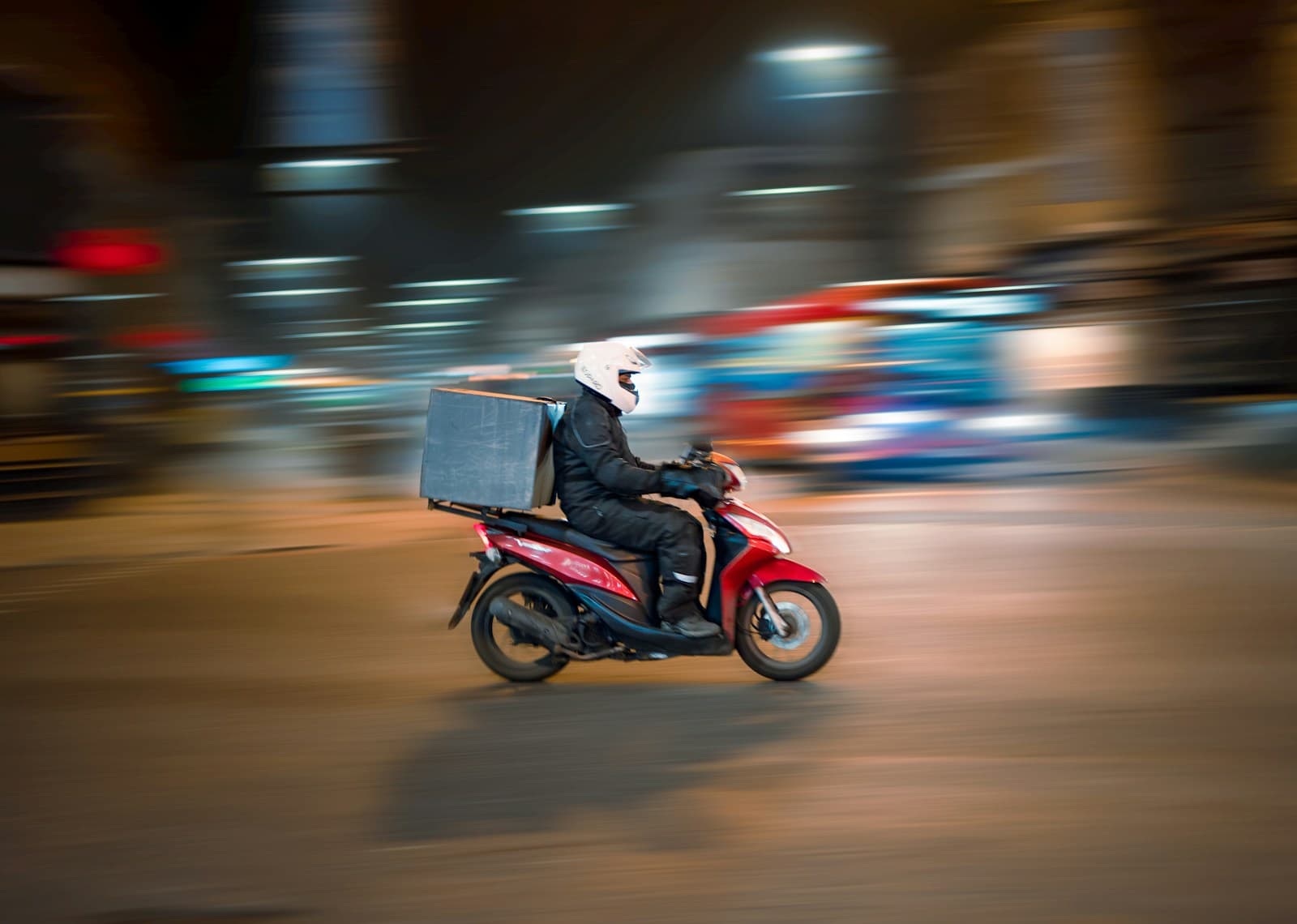
DoorDash, Uber Eats, and Grubhub operate under similar gig-work structures but with one key difference: the destination is a restaurant address (which you can list on your restricted permit as a workplace) plus customer delivery addresses (which you cannot). Idaho hearing officers sometimes approve food delivery work more readily than rideshare because the pickup location is predictable and listable, even though the dropoff location still changes.
If your restricted permit lists three restaurant addresses where you regularly pick up orders—say, a McDonald's, a Chipotle, and a local pizza shop—you can legally drive from home to those restaurants during approved hours. The customer delivery portion of the trip remains a gray area under the same statutory interpretation problem rideshare drivers face. Prosecutors have charged food delivery drivers with restricted license violations when stopped during the delivery leg, not the pickup leg.
Food delivery avoids one exposure rideshare creates: passengers as witnesses. A restricted license violation charge during an Uber trip means the passenger may be contacted as a witness to establish you were performing rideshare work, not traveling to a listed employer. Food delivery involves no passenger, reducing prosecutorial evidence quality. This is not legal advice to violate your permit terms. It is a structural observation about enforcement patterns.