South Carolina requires ignition interlock on most hardship licenses post-DUI. Installation runs $75–$150, monitoring $60–$90/month, and removal $50–$100—before you calculate the SR-22 premium or reinstatement fees.
What You'll Pay for IID Installation, Monitoring, and Removal in South Carolina
Installation of a court-ordered ignition interlock device in South Carolina costs $75–$150 depending on the provider and your vehicle type. Monthly monitoring runs $60–$90, billed every 30 days for the duration of your hardship license requirement. Removal at the end of your restriction period costs $50–$100. These are direct charges from the IID provider—separate from your SR-22 insurance premium, DMV reinstatement fees, or hardship license application costs.
South Carolina SCDMV requires ignition interlock for most hardship license applicants after a DUI conviction. If your suspension stems from a BAC over .15, a second or subsequent DUI, or refusal to submit to a breath test, the interlock requirement is mandatory for the full duration of your restricted privilege. The device must remain installed and functional—any violation, missed calibration, or failed startup test triggers a violation report to SCDMV and can revoke your hardship license immediately.
Budget for the full cost stack before your hardship hearing. A typical 12-month hardship license with IID and SR-22 runs $1,800–$2,400 total: $75–$150 installation, $720–$1,080 monitoring (12 months × $60–$90), $50–$100 removal, plus $300–$900 for SR-22-compliant liability coverage and $100 SCDMV reinstatement fee. If your employer requires you to drive within 30 days of suspension, this entire amount must be available upfront or financed through the IID provider's payment plan.
How IID Monthly Monitoring Works and What Triggers Extra Charges
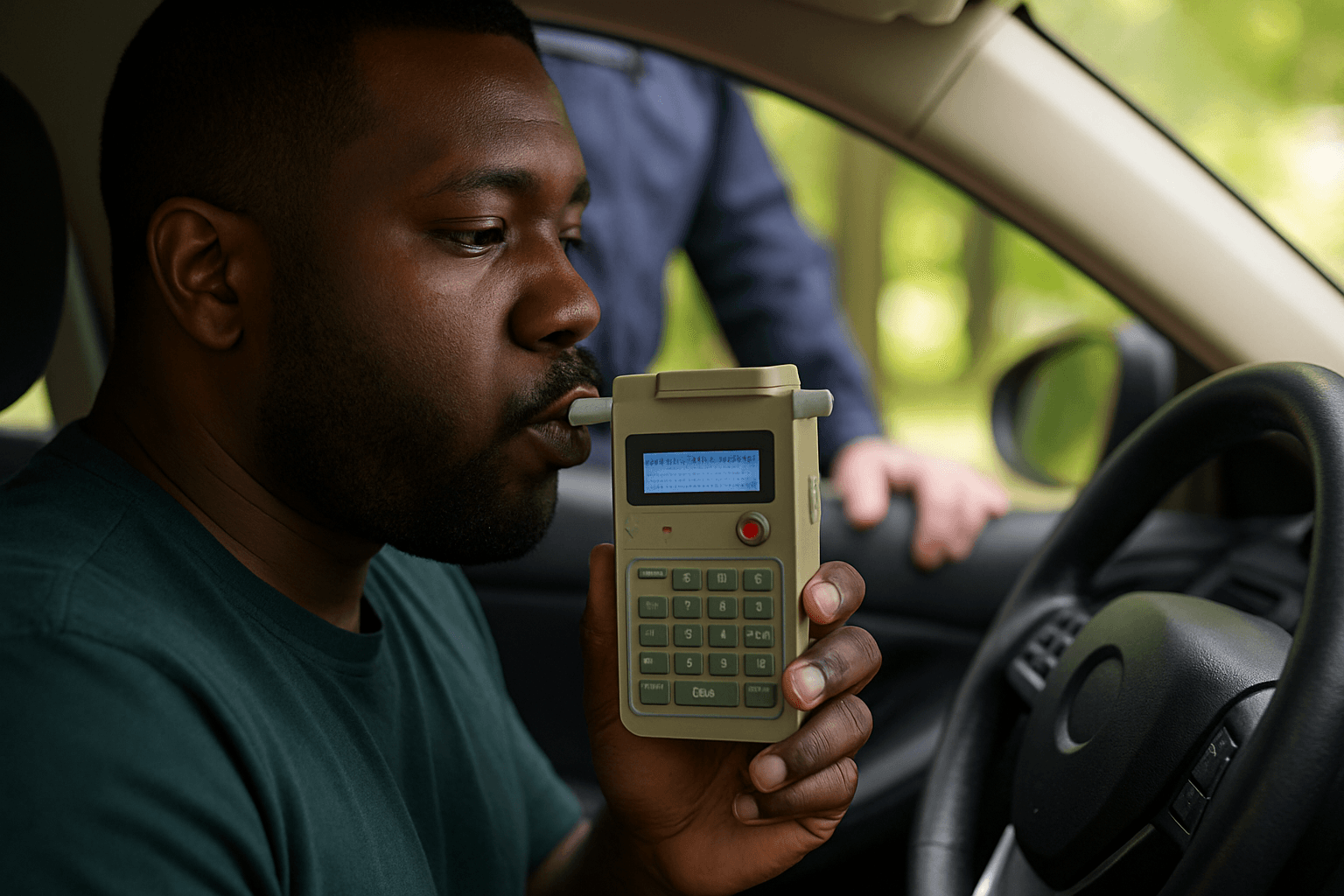
Monthly monitoring covers calibration, data download, and violation reporting to SCDMV. You visit your IID provider every 30 days for a calibration appointment—the device records every startup test, rolling retest, and failed attempt. That data uploads to SCDMV's monitoring system. Miss a calibration window by more than 5 days and the device enters lockout mode, preventing your vehicle from starting until you complete the appointment.
Failed breath tests do not trigger immediate extra fees, but they generate violation reports. A BAC reading above .02 during a startup test or rolling retest gets flagged. One failed test typically results in a warning; multiple failures within a monitoring period can trigger a compliance hearing and potential revocation of your hardship license. Lockout violations—driving past your approved hours, missing calibration, or attempting to bypass the device—carry the same risk.
Some providers charge $25–$50 extra for expedited reinstallation after a lockout or missed calibration. If your device malfunctions and requires replacement, most providers cover the swap at no charge under warranty, but you still lose days of legal driving privilege while the replacement is scheduled. Plan calibration appointments during your approved driving hours—most providers operate 8 a.m. to 5 p.m. weekdays only, which can conflict with work schedules if your hardship license restricts you to employment hours.
Compare car insurance rates in your state
Get quotes from licensed carriers — no obligation, no spam, results in minutes.
Get Your Free Quote✓ No Obligation Required✓ Licensed Carriers Only✓ Available Nationwide✓ Free to Compare
Which IID Providers Operate in South Carolina and How to Compare Costs
South Carolina SCDMV maintains a list of approved ignition interlock providers. The largest statewide networks include LifeSafer, Intoxalock, Smart Start, and Guardian Interlock. Each operates service centers across the state, but availability in rural counties varies—some providers require you to drive 50+ miles for installation and monthly calibration if you're outside the Columbia, Charleston, or Greenville metro areas.
Installation and monitoring fees vary by provider and location. LifeSafer typically charges $75–$95 installation and $65–$75/month monitoring in South Carolina. Intoxalock runs $80–$100 installation and $70–$85/month. Smart Start and Guardian fall in the same range. Some providers offer payment plans that spread installation costs across the first 3 months of monitoring, but total program cost remains the same—you're financing, not saving.
Call providers directly before your hardship hearing. Ask for total program cost (installation + monitoring × expected months + removal), calibration appointment availability in your county, and whether they offer sliding-scale pricing for financial hardship cases. Some providers discount monitoring fees by $10–$20/month if you can document unemployment or income below 150% of federal poverty guidelines, but approval is discretionary and must be requested at installation.
How IID Costs Stack with SR-22 Insurance and Hardship License Fees
Your hardship license requires SR-22 insurance filing for the full duration of the restricted privilege—typically 6 months minimum, 3 years for repeat DUI offenders. SR-22-compliant liability coverage from non-standard carriers runs $80–$200/month depending on your violation history, age, and county. That premium is separate from and additional to your IID monitoring fee. You're paying both every month, simultaneously.
SCDMV charges a $100 license reinstatement fee when you apply for your hardship license, plus a $5 duplicate license fee if your physical license was surrendered. If your suspension included an Alcohol and Drug Safety Action Program (ADSAP) requirement, add $450–$600 for program enrollment and completion before SCDMV will approve your hardship application. Court costs and attorney fees for the hardship hearing itself typically run $500–$1,500 depending on whether you hire representation.
The cost stack hits hardest in the first 60 days. You need IID installation, first month's monitoring, SR-22 filing, and reinstatement fee paid before SCDMV issues your hardship license. That's $350–$650 due immediately, before your first paycheck under the restricted license. If you're applying for hardship based on employment necessity, confirm your employer will hold your position through the 4–8 week application and installation period—many won't, and losing the job that justified the hardship license can void the restriction.
What Happens If You Miss an IID Payment or Calibration Appointment
Miss a monthly monitoring payment and your IID provider reports the lapse to SCDMV within 10 business days. SCDMV treats payment failure as a compliance violation—your hardship license can be suspended immediately, and you'll need to request a compliance hearing to reinstate. The hearing adds 30–60 days to your restriction period and typically requires proof of current payment plus a reinstatement fee.
Miss a calibration appointment and your device enters lockout mode after 5–7 days. The vehicle won't start until you complete calibration. SCDMV receives a lockout violation report automatically. If the lockout extends beyond 10 days, your hardship license is flagged for revocation. You'll receive a notice requiring you to show cause why the restriction shouldn't be terminated. Most judges terminate on the first extended lockout—there's no second chance for missed calibration.
Set calendar reminders for every calibration window and every payment due date. Most IID providers offer autopay for monitoring fees, which eliminates the risk of manual payment lapses. Calibration windows are typically 30 days ± 5 days from your last appointment, but the device will display your next required date on the handset. Treat that date as a court deadline—it is one.
How Long You'll Pay IID Costs and When Removal Happens
South Carolina hardship licenses with IID requirements run 6 months to 3 years depending on the underlying suspension. First-offense DUI with BAC over .15 typically requires 6 months of interlock. Second or subsequent DUI requires 2–3 years. Refusal cases often require 12–18 months. Your hardship order specifies the exact duration—there's no early removal for compliance or good behavior.
Removal happens only after SCDMV issues a removal authorization letter. You cannot remove the device simply because your hardship restriction period ended—you must receive written confirmation that your interlock requirement has been satisfied. That letter typically arrives 7–14 days after your restriction end date, assuming you had no compliance violations during the monitoring period. Schedule removal with your IID provider immediately after receiving the letter. Driving with an inactive or removed device before SCDMV authorization is a separate violation and can extend your underlying suspension.
Total IID program cost for a 12-month hardship restriction runs $900–$1,280: $75–$150 installation, $720–$1,080 monitoring, $50–$100 removal. For a 24-month requirement, double the monitoring portion to $1,440–$2,160. Add SR-22 insurance, reinstatement fees, and ADSAP costs to calculate the true cost of maintaining your hardship license through the full restriction period.