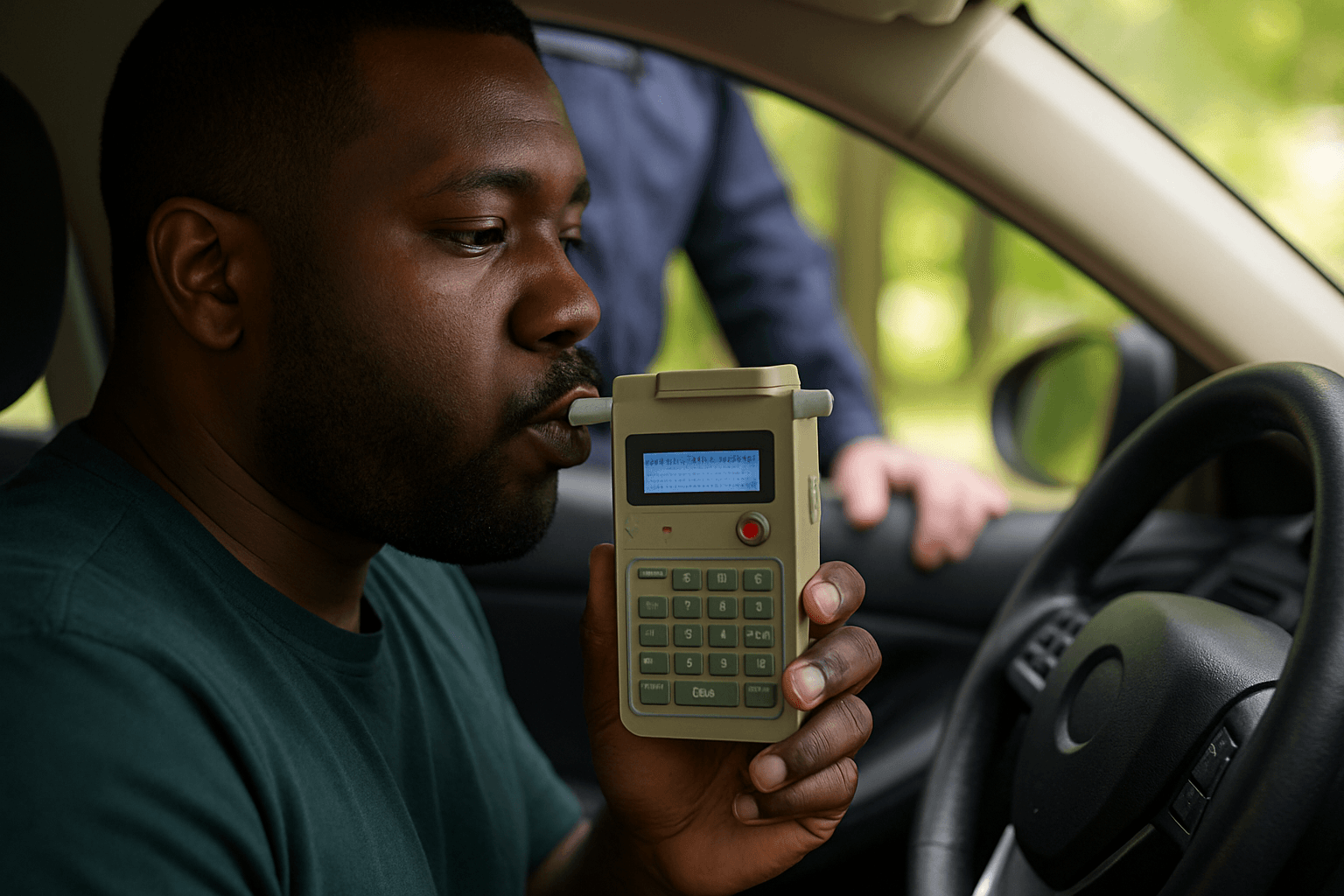
North Carolina's limited driving privilege requires ignition interlock installation and monthly monitoring. The device isn't optional, and the fees stack up fast—here's the real cost breakdown before your first approved drive.
North Carolina Hardship License IID Requirement Basics
North Carolina calls it a limited driving privilege, and if your DUI suspension triggered the requirement, the court orders ignition interlock device installation as a non-negotiable condition. You don't get to choose whether to install it. You don't get to shop providers in most counties—the court assigns one from the state-approved vendor list, and that vendor controls your pricing.
The device requirement runs for the full term of your limited privilege, which is typically 12 months for first-offense DUI, potentially longer for repeat offenses or aggravated circumstances. If your limited privilege is granted for work-only purposes Monday through Friday 6 AM to 6 PM, the IID monitors every ignition attempt during that window and logs violations for any attempt outside approved hours.
SR-22 filing is required simultaneously. North Carolina DMV won't issue the limited privilege without proof of SR-22 coverage on file, and the SR-22 must remain active for three years from your conviction date. The IID and SR-22 are parallel requirements, not sequential ones.
IID Installation Cost in North Carolina
Installation fees in North Carolina run $75 to $150 depending on the assigned provider and your vehicle type. The state certifies providers—Smart Start, Intoxalock, LifeSafer, and Draeger are the most common—but the court or DMV typically assigns one based on your county, not your preference.
Some providers waive installation fees if you prepay three months of monitoring. Others charge the full installation upfront and apply no credit toward monthly fees. The variation is provider-specific, and you have limited negotiating power because the court order names the vendor.
Installation appointments take 60 to 90 minutes. The technician hardwires the device into your vehicle's ignition system, calibrates the breath sample threshold to .04 BAC (half the legal limit), and demonstrates the rolling retest protocol. If you drive a diesel vehicle, a commercial truck, or a motorcycle, installation fees can run higher—$150 to $200—due to equipment differences.
Compare car insurance rates in your state
Get quotes from licensed carriers — no obligation, no spam, results in minutes.
Get Your Free Quote✓ No Obligation Required✓ Licensed Carriers Only✓ Available Nationwide✓ Free to Compare
Monthly Monitoring and Calibration Fees
Monthly monitoring fees range from $60 to $90 per month in North Carolina, paid directly to the IID provider. This fee covers device calibration (required every 30 to 60 days), data download and reporting to the court and DMV, and 24/7 customer support for lockouts or device malfunctions.
Calibration appointments are mandatory. Miss one, and the device enters violation mode—it won't prevent your car from starting immediately, but it triggers a tamper alert sent to your monitoring officer, and your limited privilege can be revoked. Most providers require you to visit their service center for calibration; mobile calibration is available from some vendors for an additional $15 to $25 per visit.
The monthly fee does not decrease over time. Whether you're in month one or month twelve of your limited privilege, you pay the same rate. For a standard 12-month IID requirement, total monitoring cost runs $720 to $1,080 before any violation or missed-calibration penalties.
Device Removal Cost and Final Compliance Report
Removal fees run $50 to $100 in North Carolina, charged when your IID requirement ends and you schedule uninstallation. The provider uninstalls the device, restores your ignition system to factory condition, and submits a final compliance report to the court and DMV confirming you completed the full term without violations.
You cannot remove the device early, even if your limited privilege is revoked or you stop driving. The court order specifies the IID term, and early removal is treated as a violation that can extend your underlying suspension or trigger contempt proceedings. If you sell your vehicle or it's totaled during the IID term, you must transfer the device to your replacement vehicle within 72 hours or notify the court and request a modification.
The final compliance report is required before DMV will reinstate your full driving privilege. If the provider's report shows any violations—failed tests, missed calibrations, or circumvention attempts—your reinstatement is delayed until you petition the court for resolution. Budget for the removal fee before your IID term ends; some drivers miss this cost and delay final compliance by weeks.
Total 12-Month IID Cost Stack for NC Hardship License Holders
Total cost for a 12-month IID term in North Carolina runs $900 to $1,330, broken down as: $75–$150 installation, $720–$1,080 monthly monitoring (12 months × $60–$90), and $50–$100 removal. This does not include violation penalties, mobile calibration fees, or replacement costs if the device is damaged.
Add SR-22 insurance premium increases and hardship license application fees to the IID cost. North Carolina charges a $100 limited driving privilege application fee, SR-22 filing raises your premium by 50% to 90% on average, and reinstatement fees run $65 to $130 depending on your violation. Total first-year cost for IID, SR-22, and hardship license combined typically exceeds $2,500 for first-offense DUI drivers.
Some counties offer indigency waivers that reduce monthly monitoring fees to $30 to $50 for drivers who qualify based on income. You must apply through the court that issued your limited privilege, provide proof of income, and requalify every 90 days. Approval is inconsistent across counties, and the waiver does not cover installation or removal fees.
What Happens If You Violate IID Terms on a Hardship License
A failed breath test, missed calibration, or circumvention attempt triggers an immediate violation report to the court and DMV. North Carolina DMV can revoke your limited driving privilege within 10 days of a reported violation, and the revocation extends your underlying suspension by six months to one year depending on the violation type.
Failed tests are the most common violation. If you blow .04 BAC or higher—half the legal limit—the device logs it, prevents ignition, and flags your account. One failed test typically triggers a warning; two or more within 30 days usually results in revocation. The device also records circumvention attempts: asking someone else to blow, disconnecting the device, or bypassing the rolling retest.
Violation hearings are scheduled within 30 days of revocation. You can petition the court to reinstate your limited privilege, but you must prove mitigating circumstances—medical condition, mouthwash interference, device malfunction—and most petitions are denied. The safer path is zero-tolerance adherence: no alcohol 12 hours before any approved drive, rinse your mouth with water before every test, and schedule calibration appointments early to avoid lapses.