Your CDL is suspended for reckless driving in Illinois, and you need to drive for work. The state's Restricted Driving Permit allows specific routes—but commercial vehicles are excluded, and employer documentation must prove personal-vehicle work travel.
Can CDL holders get an RDP for commercial driving after reckless driving conviction in Illinois?
No. Illinois Restricted Driving Permits (RDPs) prohibit operation of commercial motor vehicles during the restriction period, even when the underlying license suspension stems from a personal-vehicle reckless driving conviction. The RDP authorizes personal-vehicle operation only for approved purposes: employment, medical treatment, educational programs, court-ordered obligations, and alcohol/drug remedial programs.
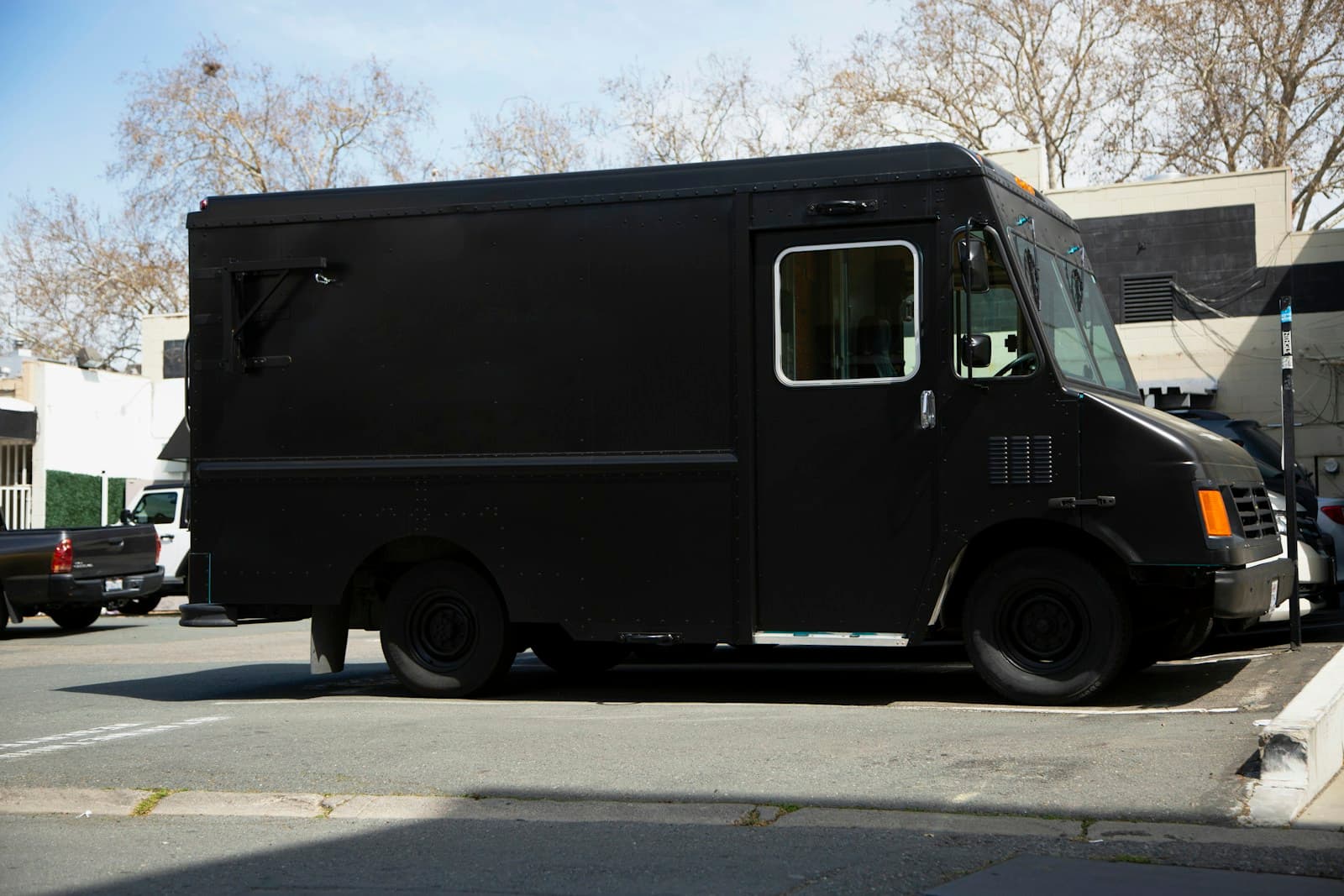
If your job requires operating vehicles over 26,001 pounds GVWR, vehicles designed to transport 16+ passengers, or any vehicle requiring hazmat placards, the RDP does not restore that privilege. Your CDL remains suspended for commercial operation. This applies regardless of whether your reckless driving occurred in your personal car or a commercial vehicle.
The distinction matters because most CDL holders assume a work permit covers any work-related driving. Illinois law separates personal driving privileges from commercial driving privileges at the statutory level. Your employer cannot accept an RDP as proof of commercial driving authorization.
What work-related driving does an Illinois RDP actually allow for CDL holders?
An RDP allows personal-vehicle operation to and from your place of employment, between multiple work sites if your job requires it, and for employment-related errands during approved hours. You must document each approved destination address and specific time window in your RDP petition. The court or Secretary of State reviews your employer affidavit to verify the necessity of each route.
Examples of approvable work routes: driving from home to a warehouse job in a personal vehicle, traveling between job sites for a construction foreman in a personal truck, or driving to client locations for a sales position. Routes must be specific. "Cook County" is not an approved destination. "3240 S Kedzie Ave, Chicago, IL 60623, Monday-Friday 6:00 AM to 3:00 PM" is an approved destination.
The RDP does not cover operating your employer's commercial vehicles, even between approved locations during approved hours. If your job consists entirely of commercial driving, the RDP provides no employment-related benefit. Many CDL holders discover this only after paying the $50 application fee and $70 reinstatement fee.
Compare car insurance rates in your state
Get quotes from licensed carriers — no obligation, no spam, results in minutes.
Get Your Free Quote✓ No Obligation Required✓ Licensed Carriers Only✓ Available Nationwide✓ Free to Compare
How does Illinois process RDP applications for reckless driving suspensions?
Illinois grants RDPs through the Secretary of State's administrative process for most traffic violations, including reckless driving under 625 ILCS 5/11-503. You apply directly to the Secretary of State Driver Services Department. No court hearing is required unless your suspension involves multiple convictions or statutory summary suspension for DUI-related offenses.
You submit Form DSD X-170 (Petition for RDP), proof of SR-22 high-risk insurance filing, a completed employer affidavit on company letterhead, documentation of your approved destinations, and payment for the $50 application fee. Processing takes 15-30 business days from the date the Secretary of State receives a complete packet. Incomplete applications are returned without processing, restarting the clock.
Reckless driving suspensions in Illinois typically last one year for a first offense. The RDP allows you to drive during that suspension period, but only for approved purposes in a personal vehicle. Your commercial driving privilege remains suspended for the full duration. If your CDL is your sole income source and your employer cannot reassign you to non-driving duties, the RDP does not solve your employment crisis.
What documentation do CDL holders need for an Illinois RDP employer affidavit?
The employer affidavit must be printed on company letterhead and include: your full legal name, your job title, your employer's business name and address, a detailed description of your work responsibilities that require personal-vehicle driving, the specific addresses you must drive to, the days of the week and hours you work, and your supervisor's signature with contact information. Generic affidavits are denied.
If your job involves commercial vehicle operation, the affidavit must clarify which duties you will perform during the RDP period that require personal-vehicle driving and which duties you cannot perform due to the commercial vehicle prohibition. For example: "Employee will perform dispatch coordination and parts delivery in personal vehicle Monday-Friday 7:00 AM to 4:00 PM. Employee will not operate company semi-trucks during restricted driving period."
The Secretary of State contacts employers to verify affidavits in approximately 40% of CDL-holder RDP applications. If your employer does not answer verification calls or contradicts the affidavit details, your application is denied. Reapplication after denial requires a new $50 fee and another 15-30 day wait.
Does an Illinois RDP require SR-22 filing for reckless driving convictions?
Yes. Illinois requires SR-22 insurance filing for all RDP applicants, regardless of the underlying violation. The SR-22 is a certificate of financial responsibility your insurance carrier files electronically with the Secretary of State, proving you maintain liability coverage at or above Illinois minimums: $25,000 bodily injury per person, $50,000 bodily injury per accident, and $20,000 property damage per accident.
You must obtain SR-22 filing before submitting your RDP application. The Secretary of State verifies active SR-22 status during processing. If your SR-22 lapses at any point during your RDP period, the Secretary of State suspends your RDP immediately and extends your underlying suspension. Most carriers require you to maintain SR-22 for three years from the date of conviction, even after your RDP period ends and your full license is reinstated.
SR-22 premiums for reckless driving convictions in Illinois typically cost $110-$190 per month for liability-only coverage with non-standard carriers. If you do not own a vehicle, non-owner SR-22 policies provide the required filing at lower premiums, typically $60-$95 per month. Non-owner policies do not cover vehicles you drive regularly, so they work only if you borrow a vehicle occasionally or use a company vehicle for personal-vehicle work errands during your RDP period.
What happens if a CDL holder violates Illinois RDP restrictions?
Operating a commercial vehicle during your RDP period, driving outside approved hours, or traveling to non-approved destinations terminates your RDP and extends your underlying suspension. Illinois treats RDP violations as driving while license suspended under 625 ILCS 5/6-303, a Class A misdemeanor carrying up to 364 days in jail and fines up to $2,500. Your CDL disqualification period is extended by the length of the violation-triggered suspension.
The Secretary of State monitors RDP compliance through employer monthly verification in high-risk cases and through law enforcement traffic stop reports in all cases. If you are stopped during approved hours on an approved route, you must present your RDP, your SR-22 proof of insurance, and your employer affidavit. Failure to carry all three documents results in citation even when you are otherwise compliant.
Most CDL holders do not realize that RDP violations trigger Federal Motor Carrier Safety Administration disqualification reviews in addition to state-level penalties. If your employer holds a federal DOT operating authority, your violation appears in the FMCSA's Driver and Motor Carrier database, complicating future employment even after your Illinois license is fully reinstated. One RDP violation often costs more in long-term career damage than the original reckless driving conviction.
What are the realistic options for CDL holders who cannot use an Illinois RDP?
If your job requires commercial vehicle operation and the RDP does not restore that privilege, you have three paths: request temporary reassignment to non-driving duties for the suspension period, apply for positions that require personal-vehicle driving only, or wait out the full suspension and apply for CDL reinstatement afterward. Illinois does not offer hardship relief for commercial driving privileges.
Some employers reassign CDL holders to warehouse, dispatch, or administrative roles during suspension periods. This requires employer willingness and an available position. Document the reassignment in writing and confirm it does not require you to operate commercial vehicles "in case of emergency." Any commercial vehicle operation during your suspension extends your disqualification period.
If you pursue reinstatement after the suspension period ends, you must pay a $70 reinstatement fee, maintain SR-22 filing for three years from conviction, and in some cases retake the CDL skills test if your suspension exceeded one year. Budget $500-$800 for reinstatement costs: Secretary of State fees, SR-22 premiums during the gap period, and skills test fees if applicable. Most CDL holders underestimate the total cost because they calculate only the suspension period, not the three-year SR-22 filing requirement that follows.