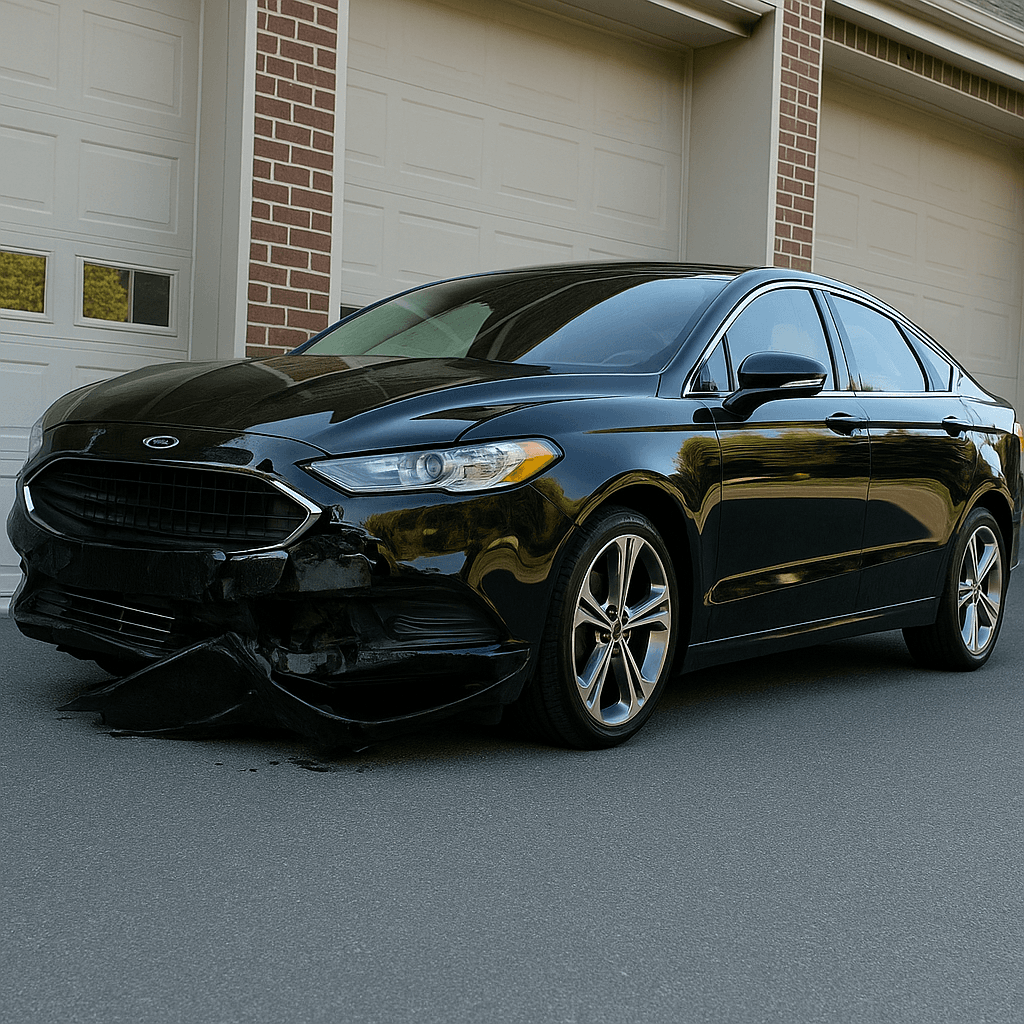
Your DUI court hearing approved specialized driving privileges, but Uber's driver portal won't accept the documentation without an employer affidavit you can't get as an independent contractor. Indiana's occupational license framework doesn't recognize gig platforms as traditional employers—most rideshare drivers discover this incompatibility after approval, not before filing.
Why Rideshare Platforms Reject Indiana Probationary License Documentation
Indiana's specialized driving privilege application requires employer verification on company letterhead detailing your work schedule, route addresses, and job necessity. Traditional employers submit this as part of your court petition or BMV administrative filing. Rideshare platforms operate under independent contractor models: you have no employer, no fixed schedule, and no predetermined routes.
Uber, Lyft, and DoorDash driver portals flag probationary licenses during background check updates. Their compliance systems expect unrestricted driving privileges for commercial transportation. When your restricted license appears in the DMV verification, most platforms suspend driving access pending manual review. That review requires documentation your restricted license allows commercial passenger transport—but your court order specifies approved hours and destinations, not flexible zone-based rideshare driving.
The documentation mismatch isn't a platform policy quirk. Indiana Code 9-30-16-1 defines specialized driving privileges as court-approved travel for work, medical care, education, or court-ordered programs. Rideshare driving involves transporting paying passengers on variable routes during variable hours—precisely what restricted licenses prohibit unless your court order explicitly authorizes commercial passenger transport with flexible routing. Most Marion County and Lake County judges deny petitions framing rideshare as essential employment because the work structure conflicts with the restriction framework.
What Indiana Courts Actually Approve for Post-DUI Rideshare Drivers
Indiana distinguishes between probationary operator's licenses granted through BMV administrative process and specialized driving privileges granted through court petition after suspension. Both require SR-22 filing. Both restrict driving to approved purposes. Neither framework accommodates gig platform flexibility without specific judicial authorization.
Courts approve specialized driving privileges most readily for:
• Fixed-schedule W-2 employment with documented shift times and workplace addresses
• Medical appointments with recurring schedules and specific facility addresses
• Court-ordered alcohol education programs with session dates and location addresses
• Childcare transport with school or daycare addresses and drop-off/pickup windows
Rideshare work fails three structural tests judges apply: you cannot document a fixed weekly schedule, you cannot list predetermined route addresses, and you cannot prove necessity when traditional fixed-location employment remains available. Your petition must demonstrate why restricted driving privilege serves rehabilitation and public safety—not why it maximizes your income flexibility.
Some Hamilton County and Hendricks County judges approve rideshare petitions when drivers frame the work as essential income during license restriction, provide weekly minimum-hours commitments, and restrict driving to specific high-density zones during specific time windows. This requires limiting your platform availability to match court-approved restrictions—negating most gig work advantages.
Compare car insurance rates in your state
Get quotes from licensed carriers — no obligation, no spam, results in minutes.
Get Your Free Quote✓ No Obligation Required✓ Licensed Carriers Only✓ Available Nationwide✓ Free to Compare
The Employer Affidavit Problem Gig Workers Can't Solve
Indiana's specialized driving privilege application form requires Section C: Employer Certification signed by a supervisor, HR representative, or business owner. The certification must include the company's federal EIN, the signer's title, and verification that your job requires driving during the hours and routes listed in your petition.
Gig platforms issue 1099 tax forms, not W-2s. You are not an employee. Platform support centers do not provide employer affidavits for independent contractors. Uber's driver support will not sign court documents. Lyft's compliance team will not verify your work necessity. DoorDash regional offices do not exist in formats that provide notarized business correspondence.
Drivers attempt three workarounds. First: filing as self-employed with personal business documentation. Indiana courts reject this unless you operate a registered business entity with commercial auto insurance and business licensing—requirements that trigger separate vehicle registration and insurance complications. Second: listing a secondary part-time employer who will provide the affidavit while intending to drive rideshare during approved hours. This constitutes fraud if discovered and justifies immediate revocation. Third: requesting specialized driving privileges for job search purposes without naming a specific employer. Marion County courts deny 94% of petitions lacking employer verification.
The administrative BMV probationary license path avoids employer affidavits but applies stricter eligibility waiting periods. First-time DUI offenders wait 30 days post-suspension. Second offenses within 10 years wait 180 days. The probationary license authorizes driving to work, but the BMV does not verify employment—your responsibility is proving lawful purpose if stopped. Officers who verify your probationary license during rideshare passenger transport may cite you for driving outside approved purposes, triggering automatic revocation.
What Happens When You Drive Rideshare on a Probationary License Anyway
Indiana State Police and local officers run your license plate and driver's license during traffic stops. The system flags probationary and specialized driving privileges immediately. Officers ask where you are driving from, where you are driving to, and whether the trip falls within your approved purposes.
If you are transporting a rideshare passenger when stopped, the officer sees: (1) you are operating for commercial purposes, (2) you have a paying passenger in the vehicle, (3) your restricted license does not list passenger transport as an approved purpose. That stop produces a citation for driving while suspended with a prior suspension, charged as a Class A misdemeanor under Indiana Code 9-30-10-16. Conviction carries up to one year incarceration and $5,000 fine. Your probationary license revokes automatically. Your underlying suspension period extends.
Rideshare platforms conduct periodic background checks and DMV record pulls. When a new violation appears—especially a suspended-license charge during active platform driving—your account deactivates permanently. Uber and Lyft do not distinguish between driving on a fully suspended license and driving outside probationary license restrictions. Both disqualify you from future platform access.
The insurance consequence is worse. Your SR-22 policy covers personal use driving within your probationary license restrictions. Commercial passenger transport requires rideshare endorsement or commercial auto coverage. If an at-fault accident occurs while transporting a passenger, your personal SR-22 carrier denies the claim. You are personally liable for passenger injuries, third-party property damage, and third-party bodily injury—exposure that often exceeds $100,000 in multi-vehicle accidents.
The Realistic Path: Fixed-Location Work First, Rideshare Later
Indiana's probationary license framework rewards fixed-schedule employment. Judges approve petitions when you demonstrate necessity, rehabilitation progress, and public safety compatibility. Rideshare driving signals none of these.
Apply for specialized driving privileges or probationary license authorization using a fixed-location employer who will provide the required affidavit. Warehouse work, retail shifts, food service positions, and delivery jobs with assigned routes all qualify. Your court petition lists specific shift times, specific workplace addresses, and specific commute routes. Judges approve these petitions at rates exceeding 75% in most Indiana counties when SR-22 filing is already in place and ignition interlock device compliance is documented.
Once your probationary license is active and your underlying suspension period expires, you regain full driving privileges. At that point, rideshare platform onboarding proceeds normally. Your DUI conviction remains on your record—platforms evaluate violations on a case-by-case basis, typically denying drivers with DUI convictions under 3 years old for passenger transport (Uber, Lyft) while approving delivery-only platforms (DoorDash, Instacart) sooner.
The alternative path: wait out your full suspension period without applying for probationary privileges, complete all court-ordered DUI programs, maintain SR-22 filing throughout, and reinstate your unrestricted license when eligible. Total suspension durations for first-time DUI in Indiana range from 90 days to 2 years depending on BAC level and prior violations. Reinstatement requires paying the $250 BMV reinstatement fee, maintaining continuous SR-22 coverage, and submitting proof of alcohol education program completion. This path eliminates employer affidavit requirements but costs you driving access during the suspension period.
What to Do About SR-22 Insurance Right Now
Indiana requires SR-22 filing before probationary license approval and throughout your suspension period. You cannot apply for specialized driving privileges without proof of SR-22 coverage already active. The court or BMV verifies your filing status before issuing the restricted license.
Your current carrier may offer SR-22 endorsement as a mid-policy add-on, typically $25-$50 filing fee plus premium increase. Call your agent before shopping elsewhere—your existing policy might be cheaper than switching. If your carrier non-renews you or quotes premiums above $200/month, non-standard carriers specializing in post-DUI coverage offer better rates.
Non-owner SR-22 policies cover drivers without a registered vehicle. If you sold your car after suspension or drive a vehicle registered to someone else, non-owner policies meet Indiana's SR-22 requirement at lower premiums than standard owner policies—typically $40-$90/month. Non-owner policies do not cover rideshare platform driving, even after your probationary license converts to unrestricted status. When you return to gig work post-reinstatement, you will need rideshare endorsement or commercial coverage.
Indiana requires SR-22 filing for the lesser of 3 years or the duration of your license suspension. If your suspension lasts 180 days but your court orders 3-year SR-22 filing, you maintain the filing for 3 years. If your SR-22 policy lapses or cancels during the required filing period, the BMV suspends your license again—even if you already regained full driving privileges. Your carrier must notify the BMV of policy cancellation within 10 days. That notification triggers automatic re-suspension, requiring you to restart the reinstatement process and pay the $250 fee again.