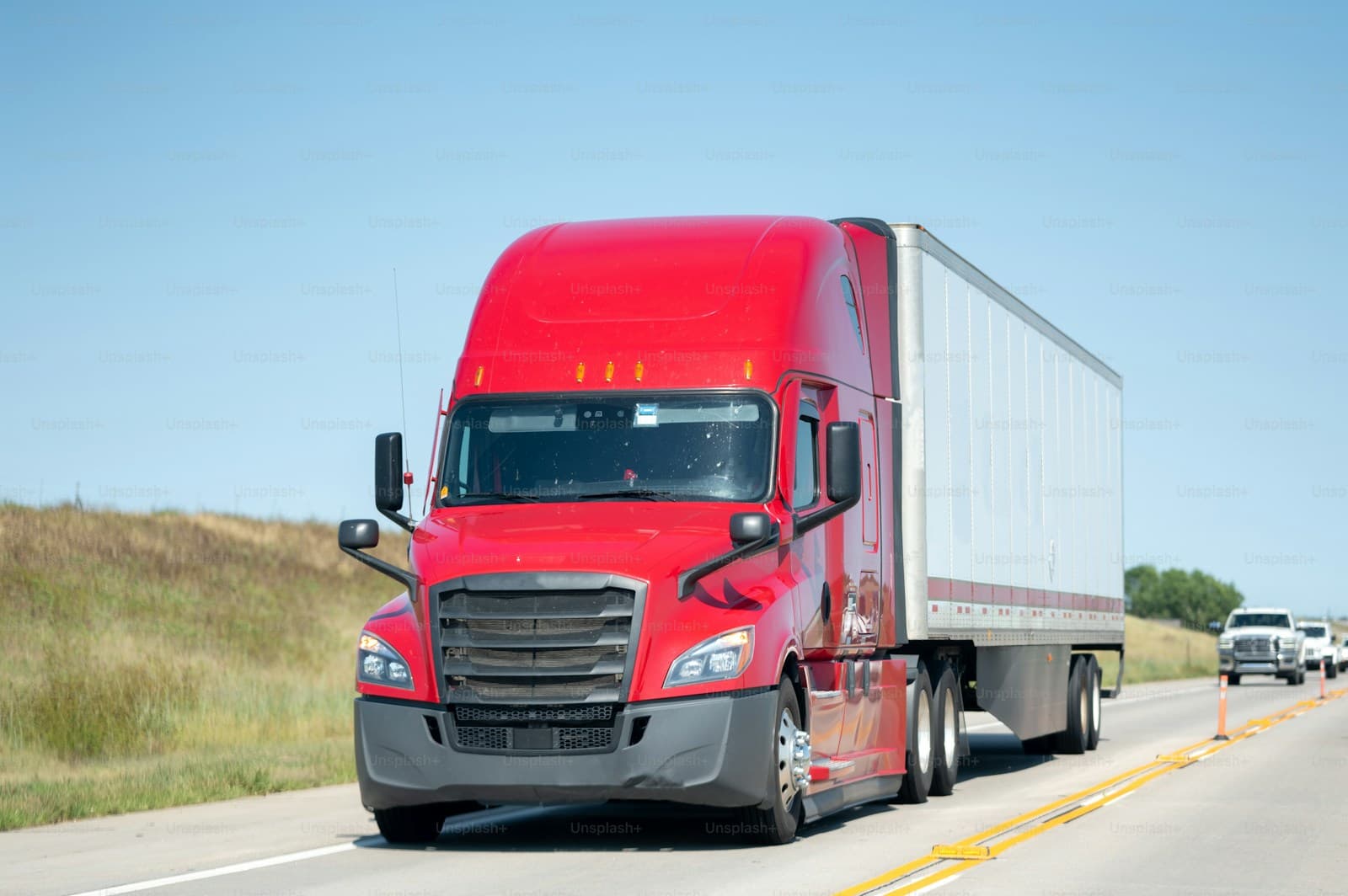
Your CDL reckless driving conviction triggers separate commercial and non-commercial suspension paths in Kansas, and the work permit application process differs dramatically depending on which license class you're trying to restore.
Kansas Issues Two Separate Suspensions for CDL Holders After Reckless Driving
Kansas suspends your commercial driving privilege and your base driver's license independently after a reckless driving conviction. The Kansas Division of Vehicles processes these as distinct actions with different timelines and different reinstatement requirements.
Your CDL disqualification runs concurrently with your base license suspension, but the work permit program only addresses your Class C civilian driving privilege. You cannot use a Kansas restricted driving permit to operate a commercial vehicle, even if your employer desperately needs you back in the truck.
Most CDL holders discover this separation when they submit their work permit application and employer affidavit—the Division of Vehicles approves the permit for personal vehicle operation to and from work, but their employer's HR department rejects it because the permit explicitly excludes commercial vehicle operation. The application fee is non-refundable.
Work Permit Eligibility Windows Differ by License Class and Conviction Type
Kansas allows work permit applications 30 days after suspension for most base license violations, but CDL holders face additional federal disqualification periods that Kansas cannot override. A reckless driving conviction in a commercial vehicle triggers a 60-day federal disqualification minimum under 49 CFR 383.51, which runs independently of your Kansas work permit timeline.
If the reckless driving occurred in your personal vehicle—not while operating a CMV—you can apply for the civilian work permit after the 30-day Kansas waiting period. If it occurred while you were driving commercially, the federal disqualification blocks CDL restoration even after Kansas issues your restricted civilian permit.
The cost stack compounds during this waiting period. Kansas charges a $59 reinstatement fee for the base license, a separate $10 work permit application fee, and requires SR-22 filing at approximately $75–$130/month for drivers with reckless driving convictions. Most CDL holders budget for one reinstatement process and discover mid-application they're paying for two.
Compare car insurance rates in your state
Get quotes from licensed carriers — no obligation, no spam, results in minutes.
Get Your Free Quote✓ No Obligation Required✓ Licensed Carriers Only✓ Available Nationwide✓ Free to Compare
Approved Destinations for Kansas Work Permits Must Match Your Current Employment Reality
Kansas work permits specify approved hours AND destination addresses separately. The Division of Vehicles requires your employer to list your exact work location address, not just confirm you're employed. If you drive for multiple job sites, each address must appear in your employer affidavit.
Route deviation during approved hours still counts as unlicensed driving. Kansas statute 8-292 treats operation outside approved destinations as driving under suspension, even if the violation occurs at 9:00 AM on a Tuesday when your permit allows 6:00 AM–6:00 PM weekday driving. The approved time window does not grant blanket driving authority—it restricts when you can drive to the specific places listed in your permit.
CDL holders switching to civilian driving jobs during suspension often submit employer affidavits for warehouse or dispatch positions without realizing their new employer operates from multiple facilities. When the permit arrives listing only the main office address, driving to the satellite location 15 miles away violates the permit terms. Kansas does not issue permit amendments—you file a new application with a $10 fee.
SR-22 Filing Duration Runs Separately from Your Work Permit Restriction Period
Kansas requires SR-22 filing for reckless driving convictions, and the filing obligation continues for two years from the conviction date, not from the date you obtain your work permit or reinstate your full license. Most drivers assume SR-22 terminates when their full license is restored, but Kansas statute 40-3104 ties the filing period to the underlying offense date.
Your work permit may be valid for six months, and your full license may be restored after one year, but your SR-22 filing continues until the two-year mark. Canceling SR-22 coverage early triggers immediate license re-suspension, and Kansas does not send advance notice before the suspension takes effect.
The SR-22 premium typically decreases after full license reinstatement—carriers recalculate risk once you're no longer operating under restriction—but the filing requirement itself does not change. Budget for the full two-year SR-22 period regardless of how quickly you restore unrestricted driving privileges.
CDL Reinstatement Requires Federal Clearance Kansas Cannot Expedite
Kansas processes civilian work permits through its administrative review system, which typically approves applications within 10–15 business days if all documentation is complete. CDL reinstatement follows a separate federal clearance pathway Kansas cannot accelerate.
After your federal disqualification period ends and your Kansas base license is reinstated, you must reapply for CDL privileges through the standard testing and medical certification process. Kansas does not waive skills testing or knowledge exams for CDL holders whose disqualification resulted from reckless driving. You start the CDL application process from the beginning, including the $20 CLP fee, the $105 CDL skills test fee, and the DOT medical exam cost.
Most carriers require active CDL status before returning drivers to commercial routes. The gap between civilian work permit approval and CDL re-issuance often runs 45–90 days, depending on testing appointment availability and medical examiner schedules. This gap is uncompensated driving time for CDL holders whose only income source is commercial vehicle operation.
Insurance Carriers Apply Different Underwriting Rules to CDL Holders with Reckless Driving
Kansas SR-22 requirements apply to your base license, but carriers underwrite CDL holders differently than civilian drivers with identical violations. Reckless driving signals higher risk in the commercial insurance market, and most standard carriers decline to file SR-22 for drivers holding CDL credentials even if the violation occurred in a personal vehicle.
Non-standard carriers that specialize in post-violation SR-22 filing—Bristol West, Direct Auto, Dairyland, GAINSCO, The General, Safe Auto—evaluate CDL status separately during underwriting. Some accept civilian-vehicle-only policies for CDL holders under work permit restrictions; others decline all CDL applicants regardless of vehicle class.
Premium quotes vary by $40–$90/month based on whether you disclose active CDL credentials. Drivers who let their CDL lapse during suspension to simplify insurance underwriting discover they cannot recover those credentials without retesting. The cost of retesting ($125+ in fees) often exceeds six months of the premium difference, but the decision is irreversible once the CDL expires.
Finding SR-22 Coverage That Matches Your Work Permit Restriction Terms
Kansas requires proof of SR-22 filing before issuing your work permit, but you cannot obtain SR-22 without an active insurance policy. Most carriers issue policies effective the day you apply, which creates a narrow window to coordinate Division of Vehicles paperwork with carrier SR-22 submission.
Non-owner SR-22 policies cover drivers who no longer own a vehicle or who operate employer-owned vehicles exclusively. CDL holders transitioning to non-driving jobs during suspension often choose non-owner policies because they're no longer operating personal vehicles—premiums run $50–$85/month for liability-only coverage, compared to $115–$180/month for standard auto policies with SR-22 endorsement.
Carriers file SR-22 forms electronically with Kansas within 24–48 hours of policy issuance. The Division of Vehicles updates your license record within 3–5 business days after receiving the filing. You cannot submit your work permit application until the SR-22 appears in the state system, so most drivers wait one full week after purchasing coverage before filing their employer affidavit and permit application. Budget seven days from policy purchase to work permit eligibility.