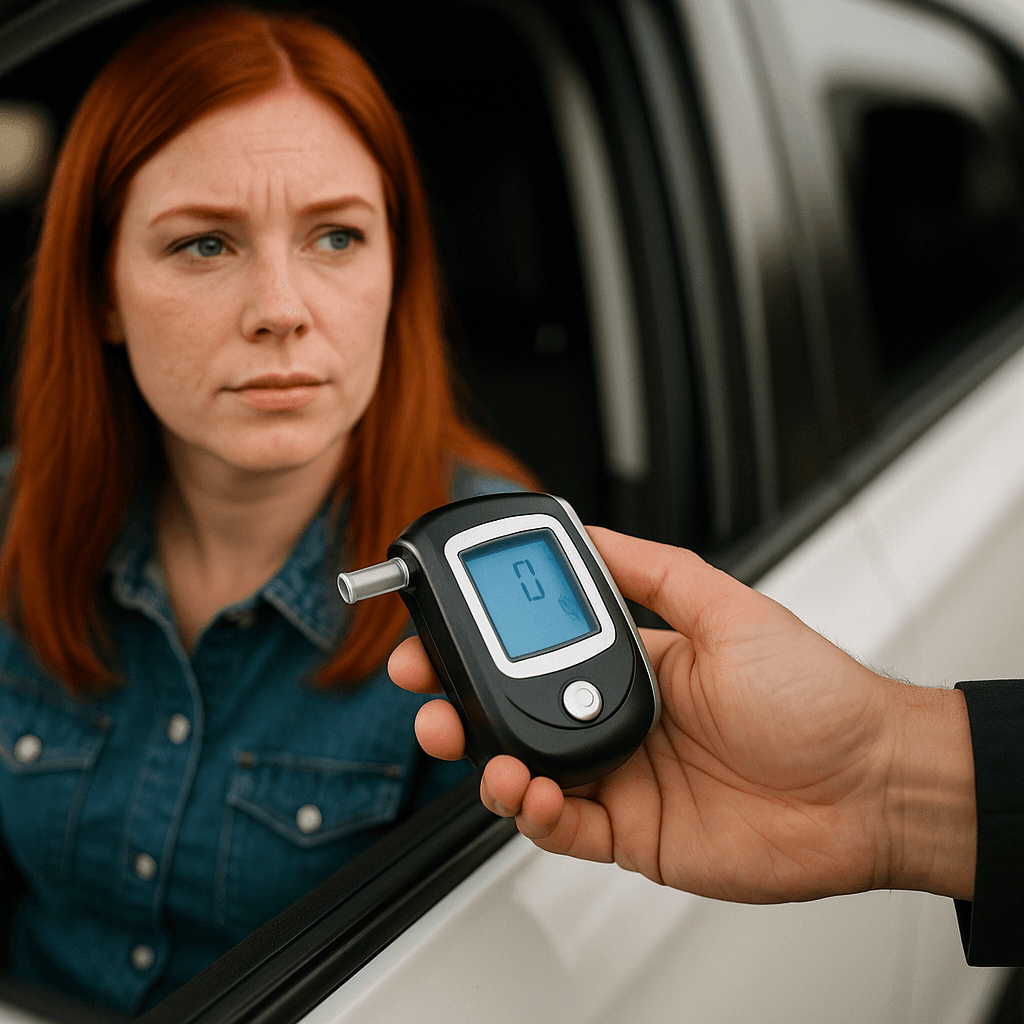
Kentucky allows hardship licenses for CDL holders after DUI, but approved routes exclude interstate commerce driving—most drivers don't realize their commercial endorsement stays suspended even if their hardship petition is granted.
CDL holders face two separate suspension tracks after Kentucky DUI
Your Kentucky CDL suspension runs parallel to your regular driver's license suspension, not instead of it. A DUI triggers a 30-day hard suspension followed by 150-day hardship eligibility for your Class D license, but federal CDL disqualification lasts one year minimum with no hardship exception for commercial driving.
Most CDL holders petition for a Kentucky hardship license assuming approved work routes will cover their commercial driving job. They discover at the hardship hearing that approved destinations can include their employer's yard or terminal, but the court will not authorize interstate commerce, hazmat routes, or any driving that requires CDL endorsement. The hardship license restores limited personal-vehicle privilege only.
Kentucky circuit courts treat CDL commercial privilege and Class D personal privilege as distinct. Your hardship petition can succeed for grocery trips and medical appointments while your CDL remains federally disqualified. Employers terminate drivers who don't understand this split before the hearing.
Hardship license applications require employer documentation that most CDL holders can't produce
Kentucky circuit courts require a notarized employer affidavit stating you need driving privileges to maintain employment. CDL holders whose job requires commercial driving face a documentation paradox: their employer cannot truthfully state the hardship license will preserve their job, because the hardship license does not restore CDL privileges.
Judges deny petitions when the employer affidavit describes commercial driving duties. Courts interpret this as misrepresentation of what the hardship license authorizes. The affidavit must describe non-commercial transportation needs like commuting to the yard, attending mandatory safety meetings, or traveling to administrative offices—not the driving work itself.
CDL holders in local delivery or short-haul roles sometimes retain employment in warehouse, dock, or dispatch positions during the disqualification period. These reassignments produce viable hardship petitions because the affidavit describes the non-driving role honestly and the approved routes cover commuting to that location. Over-the-road drivers without fallback roles rarely meet the employment-preservation test Kentucky courts apply.
Compare car insurance rates in your state
Get quotes from licensed carriers — no obligation, no spam, results in minutes.
Get Your Free Quote✓ No Obligation Required✓ Licensed Carriers Only✓ Available Nationwide✓ Free to Compare
Kentucky's 30-day absolute prohibition period blocks all driving before hardship eligibility
Kentucky imposes a 30-day hard suspension immediately after DUI conviction during which no driving is permitted under any circumstances. Your hardship license petition cannot be filed or granted during this window. CDL holders who assume they can apply immediately after sentencing waste attorney fees on premature filings that courts dismiss outright.
The 180-day total suspension begins on your conviction date. Days 1-30 are the absolute prohibition period. Days 31-180 are the conditional reinstatement period during which you may hold a hardship license if a circuit court grants your petition. Most counties schedule hardship hearings 3-5 weeks after petition filing, which means realistically you're looking at day 50-60 before a granted hardship license takes effect.
CDL employers in Kentucky operate under federal Motor Carrier Safety Regulations that prohibit rehiring a driver during active disqualification regardless of state hardship license status. Your hardship license lets you drive to job interviews or attend CDL refresher courses, but no carrier will put you in a commercial vehicle until the federal one-year disqualification expires and you complete the CDL reinstatement process.
Approved route restrictions are enforced by address, not by purpose
Kentucky hardship license orders specify exact street addresses for approved destinations: your residence, your workplace, your DUI education provider, your ignition interlock service center, medical providers, and places of worship. The order does not authorize general errands, side trips, or route deviations even during approved travel hours.
CDL holders accustomed to route flexibility misread hardship licenses as general daytime driving permission. A granted petition might authorize Monday-Friday 6:00 AM to 6:00 PM travel between home and the employer's terminal. Stopping for fuel, food, or banking between those two addresses violates the order unless those specific addresses were included in the original petition. Kentucky State Police cite hardship license violations as driving on a suspended license, which triggers automatic revocation and extends your underlying suspension by six months.
Most attorneys advise adding 4-6 routine stops to the initial petition—grocery store, pharmacy, bank, fuel station along your work route—because amendment petitions after initial approval take another 4-6 weeks and require a second court appearance. CDL holders filing pro se commonly omit these addresses and discover the restriction's severity when cited during a compliance stop.
Ignition interlock requirements apply to hardship license holders state-wide
Kentucky requires ignition interlock device installation on any vehicle you operate under a hardship license, even if the DUI occurred in a different vehicle you no longer own. The IID requirement begins the day your hardship license is granted and continues through your full reinstatement, typically 12-24 months depending on your underlying suspension length.
CDL holders face equipment incompatibility problems. Commercial vehicles with air brake systems require specialized IID models that most Kentucky-certified installers don't stock. Even when compatible devices exist, federal regulations prohibit IID installation on vehicles you don't personally own—you cannot install an IID on your employer's truck to meet Kentucky's requirement. This creates an enforcement gap: your hardship license legally requires IID on every vehicle you drive, but practical compliance is only possible in personal vehicles.
Kentucky Transportation Cabinet monitors IID compliance through monthly rolling violations. Miss one calibration appointment or record one failed startup test and your hardship license is revoked without warning. Revocation notices arrive by mail 10-15 days after the violation date, often after you've already driven on a now-invalid hardship license multiple times. CDL holders working irregular schedules miss calibration windows more often than conventional commuters.
SR-22 filing requirements extend three years beyond license reinstatement
Kentucky requires continuous SR-22 filing from the date your hardship license is granted through three years after your full driving privileges are reinstated. The SR-22 is a liability insurance certification filed by your insurance carrier with Kentucky Transportation Cabinet proving you carry state-minimum coverage: $25,000 per person/$50,000 per accident bodily injury and $25,000 property damage.
CDL holders need SR-22 on their personal vehicle policy even if they don't own the commercial vehicle they'll eventually drive. Non-owner SR-22 policies exist for drivers without a personal vehicle, typically running $40-$80/month for state-minimum liability. Your SR-22 filing must remain active without any lapse—if your insurer cancels your policy or you let coverage expire, Kentucky Transportation Cabinet receives automatic notice and suspends your hardship license the same day.
Most Kentucky SR-22 carriers are non-standard insurers: The General, Safe Auto, Direct Auto, Bristol West, and Acceptance. CDL holders often qualify for standard-market coverage after 12-18 months of clean IID reports and no hardship license violations, but initial SR-22 filing almost always routes through the non-standard market at 2-3 times standard premiums.
Full CDL reinstatement requires federal clearance Kentucky courts don't control
Your Kentucky hardship license does not shorten or bypass the federal one-year CDL disqualification. When your hardship period ends and you petition for full Class D reinstatement, you still face a separate CDL reinstatement process governed by Federal Motor Carrier Safety Administration rules, not Kentucky state law.
CDL reinstatement after DUI disqualification requires completing a Substance Abuse Professional evaluation and any recommended treatment, passing the CDL knowledge test again, passing the CDL skills test in the vehicle class you're reinstating, and paying Kentucky's $40 CDL reinstatement fee on top of the $120 general reinstatement fee. Many Kentucky CDL holders don't budget for retesting costs—skills tests through third-party examiners run $200-$400 depending on vehicle class.
Kentucky allows CDL downgrade during disqualification. You can voluntarily surrender your CDL and maintain a Class D license, which simplifies your hardship petition because judges no longer question the commercial-driving documentation conflict. Downgrading makes sense for CDL holders who've lost their driving job and won't return to commercial driving immediately. You can reapply for CDL classification after full reinstatement by passing all tests fresh.