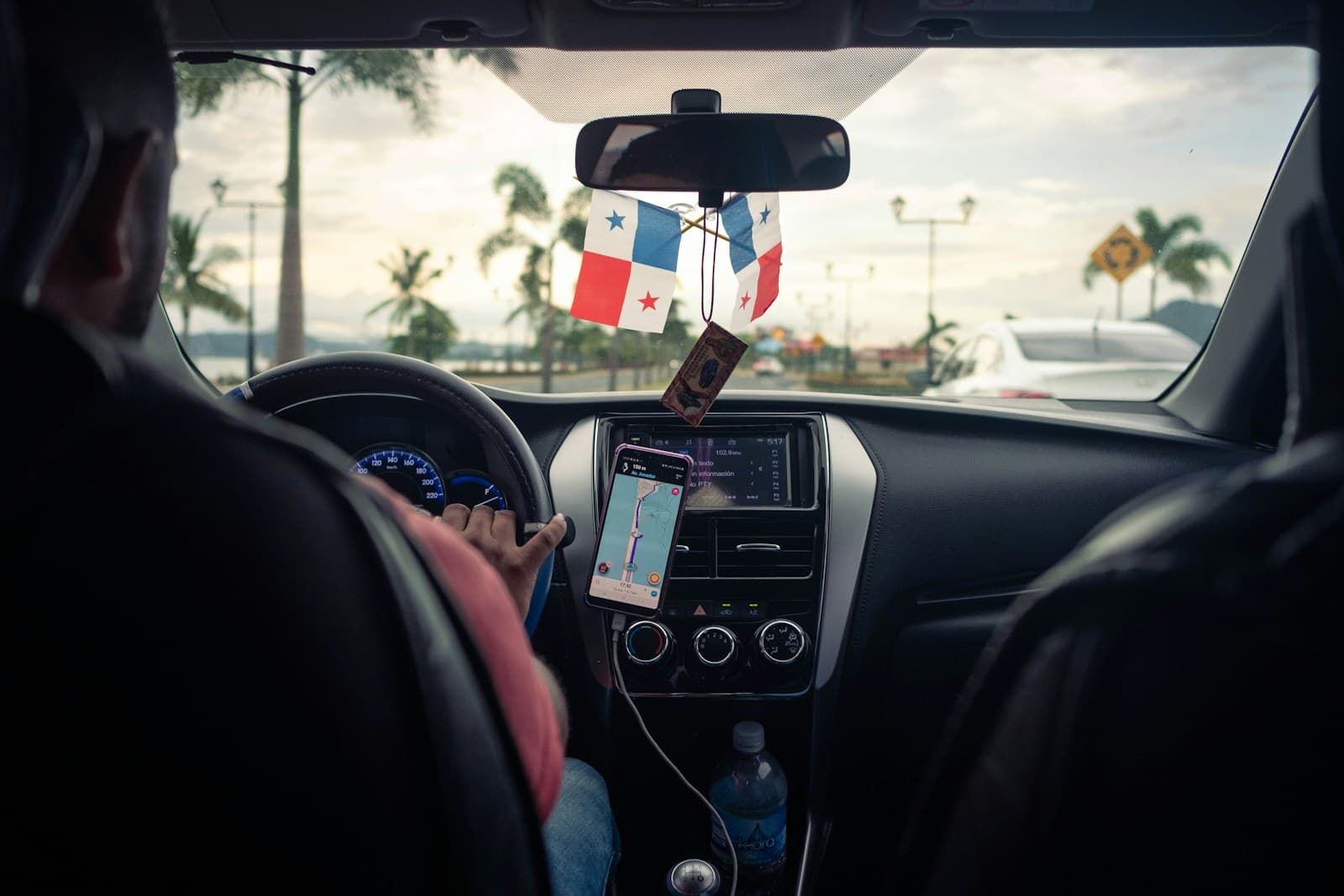
Louisiana hardship licenses allow specific employer-verified routes, but most Uber and Lyft drivers don't realize rideshare work doesn't qualify as approved employment under state hardship restrictions.
Why Louisiana Hardship Licenses Exclude Rideshare Driving
Louisiana hardship licenses restrict you to employment-verified routes between home and a single workplace. The state defines approved purposes as travel to and from employment at a fixed location, not passenger-for-hire driving throughout the city.
Rideshare work fails the hardship license test on three counts. First, your routes change every shift based on passenger requests—Louisiana requires pre-approved destination addresses listed in your court order. Second, rideshare driving is classified as commercial passenger transport, which hardship restrictions explicitly exclude. Third, your employer is yourself as an independent contractor, and Louisiana courts won't accept gig-platform documentation as employer verification.
Most rideshare drivers discover this restriction only after paying the $125 hardship application fee and appearing at their hearing. The judge denies the petition because the work doesn't meet Louisiana's approved-purpose criteria. The application fee is non-refundable, and reapplying for a different job requires a new hearing and another $125 fee.
What Routes Louisiana Actually Approves for Hardship License Holders
Louisiana courts approve three categories of routes: home to work, home to medical appointments, and home to DWI program classes. Each destination address must appear in your court order before you can legally drive there.
Work routes require employer documentation on company letterhead confirming your job title, work address, and shift schedule. The court approves specific hours—typically your exact shift times plus 30 minutes travel buffer each direction. Driving to the same workplace outside approved hours counts as unlicensed driving even if you're still employed there.
Medical and DWI program routes require advance petition amendments. You cannot add destinations mid-restriction period without filing a motion to modify your hardship order, which requires another court appearance and typically another $75-$125 filing fee. Emergency medical trips are not automatically covered—Louisiana law enforcement treats any unapproved destination as a hardship violation regardless of intent.
Compare car insurance rates in your state
Get quotes from licensed carriers — no obligation, no spam, results in minutes.
Get Your Free Quote✓ No Obligation Required✓ Licensed Carriers Only✓ Available Nationwide✓ Free to Compare
The Two-Path Problem: Traditional Employment vs Rideshare Income
Louisiana rideshare drivers suspended for DUI face a forced career pivot. Your hardship license allows travel to a W-2 job at a fixed location. It does not allow the passenger-transport work that previously generated your income.
Most drivers resolve this by finding traditional employment during the restriction period and documenting that job for hardship approval. Warehouse work, retail, restaurant jobs, and office positions all qualify if your employer provides the required verification letter. The approved route runs from your home address to the employer's single location and back.
The restriction typically lasts 12-24 months depending on your DUI case specifics. After completing your suspension period, SR-22 filing duration, DWI program requirements, and ignition interlock monitoring, you regain full driving privileges and can return to rideshare work. During the restriction, rideshare income is legally inaccessible.
SR-22 Insurance for Louisiana Hardship License Holders
Louisiana requires SR-22 filing for all DUI-triggered hardship licenses. Your insurance carrier files Form SR-22 with the Office of Motor Vehicles confirming you carry state-minimum liability coverage continuously throughout your restriction period.
Typical SR-22 premiums for Louisiana DUI hardship cases run $140-$240/month with non-standard carriers. Your total monthly cost includes the premium plus ignition interlock device rental, which averages $75-$100/month. Over a 12-month hardship period, total carrying cost runs approximately $2,580-$4,080 before factoring in the initial application and reinstatement fees.
Most standard carriers (Geico, State Farm, Progressive) either non-renew DUI policies or quote premiums 200-300% above non-standard specialists. Non-standard carriers like Direct Auto, Dairyland, and GAINSCO specialize in post-DUI SR-22 filing and typically offer lower total premiums for hardship-restricted drivers. Coverage lapses of even one day trigger automatic hardship license suspension and extend your overall restriction period.
The Hardship Application Process in Louisiana
Louisiana hardship applications proceed through district court, not through the OMV administratively. You file a petition in the parish where your DUI case was prosecuted. Most parishes require a 30-day waiting period after your license suspension begins before accepting hardship petitions.
Your petition package must include: employer verification letter on company letterhead, proof of SR-22 insurance filing, DWI program enrollment documentation, ignition interlock installation receipt, and certified copy of your suspension order. Missing any single document at your hearing typically results in denial and requires rescheduling for a new court date.
Hearing approval rates vary by parish and judge. Orleans Parish approves approximately 55-65% of first-time DUI hardship petitions. East Baton Rouge and Jefferson parishes trend slightly higher at 65-75%. Denials most commonly cite insufficient employer documentation or unapproved employment type—including rideshare work. After approval, the court order goes to OMV for physical license issuance, which takes an additional 7-10 business days.
What Happens When You Drive Rideshare on a Hardship License
Louisiana law enforcement treats hardship violations as driving under suspension, a separate criminal charge carrying up to six months jail time and $500 fine for first offense. Getting stopped while driving Uber or Lyft on a hardship license triggers this charge because passenger transport falls outside your approved purposes.
The violation also revokes your hardship license immediately. Louisiana courts do not issue warnings or grace periods—the revocation is automatic upon conviction for the driving-under-suspension charge. Your underlying suspension period often extends by the length of time your hardship was active before revocation, adding months or years to your total restriction.
Rideshare platforms conduct periodic background and driving record checks. A hardship restriction appears on your Louisiana driving record abstract. Most platforms deactivate drivers whose records show active license restrictions, which means you lose platform access before law enforcement even becomes a factor.