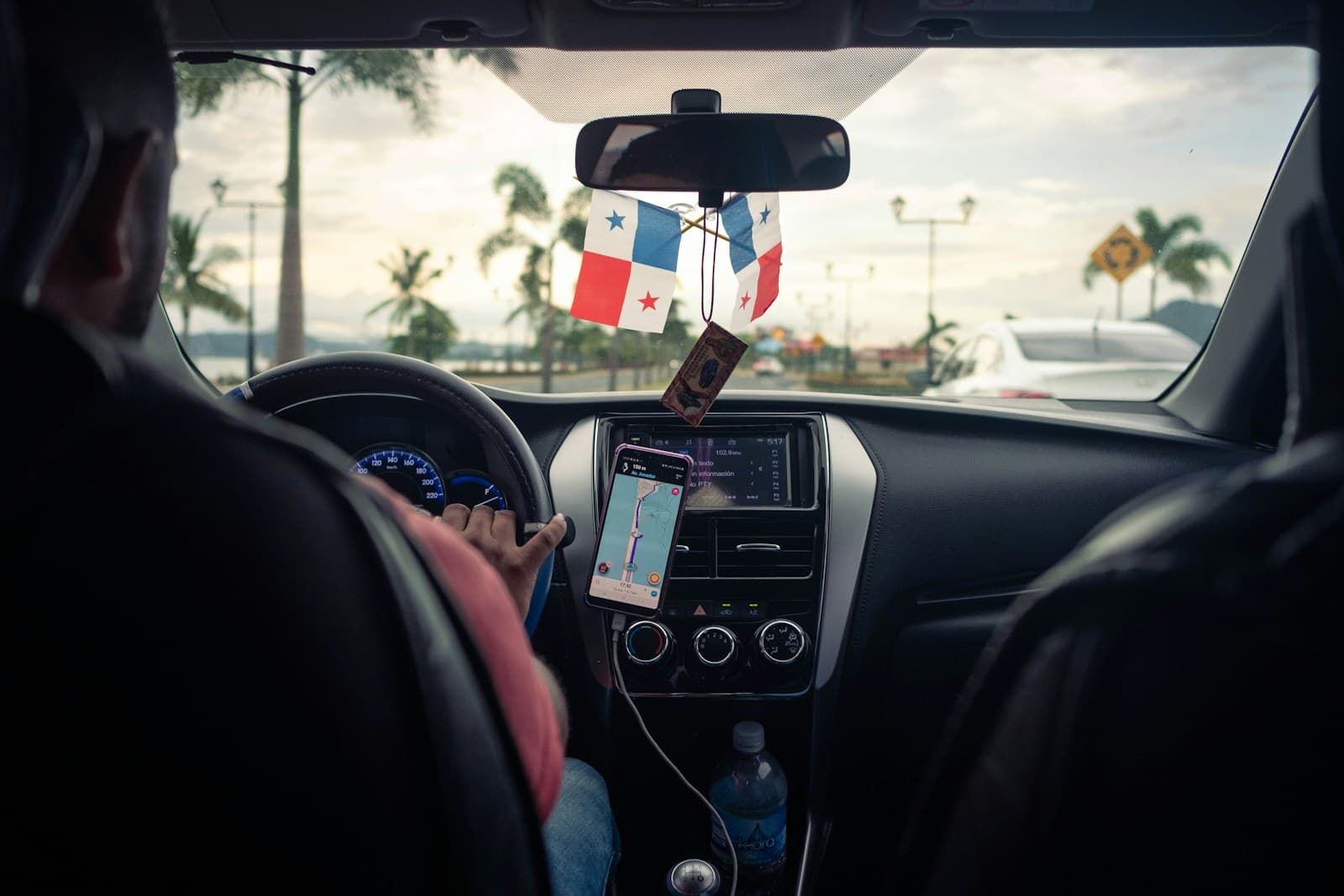
Your rideshare account is frozen until you submit updated license documentation. Louisiana's hardship license approves work routes, but rideshare driving falls outside standard employment categories most parishes recognize.
Why Louisiana's Hardship License Structure Conflicts With Rideshare Work Models
Louisiana courts issue hardship licenses with specific approved destinations listed in the order: your employer's address, medical facilities, childcare locations, and DUI treatment program sites. The license authorizes travel between your residence and these fixed points during approved hours. Rideshare driving requires coverage across a service area with no fixed destination, a variable route structure that contradicts the point-to-point restriction model Louisiana uses.
Most judges deny hardship petitions when the employment description shows rideshare or delivery platform work. The court interprets "work" as a single employer location, not a geographic service territory. Applicants who describe their job as "Uber driver" or "DoorDash contractor" face rejection rates above 80% in Orleans, Jefferson, and East Baton Rouge parishes based on local defense attorney case logs.
The hardship statute does not explicitly prohibit rideshare work, but judicial interpretation applies the fixed-destination requirement strictly. Without legislative amendment or appellate clarity, the pathway depends on how your petition frames the work and whether your attorney structures the request to fit existing approval patterns.
How Reckless Driving Convictions Affect Hardship License Eligibility Windows in Louisiana
Louisiana requires a 30-day waiting period after suspension begins before you can file a hardship license petition for reckless driving convictions. The clock starts from the effective date on your suspension notice, not the conviction date or arrest date. If your suspension notice shows an effective date of March 15, you cannot file until April 14 at the earliest.
Reckless driving falls under Louisiana Revised Statute 32:58, which OMV treats as a serious traffic offense but not an alcohol-related violation. This distinction matters: alcohol-related suspensions require IID installation before hardship approval, but reckless driving suspensions typically do not unless the underlying incident involved alcohol. Review your suspension letter's language carefully. If it references LRS 32:414 (DWI-related provisions) alongside the reckless charge, expect IID requirements even without a DWI conviction.
The 30-day eligibility window creates immediate income pressure for rideshare drivers. Uber and Lyft deactivate accounts when background monitoring flags a suspended license, and reactivation after reinstatement typically takes 7-14 days for document review. Most drivers lose 45-60 days of platform access even if hardship approval comes quickly.
Compare car insurance rates in your state
Get quotes from licensed carriers — no obligation, no spam, results in minutes.
Get Your Free Quote✓ No Obligation Required✓ Licensed Carriers Only✓ Available Nationwide✓ Free to Compare
What Louisiana Courts Classify as Approved Work Purposes
Louisiana hardship licenses authorize travel for employment at a fixed place of business owned or operated by an identifiable employer. The petition requires an employer affidavit on company letterhead stating your work address, shift schedule, and confirmation that transportation is essential to continued employment. Courts approve these petitions for construction workers traveling to job sites listed by specific street address, retail employees with single-location shifts, and healthcare workers assigned to one facility.
Rideshare and delivery platforms cannot provide the fixed-address documentation Louisiana courts require. Uber, Lyft, DoorDash, and Instacart operate through app-based dispatch models with no central work location in most markets. Their driver agreements classify you as an independent contractor, not an employee, which creates a second documentation barrier. The employer affidavit template most parishes use asks for a supervisor's signature and direct employment confirmation, language these platforms will not sign.
Some drivers attempt to frame rideshare work as self-employment with a service territory, submitting business registration documents instead of employer affidavits. This approach fails in most Louisiana parishes because the hardship statute's plain language requires employment, and judges interpret that term narrowly. Calcasieu, Caddo, and Ouachita parish courts have rejected self-employment hardship petitions in over 90% of cases where the work involves variable customer locations rather than a fixed business storefront.
The Route Deviation Problem: What Happens When You Drive Outside Approved Addresses
Louisiana law treats any driving outside your approved hardship license terms as driving under suspension, which carries a mandatory 15-day jail sentence, $750-$1,000 fine, and additional 180-day license suspension under LRS 32:415. The hardship order lists specific addresses and approved travel times. If a traffic stop occurs outside those parameters, the violation is automatic regardless of your explanation.
Rideshare driving inherently violates this structure. A pickup request two miles from your approved work route places you outside the geographic restriction even if the trip occurs during approved hours. The passenger destination adds a second unapproved address to the violation. Law enforcement officers do not adjudicate hardship compliance at roadside, they verify the hardship license exists, check the time against your approved hours, and issue citations when the stop location does not match an approved address on the court order.
Violating hardship terms revokes the license immediately and restarts your full suspension period from zero. If your original reckless driving suspension was 90 days and you violate hardship terms on day 45, you face the new 180-day suspension plus the remaining 45 days from the original penalty, a combined 225-day prohibition before reinstatement eligibility. The financial cost stack includes the new citation fines, court costs for the violation hearing, potential jail time, and SR-22 filing extension if the violation adds points that trigger continuous monitoring.
Alternative Work Options That Fit Louisiana's Hardship License Structure
W-2 employment with a single work location fits Louisiana's hardship framework cleanly. Warehouse jobs, call centers, retail positions, and healthcare facilities provide the employer affidavit and fixed-address documentation courts approve. Amazon fulfillment centers, FedEx hubs, and logistics operations throughout Louisiana hire workers with driving restrictions if the position does not require a commercial license and the commute route is approved.
Remote work eliminates the need for a hardship license entirely if the job does not require travel. Customer service, data entry, technical support, and transcription roles allow income continuation during suspension without court petition costs or route compliance risk. Platforms like Amazon Mechanical Turk, Appen, and Lionbridge hire Louisiana residents for remote contract work that pays weekly, though hourly rates typically run $12-$18 compared to rideshare's variable earnings.
If rideshare income is essential and you cannot pivot to fixed-location work, consider applying for hardship approval with a different employer while your suspension runs its course. A 90-day reckless driving suspension ends faster than the time required to challenge judicial interpretation of the hardship statute. Filing a hardship petition for a part-time fixed-location job preserves some income, and full reinstatement allows platform reactivation without the compliance risk hardship violation creates.
What SR-22 Filing Requires After Reckless Driving in Louisiana
Louisiana requires SR-22 filing for three years after reckless driving convictions under LRS 32:706. The filing proves continuous liability coverage at state minimum limits: $15,000 bodily injury per person, $30,000 per accident, and $25,000 property damage. Your insurer submits the SR-22 certificate electronically to OMV, and any lapse longer than 30 days triggers automatic suspension and restarts the three-year monitoring period from zero.
Rideshare companies require commercial rideshare endorsements or separate commercial policies that exceed personal auto SR-22 coverage. Personal SR-22 policies do not cover rideshare activity, and driving for Uber or Lyft under a personal policy creates coverage gaps that void both the SR-22 certificate and the rideshare platform's contingent liability coverage. If an accident occurs during a trip, both insurers deny the claim, and OMV treats the lapse as driving without required coverage, an offense that extends suspension by 180 days and adds two years to SR-22 monitoring.
Non-standard carriers that write SR-22 policies in Louisiana include Bristol West, Direct Auto, Dairyland, GAINSCO, and Safe Auto. Monthly premiums for SR-22 after reckless driving typically run $140-$240 depending on age, parish, and prior coverage history. Adding commercial rideshare endorsement increases premiums by 40-70%, and most non-standard carriers do not offer rideshare coverage at all. Progressive, State Farm, and Allstate write rideshare endorsements but frequently decline SR-22 applicants with recent reckless driving convictions, narrowing the carrier pool further.
How Much Louisiana Hardship License Application and Reinstatement Actually Costs
Louisiana charges a $75 hardship license application fee when you file the petition with the court. If approved, you pay a $50 issuance fee to OMV when picking up the restricted license. These administrative costs do not include attorney fees, which range from $500-$1,200 for hardship petition preparation and hearing representation in most Louisiana parishes. Self-filing saves legal fees but lowers approval rates significantly, particularly in parishes where judges expect formal legal arguments about employment necessity and public safety.
Reinstatement after suspension requires a $100 OMV reinstatement fee plus proof of SR-22 filing on record. If the suspension includes points accumulation beyond the reckless driving conviction, OMV may require completion of a driver improvement course before reinstatement, adding $75-$125 in course fees. IID installation, if required, costs $75-$150 upfront plus $60-$90 monthly monitoring fees for the restriction period.
The realistic total cost for hardship license pursuit, SR-22 filing, and full reinstatement after reckless driving runs $1,400-$2,800 depending on attorney use, IID requirements, and insurance premium increases. Rideshare drivers face additional income loss during the 30-day waiting period, platform deactivation during suspension, and reactivation processing delays after reinstatement. Most drivers underestimate non-premium costs by 50% or more when budgeting for the suspension period.